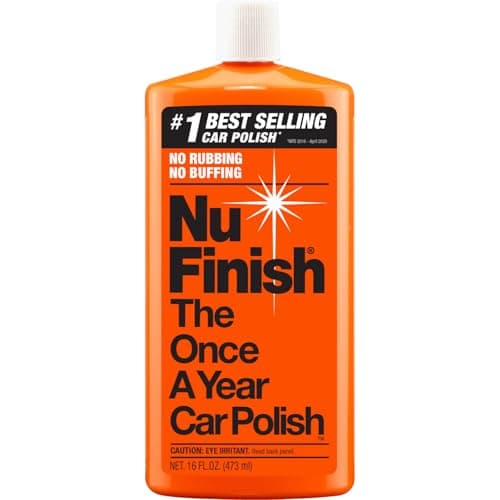
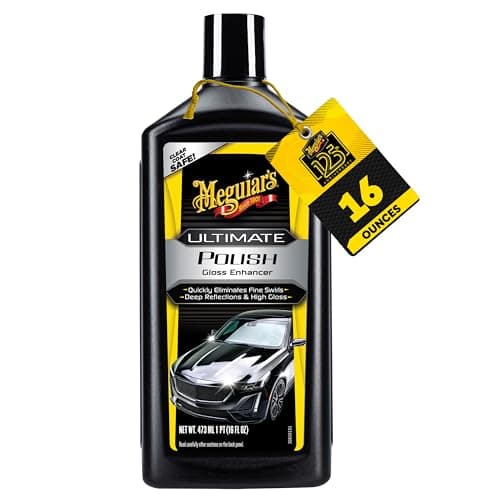
Meguiar's Ultimate Polish is the best car polish for most people — the cheapest way to get the deep, wet gloss that the word polish is actually selling, with so little abrasive in it that a first-timer cannot thin their clear coat with it. The budget pick is Nu Finish The Once A Year Car Polish, the cheapest bottle here and the only one that leaves months of real protection behind, because despite the name it is a synthetic sealant rather than a polish at all. Every price on this page comes from the live price layer, current as of November 23, 2026.
The polish shelf is the most confusing shelf in car care, and it is confusing for one reason: every bottle on it is marketed on the same outcome. Shine. Gloss. Depth. Showroom finish. None of that tells you the single fact that decides whether a bottle will do anything useful on your car, which is how much paint it removes.
A polish is an abrasive suspended in a lubricating carrier. Work it against clear coat and it levels the top few microns, taking the shallowest scratches down to nothing and leaving the surface smoother — which is what gloss physically is. The bottles below range from one that removes essentially nothing and simply makes dark paint look deeper, to one that removes enough to take out swirl marks you can see in the sun. They cost roughly the same. Buying the wrong end of that range is the most common mistake in the category.
How we ranked them
Cut level first, and stated honestly. Where a maker publishes where its bottle sits in its own abrasive line-up, we use that and say so. Where nobody publishes a figure — and almost nobody does, because there is no industry scale for it — we describe the level qualitatively from the maker's own stated purpose rather than inventing a number. No product on this page gets a cut rating we cannot point at a source for.
Then: what happens if you use it by hand. A large share of people buying polish have no machine. Some of these bottles do most of their work by hand and some do almost none, and that difference matters more than any gloss claim. We say per product which group it is in.
Then: does it leave anything behind. A pure polish leaves bare, abraded clear coat that wants a wax or sealant within hours. An all-in-one leaves protection in the same pass. Neither is better; they answer different questions, and the shelf never labels which is which.
Finally: forgiveness. How hard is this bottle to use badly? A polish with a long working time tolerates a beginner going too fast, too dry or too long in one place. A short-working, aggressive bottle punishes all three.
Polish, compound, glaze: the three words on the shelf
Polish is the middle of the abrasive range. It refines. In a two-step correction it is the second bottle — the one that removes the hazing the first bottle left and brings the gloss up. Some consumer polishes are abrasive enough to be a one-bottle answer on light defects, which is why three of the picks below genuinely overlap with compounds.
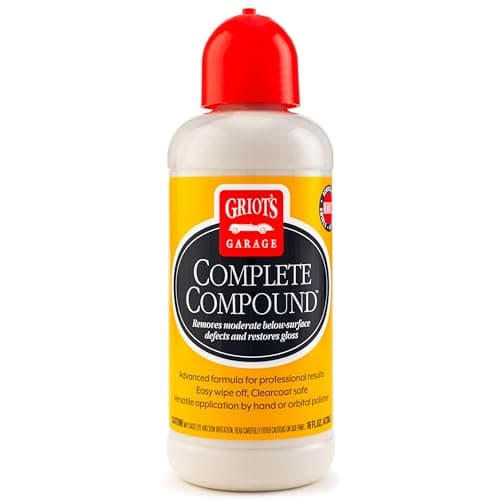
Compound is the heavy end. More abrasive, coarser, faster, and it leaves its own fine haze that needs refining afterward. If your paint has scratches you can feel with a fingernail, polish is the wrong aisle and rubbing compound is the right one.
Glaze is the no-abrasive end — oils and fillers that temporarily hide what they cannot remove. A glaze looks superb for a few washes and then the swirls come back, because they never left. Nothing on this page is a glaze, and that is deliberate.
The clean way to think about it: compound removes, polish refines, glaze hides, wax protects. If you want the long version, polish vs compound works through where the boundary actually falls, and car wax vs polish covers the other half of the confusion.
What "professional car polish" actually means
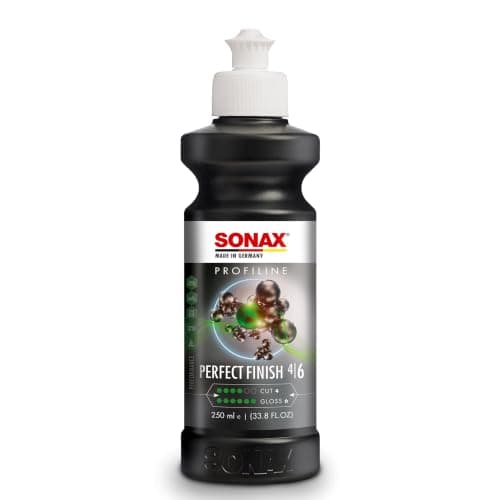
It is a real search and it has a real answer, but the answer is not a stronger bottle. Professional lines — the SONAX pick below is one — are formulated for people polishing cars every day, which means three things. Long working time, so a panel can be worked for a minute without the product flashing dry. Consistent abrasive behavior, so the same pressure gives the same result on the hundredth car as on the first. And body-shop-safe chemistry, usually silicone-free, so nothing contaminates a paint booth downstream.
What a professional bottle is not is more aggressive. Most of them cut less than the consumer one-steps beside them, because a professional is pairing the polish with the right pad and machine rather than asking the liquid to do everything. If you want the long working time and the predictability, a professional polish is a genuinely better buy. If you were hoping it removes more, it generally removes less.
Which end of the range is yours
Paint looks fine, you just want it to look wet. You want the no-cut end. A fine finishing polish by hand or machine, then wax. This is most people, and it is why our top pick is the gentlest bottle on the page.
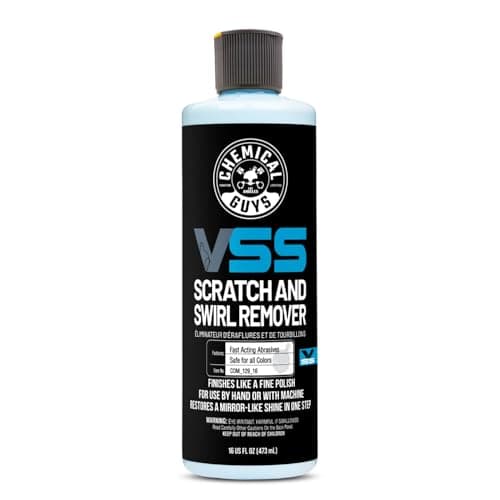
You can see fine swirls in direct sun. You want the middle or the cutting end, and you want a machine. A dual-action polisher with a polishing pad will remove in twenty minutes what an hour of hand work will not touch.
Paint is dull, chalky or oxidized. Polish alone will not get there. Start with a compound for oxidized paint and come back to a polish for the gloss pass.
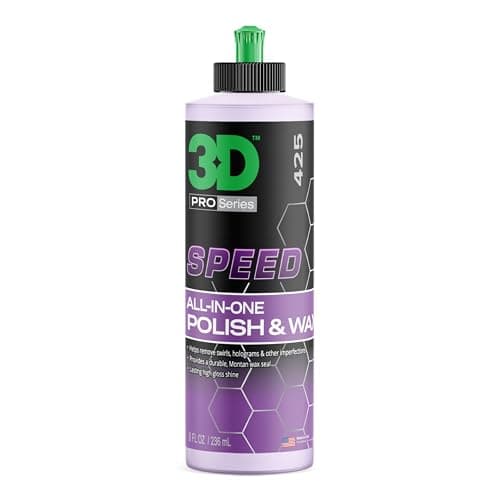
You want one bottle and one afternoon. An all-in-one. Less cut than a dedicated compound and less gloss than a dedicated polish, but it polishes and protects in a single pass, and a job you finish beats a job you plan. Two of the picks below are built for exactly this.
Before you open any of them
Polish is the one product category where preparation is not optional advice, it is a safety requirement. Every bottle here works by dragging abrasive across your clear coat. If there is bonded grit, iron fallout or road film sitting on the paint, you are dragging that across it too, and you will put in deeper scratches than you take out.
Wash, then clay bar, then — if the car sees brake dust — an iron remover. Run your fingertips over the paint afterward. If it is glass-smooth, you are ready to polish. If it still feels like fine sandpaper, polishing now will cost you more clear coat than it saves. Do you need to clay bar before polishing has the test in detail.
Getting the most out of a bottle of polish
By hand, expect gloss — not correction
Hand pressure over a four-inch foam applicator is a fraction of what a machine delivers over a five-inch pad spinning and oscillating a few thousand times a minute. The practical result is that by hand, a polish does roughly what a glaze does: it cleans, it brightens, it deepens dark paint, and it removes almost nothing. That is a perfectly good outcome if gloss is what you wanted. It is not swirl removal, no matter how long you work. How to polish a car by hand is honest about the ceiling.
Work small, work slow, keep it wet
Two feet by two feet at a time, three or four slow passes, and stop while the product still looks damp. Polish does its work in the wet phase; once it flashes dry you are rubbing spent abrasive and dust across the paint, which is how people put haze in while trying to take it out. Four pea-sized drops on the pad is plenty — more product does not mean more cut, it means a mess and a longer buff-off.
The pad changes the result more than the bottle
The same polish on a cutting pad, a polishing pad and a finishing pad behaves like three different products. If you own one bottle and three pads you have more range than someone with three bottles and one pad — which is why upgrading your pad set is usually the cheaper upgrade. The pad color guide explains what each color is claiming.
Test one panel before you commit to the car
Paint hardness varies enormously between manufacturers, and the same bottle that clears swirls in one pass on soft Japanese clear coat can barely mark hard German clear coat. Do a two-foot square on a lower door, wipe it down, and look at it in direct light before deciding your combination works. Hard paint vs soft paint covers what to expect from each.
Wipe down before you decide it worked
Most polishes contain oils that make a freshly polished panel look better than it is. The swirls you think you removed can reappear after the first wash, because the oils were filling them. A quick wipe with a panel wipe or a dilute isopropyl solution strips the oils and shows you the real result. Professionals do this on every car; it is the single habit that most improves amateur results.
Protect it the same day
A polished panel is bare, freshly abraded clear coat with no protection on it at all. It will pick up water spots and contamination faster than before you started. Put wax, sealant or a coating on before the car goes back outside — the all-in-one picks here do it in the same step, and do you wax after polishing covers the order for everything else.
How often is too often
Clear coat is finite. Factory clear is typically in the region of 40 to 50 microns and each real correction pass removes a small fraction of it, so there is a budget of corrections over a car's life rather than an unlimited supply. How often should you polish your car has the intervals, and does polishing remove clear coat explains the arithmetic. Finishing polishes like our top pick barely touch the budget. The cutting end of this page does.
If you want less, not more
Two of the bottles here are deliberately the low-cut end of the category because for a lot of cars that is the correct purchase. If your paint is in good shape and you want gloss plus months of protection rather than correction, the honest answer may not be a polish at all — see best car wax and polish for the combo products and best car wax under $20 for protection on its own.