A wax-and-polish product does two jobs in one pass: mild cleaners or abrasives lift oxidation, staining and light marring, and a protective layer goes down over the result before you have wiped the panel. It is the single most efficient thing you can do to a neglected car in an afternoon, and it is the product category most often bought by people who needed something else.
The distinction that matters: a one-step is a light correction plus protection. It will brighten faded paint, remove the gray haze on an older car, and take out the very lightest marring. It will not remove swirls you can see from three feet away, and it will not touch a scratch your fingernail catches in. If that is what you have, you need a real compound and a separate protection step, and no bottle labeled "wax and polish" will substitute.
Cleaner wax versus true all-in-one
Two different products share this shelf, and they are not equivalent.
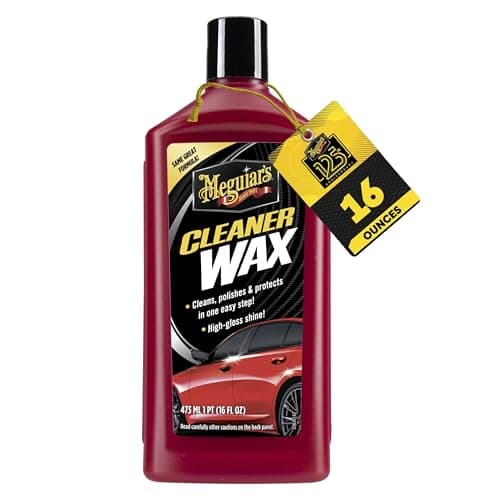
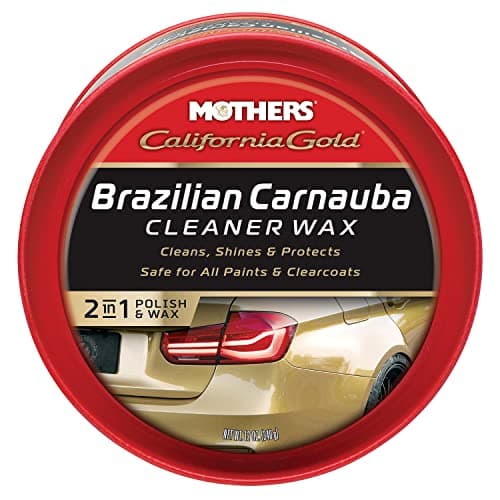
A cleaner wax uses chemical cleaners and very mild abrasives, and it is designed to work by hand. Its cleaning action is gentle — think of it as a deep clean rather than a correction. This is the cheap, forgiving, parts-store option, and for a fifteen-year-old daily driver it is genuinely the right tool.
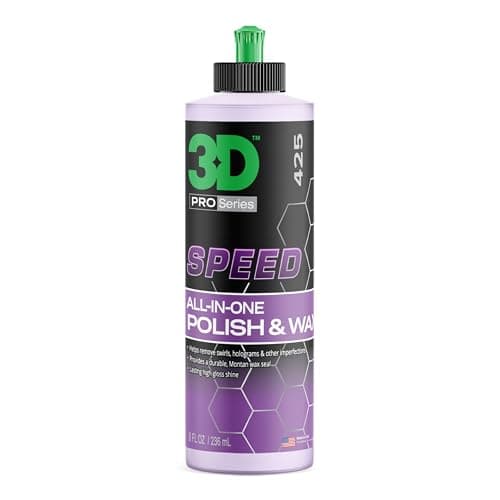
A true all-in-one carries real polishing abrasives designed to be broken down by a machine, plus a sealant. Run on a polisher, it removes light swirls properly rather than just cleaning the surface, and it leaves a synthetic protective layer behind. It costs more and it wants a machine to show what it can do.
If you own a polisher, buy the all-in-one. If you do not, buy the cleaner wax and be realistic about the result.
The catch nobody mentions
A one-step compromises on both halves. The cleaning is milder than a dedicated compound because it has to leave a surface a wax can bond to. The protection is shorter-lived than a dedicated sealant because it is sharing the bottle with cleaners and, in some formulations, gets partly removed as you buff off the residue.
That trade is worth making when the alternative is not doing the job at all. It is not worth making when the paint is either already good (buy a pure protection product — see best car wax for new cars) or genuinely bad (buy a compound and correct it properly).
How to tell if a one-step is right for your car
Wash the car, dry it, and look at a panel in direct sunlight from about three feet.
- Paint looks dull, flat or slightly chalky, but you cannot pick out individual marks. This is exactly the case a one-step solves. It is oxidation and embedded film, and mild cleaners lift it.
- You can see a web of fine circular scratches in the reflection. Those are swirls, and a one-step will make them slightly less obvious for a few weeks rather than removing them. See how to remove swirl marks.
- Individual scratches you can point at. Wrong product entirely — best compound for car scratches covers it.
Applying one properly
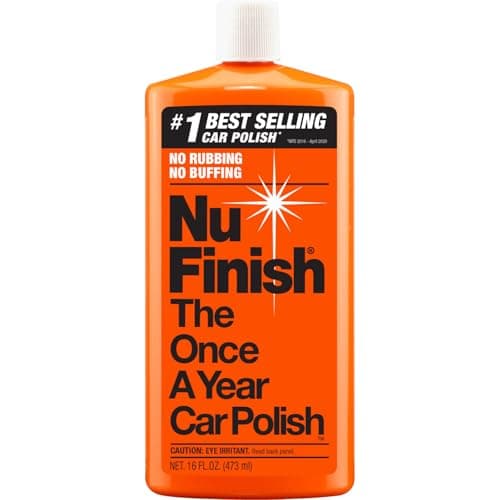
By hand: a foam applicator, small sections, moderate pressure, and let the product do the work rather than scrubbing. Wipe off with a clean plush microfiber before it dries fully hard — cleaner waxes get noticeably harder to remove if left too long, and Nu Finish in particular sets firm.
By machine: a soft polishing or finishing pad, a low-to-moderate speed, and light pressure. Do not use a cutting pad — you will remove the protective element as fast as it goes down. The pads for this are in best finishing pads, and the technique carries over from how to polish a car step by step.
Either way, work out of direct sun, and do one panel at a time. A whole car coated in drying cleaner wax is a bad afternoon.
How to choose a wax and polish
Hand or machine decides the product
Cleaner waxes are formulated to work under a hand applicator. True all-in-ones with diminishing abrasives want a machine to break those abrasives down properly, and worked by hand they under-deliver on the cleaning half.
Wax or polymer protection
- Carnauba-based — warmer, deeper look, especially on dark paint. Protection measured in weeks to a couple of months.
- Polymer or sealant-based — a harder, brighter, glassier shine and noticeably longer protection. The better choice for a car that lives outside.
Be honest about the paint
The most common disappointment in this category is buying a one-step for a problem that needed a compound. Do the three-foot sunlight test first, and if what you see is a web of circular scratches rather than a general dullness, buy the right tool instead.
Watch the buff-off window
Several products here set hard if left too long, and removing cured cleaner wax from a whole panel is genuinely unpleasant. Small sections, and remove before it fully hazes over.
Do not use one on new paint
There is nothing to clean, so the cleaning half is pure downside. A pure wax or sealant gives you the protection without abrading a perfect surface.