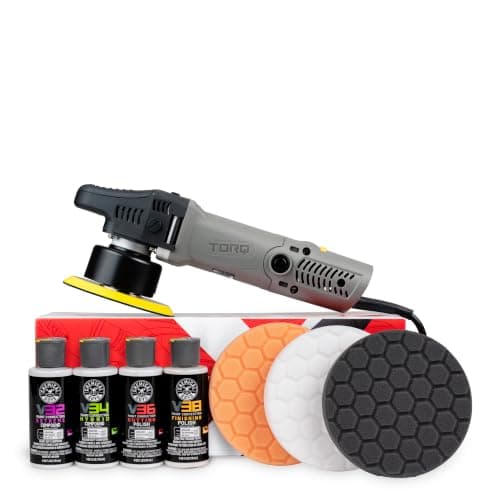
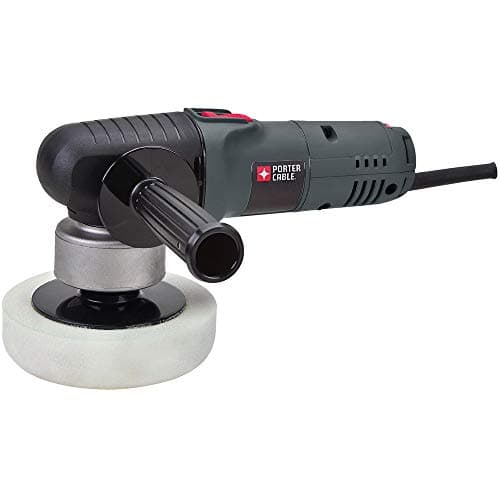
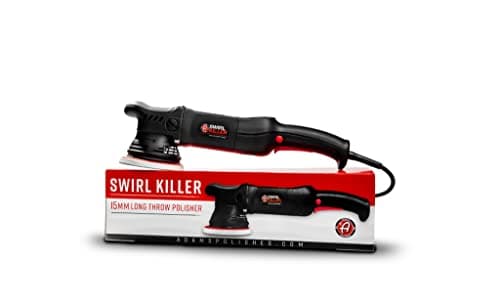
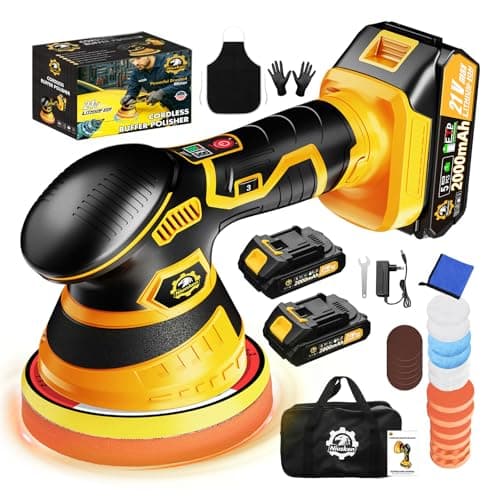
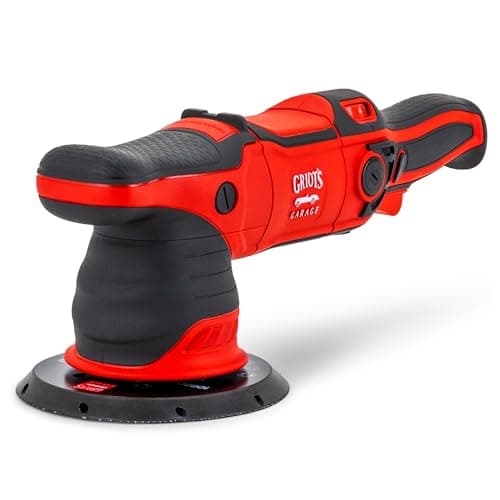
If this is your first machine polisher, the category question to answer first is not which brand — it is dual-action versus rotary. Short version: buy a dual-action (DA). We lay out exactly why in dual-action vs rotary polisher, but the summary is that a DA's pad stalls instead of grinding when you hover too long in one spot, which is exactly the mistake nearly every beginner makes on their first hood.
The five polishers below are all DA, and we picked them for how they behave once you actually apply pressure — not just their spec sheet. A cheap, underpowered DA bogs down the moment you push on it, which stalls the orbit and kills correction; every pick here holds speed under real pressure, from a full kit that bundles pads and compound to a bare tool you build a system around. If you want the wider DA field, including tools built for full-car speed rather than beginner safety, see our dual-action polisher roundup.
A polisher alone corrects nothing — the pad and compound loaded on it do the actual work, so budget for both from day one. Start with pads built for a DA rather than whatever came bundled, and walk through how to polish a car step by step before your first pass so panel order, pad rotation and compound dwell time are not guesswork.
Read the picks below by what you actually have: a complete kit if you own nothing yet, a bare tool if you already have pads and compound, or a long-throw machine if you are correcting a whole neglected car rather than a single panel.
If the third pick is the one you keep coming back to, it has earned a page of its own — our PORTER-CABLE 7424XP review goes through why a decades-old design is still the lowest-risk way to learn machine polishing, and where its short throw genuinely costs you time.
If a machine still feels like an expensive first step, the usual alternative deserves a straight answer — can you polish a car with a drill explains what a drill is missing, and why hand polishing is the better cheap route than a pad on a chuck.
How to choose your first polisher
Every spec sheet in this category lists roughly the same things — orbit, speed range, weight — but only one of them actually predicts whether the tool disappoints you: how much motor it has left when you lean into a panel. A DA's whole safety mechanism depends on the pad staying in motion; a weak motor lets real working pressure slow or stall that motion, which both kills correction and, paradoxically, erodes some of the DA's built-in forgiveness.
Specs that actually matter
- Orbit / throw — 8 mm is the standard beginner spec: forgiving and nimble, just slower to clear heavy defects than a long-throw tool.
- Motor power and speed range — a genuinely wide variable speed dial, like the 2,500-6,800 OPM range on a classic beginner DA, lets you match speed to the product and pad instead of running one setting for everything.
- Corded vs cordless — corded for a full first correction, cordless later for spot work and coating application.
- What is in the box — a kit with pads and compound removes an entire round of separate shopping; a bare tool assumes you are buying pads and compound yourself.
Match the backing plate to the pad
Most polishers here ship with, or are commonly paired with, a 5.5-inch backing plate, which is the standard beginner size — big enough to cover a panel efficiently, small enough to stay flat on a curved fender or bumper. If you buy pads separately, confirm the plate and pad sizes match before your first pass; a mismatched pad hangs off the edge of the plate and wobbles instead of gliding.
The common mistake
The mistake that wastes the most money is buying the cheapest bare motor available and expecting it to behave like the ones in tutorial videos. Cheap, underpowered units bog down under real pressure — the orbit slows or stalls, correction stops, and a beginner reasonably concludes the whole machine-polishing thing does not work. It is not the technique; it is the tool not holding speed. Every polisher in this roundup was chosen specifically because it keeps turning under load, so the results you get track your technique, not a motor giving up.