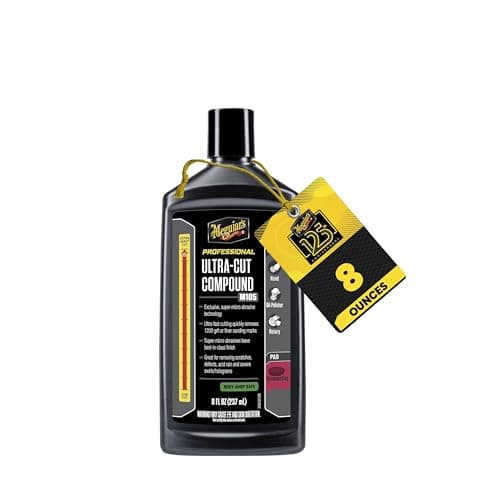
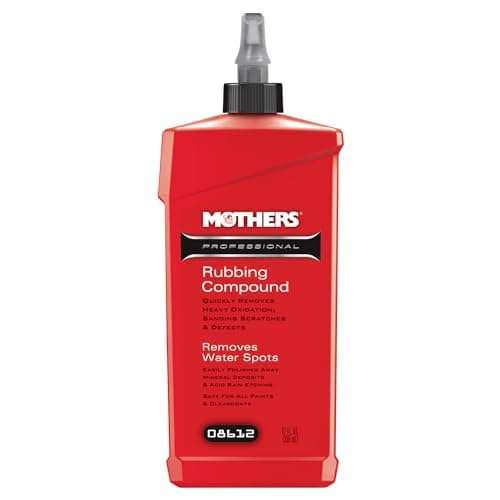
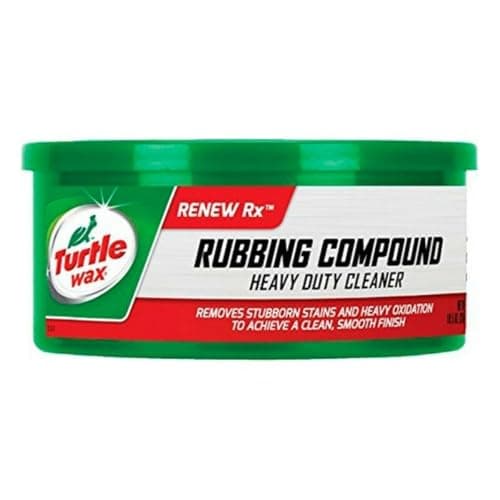
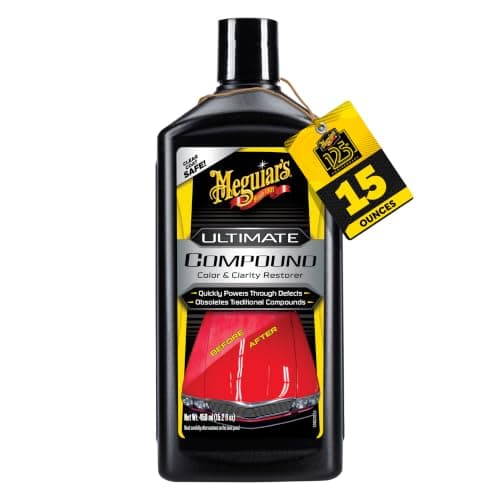
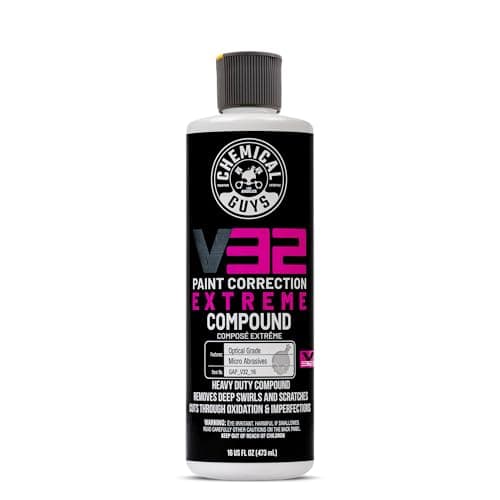
Oxidation is a different problem from swirls, and treating it like one is why so many people conclude their faded car is beyond help. Swirls are scratches — thousands of fine ones, catching light at every angle. Oxidation is chemical: UV and air have broken down the top few microns of the clear coat (or, on older single-stage paint, the color itself) into a dull, porous, chalky layer that scatters light instead of reflecting it.
The good news is that oxidation is usually shallower than it looks, and removing that dead layer is exactly what a heavy-cut compound does. The bad news is that a mild one-step polish will not do it — it removes far too little material to reach live clear coat, which is why so many first attempts end with a slightly less dull car and a frustrated owner.
The test that tells you if this will work
Before buying anything, do this. Wash and dry a panel, then rub a small area firmly with a clean microfiber towel and a little polish, by hand, for thirty seconds or so. Then look at the towel.
If the towel picks up a chalky white or gray residue and the spot underneath looks noticeably darker and glossier, you have oxidized clear coat and correction will work. If the towel picks up color — red, blue, whatever the car is — you are on single-stage paint with no clear coat, which can still be corrected but needs a lighter touch and will keep transferring color. And if the towel comes back clean and the panel stays dull, the clear coat has likely failed completely: it is peeling or delaminating rather than oxidizing, and no compound fixes that. That car needs a repaint, and we would rather tell you now than sell you a bottle.
Why heavy cut, and what it costs
Clear coat is finite. A factory clear layer is thin, and every correction pass permanently removes some of it. A heavy-cut compound removes more per pass than anything else you will use, which is the entire point on oxidized paint and a genuine risk everywhere else.
The practical rule: use the most aggressive product the job actually requires, on the smallest area that needs it, and stop as soon as the panel is corrected. Do not run a heavy compound over the whole car because two panels were bad. And do not repeat a heavy cutting pass hoping for improvement that a second pass will not deliver — if two passes have not cleared it, the problem is deeper than compound.
It is always a two-step job
A heavy-cut compound leaves haze by design. Every pick on this page will need a finishing polish on a soft pad afterwards, or the panel will read as cloudy rather than glossy — particularly obvious on dark paint. Budget the time and the second product from the start.
You will also need real pad support. A heavy compound on a soft pad barely works; pair it with a foam cutting pad, or with microfiber if foam has already proven insufficient on this paint.
Protect it afterwards, or you are doing this again
Oxidation happens because the paint was unprotected in the sun. Correcting it without then protecting it simply resets the clock — and the freshly corrected surface is more exposed than it was before, not less. A durable sealant or coating is the second half of this job. Our UV protection picks cover the wax-and-sealant route, and ceramic coatings the longer-lasting one.
One caveat before you buy anything on this page: if your car is old enough to have single-stage paint, the oxidation you are looking at is dead pigment rather than dead clear coat, and the whole cut ladder changes because there is nothing sacrificial on top. Rub a mild polish on a white towel over a hidden panel — color on the towel means you should be reading our single-stage compound picks instead of this list.
How to choose a compound for oxidized paint
Three questions: how bad is it, will you be working by machine or by hand, and how much paint are you willing to spend to fix it.
Grade the oxidation honestly
- Light — the paint looks flat rather than chalky, and a hand polish visibly darkens it. A one-step or medium compound will do.
- Moderate — visible chalkiness, the towel test comes back gray, gloss returns under pressure. This is the sweet spot for the heavy-cut compounds here.
- Severe — the surface is rough to the touch and patchy, or the clear is visibly peeling. Compound will not fix peeling clear coat. Get a paint quote.
Machine or hand
By machine is faster, more uniform and far less exhausting, and a dual-action with a cutting pad is the right tool — see the value polisher picks if you do not own one. By hand is realistic only for small areas or for panels a machine cannot reach, and it needs a compound formulated to work under hand pressure; one on this page is chosen for exactly that.
Single-stage paint needs different treatment
If your towel test came back with color on it, you are polishing the pigment layer itself. Use a less aggressive combination than you would on clear coat, expect color transfer onto every pad and towel, and be aware that there is no protective layer above the color — which makes sealing it afterwards more important, not less.
Buy enough
Oxidized paint consumes compound. The dead layer loads pads quickly and a whole faded car can go through more product than an entire year of maintenance polishing. A 16 oz bottle is a realistic starting point for a full car; a 4 oz sample bottle is for a test spot, not a project.
The mistake that wastes a weekend
Starting with the mildest product "to be safe" on genuinely chalky paint, seeing almost no change, and concluding the paint is dead. On oxidation specifically, the conservative approach misleads you — an underpowered combination produces the same result as unfixable damage. Test-spot with something aggressive enough to prove the paint responds, then decide how far to take it.