Skip to content
Pad & Polish

GUIDES · Guides

Is Paint Correction Worth It?

It is the only step in detailing whose result is permanent, and the only one that spends a resource you cannot replace. That combination is what makes the answer depend entirely on the car.

By Stephen V.Updated How we research
#ad

We earn a commission when you buy through our Amazon links, at no extra cost to you. It never affects our rankings, and we say so when the cheaper product is the better buy. How this works.

Yes, if you are keeping the car, the defects are shallow, and you will protect it afterwards. Those three conditions carry the whole answer. Correction is the only detailing step whose result does not wear off: the swirl you remove is gone for the life of the paint, which is a genuinely different proposition from wax, which lasts months, or a coating, which lasts years. If one of the three conditions fails — a lease return, a car about to be repainted, or a car that will go straight back to a brush wash — the honest answer is no, and this page is mostly about recognizing which case you are in.

What you are actually buying

Paint correction is abrasive levelling. Fine abrasives shear off the high points of clear coat around each defect until the surface is flat enough that light reflects cleanly instead of scattering. That is why a corrected panel looks deep rather than merely clean: you have not covered anything, you have changed the shape of the surface.

The result is permanent in the strict sense. A removed scratch cannot come back. What can happen — and what makes people say correction "did not last" — is that new defects get installed afterwards, almost always during washing and drying. That is not the correction failing; it is the maintenance failing, and it is the single biggest determinant of whether the money was well spent.

The other half of the transaction is what it costs you, and it is not only money. Clear coat is finite. A full repaint aside, you get the film thickness the factory applied and no more, and every correction pass removes a small, permanent fraction of it. A car can be corrected several times over its life; it cannot be corrected indefinitely. The arithmetic, including how much film a typical pass removes and how to find out how much you have, is in does polishing remove clear coat.

The test that answers the question for your car

Wash and dry the car, then look at a horizontal panel under a focused light or in direct sun, and run a fingernail across the worst scratch you can find.

Fine circular scratching, a spiderweb around the reflection, or a dull chalky cast is wash marring and oxidation. All of it lives in the top few microns of clear coat, all of it responds to correction, and this is the case where correction delivers the biggest visible change for the least film removed. This is the yes case.

A scratch your fingernail catches in is through a meaningful part of the clear coat. Correction will reduce it, usually not erase it, and chasing it to zero means removing far more film than the rest of the panel needed. Soften it and move on.

A scratch showing white, primer or bare metal is through the clear coat entirely, and no amount of polishing will fix it — abrasives can only level what is there. That is bodywork, not correction.

You cannot do this assessment under garage fluorescents. Swirls are invisible under diffuse overhead lighting and obvious under a focused beam, which is why the cheapest pick on this page is a flashlight and why we rank them at all in best detailing light for paint correction.

When it is worth it

A car you are keeping for years. The value of a permanent result scales with how long you own the result. Correcting a car you will drive for five more years spreads the cost over every one of those years; correcting one you are selling in two months does not.

Dark paint. Black, dark gray and dark blue show marring at far higher contrast than light colors, so the same correction produces a much larger visible change. If a white car looks fine and a black car with identical defects looks terrible, the black car is where the hours pay — and how to detail a black car covers what changes.

Before a ceramic coating. This is the strongest case of all, and it is about sequence rather than appearance. A coating locks in whatever surface it is applied over, for years. Coating swirled paint means paying for a multi-year product to preserve defects. If you are coating the car, correction is not an optional upgrade, it is part of the install — how to polish a car before a ceramic coating.

A neglected car with a thick, uniform problem. Heavily oxidized single-stage paint or a car that has lived through years of brush washes often transforms dramatically in a single pass, because the damage is shallow and everywhere at once. This is the highest-drama, lowest-risk correction there is.

When it is not

A lease return. Lease inspections assess damage against a wear standard, not gloss. Correction does not change that assessment, and you are spending clear coat on a car that is about to be someone else's. Wash it, clay it if it needs it, wax it, hand it back.

A car about to be repainted or panel-repaired. Obvious when stated and routinely ignored. Do not correct a panel scheduled for refinishing, and if the whole car is going to be resprayed, every hour spent on the old paint is wasted.

Paint with no film left to spend. A car that has already been corrected repeatedly, or one whose history you do not know, can be running thin clear coat — and thin clear coat fails by delaminating and peeling, which is not repairable by polishing. A thickness reading before the first pass is the difference between informed and lucky, and the instruments are ranked in best paint thickness gauge.

A car that will go straight back into a brush wash. If the maintenance will not change, the correction will be undone within a season and you will have spent film thickness for a few months of gloss. Fixing the wash habit is free and comes first — how to wash a car without scratching it.

Does it add resale value?

Not in the sense of a line item. No valuation guide has a field for "corrected paint", and nobody pays a documented premium for it. What a genuinely glossy, swirl-free car does is change the first ten seconds of a viewing: it reads as cared-for, which affects how a buyer interprets everything else they find. That is real but unquantifiable, and anyone who quotes you a specific figure for it is making it up.

If resale is the actual goal, the honest value ranking is wash and decontaminate first, then address the interior, then wax — and only then consider correction, because the first three cost a fraction as much and move a buyer more.

DIY or pay someone?

The economics are unusual here, because the equipment is a one-time cost and the labor is the expensive part of a professional quote. A pro quote is built from hours: inspection, wash and decontamination, test spot, the correction passes themselves, and the protection step — and a two-stage correction on a neglected car is days of skilled work, which is why the numbers look the way they do. The structure of both sides is in DIY detailing cost vs a shop, and the realistic time commitment in how long does paint correction take.

The case for doing it yourself is that one machine, one pad set and two bottles cover every car you will ever own, so the kit pays for itself against a single professional job and you keep it. The case against is that the learning curve is paid in clear coat, and a modern dual-action machine with stall protection is what makes that curve survivable — which is why the first pick below is a machine rather than a product. Start with paint correction for beginners if that is the direction you are leaning.

Either way, one rule holds: do a test spot. One 2 x 2 ft section, least aggressive combination of pad and product first, inspected under a light before you commit to the whole car. It tells you whether the defects respond at all, how much cut this paint needs, and therefore whether the job in front of you is the two-hour version or the two-day one. That single section is also the cheapest possible answer to the question in this page's title.
The short answer

Quick picks

#ProductBest forScorePrice
01
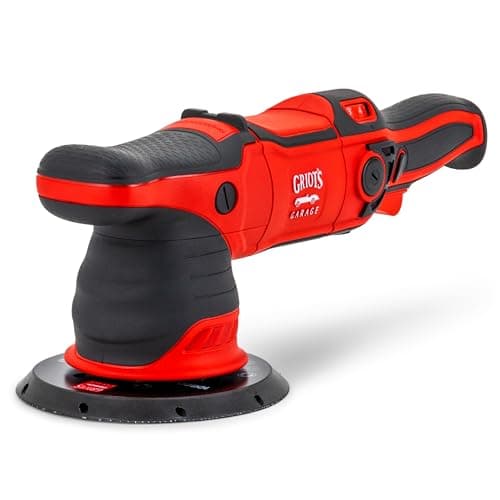
Griot's Garage Griot's Garage G9 Random Orbital Polisher
Griot's Garage G9 Random Orbital Polisher

The dual-action most enthusiasts would tell a beginner to buy: a smooth 9 mm orbit, a strong motor and a lifetime warranty, so it corrects real defects without the wobble cheaper units get under pressure.

A first polisher you won't outgrow
8.8
$179.99Amazon
02
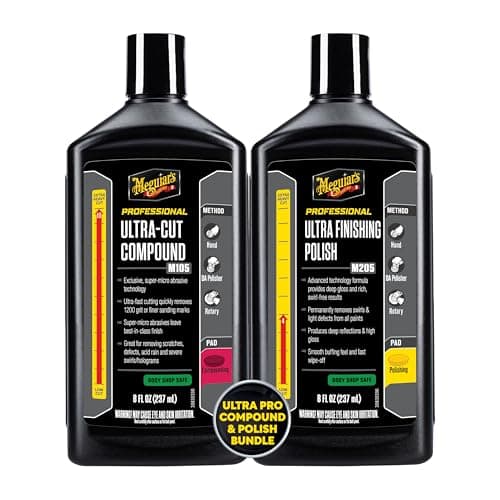
Meguiar's Meguiar's Mirror Glaze Bundle (M105 + M205)
Meguiar's Mirror Glaze Bundle (M105 + M205)

The two bottles behind more successful corrections than anything else in the hobby, sold together: cut with the first, finish with the second, and you have the entire chemical side of paint correction covered.

The complete two-step chemical kit, without guessing
8.5
$27.94Amazon
03
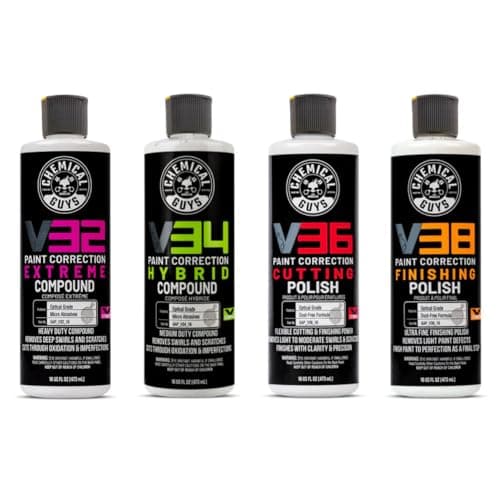
Chemical Guys Chemical Guys V-Line Polish & Compound Kit
Chemical Guys V-Line Polish & Compound Kit

The whole correction ladder in one box — heavy cut, medium cut, cutting polish and final finish — so whatever the paint turns out to need, the right bottle is already on the bench.

Owning every cut level before you know which one you need
8.4
$74.99Amazon
04
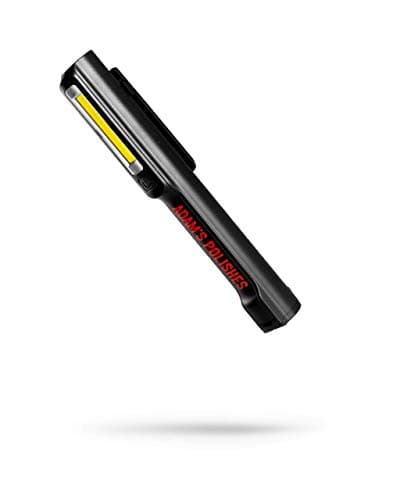
Adam's Polishes Adam's Swirl Finder Flashlight
Adam's Swirl Finder Flashlight

A 170-lumen pocket torch with a tight, hard-edged beam — not a color-match tool, but the cheapest thing that will show you swirls you cannot otherwise see, which is most of the job.

Finding swirls before and after a pass, for the price of a bottle of polish
7.4
$14.44Amazon

#ad · Live prices from the Amazon Product API, as of October 17, 2026. Where we have no verified live price, we show none — we would rather leave a gap than print a number that has rotted.

In detail

The picks, in full

01
Griot's Garage Griot's Garage G9 Random Orbital Polisher

A first polisher you won't outgrow

Griot's Garage G9 Random Orbital Polisher

9 mm orbit1000 W motor6-speed dialLifetime warranty
8.8/10

The dual-action most enthusiasts would tell a beginner to buy: a smooth 9 mm orbit, a strong motor and a lifetime warranty, so it corrects real defects without the wobble cheaper units get under pressure.

Ergonomics
8.8
Correction power
8.6
Beginner-safe
9.2
Value
8.4

Pros

  • Enough torque to hold speed under pad pressure, where budget DAs bog down
  • Longer 9 mm orbit corrects faster than the old 5 mm entry tools
  • Griot's lifetime warranty is genuinely lifetime

Cons

  • Heavier than a bare-bones DA
  • Pads and compounds sold separately

Don't buy this if…

…you only ever want to apply a spray coating — a cheaper spot polisher is plenty.

$179.99View on Amazon

Price as of October 17, 2026. Prices change — Amazon's is the one that counts.

#ad · we may earn a commission from this link to Griot's Garage G9 Random Orbital Polisher

02
Meguiar's Meguiar's Mirror Glaze Bundle (M105 + M205)

The complete two-step chemical kit, without guessing

Meguiar's Mirror Glaze Bundle (M105 + M205)

M105 + M205Cut then finishProfessional lineBody-shop safe
8.5/10

The two bottles behind more successful corrections than anything else in the hobby, sold together: cut with the first, finish with the second, and you have the entire chemical side of paint correction covered.

Completeness
7.8
Correction ability
9.4
Beginner-friendly
7.6
Value
9.2

Pros

  • The most-documented compound-and-polish pairing there is
  • Cheaper together than buying the two bottles separately
  • Body-shop safe, so nothing is hidden by fillers

Cons

  • No pads, machine or towels — chemicals only
  • M105 dusts and needs technique to work cleanly

Don't buy this if…

…you own no polisher or pads yet — buy a machine kit first.

$27.94View on Amazon

$31.2911% off

Price as of October 17, 2026. Prices change — Amazon's is the one that counts.

#ad · we may earn a commission from this link to Meguiar's Mirror Glaze Bundle (M105 + M205)

03
Chemical Guys Chemical Guys V-Line Polish & Compound Kit

Owning every cut level before you know which one you need

Chemical Guys V-Line Polish & Compound Kit

4 x 16 ozV32 / V34 / V36 / V38Full correction ladderOptical grade
8.4/10

The whole correction ladder in one box — heavy cut, medium cut, cutting polish and final finish — so whatever the paint turns out to need, the right bottle is already on the bench.

Completeness
9
Correction ability
9.2
Beginner-friendly
7.4
Value
7.8

Pros

  • Covers every defect severity without a second order mid-job
  • Four full-size bottles, not sample sizes
  • Steps are numbered, so the sequence is not a judgment call

Cons

  • The largest chemical outlay of any kit here
  • Most owners will barely touch two of the four bottles

Don't buy this if…

…you correct one car occasionally — a two-step bundle is enough.

$74.99View on Amazon

Price as of October 17, 2026. Prices change — Amazon's is the one that counts.

#ad · we may earn a commission from this link to Chemical Guys V-Line Polish & Compound Kit

04
Adam's Polishes Adam's Swirl Finder Flashlight

Finding swirls before and after a pass, for the price of a bottle of polish

Adam's Swirl Finder Flashlight

170 lumensFocused beamPocket-sizedBattery powered
7.4/10

A 170-lumen pocket torch with a tight, hard-edged beam — not a color-match tool, but the cheapest thing that will show you swirls you cannot otherwise see, which is most of the job.

Defect visibility
7.6
Color accuracy
5
Build & runtime
7.4
Value
9.6

Pros

  • Costs less than almost anything else on this site and still changes what you can see
  • Tight beam throws hard shadows, which is exactly what reveals fine scratches
  • Small enough to keep in a pocket while you work

Cons

  • No color temperature control and no published CRI figure
  • Too small and too dim to light a whole panel at once

Don't buy this if…

…you need to color-match a repair — this finds defects, it does not judge color.

$14.44View on Amazon

Price as of October 17, 2026. Prices change — Amazon's is the one that counts.

#ad · we may earn a commission from this link to Adam's Swirl Finder Flashlight

How we picked

We do not run a testing lab

We compiled published specifications, manufacturer data sheets and aggregated owner reviews, computed the cost of ownership from real sizes and coverage, then scored each product against a published rubric. The scores are judgments from documented research — they are not measurements we took, because we do not own a lab and we are not going to pretend we do. Where a number came from someone else, we name them and link them in Sources.

Questions

Frequently asked

Is paint correction permanent?
The result is, in the strict sense: a defect that has been levelled out of the clear coat cannot come back. What people experience as correction 'not lasting' is new defects being installed afterwards, nearly always during washing and drying. The correction held; the maintenance did not.
How long does paint correction last?
Indefinitely, until new damage is added. There is no wear-off period the way there is with wax, because nothing was applied - the shape of the surface was changed. How long it looks corrected therefore depends almost entirely on how the car is washed and whether it was protected afterwards.
Does paint correction damage your paint?
It consumes a small, permanent amount of clear coat, which is how it works rather than a side effect. A car can be corrected several times over its life, not indefinitely. The real risk is on paint whose history is unknown or that has already been corrected repeatedly, which is why a thickness reading before the first pass is worth taking.
Is paint correction worth it before a ceramic coating?
This is the strongest case for it. A coating bonds over whatever surface it is applied to and holds that surface for years, so coating swirled paint means paying for a multi-year product to preserve the defects. If the car is being coated, correction is part of the install rather than an upgrade.
Does paint correction increase resale value?
Not as a measurable line item - no valuation guide has a field for it and nobody pays a documented premium. What it changes is the impression in the first ten seconds of a viewing, which affects how a buyer reads everything else. Real, but not quantifiable, and anyone quoting a figure for it is inventing one.
Should I correct a car I am about to sell or return?
Usually no. A lease inspection assesses damage against a wear standard rather than gloss, and a car you are selling in weeks does not repay a permanent, film-consuming process. Wash it, decontaminate it if the paint feels rough, and wax it - that gets most of the visual benefit for a fraction of the cost.

Keep reading

Receipts

Sources

We do not run a testing lab, and we do not pretend to. Where a measured number came from someone else's lab, we name them and link them. Where we could not verify something, we say so on the page rather than quietly leaving it out. Read our full method.