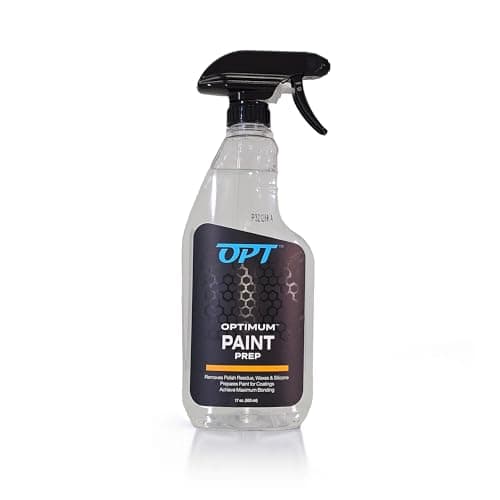
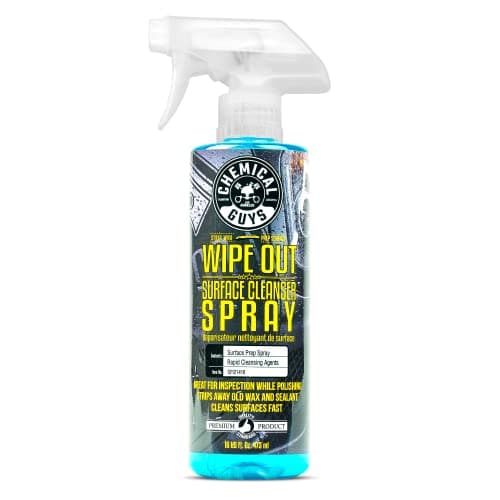
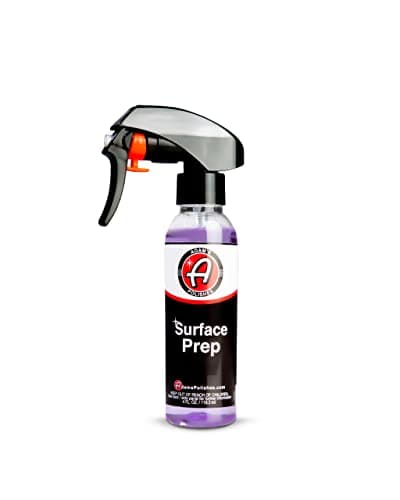
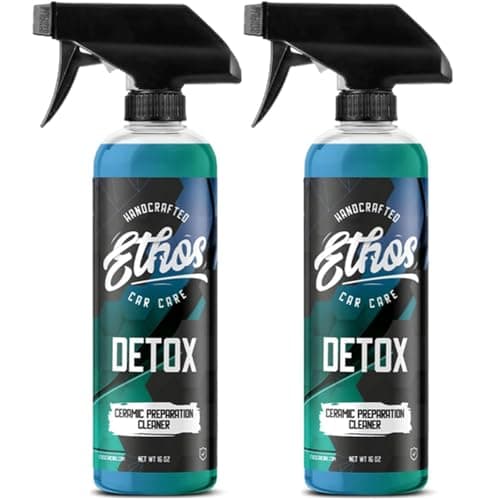
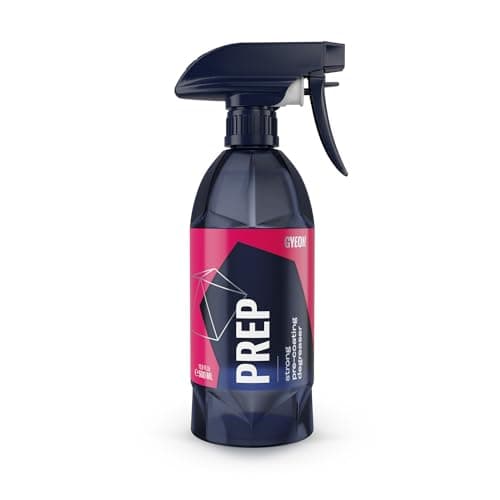
Here is the failure nobody sees coming. You wash the car properly, decontaminate it, spend a day machine polishing it to a mirror, apply an expensive ceramic coating, and it looks spectacular. Six months later it has stopped beading, and you conclude the coating was overhyped.
What actually happened is that the coating bonded to a film of polishing oil rather than to your clear coat, and left when that film did. A panel wipe is the ten-dollar, twenty-minute step that prevents it, and it is the step most first-time installers skip because nothing about the paint looks wrong without it. The same cleansers are what strip an old wax layer — how to remove wax from car paint.
Why polishes leave oils at all
Not by accident. Lubricating oils in a compound or polish are what let the abrasives work across a panel without grabbing, control heat, and extend working time. They are doing a real job during the polishing step.
They also stay behind afterwards. Some products are deliberately "body shop safe" and leave less, some consumer polishes contain fillers that deliberately leave more — but a normal microfiber wipe-down after polishing does not remove them. It redistributes them, which is exactly why the paint looks so good at that moment.
What a panel wipe actually is
A solvent blend — commonly isopropyl alcohol and water with surfactants, sometimes proprietary chemistry — designed to dissolve oils and residues and then evaporate completely, leaving nothing of its own behind. That second half matters as much as the first: a cleaner that removes oils but leaves surfactant film has simply swapped one bonding problem for another.
You will see advice to make your own from diluted isopropyl alcohol. It does work to a point, but dilution ratios are argued about endlessly, alcohol alone struggles with some modern polishing oils, and the products here are formulated and tested by companies that have to live with the coating failing afterwards. For a step this cheap, relative to the coating and the weekend, it is not the place to economize.
How to use one properly
- Finish all polishing. The panel wipe is the last thing before the coating.
- Work one panel at a time, in the shade, on cool paint. Solvent evaporating in direct sun flashes before it can dissolve anything.
- Spray onto a clean microfiber towel or onto the panel, then wipe in one direction rather than circles.
- Immediately follow with a second, completely dry towel. Wipe on, wipe off — leaving it to air dry can leave streaking.
- Change towels constantly. A towel saturated with dissolved oil just spreads them onto the next panel. This is the mistake that undoes the whole step.
- Do not touch the panel afterwards. Skin oils are exactly what you just removed.
Panel wipe is not decontamination
Two entirely different steps, at opposite ends of the job. Decontamination — iron remover and clay — removes bonded particles before you polish, and is covered in our iron remover picks and clay bar picks. A panel wipe removes oils and residues after you polish. Doing one does not substitute for the other, and a coating install needs both.
One more use worth knowing: if you are re-coating a car that already has a failing coating, an ordinary panel wipe will not remove the old layer. That needs a dedicated coating stripper, which is why one sits at the bottom of this page — the situation is covered in how long does a ceramic coating last.
How to choose a panel wipe
Three things: how strong it needs to be, how much you need, and whether you are stripping an old coating as well as oils.
Match strength to what you just used
- A body-shop-safe, filler-free polish — a general surface cleanser is plenty. There is not much to remove.
- A consumer polish or an all-in-one with fillers — use a coating manufacturer's own prep or a dedicated paint prep. These are formulated for exactly this residue.
- An existing coating that has failed — you need a stripper, not a wipe. Nothing else removes a cured coating chemically.
Buy the size that matches the job
Panel wipe is used generously — being stingy is precisely what causes the failure it exists to prevent. For one car, roughly 16 ounces is comfortable. A 4 oz bottle is the right buy for a single install if you would rather not have a bottle sitting on a shelf for two years, and a 500 ml or larger bottle makes sense if you coat more than one car or maintain other people's.
Watch out for what it strips
A panel wipe removes wax and sealant along with everything else — that is the point, but it means it is not a maintenance product. Do not use one as a "deep clean" on a car you have just waxed. It is also worth keeping off trim and rubber where the manufacturer does not state compatibility, since solvents can dry out unprotected plastics.
Towels are half the product
Use edgeless, plush, genuinely clean towels — and more of them than feels necessary. Two per panel is a reasonable rule: one to wipe on, one to wipe off, both retired to the laundry pile afterwards. A towel that has been through a fabric-softener wash will deposit exactly the kind of film you are trying to remove, so wash detailing towels separately and without softener.
The check that tells you it worked
After wiping, look at the panel from a low angle under bright light. Polishing oils show as faint smeary patches that shift as you move; properly wiped paint looks uniform and slightly less glossy than it did with the oils on it. That small loss of gloss is normal and is the point — it comes back the moment the coating goes on. The full install sequence is in how to apply ceramic coating.