Skip to content
Pad & Polish

HUB 05 · Car Wax & Sealants

Do You Wax After Polishing?

Yes, and ideally the same day. Polishing is subtractive: it removes defects, and it removes every molecule of wax, sealant or coating that was protecting the paint along with them.

By Stephen V.Updated How we research
#ad

We earn a commission when you buy through our Amazon links, at no extra cost to you. It never affects our rankings, and we say so when the cheaper product is the better buy. How this works.

Yes. Always, and preferably before the car moves. Polishing is an abrasive process: it removes a very thin layer of clear coat to level out defects, and everything sitting on top of that clear coat — the wax you applied in spring, the sealant from last year, the remains of a coating — comes off with it. A freshly polished panel is the cleanest and the most exposed it will ever be. If you stop there, you have spent a weekend making paint beautiful and then left it naked.

The confusion in the question is worth unpacking, because it comes from a real place. Polishing makes paint look better than waxing does — glossier, deeper, genuinely corrected rather than coated. It is natural to look at that panel and conclude the job is finished. But gloss and protection are two different properties that happen to look similar from six feet away. Polish gives you the first. Only wax, sealant or a coating gives you the second.

What polishing actually leaves behind

A compound or polish works by dragging fine abrasives across the clear coat under pressure, shearing off the high points around each defect until the surface is level again. There is no mechanism by which a layer of wax survives that. It is physically abraded away in the first few seconds of the first pass, which is also why a good compound specifies "no fillers" as a feature: you are meant to be looking at bare, honest paint when you are done.

Bare clear coat is not fragile in the sense that it will fail overnight. It is, however, the surface that everything in the environment now reaches directly: UV, acid rain, bird droppings, bug remains, industrial fallout, tree sap and road film. Clear coat is the sacrificial layer in a modern paint system, and the whole point of putting wax over it is to give the environment something cheaper to attack first. Two specific risks matter more than the rest.

Etching. Bird droppings and bug splatter are acidic, and on unprotected clear coat in warm weather they can etch a permanent depression into the surface in a matter of hours. On a waxed panel the same deposit usually wipes off. This is the risk that makes "the same day" the right answer rather than "next weekend".

Water spotting. Unprotected paint is hydrophilic — water spreads and clings rather than beading and rolling off. Hard water left to evaporate on bare clear coat deposits its mineral content in place, and the result ranges from an easy wipe-off to a genuine etch, as removing water spots from car paint goes into. A single rain shower on a freshly polished, unprotected car can undo a visible part of your weekend.

How soon is soon enough?

Same session. The correct sequence is wash, decontaminate, polish, wipe down, protect, and that whole chain should happen before the car leaves the garage or driveway. There is no cure time to respect between polishing and waxing, because polish is not a coating; it leaves nothing behind that needs to harden.

The one real exception is fresh paint, meaning a recent repaint or refinish rather than factory paint. New refinish paint off-gasses solvent for weeks, and sealing it too early can trap that process. Factory paint has been fully cured since the oven at the assembly plant and has no such requirement. The two cases genuinely have opposite answers, which is why they get their own page in how long to wait before waxing new paint.

The step between polishing and waxing that most people skip

Polishing oils. Almost every compound and polish contains lubricating oils that help the abrasives work and keep the product from drying out mid-pass, and some of those oils remain on the panel after the wipe-off. They are not a problem for gloss — in fact they slightly flatter it, which is why a just-wiped panel can look better than it does the next morning. They are a problem for adhesion.

A wax or sealant applied over a film of polishing oil bonds to the oil rather than to the clear coat, and when the oil eventually breaks down, the protection goes with it. The fix is a panel wipe: a dedicated surface cleanser, or in a pinch a 15–20% isopropyl alcohol solution, wiped on and off with a clean microfiber before any protection goes down. It takes ten minutes for a whole car.

How much this matters scales with what you are applying. For a carnauba wax that lasts weeks, skipping the wipe-down costs you a little durability. For a ceramic coating, it is the difference between a coating that lasts years and one that fails in patches — the reason a panel wipe is non-negotiable there and has its own rankings in best panel wipe for ceramic coating. One of the picks below is the small-bottle version for exactly this step.

Wax, sealant, or coating?

"Wax" in this question is usually shorthand for "protection", and three different kinds are available. The honest ranking depends entirely on how much work you just did.

Carnauba or hybrid wax is the easy answer: cheap, forgiving, warm-looking, and gone in one to three months. If the polish was a one-afternoon tidy-up on a daily driver, this is proportionate. A carnauba-polymer hybrid buys months instead of weeks for the same effort.

A synthetic sealant bonds to the clear coat rather than resting on it and carries a season on one application. This is the right default after a real correction: you did hours of subtractive work, and it deserves protection measured in seasons rather than washes. The field is ranked in best paint sealant.

A ceramic coating is the option that makes a multi-day correction make sense, because it locks the corrected surface in for years rather than months. It also locks in anything you missed, which is the real argument for doing the finishing polish step properly first — see how to polish a car before a ceramic coating.

The way to choose is to match the protection to the effort. A quick single-step polish and a bottle of wax is a coherent afternoon. Three days of two-stage correction followed by a spray wax that dies in six weeks is not. The category-level comparison is in wax vs sealant vs coating.

Can you wax over polish? And the reverse mistake

Yes — that is the normal, intended order, and nothing about a polished surface rejects wax. The sequence that does not work is the other way round: polishing over wax. Abrasives have to reach the clear coat to do anything, so a waxed panel wastes the first part of every pass removing the wax, with the compound picking up and smearing the softened wax as it goes. It is messy, it is slower, and it makes it harder to judge your progress.

The same logic kills the popular idea of a product that does both at once in a serious correction context. Combination polish-and-wax bottles are real and genuinely useful for tidying up neglected paint in one pass — the field is ranked in best car wax and polish — but they are a compromise at both ends by design. If you have already done the work of a dedicated correction, finishing it with a dedicated protection step is what makes the correction last.

One last practical note. Inspect before you protect, under a light, from two angles. Wax is slightly forgiving of fine haze, which means it can hide a patch you missed just long enough for you to put the machine away. Finding it two weeks later means stripping the wax to fix it. The inspection discipline is in how to remove swirl marks.
The short answer

Quick picks

#ProductBest forScorePrice
01
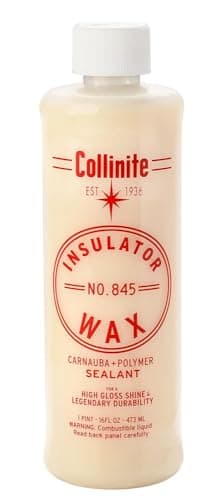
Collinite Collinite 845 Insulator Wax
Collinite 845 Insulator Wax

The durability king of traditional protection: a carnauba-plus-polymer liquid that routinely outlasts pure carnaubas by months, which is why it's a cult favorite for winter and daily drivers.

The longest-lasting traditional wax
8.4
$20.95Amazon
02
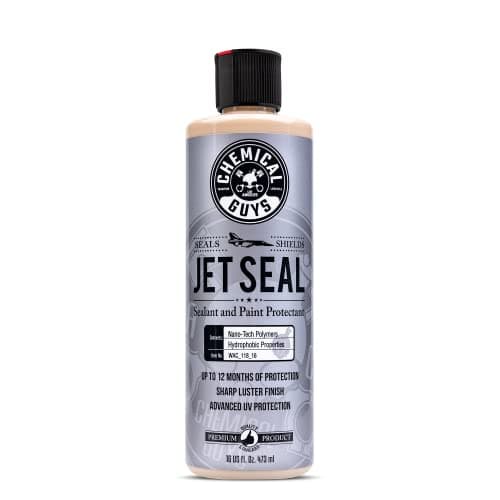
Chemical Guys Chemical Guys JetSeal Anti-Corrosion Paint Sealant
Chemical Guys JetSeal Anti-Corrosion Paint Sealant

The long-haul synthetic sealant here: it bonds to the clear coat rather than sitting on it like carnauba, which is why a single application carries protection through a season rather than a month.

Season-long synthetic protection under a wax topper
8.0
$39.99Amazon
03
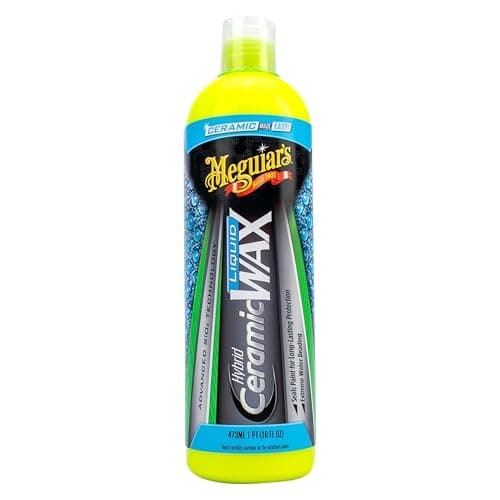
Meguiar's Meguiar's Hybrid Ceramic Liquid Wax
Meguiar's Hybrid Ceramic Liquid Wax

The no-technique beading spray: hose the car, spray while wet, rinse. It's the easiest way to get real SiO2 water behavior, at the cost of the shortest durability on this list.

A total beginner who wants beading with zero technique
8.2
$22.51Amazon
04
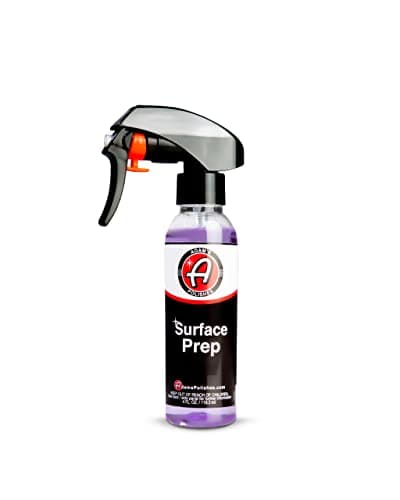
Adam's Polishes Adam's Polishes Surface Prep (4 oz)
Adam's Polishes Surface Prep (4 oz)

A 4 oz bottle of coating prep — small, cheap and exactly the right size for one car, which is the whole point when the alternative is a liter of something you use once a year.

A single coating install, with nothing left over
8.4
$10.19Amazon

#ad · Live prices from the Amazon Product API, as of October 17, 2026. Where we have no verified live price, we show none — we would rather leave a gap than print a number that has rotted.

In detail

The picks, in full

01
Collinite Collinite 845 Insulator Wax

The longest-lasting traditional wax

Collinite 845 Insulator Wax

Carnauba + polymerMonths of durabilityLiquidThin coats
8.4/10

The durability king of traditional protection: a carnauba-plus-polymer liquid that routinely outlasts pure carnaubas by months, which is why it's a cult favorite for winter and daily drivers.

Durability
9
Looks & warmth
7.6
Ease of use
7.8
Value
9.2

Pros

  • Outlasts most pure carnauba waxes by a wide margin
  • Excellent value per bottle — a little goes far
  • Loved for winter and salt protection

Cons

  • Apply in thin coats or it's fussy to buff
  • Warmth of look trails a rich show carnauba

Don't buy this if…

…you want the deepest wet carnauba glow above all — a show paste wax looks warmer.

$20.95View on Amazon

Price as of October 17, 2026. Prices change — Amazon's is the one that counts.

#ad · we may earn a commission from this link to Collinite 845 Insulator Wax

02
Chemical Guys Chemical Guys JetSeal Anti-Corrosion Paint Sealant

Season-long synthetic protection under a wax topper

Chemical Guys JetSeal Anti-Corrosion Paint Sealant

16 ozSynthetic sealantAnti-corrosionHand or machine application
8.0/10

The long-haul synthetic sealant here: it bonds to the clear coat rather than sitting on it like carnauba, which is why a single application carries protection through a season rather than a month.

Durability
9
Looks & warmth
7.4
Ease of application
8.2
Value
7.6

Pros

  • Durability well beyond any carnauba wax
  • Rated for wheels and bare metal as well as paint
  • Takes a carnauba topper cleanly if you want more warmth

Cons

  • The sharpest, most clinical look in this category — some prefer carnauba
  • The most expensive bottle on this page

Don't buy this if…

…you love the deep, wet carnauba look — a sealant's shine is deliberately cooler.

$39.99View on Amazon

Price as of October 17, 2026. Prices change — Amazon's is the one that counts.

#ad · we may earn a commission from this link to Chemical Guys JetSeal Anti-Corrosion Paint Sealant

03
Meguiar's Meguiar's Hybrid Ceramic Liquid Wax

A total beginner who wants beading with zero technique

Meguiar's Hybrid Ceramic Liquid Wax

SiO2 sprayApply on wet paintNo buffingFrequent top-ups
8.2/10

The no-technique beading spray: hose the car, spray while wet, rinse. It's the easiest way to get real SiO2 water behavior, at the cost of the shortest durability on this list.

Durability
6.6
Ease of application
9.4
Beading
8
Value
8.6

Pros

  • Genuinely foolproof — spray on wet paint, rinse
  • Real SiO2 beading and sheeting
  • Cheap enough to reapply often

Cons

  • Shortest-lived here; needs frequent reapplication
  • Beading fades faster than a wipe-on ceramic

Don't buy this if…

…you want to protect and forget for months — a graphene spray lasts much longer.

$22.51View on Amazon

Price as of October 17, 2026. Prices change — Amazon's is the one that counts.

#ad · we may earn a commission from this link to Meguiar's Hybrid Ceramic Liquid Wax

04
Adam's Polishes Adam's Polishes Surface Prep (4 oz)

A single coating install, with nothing left over

Adam's Polishes Surface Prep (4 oz)

4 ozSurface cleanserCoating prepSingle-install size
8.4/10

A 4 oz bottle of coating prep — small, cheap and exactly the right size for one car, which is the whole point when the alternative is a liter of something you use once a year.

Oil removal
8.4
Residue-free
8.6
Ease of use
9
Value
7.6

Pros

  • Right-sized for one install rather than a shelf-life problem
  • Pairs with the Adam's coatings a lot of first-timers start on
  • The cheapest way to prep properly instead of skipping the step

Cons

  • 4 oz runs out fast if you are heavy-handed with the towel
  • Costs far more per ounce than the 16 oz cleansers

Don't buy this if…

…you coat more than one car a year — buy a bigger bottle.

$10.19View on Amazon

Price as of October 17, 2026. Prices change — Amazon's is the one that counts.

#ad · we may earn a commission from this link to Adam's Polishes Surface Prep (4 oz)

How we picked

We do not run a testing lab

We compiled published specifications, manufacturer data sheets and aggregated owner reviews, computed the cost of ownership from real sizes and coverage, then scored each product against a published rubric. The scores are judgments from documented research — they are not measurements we took, because we do not own a lab and we are not going to pretend we do. Where a number came from someone else, we name them and link them in Sources.

Questions

Frequently asked

Do you have to wax after polishing a car?
Yes, in the sense that you have to apply some form of protection. Polishing abrades away every bit of wax, sealant or coating that was on the paint, leaving bare clear coat exposed to UV, acidic bird droppings and water spotting. Wax, a synthetic sealant or a ceramic coating all qualify; leaving it bare does not.
How long after polishing should you wax?
The same session, before the car moves. There is no cure time to wait for, because polish leaves nothing behind that needs to harden. The only exception is fresh refinish paint, which off-gasses for weeks and should not be sealed too early - factory paint has been cured since the assembly plant.
Do I need to wipe the paint down between polishing and waxing?
It is a ten-minute step that meaningfully improves adhesion. Compounds and polishes contain lubricating oils, and a residue of them left on the panel means your wax bonds to oil rather than to clear coat. A dedicated panel wipe or a 15-20% isopropyl alcohol solution removes it. Before a ceramic coating this step is mandatory, not optional.
Can you wax over polish?
Yes - that is the intended order. The sequence that does not work is polishing over wax, because the abrasives have to spend the first part of every pass removing the wax before they reach the clear coat, which is messy and makes your progress hard to judge.
Is wax or sealant better after polishing?
Match the protection to the effort. A quick single-step polish pairs sensibly with a wax. After a genuine multi-stage correction, a synthetic sealant carries a season on one application and a ceramic coating carries years, which is far better value for the hours you just spent.
What happens if you never wax after polishing?
Nothing dramatic on day one. Over the following weeks the unprotected clear coat loses its hydrophobic behavior, water clings and spots instead of beading, road film bonds more readily, and acidic deposits get hours to etch instead of being wiped off a wax layer. The gloss you polished in fades noticeably faster than it needs to.

Keep reading

Receipts

Sources

We do not run a testing lab, and we do not pretend to. Where a measured number came from someone else's lab, we name them and link them. Where we could not verify something, we say so on the page rather than quietly leaving it out. Read our full method.