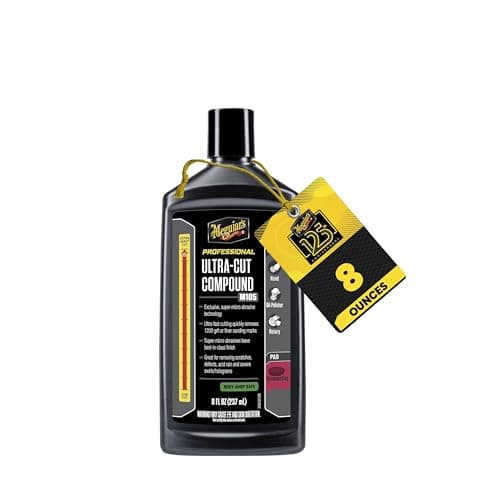
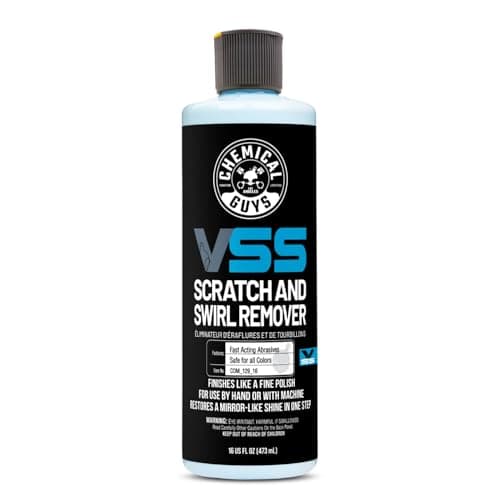
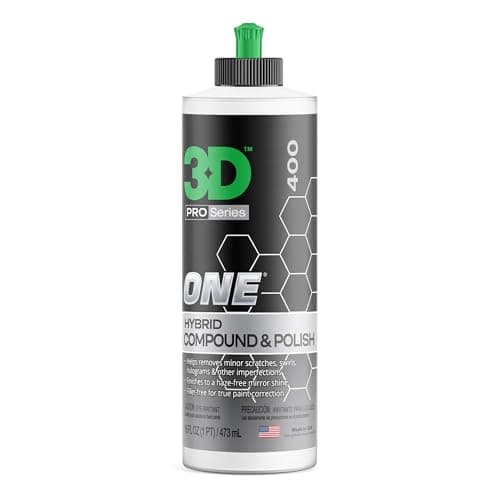
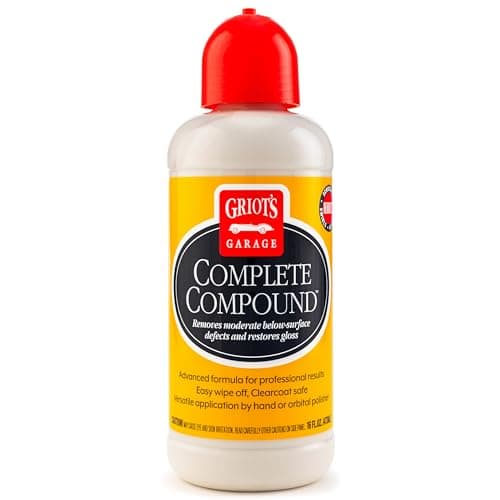
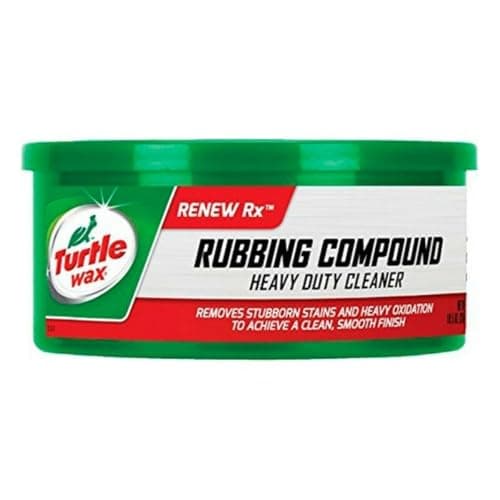
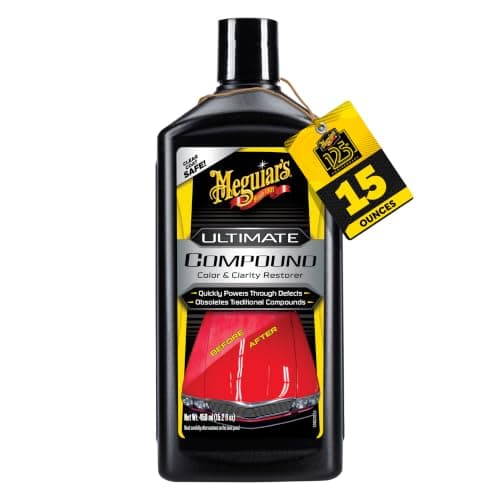
These six products span the realistic range of a home garage: a forgiving one-step you could hand to a first-timer, a body-shop-grade heavy cutter for paint that's actually neglected, and everything reasonable in between. None of them is the "best" compound in the abstract — the right one depends on how bad the defects are and whether you're willing to follow up with a separate polish.
If you're not sure which situation you're in, read compound vs. polish first — it lays out what each step actually removes and the order they go in. As a rule, reach for a one-step (Ultimate Compound, Chemical Guys VSS, or 3D One) for ordinary swirls and light oxidation, and save a dedicated heavy cutter like M105 or the Turtle Wax rubbing compound for paint you already know needs real correction — most of that group still wants a finishing polish afterward to look its best.
The picks below are ordered by how most home garages would actually use them, not by raw cutting power alone — the ranking weighs how forgiving each product is against how much correction it delivers, since a compound that corrects perfectly in a shop but marrs a beginner's paint isn't the better buy for most people.
A compound's rated cut level is only half the story: the same bottle behaves differently on a soft finishing pad than a firm cutting pad, and differently again on a polisher that bogs down under pressure versus one that holds speed — see our pad picks for pairing advice. Whatever you choose below, work a test spot first and judge the result before committing to a full panel — and if you have never run a compound by hand or by machine, how to use rubbing compound covers the technique that decides whether any of these bottles performs the way its label claims.
Two of the bottles above come from the same brand and confuse more buyers than the rest of this list combined. Ultimate Compound vs M105 settles which of the two your paint, pad and machine should be getting.
How to choose a rubbing compound
The specs that actually matter
- Cut level — how much material it's designed to remove per pass. Manufacturers rank their own lineups from heavy cutters (like M105) down to light finishing polishes; a one-step sits in the middle by design.
- Abrasive technology — DAT-style compounds break down and finish as you work them; SMAT-style compounds hold a consistent cut and usually expect a separate finishing polish after. Check which one you're buying so you know whether a follow-up step is already part of the plan.
- Clear-coat safety — every compound here is sold as clear-coat safe when used as directed, but "safe" still assumes a reasonable pad, reasonable pressure, and a test spot first.
- Hand vs. machine — a few of these compounds (Meguiar's Ultimate Compound in particular) are formulated to also work by hand if you don't own a polisher yet, though a machine will always finish faster and more evenly.
The size you're actually buying
Bottle size varies more than people expect: Meguiar's Ultimate Compound ships at 15.2 oz against Turtle Wax's 10.5 oz — roughly 45% more productin the larger bottle before price even enters the comparison. On a compound you'll reach for repeatedly, that size difference is worth checking before assuming the cheaper listing is actually the better deal per ounce.
The common mistake
Buying more cut than the paint needs. A heavy body-shop compound like M105 removes real defects fast, but it's built for someone comfortable managing heat, pad pressure and a follow-up polish — used on ordinary daily-driver swirls, it does more work (and removes more clear coat) than the job calls for. Start with a one-step, and only step up to a dedicated heavy cutter once you've confirmed the lighter product genuinely can't get the defect out.