Iron remover targets one specific thing: ferrous metal particles — brake dust, rail dust, industrial fallout — that embed themselves in clear coat and paint wheel faces, then rust in place. You'll usually see it as tiny orange specks on light paint before you've even run a hand over the surface. A clay bar can shear off some of this fallout mechanically, but iron removers dissolve it chemically first, which is gentler on the paint and clears more of it than clay does alone.
All four picks here work the same way — spray on cool, shaded paint or wheels, let the reaction do its work (most bleed a visible purple color as iron dissolves, which is the product showing you it's working, not a stain), then rinse thoroughly. Where they differ is potency, smell and whether the bottle is dedicated to paint or doubles as a wheel cleaner too.
Iron remover is a chemical first pass, not a replacement for claying — run the baggie test after it dries, and if the paint still feels gritty, that texture is non-metallic contamination a clay bar or mitt needs to finish. For the full sequencing of wash, iron remover, clay and correction, see our paint prep hub.
Wheels are worth calling out separately, since brake dust concentrates there far more than anywhere on the body. A dedicated or dual-purpose iron remover clears baked-on dust from barrels and spokes far faster than soap and a brush alone, and doing the wheels at the same time as the paint means you are not mixing up which bottle goes where. Whichever pick you choose, always check the wheel finish is compatible before spraying a full set.
Worth being clear about what this product cannot do, because it is the most common misunderstanding in decontamination: an iron remover only touches ferrous metal. Tree sap, overspray and tar are untouched by it, and clay is the only thing that removes them. Iron remover vs clay bar sets out which your paint actually needs, and why the chemical stage always goes first.
The short answer
| # | Product | Best for | Score | Price |
|---|
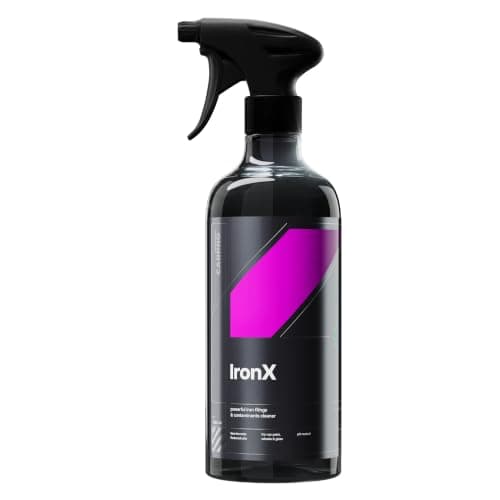
| 01 | CarPro IronX Iron RemoverThe category benchmark: a pH-balanced iron remover that dissolves embedded brake-dust and fallout — it bleeds purple as it works — and is safe on paint and wheels when used as directed. | The reference iron remover for paint and wheels | | $35.99·Amazon |
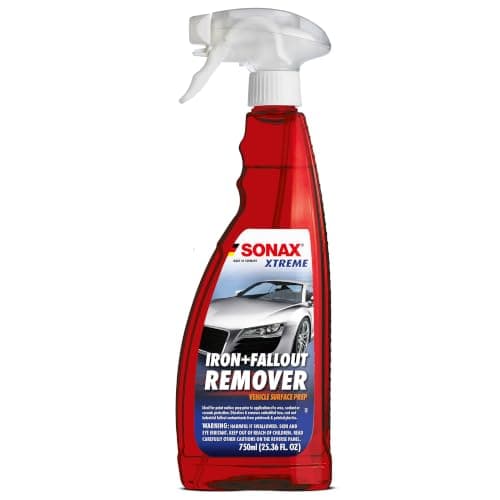
| 02 | SONAX Iron + Fallout RemoverA high-performance fallout remover that many detailers rate at the very top for cutting power and cleaner smell than the old-guard products — a strong, slightly more pleasant alternative. | Maximum cutting power with a more tolerable smell | | $24.99·Amazon |
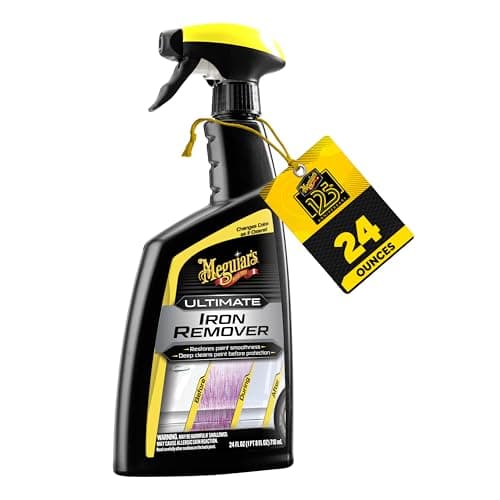
| 03 | Meguiar's Ultimate Iron RemoverThe value bottle in the category: a mainstream 24 oz color-changing iron remover that costs a fraction of the boutique brands and does the one job an iron remover has to do. | Cheap, widely available fallout removal on wheels and paint | | $11.97·Amazon |
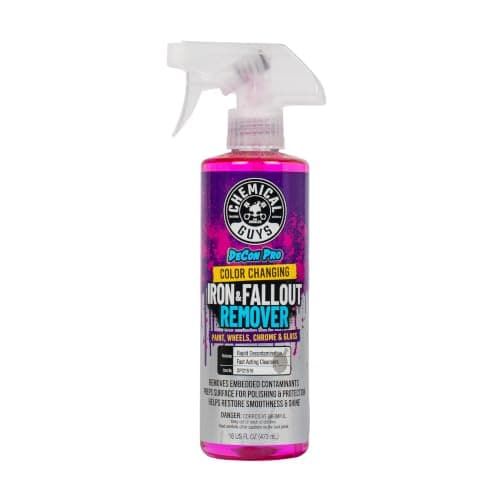
| 04 | Chemical Guys DeCon Pro Iron RemoverA dual-purpose iron remover and wheel cleaner, so one bottle handles both fallout on paint and baked-on brake dust on wheels — the practical pick if you'd rather not buy two products. | One bottle for paint fallout and wheels | | $18.99·Amazon |
#ad · Live prices from the Amazon Product API, as of October 19, 2026. Where we have no verified live price, we show none — we would rather leave a gap than print a number that has rotted.
In detail
The reference iron remover for paint and wheels
Iron dissolverColor-change reactionPaint-safe pHWheels + body
The category benchmark: a pH-balanced iron remover that dissolves embedded brake-dust and fallout — it bleeds purple as it works — and is safe on paint and wheels when used as directed.
- Fallout strength
- 9
- Usability
- 8
- Smell
- 6.4
- Value
- 7.8
Pros
- +Dissolves bonded iron that clay can't fully remove
- +Color change shows you where it's working
- +Trusted, well-documented formula
Cons
- −Strong sulfur smell during the reaction
- −Premium price per bottle
Don't buy this if…
…your paint is only lightly contaminated — a clay bar alone may be enough.
Maximum cutting power with a more tolerable smell
Iron dissolverColor-changeHigh potencyPaint + wheels
A high-performance fallout remover that many detailers rate at the very top for cutting power and cleaner smell than the old-guard products — a strong, slightly more pleasant alternative.
- Fallout strength
- 9.2
- Usability
- 8
- Smell
- 7.4
- Value
- 7.8
Pros
- +Aggressive on baked-on brake dust and fallout
- +Less offensive smell than some rivals
- +Clear color-change feedback
Cons
- −Potent — follow dwell times and rinse well
- −Premium price
Don't buy this if…
…you want the cheapest decon step — a clay bar covers light contamination for less.
Cheap, widely available fallout removal on wheels and paint
24 ozColor-changingPaint and wheel safeSpray on, rinse off
The value bottle in the category: a mainstream 24 oz color-changing iron remover that costs a fraction of the boutique brands and does the one job an iron remover has to do.
- Fallout strength
- 7.6
- Smell
- 6.8
- Usability
- 8.4
- Value
- 9.2
Pros
- +Lowest cost per ounce of any iron remover we track
- +Stocked almost everywhere, so re-buying is easy
- +Color change makes it obvious when it has finished working
Cons
- −Milder bite than the boutique formulas on baked-on brake dust
- −Still smells like an iron remover, because they all do
Don't buy this if…
…your wheels are years into neglect — a stronger formula will save you a second pass.
One bottle for paint fallout and wheels
Iron + wheel cleanerColor-changeDual purposePaint-safe
A dual-purpose iron remover and wheel cleaner, so one bottle handles both fallout on paint and baked-on brake dust on wheels — the practical pick if you'd rather not buy two products.
- Fallout strength
- 8
- Usability
- 8.4
- Smell
- 6.8
- Value
- 8.4
Pros
- +Doubles as a wheel cleaner
- +Color-change shows the reaction
- +Good value for two jobs in one
Cons
- −Jack-of-two-trades vs a dedicated remover
- −Standard iron-remover smell
Don't buy this if…
…you only ever decon paint — a single-purpose remover can be a touch stronger.
How to choose an iron remover
Potency vs. smell
The strongest fallout removers here also tend to have the strongest sulfur smell — that's largely a byproduct of the same chemistry that dissolves iron efficiently. If you're decon-ing in an enclosed garage, that trade-off is worth weighing; a slightly milder formula with a more tolerable smell may be the better fit than the single most aggressive bottle on the shelf.
Paint-only vs. dual-purpose
Some iron removers are formulated and marketed for paint and wheels together, which is convenient if you'd rather buy one bottle instead of a dedicated wheel cleaner plus a dedicated paint decon spray. A single-purpose paint remover can have a slight edge in potency, but for most driveway details the dual-purpose route is the simpler and cheaper path.
The cost math
Iron remover is a maintenance product, not a one-time purchase — fallout rebuilds on daily drivers, especially near brakes and on wheels, so a bottle that lasts many applications costs less per detail than it looks on the shelf. Weigh bottle size against how often you actually decon, not just the sticker price.
The common mistake
Letting the product dry on the panel before rinsing, or spraying it onto hot paint in direct sun, both reduce how well it works and risk streaking. Work in the shade, keep the panel wet through the dwell time, and rinse thoroughly before it's given a chance to dry. The other common error is treating one application as a permanent fix — fallout is continuously deposited by driving, so an iron remover is a recurring maintenance step, not a once-and-done treatment, the same way a wash is.
Where it fits with clay
Run the iron remover before you clay, not after. Dissolving as much bonded metal as possible chemically means the clay bar or mitt has less mechanical work left to do, which lowers the marring risk of the whole decon process. If the paint still feels gritty through a baggie once the iron remover has rinsed off and dried, that remaining texture is non-metallic contamination — general grime, sap, overspray — and clay is the tool for finishing the job from there.
How we picked
We compiled published specifications, manufacturer data sheets and aggregated owner reviews, computed the cost of ownership from real sizes and coverage, then scored each product against a published rubric. The scores are judgments from documented research — they are not measurements we took, because we do not own a lab and we are not going to pretend we do. Where a number came from someone else, we name them and link them in Sources.
Questions
What does an iron remover do?+
It chemically dissolves embedded ferrous metal particles — brake dust, rail dust, industrial fallout — that bond to paint and wheels and oxidize there, which a wash alone can't remove.
Iron remover vs. clay bar — do you need both?+
Often yes: iron remover dissolves metallic fallout chemically, while a clay bar mechanically clears everything else bonded to the paint, including whatever iron the chemical pass didn't fully lift.
Is iron remover safe on paint and wheels?+
Used as directed on cool, shaded surfaces and rinsed thoroughly, yes — these formulas are pH-balanced for clear coat, though you should always check a product's specific wheel-finish compatibility first.
Why does it smell?+
The reaction that dissolves iron and produces the visible color change is sulfur-based in most formulas, which is where the strong smell comes from — it fades once you rinse.
How often to use it?+
It depends on your driving environment more than a fixed interval — cars parked near railways, industrial areas or with heavy brake dust buildup need it more often than a garage-kept daily driver.
What happened to Adam's Iron Remover?+
We used to list it as the value pick here, but every consumer-size bottle — the 16 oz, the 16 oz two-pack and the 5 gallon — now shows as unavailable on Amazon, leaving only a gallon jug at several times the price of a normal bottle. Until a consumer size returns, our value pick is Meguiar's Ultimate Iron Remover, which is the cheapest per ounce of any iron remover we track.
Receipts
We do not run a testing lab, and we do not pretend to. Where a measured number came from someone else's lab, we name them and link them. Where we could not verify something, we say so on the page rather than quietly leaving it out. Read our full method.