Skip to content
Pad & Polish

GUIDES · Guides

How Often Should You Polish Your Car?

Waxing is a habit. Polishing is a decision. The honest answer is not a number of months — it is a test you run before you reach for the machine.

By Stephen V.Updated How we research
#ad

We earn a commission when you buy through our Amazon links, at no extra cost to you. It never affects our rankings, and we say so when the cheaper product is the better buy. How this works.

Waxing has a rhythm. Every two or three months, more in winter, and if you skip one your paint is briefly less protected and then you catch up. Polishing has no rhythm, and treating it as though it does is how people wear clear coat out for no reason.

The difference is direction. A wax adds a layer; you can apply it fifty times and the paint underneath is unchanged. A polish removes a layer; every pass permanently spends a small amount of clear coat that never comes back. So there is no interval at which polishing becomes correct. There is only a condition at which it becomes worth it.

The test that replaces the calendar

Run this two or three times a year, after a proper wash and decontamination, and let the result decide.

  1. Wash and dry the car. Half of what looks like defects on a dirty car is dirt.
  2. Feel the paint. If it is rough, that is bonded contamination and a clay bar is the answer, not a polisher. A great many people polish paint that only needed decontaminating.
  3. Look at it under a hard, focused light in a dark garage, or in direct low sun. Ordinary interior lighting hides almost everything.
  4. Grade what you see. Faint haze you have to hunt for is not worth clear coat. A visible spiderweb pattern across the hood and roof in daylight is. Isolated scratches are a spot repair, not a full correction.

The honest framing: you are not asking "has enough time passed?" You are asking "is there a defect here I mind enough to spend permanent clear coat on?" On most daily drivers, the answer is yes far less often than the internet suggests.

What an interval actually looks like in practice

With that caveat firmly in place, here is what the decision tends to produce for different cars. These are consequences of how quickly defects accumulate, not recommendations to follow blindly.

Car and careWhat usually triggers a correctionTypical outcome
Garaged, hand-washed with two buckets, coatedRarely anything — defects accumulate very slowlyA light one-step every few years, if that
Daily driver, careful hand washing, waxedGradual wash marring becoming visible in sunOne correction every year or two
Daily driver, occasional automatic washesSwirls arriving faster than any protection preventsAnnual, and the wash habit is the real problem
Neglected or newly acquired used carA backlog of defects from a previous ownerOne serious correction, then maintenance
Any car going under a ceramic coatingThe coating locking in whatever is underneathCorrect once, properly, immediately before coating

Notice what the first two rows have in common: the interval is set by how the car is washed, not by how it is polished. That is the single biggest lever available, and it is covered in how to wash a car without scratching it.

Not every correction is a full correction

A great deal of the anxiety about this question comes from imagining every polish as a two-stage, whole-car, weekend-long job. It usually is not.

  • A spot repair — one scratch, one panel, by hand — costs almost nothing in clear coat and can be done any time. It is not on the same budget as a full correction.
  • A light one-stepon a soft pad removes fresh wash marring and leaves plenty of clear behind. This is the maintenance-level option, and it is what most "annual polish" discussions should actually be about.
  • A full two-stage correction is the expensive one, in time and in clear coat. Reserve it for a genuine backlog of defects or for pre-coating prep — what is a cut and polish explains what it involves.
  • An all-in-one pass corrects lightly and protects in the same step, which for a lot of daily drivers is genuinely the whole job for a year.

We deliberately do not publish a number of safe corrections or a micron figure for clear coat thickness, because those vary by manufacturer, by panel and by repaint history, and a single number would be wrong for most readers. The reasoning behind that refusal is set out in will rubbing compound damage clear coat.

How to need it less often

Almost every swirl on a daily driver was installed during washing and drying. So the answer to "how do I polish less often" is not a product — it is a wash routine, plus a maintained layer of protection so grime releases instead of being dragged across the paint. Protection does not stop scratches, but a slick surface needs less pressure to clean, and less pressure is fewer swirls. That is the whole mechanism.

Prices for everything below are live from the retailer and stamped with the date we verified them. Where we have no verified price we show none rather than a stale one.

The short answer

Quick picks

#ProductBest forScorePrice
01
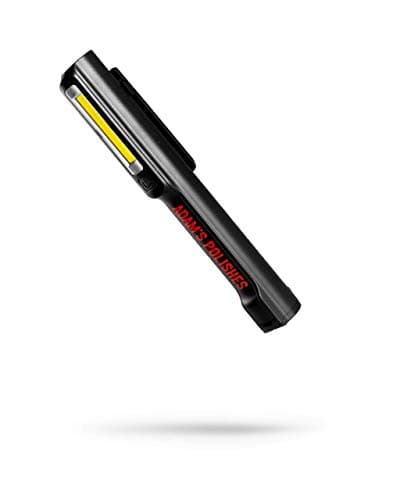
Adam's Polishes Adam's Swirl Finder Flashlight
Adam's Swirl Finder Flashlight

A 170-lumen pocket torch with a tight, hard-edged beam — not a color-match tool, but the cheapest thing that will show you swirls you cannot otherwise see, which is most of the job.

Finding swirls before and after a pass, for the price of a bottle of polish
7.4
$14.44Amazon
02
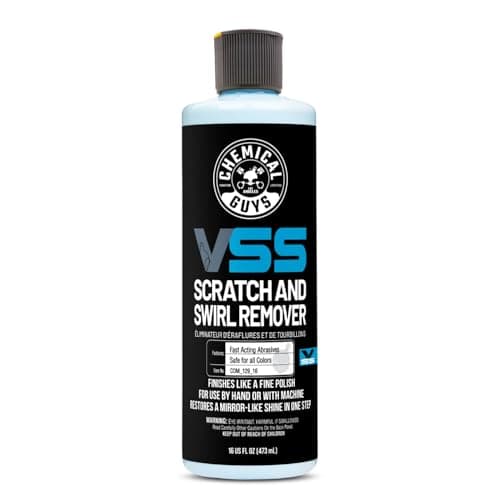
Chemical Guys Chemical Guys VSS One-Step Scratch & Swirl Remover
Chemical Guys VSS One-Step Scratch & Swirl Remover

A true one-step: it cuts light-to-moderate defects and then finishes with enough gloss to skip a separate polish, which is exactly what most weekend correction jobs need.

A one-and-done light correction step
8.0
$21.99Amazon
03
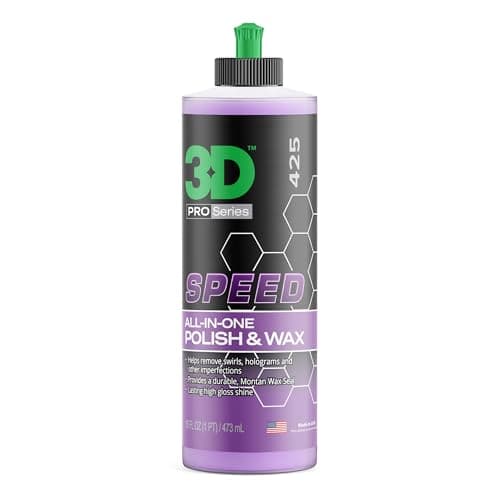
3D Products 3D Speed All-In-One Polish & Wax (16 oz)
3D Speed All-In-One Polish & Wax (16 oz)

A genuine all-in-one rather than a wax with a marketing claim: real polishing abrasives remove light swirls, and a clear-coat-safe sealant goes down in the same pass on the same pad.

One machine pass that corrects lightly and protects at the same time
8.1
$31.99Amazon
04
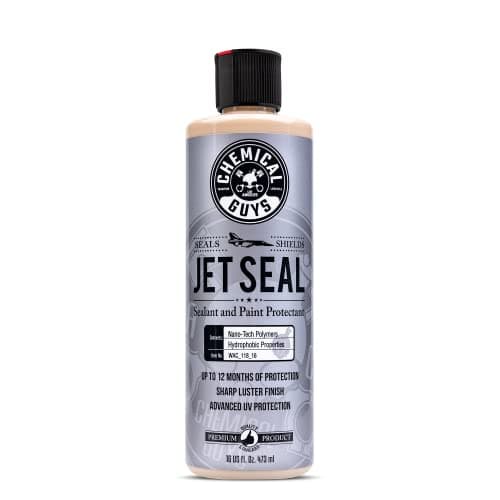
Chemical Guys Chemical Guys JetSeal Anti-Corrosion Paint Sealant
Chemical Guys JetSeal Anti-Corrosion Paint Sealant

The long-haul synthetic sealant here: it bonds to the clear coat rather than sitting on it like carnauba, which is why a single application carries protection through a season rather than a month.

Season-long synthetic protection under a wax topper
8.0
$39.99Amazon

#ad · Live prices from the Amazon Product API, as of Sep 18, 2026. Where we have no verified live price, we show none — we would rather leave a gap than print a number that has rotted.

In detail

The picks, in full

01
Adam's Polishes Adam's Swirl Finder Flashlight

Finding swirls before and after a pass, for the price of a bottle of polish

Adam's Swirl Finder Flashlight

170 lumensFocused beamPocket-sizedBattery powered
7.4/10

A 170-lumen pocket torch with a tight, hard-edged beam — not a color-match tool, but the cheapest thing that will show you swirls you cannot otherwise see, which is most of the job.

Defect visibility
7.6
Color accuracy
5
Build & runtime
7.4
Value
9.6

Pros

  • Costs less than almost anything else on this site and still changes what you can see
  • Tight beam throws hard shadows, which is exactly what reveals fine scratches
  • Small enough to keep in a pocket while you work

Cons

  • No color temperature control and no published CRI figure
  • Too small and too dim to light a whole panel at once

Don't buy this if…

you need to color-match a repair — this finds defects, it does not judge color.

$14.44View on Amazon

Price as of Sep 18, 2026. Prices change — Amazon's is the one that counts.

#ad · we may earn a commission from this link to Adam's Swirl Finder Flashlight

02
Chemical Guys Chemical Guys VSS One-Step Scratch & Swirl Remover

A one-and-done light correction step

Chemical Guys VSS One-Step Scratch & Swirl Remover

One-step cut + finishMachine friendlyBody-shop safeLight–moderate cut
8.0/10

A true one-step: it cuts light-to-moderate defects and then finishes with enough gloss to skip a separate polish, which is exactly what most weekend correction jobs need.

Cutting power
7.4
Finishing ability
8.2
Ease of use
8.4
Value
8

Pros

  • Cuts and finishes in a single product and pass
  • Refines to a glossy finish, not a hazy one
  • Good on daily-driver defect levels

Cons

  • Not enough bite for heavy oxidation
  • One-steps compromise vs a dedicated cut + polish

Don't buy this if…

the paint is badly neglected — a two-step compound-then-polish will look far better.

$21.99View on Amazon

Price as of Sep 18, 2026. Prices change — Amazon's is the one that counts.

#ad · we may earn a commission from this link to Chemical Guys VSS One-Step Scratch & Swirl Remover

03
3D Products 3D Speed All-In-One Polish & Wax (16 oz)

One machine pass that corrects lightly and protects at the same time

3D Speed All-In-One Polish & Wax (16 oz)

16 ozPolish + sealant in oneMachine or handClear coat safe
8.1/10

A genuine all-in-one rather than a wax with a marketing claim: real polishing abrasives remove light swirls, and a clear-coat-safe sealant goes down in the same pass on the same pad.

Cleaning ability
8.6
Gloss
8.6
Durability
7.6
Value
7.6

Pros

  • Removes light swirls properly, not just fills them
  • Leaves a sealant layer, so no separate protection step is needed
  • Works on a machine or by hand, which most one-steps do not

Cons

  • Priced well above the parts-store cleaner waxes
  • Not enough cut for anything past light-to-moderate defects

Don't buy this if…

your paint is genuinely swirled — a dedicated compound and a separate sealant will do far more.

$31.99View on Amazon

Price as of Sep 18, 2026. Prices change — Amazon's is the one that counts.

#ad · we may earn a commission from this link to 3D Speed All-In-One Polish & Wax (16 oz)

04
Chemical Guys Chemical Guys JetSeal Anti-Corrosion Paint Sealant

Season-long synthetic protection under a wax topper

Chemical Guys JetSeal Anti-Corrosion Paint Sealant

16 ozSynthetic sealantAnti-corrosionHand or machine application
8.0/10

The long-haul synthetic sealant here: it bonds to the clear coat rather than sitting on it like carnauba, which is why a single application carries protection through a season rather than a month.

Durability
9
Looks & warmth
7.4
Ease of application
8.2
Value
7.6

Pros

  • Durability well beyond any carnauba wax
  • Rated for wheels and bare metal as well as paint
  • Takes a carnauba topper cleanly if you want more warmth

Cons

  • The sharpest, most clinical look in this category — some prefer carnauba
  • The most expensive bottle on this page

Don't buy this if…

you love the deep, wet carnauba look — a sealant's shine is deliberately cooler.

$39.99View on Amazon

Price as of Sep 18, 2026. Prices change — Amazon's is the one that counts.

#ad · we may earn a commission from this link to Chemical Guys JetSeal Anti-Corrosion Paint Sealant

Buying for a decision rather than a schedule

The light is the most useful purchase on this page

You cannot make this call in a dim garage under fluorescent tubes, which is why so many people either polish paint that did not need it or live with defects they never saw. A focused swirl-finder light is the cheapest item here and it is the one that actually answers the question. The fuller field, including the color-accurate professional lights, is in our detailing light picks.

Own a one-step before you own a compound

For a maintenance-level correction, a one-step scratch-and-swirl remover or an all-in-one is the right tool and the safer one: enough cut for fresh wash marring, enough refinement to finish glossy, and far less clear coat spent than a compound-and-polish sequence. Buy the heavy stuff only when a test spot proves you need it.

An all-in-one collapses two jobs into one afternoon

For a car that needs a light tidy-up and protection, a single all-in-one pass does both. It will not match a dedicated correction followed by a dedicated sealant, but it is a genuinely good annual routine for a daily driver, and the field is ranked in best car wax and polish.

Spend on protection, because it is what sets the interval

A durable sealant or coating is the thing that pushes your next correction further out. It does not prevent scratches, but it keeps the surface slick so washing needs less pressure, and it means contamination sits on the protection rather than on your clear coat. Our sealant picks and the coating shortlist are the two routes.

Decontaminate before you conclude you need to polish

Rough paint is not the same as defective paint. Iron fallout and bonded road film make a car feel and look tired, and both come off chemically and mechanically without touching the clear coat. Our iron remover picks and the clay bar shortlist cover a step that costs no clear coat at all and frequently removes the reason you were reaching for a polisher.
How we picked

We do not run a testing lab

We compiled published specifications, manufacturer data sheets and aggregated owner reviews, computed the cost of ownership from real sizes and coverage, then scored each product against a published rubric. The scores are judgments from documented research — they are not measurements we took, because we do not own a lab and we are not going to pretend we do. Where a number came from someone else, we name them and link them in Sources.

Questions

Frequently asked

How often should you polish your car?
Not on a schedule. Polishing removes clear coat permanently, so it is a decision rather than a habit: inspect the paint two or three times a year under a hard light after washing and decontaminating, and correct only when there is a defect you mind enough to spend clear coat on. In practice a carefully hand-washed daily driver tends to want a light correction every year or two, and a garaged, coated car far less often.
Is polishing your car bad for the paint?
Polishing is subtractive by design — that is the mechanism, not a side effect. A single light pass costs very little, and a well-maintained car can be corrected several times over its life without trouble. The damage comes from polishing on a calendar, escalating to heavy compounds without diagnosing, and correcting defects that were not worth removing in the first place.
How is polishing different from waxing?
Direction. A wax adds a sacrificial layer on top of the paint, which is why it can be reapplied indefinitely on a three-month rhythm. A polish removes a microscopic layer of clear coat to level out defects, which is permanent and finite. Wax on a schedule; polish on evidence.
How many times can a car be polished?
There is no universal number and we will not invent one. Factory clear coat thickness varies by manufacturer, by panel and by whether a panel has ever been repainted, so any published count would be wrong for most cars. The useful discipline is to correct only when a defect justifies it, with the mildest combination that actually works, and to protect the result so it does not need repeating next year.
Should I polish my car before applying a ceramic coating?
Yes, and this is the one case where polishing is driven by an event rather than by inspection. A coating is faithful — it preserves the surface exactly as it is on install day for years, including swirls and haze. Correct once, properly, immediately before coating, then let the coating carry the finish forward.
How do I make a correction last longer?
Change how the car is washed, and keep a durable layer of protection on it. Almost every swirl on a daily driver is installed during washing and drying, so a two-bucket routine, a thorough pre-rinse and a plush drying towel do more for the interval than any product. Protection helps because a slick surface needs less pressure to clean, and less pressure means fewer new scratches.

Keep reading

Receipts

Sources

We do not run a testing lab, and we do not pretend to. Where a measured number came from someone else's lab, we name them and link them. Where we could not verify something, we say so on the page rather than quietly leaving it out. Read our full method.