Here is the uncomfortable fact behind most of this site: the overwhelming majority of swirl marks on a car were not put there by the weather, the road or bad luck. They were installed by washing and drying — by dragging grit across paint with a mitt, a sponge, a brush or a towel. Which means the most valuable page in a paint correction library is the one about not needing paint correction.
The mechanism is simple and it explains every rule below. Dirt on a car is abrasive. Any time you press something against the paint while abrasive particles are between the two, you cut the clear coat. Every technique here does one of three things: remove grit before anything touches the paint, keep grit from returning to the paint once removed, or reduce the pressure required to clean.
The routine
- Work in shade, on a cool panel. Soap and water drying on hot paint leaves mineral deposits and forces you to work faster than the process allows. If the panel is warm to the touch, wait.
- Wheels and tires first, with their own tools. Brake dust is ferrous and genuinely sharp, and a mitt that has touched a wheel should never touch paint again that day. Separate bucket, separate brushes, done before the paint so overspray gets rinsed off afterward.
- Pre-rinse thoroughly, top to bottom. This is the step that removes the most dangerous material, and it is the step people skip. Anything a hose carries away is grit that never gets a chance to be dragged across a panel.
- Two buckets, both with grit guards. One with soap solution, one with plain rinse water. Load the mitt from the soap bucket, wash a section, then rinse the mitt in the plain water — scrubbing it against the grit guard — before it goes back into the soap. The rinse bucket is where the dirt ends up, which is precisely the point: a single-bucket wash returns every particle you just collected straight back to the paint.
- Top down, one section at a time. The roof, glass and upper panels are cleanest; rockers, lower doors and the rear bumper are filthiest. Working downward means you are never carrying lower-panel grit onto upper panels.
- Straight overlapping lines, not circles. If a particle does get under the mitt, a straight-line pass leaves a single fine line that is far less visible than a circular one. Circular motion is exactly what produces the classic spiderweb pattern under sunlight.
- Let the mitt float. Pressure is what turns a particle into a scratch. Let soap and the weight of the mitt do the work; if a spot is not coming off, re-soak it rather than scrubbing.
- Final rinse, then dry immediately. Never let a car air-dry — that is how water spots form, and water spots eventually become a correction job. Use a large, plush drying towel, laid flat and drawn across the panel, or blotted rather than rubbed.
The five habits that cause the most damage
- Automatic brush washes. The worst thing you can do to a painted surface, by a distance. The brushes hold grit from every car that went through before yours. Touchless washes are far safer and use stronger chemistry, which is a fair trade for a winter car.
- Sponges. A flat sponge face has nowhere for grit to go, so anything it picks up stays pressed between the sponge and your paint. A deep-pile microfiber or lambswool mitt lets particles move up into the nap and away from the surface.
- One bucket. Every rinse of a dirty mitt into your soap bucket contaminates the whole wash. The second bucket costs almost nothing and is the single highest-value change most people can make.
- Dish soap. It strips wax and sealant, it is not pH-neutral, and a car with no protection needs more pressure to clean, which causes more marring. Use a dedicated car shampoo — our soap picks rank the field.
- Drying with whatever is to hand. Bath towels, chamois and old microfiber that has been washed with fabric softener all cause marring. Drying happens with zero lubrication, on a surface you have just spent an hour cleaning, so it is arguably the highest-risk step in the whole process.
Rinseless, waterless and the no-hose situation
If you do not have a hose — an apartment, a shared lot, a water restriction — the honest hierarchy is: a proper two-bucket wash is best, a rinseless wash with plenty of clean towels is a good second, and a waterless wash is acceptable only on a car that is lightly dusty rather than genuinely dirty. The risk in both alternatives is the same: without a pre-rinse, you are relying entirely on lubrication to carry grit safely away. Use more product than feels necessary, use one towel face per panel, and never go back over a section with a face that has already been used.
Protection is part of wash safety
This is the part people miss. A waxed, sealed or coated panel releases dirt with less effort, and less effort means less pressure, and less pressure means fewer scratches. The protective layer is not just about beading and gloss — it is genuinely a wash-safety measure, and it is why a car that is kept protected needs correcting so much less often than one that is not. That argument is worked through in how often should you polish your car.
Prices for everything below are live from the retailer and stamped with the date we verified them. Where we have no verified price we show none rather than a stale one.
The short answer
| # | Product | Best for | Score | Price |
|---|
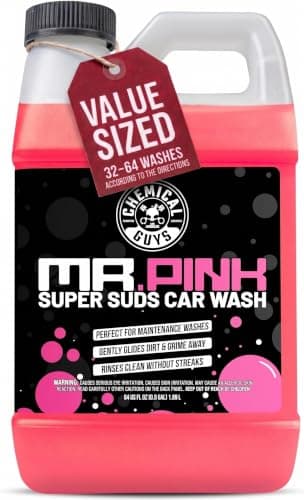
| 01 | | A weekly maintenance wash over an existing layer of protection | | $27.99·Amazon |
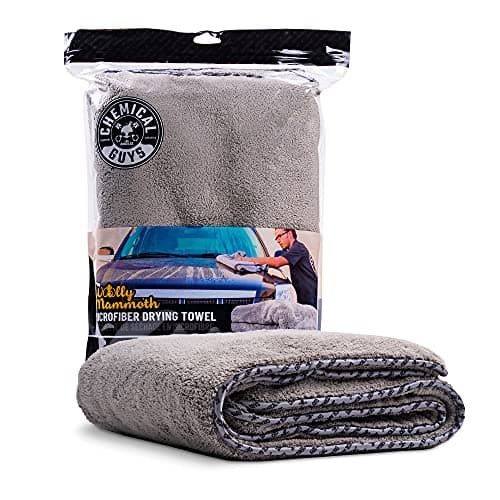
| 02 | | Drying a whole car in one or two passes | | $21.99·Amazon |
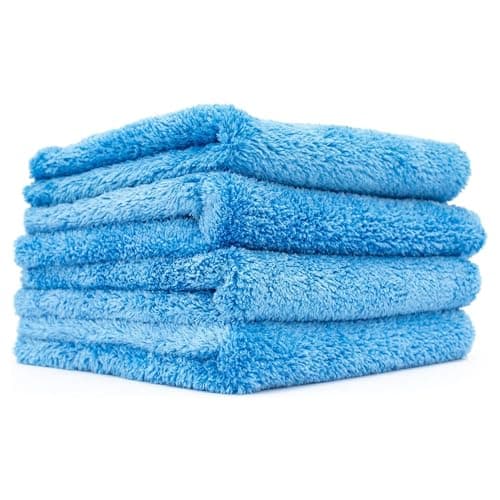
| 03 | | Buffing wax and coatings off dark, delicate paint | | $25.95·Amazon |
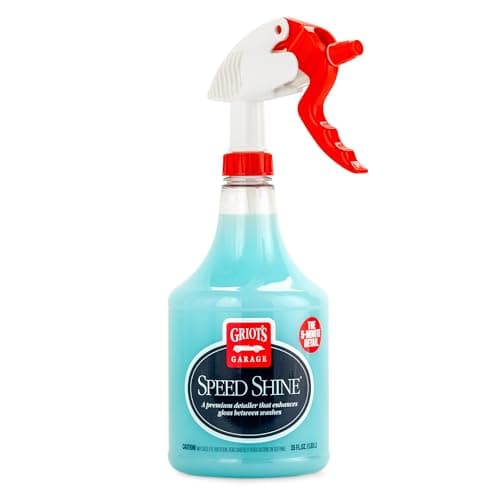
| 04 | Griot's Garage Speed Shine (35 oz)The detail spray most people who own a clay bar already have: very slippery, safe on every exterior surface including trim and wheels, and the default clay lubricant in half the tutorials online. | Clay lubricant and a between-wash wipe-down, from one bottle | | $31.69·Amazon |
#ad · Live prices from the Amazon Product API, as of Sep 18, 2026. Where we have no verified live price, we show none — we would rather leave a gap than print a number that has rotted.
In detail
A weekly maintenance wash over an existing layer of protection
64 ozpH balancedFoam cannon or bucketWax and coating safe
The default enthusiast shampoo: high-foaming, pH-balanced and safe over wax, sealant or a coating, in a bottle size that lasts most people a season of weekly washes.
- Cleaning power
- 7.8
- Foam & lubricity
- 9
- Coating safety
- 9.2
- Value
- 8.6
Pros
- +Foams heavily enough to give a foam cannon something to work with
- +Will not strip the wax, sealant or coating you spent an afternoon applying
- +Dilutes far enough that the cost per wash is small
Cons
- −Little cleaning power against road film that has been left for months
- −Heavy fragrance that not everyone wants
Don't buy this if…
…you are washing before a full correction — you want a stripping wash, not this.
Drying a whole car in one or two passes
36 x 25 inDedicated drying towelDual-sided pileSingle large sheet
One sheet big enough to dry most of a car without re-wringing — and drying is where towel-inflicted swirls actually happen, so this is the towel that most protects a correction you just paid for in hours.
- Absorbency
- 9.2
- Plushness
- 8.6
- Durability
- 8.2
- Value
- 7.8
Pros
- +Large enough to sheet water off a panel in one pull
- +Deep pile carries water rather than pushing grit around
- +Replaces a stack of small towels with one
Cons
- −Bulky to wring out and slow to dry between uses
- −Costs more than a multi-pack of general-purpose towels
Don't buy this if…
…you already own a good drying towel — one is genuinely enough.
Buffing wax and coatings off dark, delicate paint
500 GSM16 x 16 inEdgeless (no border)4-pack
The towel enthusiasts standardize on: 500 GSM of Korean 70/30 microfiber with no stitched border at all, which removes the single most common cause of towel-inflicted scratches.
- Absorbency
- 8.6
- Plushness
- 9.2
- Durability
- 8.8
- Value
- 7.4
Pros
- +Edgeless construction removes the hard seam that marrs paint
- +Dense 500 GSM pile lifts residue instead of dragging it
- +Holds its plushness through many wash cycles
Cons
- −Several times the cost per towel of a bulk multi-pack
- −Too good to waste on wheels, engine bays or interiors
Don't buy this if…
…you need a big pile of towels for dirty jobs — buy these for paint and something cheap for everything else.
Clay lubricant and a between-wash wipe-down, from one bottle
35 ozAll exterior surfacesClay lubricantTrim and wheel safe
The detail spray most people who own a clay bar already have: very slippery, safe on every exterior surface including trim and wheels, and the default clay lubricant in half the tutorials online.
- Lubricity
- 9.2
- Gloss added
- 8.4
- Streak resistance
- 8.8
- Value
- 8.8
Pros
- +Slippery enough to clay with safely, which not every quick detailer is
- +Safe on trim, glass and wheels as well as paint
- +Large bottle at a sensible price
Cons
- −Adds gloss but essentially no durable protection
- −Not the product for a genuinely dirty car
Don't buy this if…
…you want a spray that also protects — a ceramic spray does both jobs at once.
What to buy, in order of how much damage it prevents
Two buckets and grit guards, first
They are the cheapest items involved and they prevent more marring than anything else on this page. We do not rank buckets or grit guards — they are not something we carry in the catalog and we are not going to invent a pick to fill the slot — but any two five-gallon buckets and a pair of guards will do the job. Buy them before you buy a better shampoo.
A pH-neutral shampoo, not a wash-and-wax
Neutral pH matters because you want to clean the dirt without stripping the protection that is making the wash safer. Wash-and-wax shampoos are fine on an unprotected car and pointless on a coated one, where they can dull the coating's own behavior. Our soap picks flag which is which.
Spend properly on drying
Drying is the least lubricated contact of the whole process and it is where a lot of marring happens. A large, genuinely plush drying towel that absorbs a whole car in one or two passes beats three mediocre towels, because every additional pass is another opportunity. The field is ranked in best microfiber towels for detailing.
Use a drying aid
A light mist of detail spray on a wet panel before you draw the towel across adds lubrication exactly where there is none, and leaves a little gloss behind. It is the cheapest upgrade to the riskiest step, and the field is in best detail spray.
Keep separate towels for paint and everything else
Wheels, jambs, exhaust tips and engine bays contaminate a towel permanently. Colour-code them and never let a wheel towel near paint. Cheap towels are entirely adequate for the dirty jobs, which is the argument for owning both grades rather than one.
Wash your towels properly
No fabric softener, no dryer sheets, no washing them with cotton. Softener coats microfiber fibers and destroys both absorbency and safety, and cotton lint embeds in the nap. A towel that has been through a softener cycle is a marring risk rather than a cleaning tool.
How we picked
We compiled published specifications, manufacturer data sheets and aggregated owner reviews, computed the cost of ownership from real sizes and coverage, then scored each product against a published rubric. The scores are judgments from documented research — they are not measurements we took, because we do not own a lab and we are not going to pretend we do. Where a number came from someone else, we name them and link them in Sources.
Questions
What is the two-bucket wash method?+
Two buckets, both fitted with grit guards: one holding your soap solution, one holding plain rinse water. Load the mitt from the soap bucket, wash one section, then rinse the mitt in the plain water and scrub it against the grit guard before reloading it with soap. The dirt ends up in the rinse bucket instead of going back onto your paint, which is what a single-bucket wash does every time you dunk the mitt.
Do automatic car washes scratch your paint?+
Brush-based automatic washes do, reliably — the brushes carry grit from every vehicle that went through before yours and press it against your clear coat. Touchless automatic washes are far safer for the paint because nothing physically contacts it; the trade is stronger chemistry, which will shorten the life of a wax or sealant. For a winter daily driver a touchless wash is a reasonable compromise.
Why should I not use a sponge to wash my car?+
A flat sponge face gives grit nowhere to go, so any particle it picks up stays trapped between the sponge and the paint for the rest of the pass. A deep-pile microfiber or lambswool mitt lets particles travel up into the nap and away from the surface. It is the single most important property of a wash mitt and sponges do not have it.
Is it bad to let a car air-dry?+
Yes, for two reasons. Evaporating water leaves behind its dissolved minerals as water spots, and left long enough on a hot panel those deposits etch into the clear coat and become a polishing job. Dry immediately after the final rinse with a large plush drying towel, ideally with a light mist of detail spray for lubrication.
Can you wash a car without scratching it if you have no hose?+
You can get close. A rinseless wash with plenty of clean towels — one face per panel, never reusing a face — is a good substitute, and a waterless wash is acceptable on a car that is dusty rather than genuinely dirty. The risk in both is that you have no pre-rinse, so lubrication is the only thing carrying grit safely away. Use more product than feels necessary.
Does washing in straight lines really matter?+
Yes, and not because straight lines prevent scratches. If a particle does get under the mitt it will mark the paint either way, but a straight-line pass leaves a single fine line that catches light from one angle, while a circular motion leaves an arc that catches light from many. That is why wash marring shows up as the classic spiderweb pattern in sunlight.
Receipts
We do not run a testing lab, and we do not pretend to. Where a measured number came from someone else's lab, we name them and link them. Where we could not verify something, we say so on the page rather than quietly leaving it out. Read our full method.