Skip to content
Pad & Polish

GUIDES · Guides

How to Polish a Car by Hand

It works, within limits. Here is what those limits are, and how to get the most out of an afternoon and a foam applicator.

By Stephen V.Updated How we research
#ad

We earn a commission when you buy through our Amazon links, at no extra cost to you. It never affects our rankings, and we say so when the cheaper product is the better buy. How this works.

Hand polishing has a bad reputation among enthusiasts, and it is only half deserved. It genuinely will not do what a machine does — the physics are not close — but there are real situations where it is the right choice, and doing it properly produces a noticeably better result than doing it the way most people do.

Start with the honest limitation. A dual-action polisher moves a pad through thousands of orbits a minute under consistent pressure, and that combination of speed and consistency is what breaks a compound's abrasives down properly and levels clear coat evenly. Your hand cannot generate it. Hand polishing therefore removes far less, covers far less area per hour, and is much harder to keep even.

When hand polishing is the right call

  • One scratch or one small area. Setting up a machine for a three-inch mark is more effort than fixing it by hand.
  • Places a machine cannot reach. Around badges, in door shuts, inside a fuel filler recess, along the edge of a spoiler. Even people who own two polishers do these by hand.
  • Applying a cleaner wax or a one-step. Many are formulated specifically for hand use, and they are doing chemical cleaning as much as abrasive work.
  • You do not own a polisher and are not going to buy one. Some hand polishing beats no polishing.

And when it is not: a whole car full of swirls. That is many hours of work for a patchy result, and it is the case a dual-action polisher was invented for.

Product choice matters more than technique

This is where most hand polishing fails before it starts. Compounds fall into two rough families. Diminishing abrasives start coarse and break down finer as they are worked — and that breakdown depends on friction and heat a machine supplies. Worked by hand, they often never break down properly, so they either under-correct or leave their own marring behind.

Non-diminishing abrasives hold a constant cut for as long as you work them, which suits hand pressure far better. Products explicitly labeled for hand or machine use, and hand polishing kits sold with their own applicator, are the ones to look for. If the label only mentions machine use, believe it.

The applicator is not optional

A folded microfiber towel is the wrong tool. It has no body, so all your pressure goes through your fingertips in three narrow strips, and the result is a polished stripe pattern rather than an evenly corrected panel.

A proper foam applicator pad spreads pressure across its whole face. Use a firmer foam for compounding and a softer one for finishing, keep them separate, and never use a pad that has had compound in it for a finishing step — trace abrasive survives washing and will put marring straight back into paint you just refined.

How to actually do it

  1. Wash and decontaminate first. Non-negotiable. Rubbing compound over bonded grit grinds that grit into the paint. Clay it — how to clay bar a car.
  2. Work in the shade, on cool paint. Compound drying on a hot panel is unpleasant to remove and stops cutting.
  3. Small sections. About a foot square. Larger and the product dries before you have finished working it.
  4. A few pea-sized drops on the applicator, not on the paint. Spread first with no pressure, then work.
  5. Straight overlapping lines, then cross-hatch. Passes along the panel, then across it. Straight-line motion means any mark you leave is far less visible than a circular one — this is the one point where hand technique genuinely differs from machine technique.
  6. Firm, even pressure, and keep going. Thirty seconds to a minute per section, watching the product go from opaque to nearly clear. That transition is the abrasives finishing their work.
  7. Buff off with a clean microfiber before the residue dries fully. Turn the towel often.
  8. Inspect, then decide. Under a strong light at a raking angle. One more pass, or move on. Do not do a fourth pass out of hope — every pass spends clear coat.

Refine, then protect

A compounding pass leaves haze. On white or silver you may not see it; on black or dark metallic it is obvious in sunlight. A fine finishing polish on a soft applicator, worked lightly, clears it.

Then protect. Whatever wax or sealant was on that panel came off with the compound, and bare clear coat should not be left bare. The order matters and it is covered in car wax vs polish; applying it by hand is in how to wax a car by hand.

What to expect, realistically

Light swirls, water spots and dullness will improve noticeably. Moderate swirls will improve somewhat. Deeper scratches will not move, and no amount of additional effort will change that — at which point the decision is a machine or a professional, not more pressure. Knowing where that line is before you start is what makes an afternoon of hand polishing satisfying rather than frustrating.
The short answer

Quick picks

#ProductBest forScorePrice
01
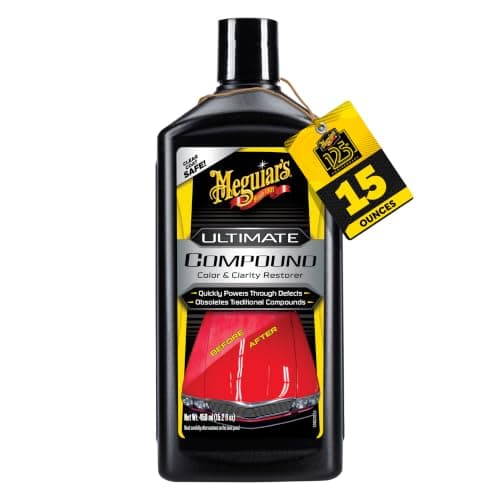
Meguiar's Meguiar's Ultimate Compound
Meguiar's Ultimate Compound

The compound to start with: clear-coat safe, works by hand or machine, and removes moderate swirls and oxidation while leaving a finish glossy enough that many people skip a follow-up polish.

Most swirl and oxidation removal, by hand or machine
8.6
$13.97Amazon
02
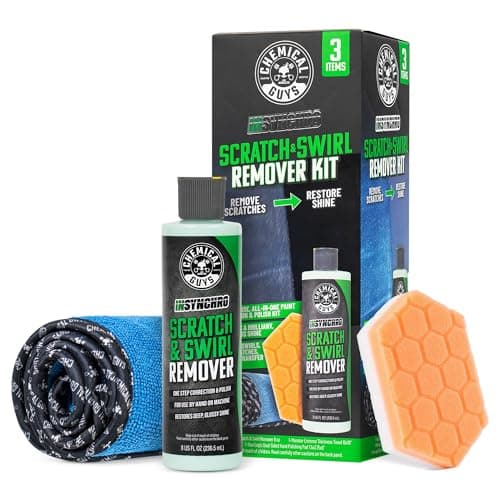
Chemical Guys Chemical Guys Insynchro Scratch & Swirl Remover Hand Kit (8 oz)
Chemical Guys Insynchro Scratch & Swirl Remover Hand Kit (8 oz)

A polish sold with the hand pad it is meant to be used with — which matters, because hand polishing fails far more often from the wrong applicator than from the wrong bottle.

Hand-correcting a single scratch or a small panel
7.8
$24.99Amazon
03
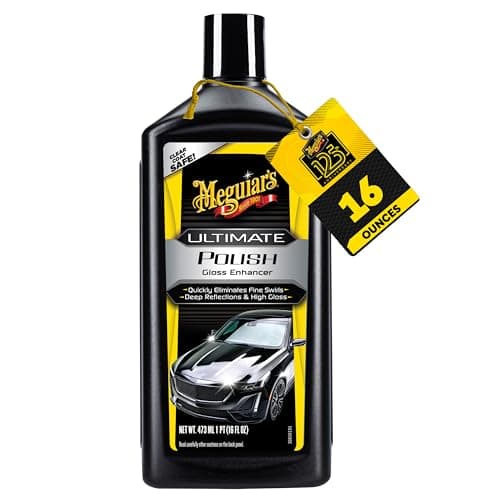
Meguiar's Meguiar's Ultimate Polish
Meguiar's Ultimate Polish

The gloss step, not a correction step: an extremely fine polish that darkens and deepens paint after compounding, which is exactly what black and dark-metallic finishes need before wax goes on.

The gloss pass after compounding, especially on dark paint
7.7
$9.67Amazon
04
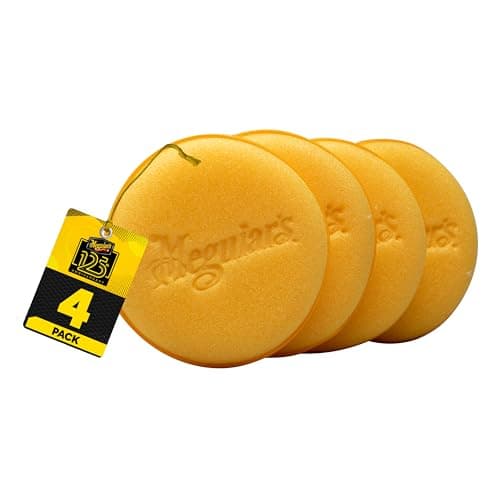
Meguiar's Meguiar's 4" Foam Applicator Pads (4 Pack)
Meguiar's 4" Foam Applicator Pads (4 Pack)

Four soft foam rounds for a few dollars — the correct way to apply a wax, polish or dressing by hand, and cheap enough that you reach for a fresh one instead of a contaminated one.

Applying wax, polish or dressing by hand
8.5
$5.95Amazon

#ad · Live prices from the Amazon Product API, as of Sep 4, 2026. Where we have no verified live price, we show none — we would rather leave a gap than print a number that has rotted.

In detail

The picks, in full

01
Meguiar's Meguiar's Ultimate Compound

Most swirl and oxidation removal, by hand or machine

Meguiar's Ultimate Compound

Clear-coat safeHand or machineNo fillers15.2 oz
8.6/10

The compound to start with: clear-coat safe, works by hand or machine, and removes moderate swirls and oxidation while leaving a finish glossy enough that many people skip a follow-up polish.

Cutting power
7.6
Finishing ability
8.6
Ease of use
9
Value
9

Pros

  • Genuinely clear-coat safe and beginner-forgiving
  • Corrects moderate defects yet finishes down glossy
  • Works by hand when you don't have a machine

Cons

  • Not aggressive enough for deep scratches or heavy oxidation
  • Best results still need a machine

Don't buy this if…

your paint has heavy sanding marks or severe oxidation — step up to a dedicated cutting compound.

$13.97View on Amazon

Price as of Sep 4, 2026. Prices change — Amazon's is the one that counts.

#ad · we may earn a commission from this link to Meguiar's Ultimate Compound

02
Chemical Guys Chemical Guys Insynchro Scratch & Swirl Remover Hand Kit (8 oz)

Hand-correcting a single scratch or a small panel

Chemical Guys Insynchro Scratch & Swirl Remover Hand Kit (8 oz)

8 ozHand polishing kitPad includedScratch and swirl removal
7.8/10

A polish sold with the hand pad it is meant to be used with — which matters, because hand polishing fails far more often from the wrong applicator than from the wrong bottle.

Cut
6.4
Finish
8
Ease of use
8.8
Value
8

Pros

  • Product and applicator are matched, so nothing is improvised
  • Small size suits spot repairs rather than whole cars
  • Works where a machine physically cannot reach

Cons

  • Hand correction is slow and covers very little area per hour
  • 8 oz will not do a whole car

Don't buy this if…

you own a dual-action polisher — the machine does this faster and better.

$24.99View on Amazon

Price as of Sep 4, 2026. Prices change — Amazon's is the one that counts.

#ad · we may earn a commission from this link to Chemical Guys Insynchro Scratch & Swirl Remover Hand Kit (8 oz)

03
Meguiar's Meguiar's Ultimate Polish

The gloss pass after compounding, especially on dark paint

Meguiar's Ultimate Polish

16 ozFine finishing polishHand or DAUse before wax or sealant
7.7/10

The gloss step, not a correction step: an extremely fine polish that darkens and deepens paint after compounding, which is exactly what black and dark-metallic finishes need before wax goes on.

Cutting power
3
Finish quality
9.2
Ease of use
9.2
Value
9.2

Pros

  • Adds visible depth to dark paint that compound alone leaves flat
  • Almost impossible to over-correct with — very low cut
  • One of the cheapest bottles in the whole category

Cons

  • Removes essentially no defects on its own
  • Adds a whole extra step to an already long job

Don't buy this if…

your paint still has swirls — compound first, then come back to this.

$9.67View on Amazon

$12.9926% off

Price as of Sep 4, 2026. Prices change — Amazon's is the one that counts.

#ad · we may earn a commission from this link to Meguiar's Ultimate Polish

04
Meguiar's Meguiar's 4" Foam Applicator Pads (4 Pack)

Applying wax, polish or dressing by hand

Meguiar's 4" Foam Applicator Pads (4 Pack)

4-inch diameter4 per packSoft foamWashable
8.5/10

Four soft foam rounds for a few dollars — the correct way to apply a wax, polish or dressing by hand, and cheap enough that you reach for a fresh one instead of a contaminated one.

Application evenness
8.6
Comfort
8
Durability
8
Value
9.4

Pros

  • Spreads product far more evenly than a folded towel
  • Cheap enough to keep separate pads for separate products
  • Washable and reusable for a long time

Cons

  • Foam soaks up product, so the first pass uses more than you expect
  • Too soft to do any real cutting by hand

Don't buy this if…

you are applying a ceramic coating — those need the suede block in the coating kit.

$5.95View on Amazon

$9.0034% off

Price as of Sep 4, 2026. Prices change — Amazon's is the one that counts.

#ad · we may earn a commission from this link to Meguiar's 4" Foam Applicator Pads (4 Pack)

How we picked

We do not run a testing lab

We compiled published specifications, manufacturer data sheets and aggregated owner reviews, computed the cost of ownership from real sizes and coverage, then scored each product against a published rubric. The scores are judgments from documented research — they are not measurements we took, because we do not own a lab and we are not going to pretend we do. Where a number came from someone else, we name them and link them in Sources.

Questions

Frequently asked

Can you polish a car by hand effectively?
For a small area, a single scratch, or somewhere a machine cannot reach, yes. Across a whole car it is many hours of work for a patchy result — that is what a dual-action polisher exists for.
What is the best compound to use by hand?
One that explicitly supports hand use. Compounds with diminishing abrasives rely on machine friction and heat to break down properly, and worked by hand they often under-correct or leave marring. Hand polishing kits sold with a matched applicator are the safest choice.
Should you polish in circles or straight lines by hand?
Straight overlapping lines, then a cross-hatch pass in the other direction. Circular motion is what produces the circular swirl pattern that is so visible in sunlight — straight marks are far less noticeable.
Can you use a microfiber towel to polish by hand?
It is the most common mistake. A towel has no body, so pressure concentrates under your fingertips and you polish stripes rather than the panel. A foam applicator pad spreads pressure evenly across its face.
How long does it take to polish a car by hand?
Realistically several hours for a full car, and the result will be less even than an hour with a machine. Budget the time for one or two panels rather than the whole vehicle in a single session.

Keep reading

Receipts

Sources

We do not run a testing lab, and we do not pretend to. Where a measured number came from someone else's lab, we name them and link them. Where we could not verify something, we say so on the page rather than quietly leaving it out. Read our full method.