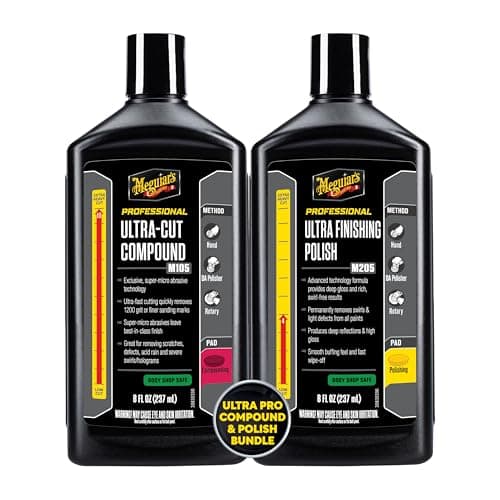
The single most expensive mistake in this hobby is buying a polisher and nothing else. A machine corrects nothing on its own — the pad and the compound loaded onto it do all of the actual cutting, and a good machine running whatever foam disc came free in the box produces a worse result than a cheap machine running the right consumables.
Kits exist to solve that, and they solve it partially. There is no single box on the market that contains everything a correction genuinely needs, and any page claiming otherwise is selling you something. What the kits below do is remove one whole category of decision at a time, and the useful skill is knowing which category each one covers.
What a complete correction setup actually contains
Five things, and most kits cover two or three:
- A machine — a dual-action polisher, plus a backing plate sized to your pads. See the beginner picks.
- Pads — at minimum a cutting pad and a finishing pad, ideally two or three of each so you are not running a saturated pad through a whole car.
- Chemicals — a compound and a polish, matched to the defects you have.
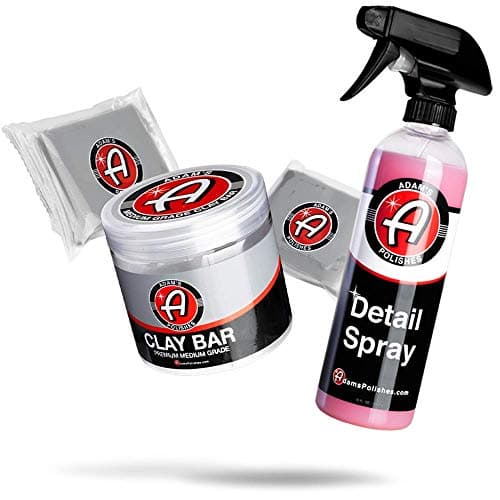
- Decontamination — an iron remover and clay, which happen before any of the above.
- Towels — clean, edgeless microfiber, and more of it than you expect. See the towel picks.
Note that decontamination comes first in the process and last in most people's shopping. Skipping it means dragging embedded grit under a spinning pad, which adds scratches to the panel you are trying to fix — which is why a decon kit is on this page at all.
The three shapes of kit
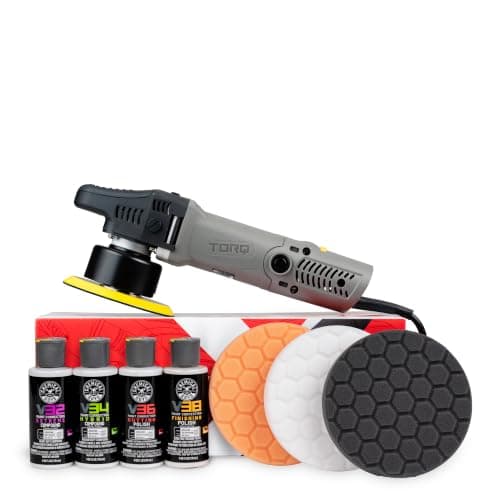
Machine kits bundle a polisher with starter pads and often a compound. They are the right buy if you own nothing, and their weakness is that the bundled consumables are basic — you will replace the pads long before the machine.
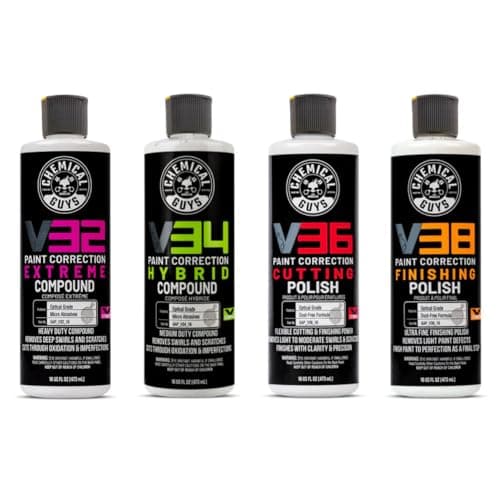
Chemical kits bundle two or four products covering the cut-to-finish ladder. They are the right buy if you already have a machine and pads, and they are where the best value in this category sits, because the chemicals are full-size professional products rather than sample bottles.
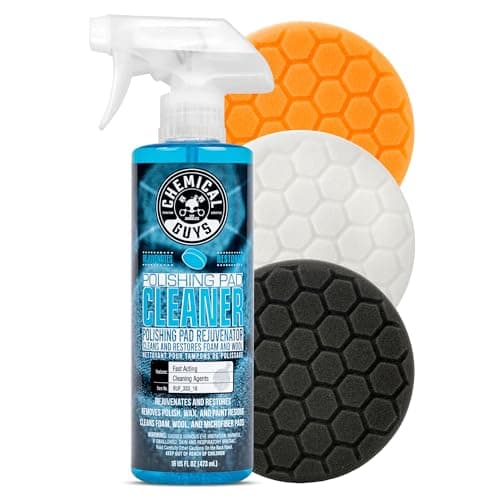
Pad kits bundle a cut/polish/finish set plus, usually, a pad cleaner. They are the right buy if you have a machine and compound but inherited whatever pads came in the box.
Buy the kit that fills your actual gap
The reason kits get a bad reputation is overlap. Buying a machine kit when you already have pads and compound means paying for a second set of both, and the bundled versions are rarely as good as what you already own. Work out which of the five categories above you are actually missing, then buy the kit that covers it — that is the entire decision.
If you are missing everything and want the shortest path: a machine kit plus a decon kit covers you for a first correction, and you can upgrade pads and chemicals individually as you learn what your paint needs. The technique side is in how to polish a car step by step, and paint correction for beginners sets realistic expectations for a first attempt.
The alternative to a boxed kit is assembling one, which gets you the best version of each item and no duplicates of things you already own. Our exterior detailing product list does that: ten products, one per job, in workflow order, with the order of spending priority if you cannot buy it all at once.
How to choose a paint correction kit
Inventory what you own first. Everything else follows from the gap.
Check pad and plate compatibility
The most common kit mismatch: pads that do not fit the backing plate you already have. A 5-inch plate wants 5.5-inch pads; a 6-inch plate wants 6- to 6.5-inch pads. A pad kit that does not match your machine is money spent on foam you cannot mount.
Judge the chemicals, not the piece count
"14-piece" and "17-piece" counts usually include applicators, towels and a bucket. Those are not the expensive part. Look at what the actual compounds and polishes are and whether they are full-size — four 16 oz professional bottles is a genuinely different proposition from four 4 oz samples, even if the piece count reads the same.
Beware kits that are mostly wash products
A lot of what is sold as a "detailing kit" is shampoo, wheel cleaner, tire dressing and interior spray. Those are useful products and they are not paint correction. If the goal is removing swirls, a kit without a compound, a polish and a cutting pad is not a correction kit regardless of what the box says.
Where to spend the extra
- Pads — the cheapest upgrade with the most visible effect. Bundled pads are always the weakest part of a machine kit.
- Towels — a cheap towel undoes a good correction on the wipe-off.
- Not the machine, necessarily — the value polishers in best car polisher for the money correct paint perfectly well.
What no kit includes
Good lighting. A handheld inspection light is the difference between correcting defects and guessing at them, and nothing in any box on this page has one. It is the first thing to add after the kit itself.