Polish removes. Wax adds. That is the whole thing, and once it is clear, every other question in this category answers itself.
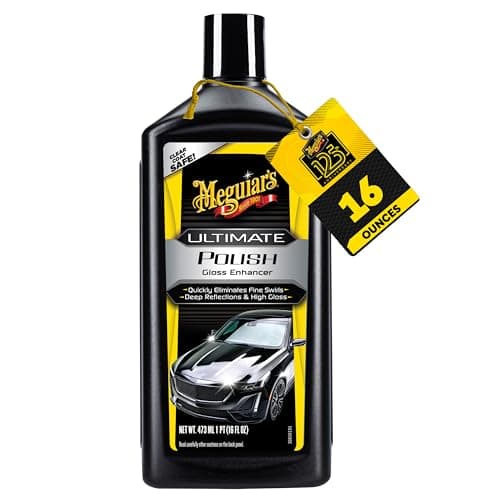
A polish contains abrasives. Worked across paint, they level an extremely thin layer of clear coat so that fine scratches, oxidation and haze are cut down to a flat surface that reflects light cleanly again. Nothing is added; the panel ends up marginally thinner and considerably clearer.
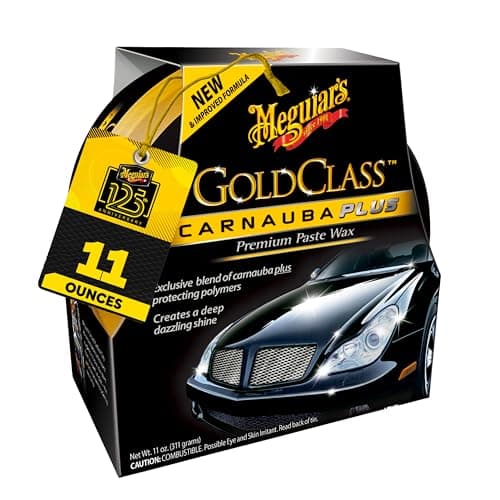
A wax contains no abrasives at all. It lays a sacrificial film — natural carnauba, synthetic polymer, or a blend — on top of the clear coat. That film takes the UV, the rain, the detergent and the road grime instead of your paint, and wears away over weeks or months. Nothing is removed; a layer is added.
The comparison, straight
| | Polish | Wax |
|---|
| What it does | Removes a thin layer of clear coat | Adds a sacrificial layer on top |
| Contains abrasives | Yes | No |
| Fixes swirls and haze | Yes — that is its job | No — it can briefly mask them |
| Protects the paint | No | Yes — that is its job |
| How often | Rarely — once every few years at most | Regularly — every few weeks or months |
| Order | First | Second, over the polished surface |
Why the order is not negotiable
Polish first, wax second. Always.
Polishing after waxing removes the wax you just applied — abrasives do not distinguish between a protective layer and a defect. Every minute spent waxing before polishing is wasted, and worse, the wax residue interferes with how the polish's abrasives break down, so the correction underperforms as well.
Waxing after polishing is the entire point. Freshly polished clear coat is bare and unprotected — it has just had whatever was protecting it removed along with the defects. Leaving it that way is how a beautifully corrected car looks tired again in two months. The whole sequence is in how to polish a car step by step.
Where compound fits in
Compound is polish's more aggressive relative — coarser abrasives, more cut, and it leaves haze of its own that a polish then refines away. The full gradation runs: compound to remove defects, polish to refine the finish, wax or sealant to protect it. Most cars do not need all three. The distinction is worked through in polish vs compound.
Which one does your car need?
Wash the car, dry it, and look at a panel in direct sunlight from about three feet away.
The reflection is sharp, the paint just looks a bit lifeless. It needs wax. There is nothing wrong with the surface — it is unprotected, and protection is what puts the depth back.
You can see a web of fine circular scratches in the reflection. It needs polish, and then wax. Waxing over swirls hides them for about a fortnight and then you are looking at them again.
The paint is dull, chalky or faded rather than scratched. That is oxidation, and a polish or a cleaner wax will lift it. See best car wax and polish.
The products that do both
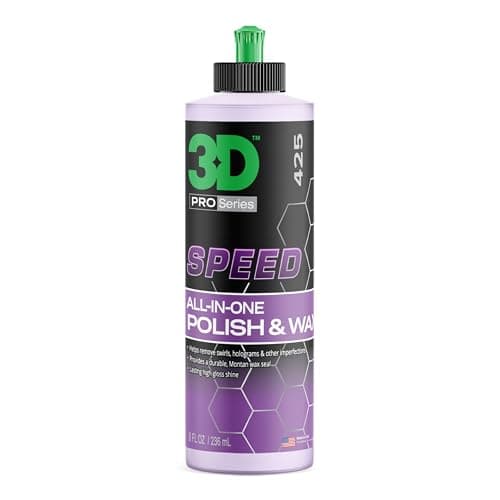
Cleaner waxes and all-in-ones combine mild abrasives with a protective layer, and they are a genuinely sensible purchase for tired paint you want improved in one afternoon. The compromise is real in both directions — milder correction than a dedicated polish, shorter protection than a dedicated wax — but for a car that would otherwise get neither, one pass beats no pass.
Where they mislead is when someone with a properly swirled car buys one expecting correction. It is not enough. That job needs a compound, a machine, and a separate protection step.
How often each one
Wax: every few weeks for carnauba, every few months for a synthetic sealant, driven by how the water behaves rather than the calendar. When water stops beading and starts lying flat, it has gone. See how often to wax a car.
Polish: as rarely as you can get away with. Every polish spends clear coat you never get back, and a car has a finite amount of it. Once every few years, when defects have genuinely accumulated, is a healthy rhythm — see will rubbing compound damage clear coat. Good washing habits are what keep that interval long.