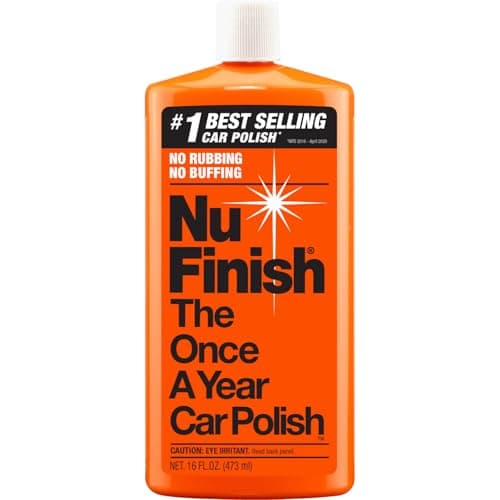
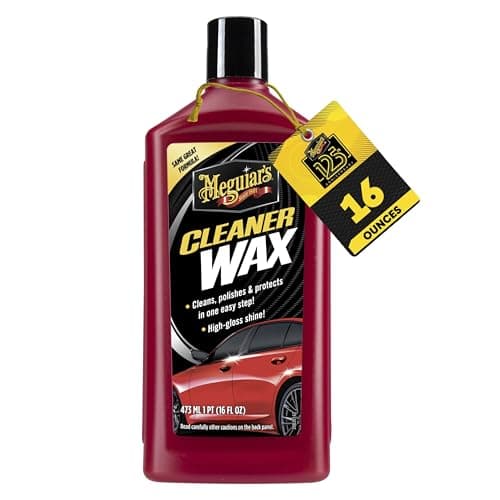
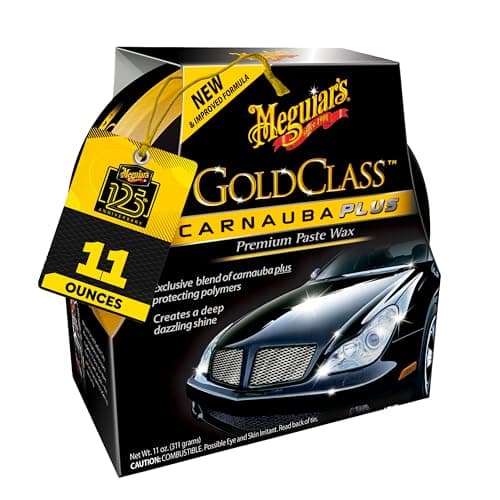
Meguiar's Gold Class Carnauba Plus Paste is the best car wax under $20 for most people — a carnauba blend that puts down the warm, wet look people buy wax for, forgiving enough that a first-timer cannot really get it wrong, and stocked in essentially every parts store in the country. The budget pick is Nu Finish The Once A Year Car Polish, the cheapest bottle on this page and, awkwardly for the price order, the one with the longest protection on it: it contains no wax at all, which is exactly why it outlasts the carnauba products beside it. Every price below comes from the live price layer, and every product here was under $20 as of November 23, 2026.
This page exists because the twenty-dollar line means something completely different in wax than it does in tools. On the polisher side of the site, a price cap is a real constraint — under $100 there are machines that cannot correct paint at all. In wax it is not a constraint in the same way. The twenty-dollar shelf is where the mainstream of the category actually lives, and several of the most durable products sold anywhere are on it.
So the question this page answers is not "what is the best cheap wax" in the sense of "what is the least bad". It is: under $20, what are you choosing between, and what does each choice cost you in months of protection and minutes of work?
What $20 actually buys in wax
Five formats, and the price has almost nothing to do with which one is right for you.
A carnauba paste. The traditional product and still the best-looking one: a tin of blended carnauba that goes on with a foam applicator, hazes, and buffs off to a warm glow with visible depth on dark paint. What you give up is time — a paste is the slowest format to apply — and durability, because carnauba measures its life in weeks.
A polymer sealant sold as a polish. Category labeling has never caught up with the chemistry here. Products that contain no wax but a synthetic polymer network bond harder, survive heat and rain far better, and routinely outlast carnauba by months. They look different — a hard, glassy shine rather than a warm glow — and some people genuinely dislike that look.
A spray wax. Spray, spread, wipe. Nothing in car care is faster, and on a car that already has protection a spray is the correct maintenance step rather than a lesser version of a real wax. What it is not is a primary layer: a spray lays down a thinner film than anything you apply by hand and cure.
A rinse-off hybrid sealant. The newest format and the laziest in the best sense — you spray it onto a wet car partway through the rinse and hose it straight off, so the application step disappears into a wash you were doing anyway. Protection per application is modest. Protection per minute of extra effort is unbeatable, because the extra effort is roughly zero.
A cleaner wax. A wax with mild chemical cleaners in it, meant for paint that has gone dull and has never been polished. It lifts the oxidation and staining a pure wax would simply seal over, then leaves its protection in the same pass. On a neglected car it produces the biggest visible change of anything on this page. On corrected paint it is the wrong product, because the cleaners have nothing to do.
How we ranked them
Protection per application first. How many weeks or months does one coat realistically hold up? Where a maker publishes a figure we use theirs and say so; where nobody publishes one — which is most of the carnauba market — we say that too rather than inventing a number.
Effort per application second. A wax you will actually reapply on schedule protects paint better than a longer-lived wax you dread. That is not a hand-wave; it is why the rinse-off sealant ranks above two products that outlast it on paper.
What it does to paint that has never been polished. A large share of people searching for a cheap wax are looking at dull, chalky, swirled paint and hoping wax fixes it. Wax does not fix it — but a cleaner wax improves it and a pure wax does not. We rank that difference rather than ignoring it.
Availability last, and it matters more than you would think. Running out of product halfway around a car on a Sunday is a real failure mode. Four of the six products below are on the shelf of any parts store in the country.
The one thing $20 does not buy
Multi-year protection. Not from any product on this page, and not from any product at twice the price either. A genuine ceramic coating crosslinks into a semi-permanent film and is rated in years; the cheapest real coatings we rank start well above this band and need a corrected, panel-wiped surface before they will bond properly. If that is what you are actually shopping for, start at best ceramic coating under $100 instead, and read wax vs sealant vs coating first so you are not paying coating prices for sealant chemistry.
The honest ceiling for this page is a season, from the polymer products, and a few weeks from the carnauba ones. Within those limits everything here does its job, and the twenty-dollar cap costs you nothing you would have noticed.
Getting a $20 wax to perform like a $60 one
Spend what you saved on preparation, not on the bottle
Wax bonds to whatever is on the paint. If that is bonded iron, road film and embedded grit, the wax bonds to contamination and leaves with it. A wash, a clay bar and — if the car sees brake dust — an iron remover will do more for how long your wax lasts than any upgrade inside this price band. That is not a slogan; it is the single largest variable in wax durability.
Thin coats, every time
Every product on this page works better applied thinner than feels right. Only the layer actually touching the clear coat bonds; the rest is product you will buff off, or worse, product that sets hard and fights you. A paste tin should last years on one car. If yours is running out in a season, you are using too much.
Do not layer carnauba under a sealant
Order matters. A synthetic sealant goes onto bare, clean, corrected paint and gets its cure time; wax goes on top of it if you want the warmth. Reverse that and the sealant bonds to wax rather than to clear coat, which throws away most of its durability. Do you wax after polishing walks through the sequence.
Judge cost per application, not cost per bottle
A 16 oz liquid at the top of this band covers a mid-size car perhaps fifteen or twenty times. A paste tin covers more. At that rate every product here costs well under a dollar a wax, and the gap between the cheapest and dearest bottle on this page works out to pennies per application — which is why choosing on format rather than on sticker price is the right call.
Reapply on a schedule, not on appearance
Wax fails invisibly. Beading dies long before gloss does, so paint can look waxed for weeks after the protection has gone. How often to wax a car has the intervals by product type; the short version is that a carnauba in this band wants reapplying seasonally and a polymer product roughly twice a year.
When it is genuinely worth spending more
Three cases. If you want months rather than weeks from a paste, the Collinite tins on best long lasting car wax are rated in a different league and cost only a few dollars more. If the car lives outside through a salted winter, a dedicated synthetic sealant is a better buy than any carnauba here. And if you are protecting a weekend of fresh paint correction, do not finish it with a cleaner wax — the cleaners have nothing left to clean and you are paying for chemistry you cannot use.
Two brands worth knowing before you shop the cheap shelf
Turtle Wax owns this price band by volume, and we rank its products across the site — what the step up from each one actually is sits on Turtle Wax alternatives. Meguiar's takes the top spot here and several others; Meguiar's alternatives covers the products in its range that have a clear swap and the ones that do not.