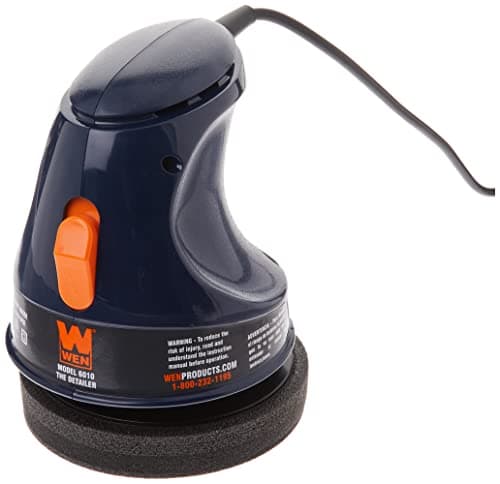
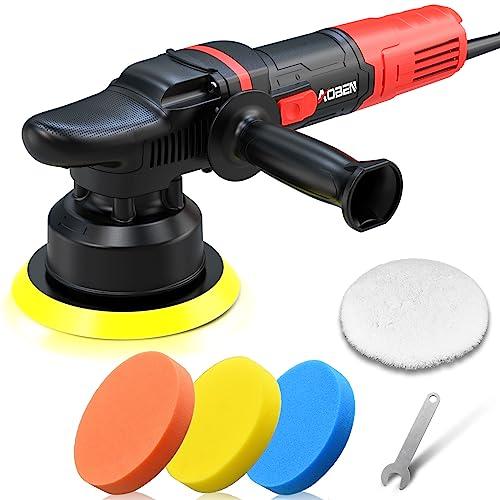
The AOBEN 6-inch dual action is the best car polisher under $50 for most people — the only machine in the band that calls itself a dual action and publishes a usable 1,000-4,500 rpm speed range, with four pads and a detachable handle in the box. The budget pick is the WEN 6010, a 6-inch orbital waxer that costs less than a tin of good paste wax and saves you an hour of hand-buffing every time you use it. Every machine on this page was under $50 with a live Amazon price as of November 23, 2026.
This page needs an honest headline before anything else, because the category is full of listings that imply otherwise. Fifty dollars does not reliably buy paint correction. It buys a motor that spins a pad, and that is genuinely useful — it is the difference between waxing a truck in twenty minutes and waxing it in two hours. But removing swirl marks is a different job with a different requirement, and the specification that decides whether a machine can do it is one that no manufacturer in this band publishes.
So we have sorted these six by the job each is actually built for rather than pretending they all do the same thing at different quality levels. Three of them are wax applicators. One is a mini for spot work. One is a rotary with real cutting power and real risk. And one is the closest thing in the band to a corrector, with the caveats stated in full.
The number nobody under $50 will publish
On a dual-action polisher, the figure that predicts correction ability is orbit throw— how far the pad's center travels through its random wobble, measured in millimeters. A 5 mm throw is a wax applicator that will slowly refine light haze. An 8 or 9 mm throw is the entry point for real defect removal. A 15 or 21 mm throw is what people mean by a long-throw machine.
Griot's publishes 9 mm for the G9 and 15 mm for the G15. Adam's publishes 15 mm. Maxshine publishes 21 mm. Among the six machines on this page, not one publishes an orbit throw figure at all— not in the title, not in the bullets, not on the brand sites. That is not us failing to find it; it is the band's defining characteristic. A maker that had a 9 mm throw to advertise would advertise it.
We refuse to invent the number, so we rank on what is published: head size, speed range, motor rating or battery platform, what is in the box, and whether the action is random-orbit or rotary. Where a maker publishes nothing for a spec, the product entry says so and treats the silence as information. Long throw vs short throw polisher explains why the figure matters so much.
How we ranked them
The job it is honestly built for, first. A 10-inch waxer is excellent at waxing and hopeless at correcting. Ranking it below a DA on "correction power" and leaving it there would be useless to someone who came here to stop waxing by hand. So the order below reflects how many people the machine serves well, not a single score.
Then published specs over claims."Professional grade" and "removes swirls" appear in nearly every listing in this band and mean nothing. A published speed range, a published wattage, a published battery capacity and a stated action type are checkable. We rank on the checkable ones.
Then risk. A random-orbit machine mostly stalls when you lean on it. A rotary does not — it keeps spinning on one axis and will go through clear coat in seconds if you dwell. That is a real difference in consequences, and it is why the most powerful machine on this page is not near the top.
Then what is in the box. At this price, a machine that arrives with pads and a case is worth meaningfully more than one that needs another twenty dollars of accessories before it can be used. Four of these six ship ready to work.
And a warning about the score column, because on this page it reads backwards. Each score is an average across four axes — ergonomics, correction power, beginner-safety and value — and in a band where almost nothing corrects paint, a machine that is excellent at one narrow job scores very well indeed. The cheapest waxer here posts the highest number on the page while sitting last in the order, because it is close to perfect at applying wax and incapable of anything else. We have not adjusted either figure to hide that. Read the order as "who should buy this" and the score as "how well does it do its own job", and the two stop disagreeing.
What each of these machines is for
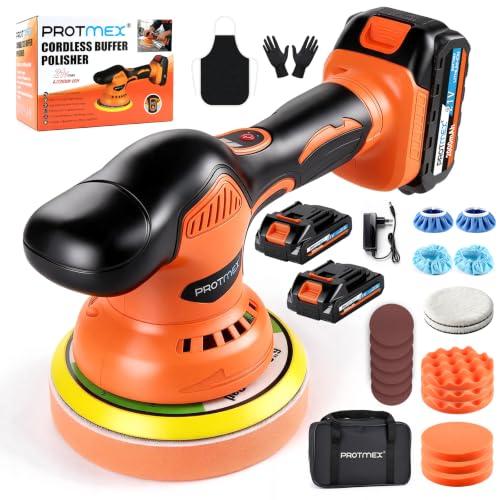
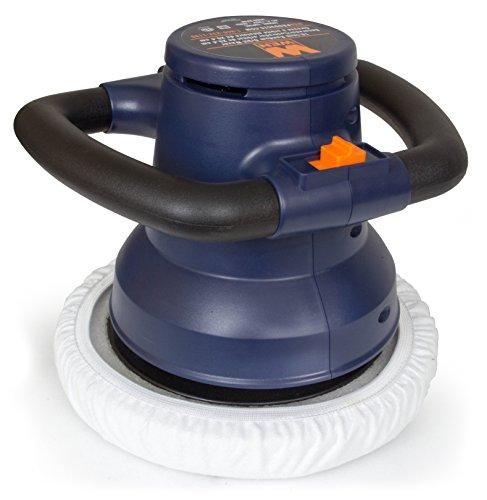
Spreading wax and sealant. This is the band's core competence and there is no shame in it. An orbital waxer applies product in a thinner, more even film than a hand applicator, buffs it off with a bonnet, and turns the most tedious hour in car care into twenty minutes. The WEN pair and the Protmex cordless do this well. If you wax two or three times a year, one of them pays for itself in time on the first use.
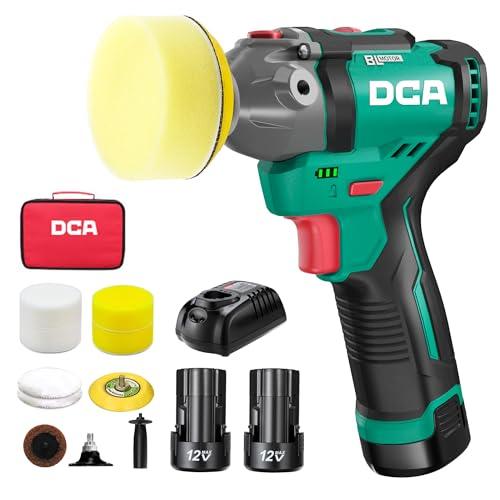
Reaching the places a big pad cannot. On an older car a disproportionate share of visible damage is on pillars, mirror caps, bumper corners and around door handles — exactly where a 6-inch pad cannot sit flat. A 3-inch mini solves that, and the DCA kit here is the cheapest brushless one we can find live. Best mini polisher covers the category properly.
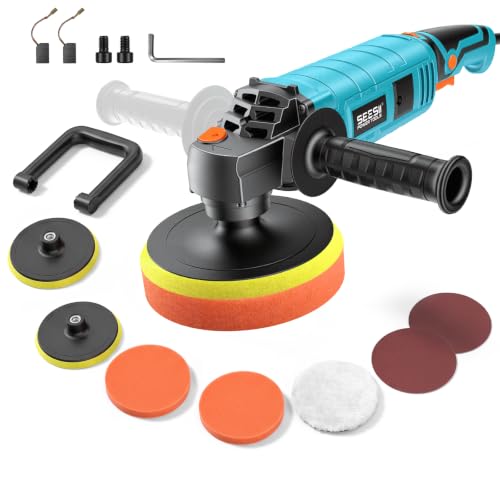
Cutting badly neglected single-stage paint. A chalky, oxidized 1990s repaint or a faded work truck needs more cut than a DA in this band can deliver, and the SEESII rotary has the motor for it. It also has no stall protection at all. On a car with thin factory clear coat, a rotary in untrained hands is the one genuinely dangerous tool in car care — read how to use a rotary polisher before you plug it in, and will rubbing compound damage clear coat for what you are risking.
Light haze and a hopeful attempt at swirls. The AOBEN is the only pick that is plausibly in this territory, and the honest framing is that it may remove light haze with a cutting pad and a decent compound, and it may not, because we cannot check the orbit figure that would tell us. If swirl removal is the actual goal, the next section is the one to read.
When to spend more — and how much more
The cheapest machines we can honestly call correctors start around double this page's cap, and the jump buys three specific things: a published orbit throw, a motor that holds speed under pad pressure instead of bogging down, and a warranty that exists.
If you are shopping for a machine to fix swirl marks rather than to apply wax, best car polisher under $100 is the cheapest honest entry point, and best car polisher under $200 is where pad area stops being the limiting factor — a 5.5-inch pad works roughly three times the area of a 3-inch one, which is what makes a whole car realistic in an afternoon. If you want the machine you will not outgrow, best car polisher for beginners is where that conversation lives.
One more honest comparison: the gap between this band and a correcting machine is roughly the cost of a tank of fuel. If paint correction is genuinely the goal, saving for two more weeks is a better plan than buying twice.
Budget the accessories, not just the machine
A polisher does nothing on its own. The pads do the work and the liquid does the cutting, and in this band the pads that come in the box are thin, open-cell foam of unspecified grade — fine for applying wax, not what you want for anything else. Replacement foam pads start in the low teens, so plan on that before you decide which machine fits the budget. Best polishing pads for DA has the sets worth buying and how many polishing pads do I need has the count.
Liquid is the cheaper half of the equation and the more important one. A good one-step will do more for the result than a thirty-dollar upgrade in machine — see best car polish for the bottles sorted by how much they actually cut, and best car wax under $20 for what to put on afterward. The cheapest waxer here with a good paste wax beats the dearest machine on this page running whatever came free in the box.
Two honest notes on this price band
Prices here move, and the cap is tight. One pick on this page sits within a couple of dollars of the $50 line, so on any given day it may be a dollar over. The live price under each product is the number that counts; our ranking reflects the job each machine does, not its position relative to the line on one particular morning.
Brand support in this band is thin. WEN is an established tool brand with a real service network. The others are Amazon-first brands, which means replacement batteries, backing plates and brushes may simply not be available in two years. That is priced in: these are tools you use until they fail rather than tools you maintain. If long-term support matters to you, that is another argument for the under-$100 band, where Griot's lifetime warranty starts to appear.
Getting real results out of a cheap machine
Decontaminate first, every time
A machine multiplies whatever is on the paint. Run a pad over bonded grit at 4,000 rpm and you are power-sanding your clear coat with road dirt. Wash, then clay bar, then — if the car sees brake dust — an iron remover. This matters more on a cheap machine than an expensive one, because a budget tool gives you less feedback through the handle when something is wrong.
Keep the pad flat and the machine moving
Every failure mode in this band comes from the same two mistakes: tipping the machine onto an edge, and parking it in one place. Flat pad, light pressure, slow overlapping passes, and never let the head sit still while the motor is running. On the rotary that rule is not advice, it is the difference between a corrected panel and a burn-through.
Let the weight do the work
These machines have less torque reserve than a $180 DA, so leaning on them does not increase cut — it stalls the head and the pad stops rotating, which means it stops working entirely while still generating heat. If you need more cut, change the pad or the liquid, not the pressure. How to use a dual action polisher has the technique in full.
Bonnets are for wax, pads are for work
The stretchy terry or synthetic bonnets that ship with orbital waxers are applicators, not polishing pads — they have no foam structure to hold a compound against the paint. If you are applying wax or sealant, a bonnet is correct and nothing else is needed. If you are attempting any kind of correction, you need real foam on a proper backing plate, which on some of these machines means checking the spindle thread before you buy.
Work out of the sun and off hot panels
Product flashes dry in seconds on a panel warm to the touch, and a dry pad is an abrasive pad in the worst sense. Shade, cool paint, and a panel you can comfortably rest your hand on. Can you polish a car in the sun covers why this ruins more cheap-machine attempts than the machine does.
Clean the pad far more often than feels necessary
A pad loaded with spent product and removed clear coat stops cutting and starts smearing. A compressed-air blast or a brush across the face between panels keeps it working, and a proper wash after every session roughly doubles pad life — which matters when the pads cost a third of what the machine did. How to clean polishing pads has the method.
Know the realistic ceiling so you are not disappointed
With a cheap machine, good technique and the right liquid, a realistic outcome on a neglected daily driver is: clean, decontaminated paint, wax applied evenly in a fraction of the time, visibly better gloss, and light haze knocked back. Deep swirls, buffer trails and scratches you can feel are not in reach, and no technique closes that gap. Paint correction for beginners sets the expectation properly before you start.