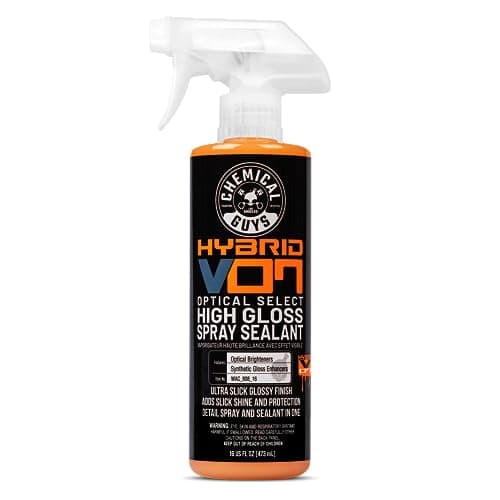
If you are stepping up from one Turtle Wax product, start with Collinite 476S Super Doublecoat — it is the swap for Super Hard Shell, the paste most people own, and Collinite rates it at 7 to 10 months against the few weeks a traditional carnauba paste holds. The budget pick is Chemical Guys Hybrid V7, the cheapest bottle here and the swap for ICE Seal N Shine when you want a spray sealant you apply deliberately rather than one that rinses away with the hose water. Prices come from the live price layer, as of November 23, 2026.
The framing matters more on this page than on most. Turtle Wax is not a bad brand and this is not a page arguing that it is. It is the brand that made car care a supermarket purchase, its products are on a shelf within ten minutes of almost everyone in the country, and we rank several of them on this site — Super Hard Shell is the budget pick on best paste wax for cars, ICE Seal N Shine earns its place on best paint sealant, and the Hybrid Solutions ceramic spray sits on best spray wax. Turtle Wax's defining strength is that it brought modern chemistry — SiO2, graphene, hybrid sealants — to a price nobody else matches, and in several categories the cheapest honest answer is still a Turtle Wax bottle. Best car wax under $20 is the band it owns.
So the useful question is not whether to leave the brand. It is: for this one job, what does paying two or three times more actually get me, and is it a thing I care about? There are only really three answers in this category, and every swap below is one of them.
Months per application. The clearest and most common upgrade. A mass-market paste or spray protects for weeks; the specialist products are rated in seasons. This is the one place where more money reliably buys more of something measurable, because the makers publish figures.
Strength on a specific problem. A multi-purpose bottle is tuned to be safe on everything, which caps how hard it can work on one thing. Dedicated chemistry — a purpose-built iron remover, a body-shop rubbing compound — does the single job faster and further.
A process rather than a product. The biggest gap on this page is not a bottle at all. Some jobs cannot be done by anything you wipe on, and a kit that includes a real abrasive ladder is a different category of answer to a kit that includes a cloth.
The swaps, line by line
Super Hard Shell Paste → Collinite 476S Super Doublecoat. Super Hard Shell is the cheapest paste wax that still genuinely protects paint, and that is a real achievement. 476S is the durability swap, and it is not a small step: Collinite rates it at 7 to 10 months against 4 to 7 for its own 845 liquid, because it is a carnauba-and-polymer blend rather than a straight carnauba. You pay for it with labor — Collinite itself calls 476S the most labor-intensive wax in its range, it has to go on very thin, and an owner review on Collinite's own product page advises taping off black trim before you start. The whole paste field is on best paste wax for cars.
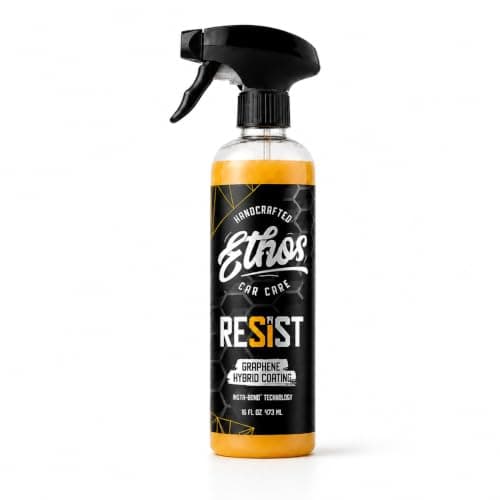
Hybrid Solutions Ceramic Spray → Ethos RESIST Graphene Spray. The Turtle Wax spray is the reason SiO2 reached a supermarket price, and for a wash-and-go maintenance layer it is hard to argue with. RESIST is the swap if you want a published standalone figure: Ethos rates its reduced-graphene-oxide and SiO2 hybrid at 6+ months standing alone, in a 16 oz bottle that covers a full car several times, which puts the cost per application below the small-bottle graphene coatings. It costs roughly double a supermarket graphene spray for a difference you cannot see on day one, and it is a smaller brand with less long-term owner feedback. Neither product is a coating — ceramic spray vs ceramic coating is the distinction, and best graphene coating is the category.
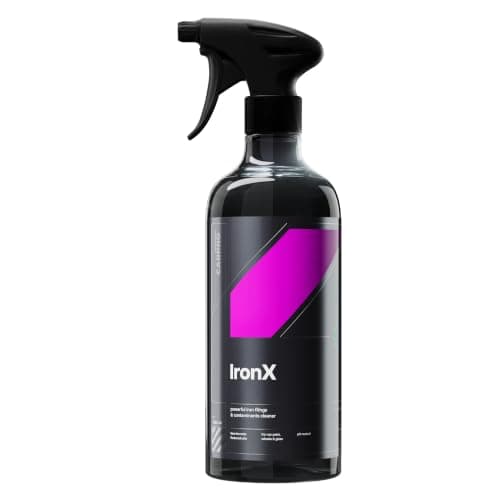
Hybrid Solutions Iron Remover & Wheel Cleaner → CarPro IronX. The Turtle Wax bottle does two jobs at once, which is its appeal and its ceiling: a combined wheel cleaner and iron remover has to be gentle enough for both surfaces. IronX is the category benchmark for one of those jobs — a pH-balanced dedicated iron dissolver that bleeds purple as it reacts, so you can see where contamination actually is, and it lifts bonded fallout that clay alone cannot fully remove. The trade is money and a genuinely unpleasant sulfur smell during the reaction. Both sit on best iron remover for car, and iron remover vs clay bar explains why you may need both.
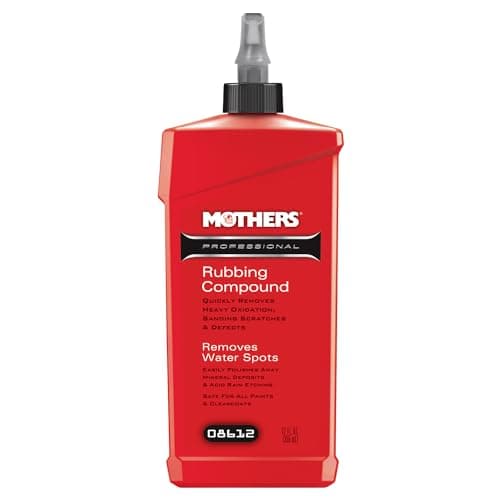
Rubbing Compound (Heavy Duty) → Mothers Professional Rubbing Compound. Turtle Wax's compound is a few dollars and will take the edge off oxidation by hand. The Mothers bottle comes from the body-shop line rather than the consumer shelf, with real cutting ability on sanding marks and heavy oxidation that still works under a hand applicator — which matters on panels a machine cannot reach. It finishes coarser than the optical-grade compounds, so plan a polish stage after it. The ladder is on best compound for oxidized paint.
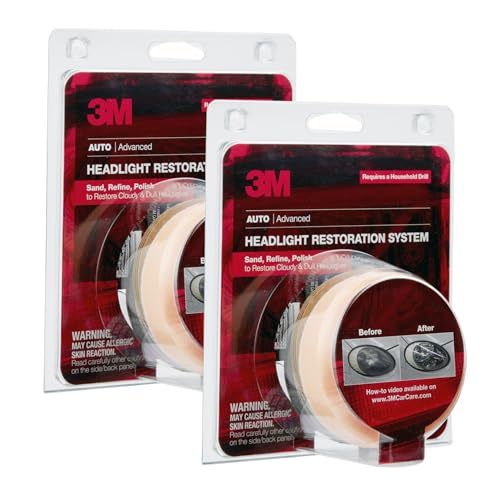
Headlight Restoration Kit → 3M Headlight Lens Restoration System. This is the swap where the product category changes rather than the brand. The 3M kit is a real abrasive ladder — 500 and 800 grit discs, a Trizact refining disc, compound and a disc pad holder — driven by your own drill, which is the only approach that clears heavy oxidation instead of polishing the top of it. It also needs that drill, it will overheat soft polycarbonate if you are careless, and it finishes with a rubbing compound and no UV clear coat, so you have to add protection yourself or the lens starts yellowing again almost immediately. If your lenses are only lightly hazed this is far more cut than you need; best headlight restoration kit ranks the no-sand options too.
ICE Seal N Shine → Chemical Guys Hybrid V7. Seal N Shine is the lowest-effort protection in car care: you spray it onto a wet car during the rinse and hose it off, so the application step disappears into the wash. The cost of that convenience is film thickness — a rinse-off application leaves less behind than anything you wipe on. V7 is the swap that keeps the spray-bottle simplicity but puts the product on deliberately: SiO2-infused, slick, and able to restore beading on a tired coating rather than smothering it. It is still not a primary layer on bare paint. The format sits between best spray wax and best paint sealant.
How we picked the step-ups
One stated, published advantage each. Every pick above beats the Turtle Wax product it replaces on something its maker publishes — a durability rating, a dedicated chemistry, a pack list — rather than on reputation. Where a figure exists it is attributed to the maker; where none exists we say so.
The extra cost and the extra effort are both stated. Four of these six swaps cost you work as well as money: a harder paste to buff, a dilution plan, a sulfur smell, a drill. A page that only listed the upside would be useless for deciding.
Registry products only, and no hands-on comparison claimed. Every alternative here already has a full write-up elsewhere on this site. We have not run these products side by side against their Turtle Wax counterparts; how we research sets out what our scores are built from.
When the cheap bottle is already the right answer
Weeks versus months is a usage question, not a quality question
A garage-kept car washed twice a month does not notice the difference between a six-week wax and a seven-month one, because it gets rewaxed before either fails. A car parked outside through a salted winter notices enormously. How often to wax a car is the honest way to decide which of those you are.
Preparation beats product, every time
A premium sealant on contaminated paint lasts worse than a supermarket wax on properly decontaminated paint, because protection bonds to whatever is on the surface. If you are about to spend three times more on a bottle, spend it on a clay bar and an iron remover first and keep the Turtle Wax. That is not a cheap-out; it is the correct order of operations.
Do not step up and down at the same time
Buying a 7-to-10-month paste and then topping it monthly with a carnauba spray throws away most of what you paid for, because you are judging the finish by the top layer. Wax vs sealant vs coating sets out the hierarchy, and the rule is simple: durable product on the paint, fast product on top, never the reverse.
Multi-purpose bottles have a real ceiling — and a real place
A combined wheel cleaner and iron remover, or a wash-and-wax, is formulated to be safe on everything it touches, which caps how hard it can work on any one thing. That is a genuine limitation when you have a specific problem and a genuine convenience when you do not. Buy the dedicated product for the job that is actually bothering you and keep the multi-purpose one for maintenance.
Count the tools, not just the bottle
Two swaps on this page need equipment you may not own: the 3M headlight system needs a drill, and a gallon of concentrate needs a spray bottle and a dilution plan. Add that to the price before you compare it to the thing you already have under the sink.
Where Turtle Wax still wins on this site
Super Hard Shell is the cheapest real paste-wax protection we can find and is the budget pick on our paste roundup. Seal N Shine has the lowest effort-per-application of anything we rank. The Hybrid Solutions ceramic spray brought SiO2 to a price that made it a mainstream purchase. If one of those is doing the job you bought it for, the correct number of alternatives to buy is zero — best car detailing brands sets out what each brand is genuinely best at.
If the complaint is the opposite — that it is not cheap enough
Then this is the wrong page. The price band itself, across every format, is on best car wax under $20, and the mid-market brand with the widest range is covered on Meguiar's alternatives.