Skip to content
Pad & Polish

GUIDES · Guides

How to Detail a Black Car

Black paint shows every mistake you have ever made on it, in direct sunlight, from twenty feet away. Nothing about the process is different. Everything about the tolerances is.

By Stephen V.Updated How we research
#ad

We earn a commission when you buy through our Amazon links, at no extra cost to you. It never affects our rankings, and we say so when the cheaper product is the better buy. How this works.

The single change that matters most is the finishing polish step. On silver or white, a compound pass followed by wax looks excellent. On black, that same panel looks clean but faintly dry, because the micro-marring a compound leaves is invisible on light paint and clearly visible on dark. Add one pass of a fine finishing polish on a soft finishing pad and the panel goes from clean to wet. Everything else on this page is about not putting new marks in between washes.

It is worth getting the physics right first, because a lot of advice about black paint is built on a myth. Black clear coat is not softer, thinner or more fragile than any other color. The clear coat over a black base is the same material at the same film thickness as the clear over a white base from the same plant. What differs is optical: a dark surface reflects far less light overall, so a scratch that scatters light stands out against a near-black background at enormous contrast. On white, that same scratch scatters light against an already-bright background and effectively disappears.

That means black paint does not need gentler products. It needs a process with no tolerance for the small compromises every other color forgives.

The wash: where the swirls come from

Almost every swirl mark on a daily-driven black car was installed by its owner during a wash. Not by the automatic wash six months ago, not by road debris — by whatever was in their hand on a Saturday. That is the uncomfortable headline and it is also the good news, because it is the part entirely within your control.

Three things do most of the work. Two buckets with grit guards, so the mitt is rinsed of grit before it goes back into clean soap rather than carrying it to the next panel. A deep-pile mitt, because depth is what gives a hard particle somewhere to go other than between the fibers and the clear coat — the full argument is in best car wash mitt. Straight overlapping passes, top down, never circles, because straight-line marring is far less visible than circular marring even when it happens: it catches light from one angle instead of every angle.

On black, add two more. Use two mitts in different colors — one for the upper two-thirds of the paint, one for the lower sections and never the reverse order, because the lower quarter of a car carries the hardest grit. And never wash a black car in direct sun; the panel dries faster than you can rinse it, which turns a wash into a water-spotting exercise. The whole method is in how to wash a car without scratching it.

The dry: the step that undoes a careful wash

Drying is the only point in a wash where dry fiber is dragged across dry paint under hand pressure, which makes it the highest-risk step on a dark car and the one almost nobody thinks about.

Sheet the water off first with a low-pressure open-ended flow from the top down — surface tension pulls most of the standing water off with it, and water you never have to towel is water that cannot drag anything. Then lay a large plush drying towel flat, pull it toward you once, and lift. No circles, no pressure, no second pass over the same area with the same face of the towel. And on black specifically, mist a drying aid or detail spray onto the panel first: it restores the slip layer the rinse removed, which turns a dry drag into a lubricated one. The towels are ranked in best car drying towel.

This is also where the "black cars show streaks" complaint usually comes from. What looks like streaking is almost always one of three things: water spots from drying too slowly in the sun, un-buffed wax left to cure too long on a hot panel, or towel marring catching the light. All three are process problems rather than paint problems.

The correction: two steps, not one

This is where black paint genuinely changes the recipe. On most colors a one-step correction is a legitimate finish. On black, the standard is compound then polish, and the second step is not optional if the goal is depth rather than cleanliness.

Step one, the compound. Remove the defects. The choice is the same as on any color, with one caveat: finish quality matters more than raw cut here, so the aggressive cutter that would be fine on a white truck is a poor trade on a black hood. The field is ranked for exactly this in best cutting compound for black cars.

Step two, the finishing polish. A very fine polish on a soft black finishing pad, at a moderate speed, with light pressure. This step removes essentially no defects — it refines the surface the compound left so that light reflects cleanly instead of scattering. The difference on black is visible from across a parking lot, and it is the single largest return on effort in this entire guide. The distinction between the two products is laid out in Ultimate Compound vs Ultimate Polish.

Two practical notes. Work in smaller sections than you would on a light color, because you need to inspect more carefully and a 2 x 2 ft area is about as much as you can genuinely check. And buy a light before you buy anything else: swirls on black are invisible under garage fluorescents and obvious under a focused beam, so correcting black paint without an inspection light is guesswork. The options are in best detailing light for paint correction.

If you are running a rotary or a long-throw machine, watch for holograms — the faint curved pattern that only appears in direct light and that black displays better than any other color. They are a technique artifact rather than a defect in the paint, and how to remove buffer trails covers clearing them.

The protect step, and the honest role of a glaze

Protection on black has two jobs: the usual one, and adding optical depth. Three approaches, with different levels of honesty about what they do.

A wax or sealant protects and adds a little warmth. The dark-paint rankings are in best car wax for black cars.

A glaze or glaze-sealant hybrid contains fillers — oils and polymers that sit in fine scratches and reduce how much light they scatter. This is cosmetic rather than corrective, and it is worth being completely clear about that: a glaze hides swirls temporarily and removes nothing. That makes it a legitimate tool in one specific situation — paint you have decided not to correct, on a car you want to look good now — and a bad idea in another: never glaze before a coating, because you will lock the fillers and the defects underneath in for years.

A ceramic coating is the option that makes a two-step correction on black worth the hours, because it holds the corrected surface for years rather than months. It is also the least forgiving of a rushed finishing polish, for the same reason. The dark-paint rankings are in best ceramic coating for black cars.

Keeping it, which is the hard part

A corrected black car stays corrected only if the maintenance washes stop installing new marks. Four habits do nearly all of it.

Never touch an automatic wash with brushes. A touchless wash is a compromise; a brush wash on black paint is a correction appointment.

Keep a detail spray and a plush towel in the car, because the real enemy between washes is bird droppings and bug remains, which etch unprotected and semi-protected paint in hours in warm weather. Spray generously, let it dwell, and lift rather than wipe.

Wash more often, not harder. A light wash every week is far safer for black paint than a hard scrub once a month, because the grit load on the mitt is lower every time.

Accept that it will never be perfect in the sun. This is the one honest thing nobody says. Direct sunlight on black paint reveals marks a few microns deep that no amount of maintenance prevents entirely, and chasing absolute perfection means polishing a finite resource away — the arithmetic is in does polishing remove clear coat. Correct it properly once, protect it well, wash it carefully, and let the last 2% go.
The short answer

Quick picks

#ProductBest forScorePrice
01
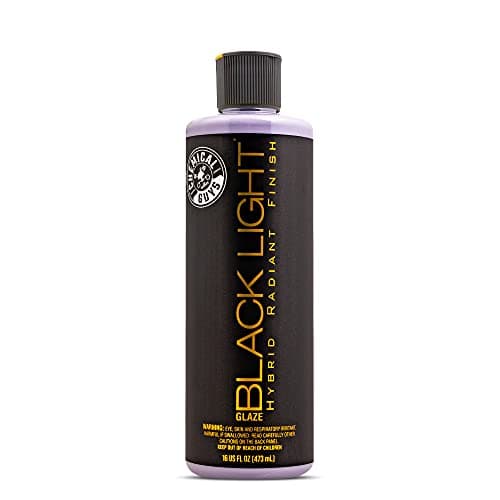
Chemical Guys Chemical Guys Black Light Hybrid Glaze & Sealant
Chemical Guys Black Light Hybrid Glaze & Sealant

A glaze and sealant hybrid formulated specifically for dark paint — it fills the fine marring that makes black look gray and adds the wet depth that black is bought for in the first place.

Black and dark-metallic paint that is not perfectly corrected
8.0
$29.99Amazon
02
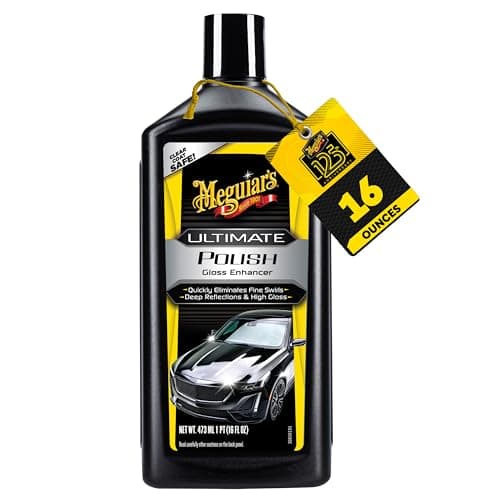
Meguiar's Meguiar's Ultimate Polish
Meguiar's Ultimate Polish

The gloss step, not a correction step: an extremely fine polish that darkens and deepens paint after compounding, which is exactly what black and dark-metallic finishes need before wax goes on.

The gloss pass after compounding, especially on dark paint
7.7
$9.67Amazon
03
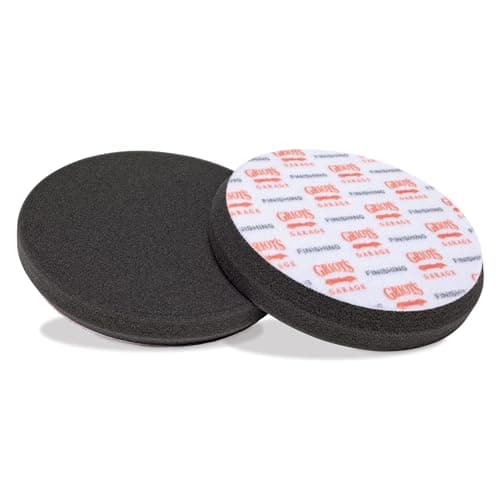
Griot's Garage Griot's Garage 5.5" Black Foam Finishing Pads
Griot's Garage 5.5" Black Foam Finishing Pads

The soft black foam that turns a compounded panel into a finished one — almost no cut, all gloss, and forgiving enough that it is very hard to leave a mark with it.

The last pass before wax or coating
8.6
$22.99Amazon
04
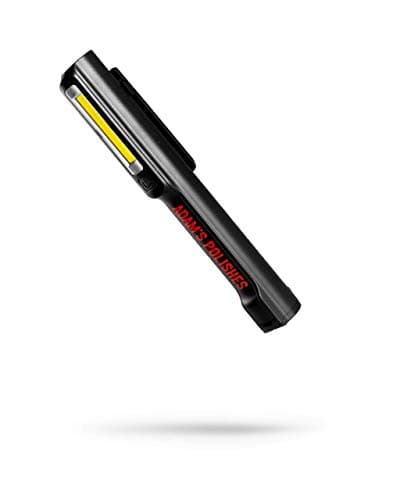
Adam's Polishes Adam's Swirl Finder Flashlight
Adam's Swirl Finder Flashlight

A 170-lumen pocket torch with a tight, hard-edged beam — not a color-match tool, but the cheapest thing that will show you swirls you cannot otherwise see, which is most of the job.

Finding swirls before and after a pass, for the price of a bottle of polish
7.4
$14.44Amazon

#ad · Live prices from the Amazon Product API, as of October 17, 2026. Where we have no verified live price, we show none — we would rather leave a gap than print a number that has rotted.

In detail

The picks, in full

01
Chemical Guys Chemical Guys Black Light Hybrid Glaze & Sealant

Black and dark-metallic paint that is not perfectly corrected

Chemical Guys Black Light Hybrid Glaze & Sealant

16 ozGlaze + sealant hybridFormulated for dark colorsHand or machine
8.0/10

A glaze and sealant hybrid formulated specifically for dark paint — it fills the fine marring that makes black look gray and adds the wet depth that black is bought for in the first place.

Durability
6
Looks & warmth
9.2
Ease of application
8.6
Value
8

Pros

  • Visibly deepens black paint in a way a plain sealant does not
  • Hides light marring that would otherwise need another correction pass
  • Layers under a wax or sealant without issue

Cons

  • Glazes conceal defects rather than remove them — this is cosmetic
  • Filling effect fades over several washes

Don't buy this if…

…you want defects actually gone — glaze is a finish, correction is the fix.

$29.99View on Amazon

Price as of October 17, 2026. Prices change — Amazon's is the one that counts.

#ad · we may earn a commission from this link to Chemical Guys Black Light Hybrid Glaze & Sealant

02
Meguiar's Meguiar's Ultimate Polish

The gloss pass after compounding, especially on dark paint

Meguiar's Ultimate Polish

16 ozFine finishing polishHand or DAUse before wax or sealant
7.7/10

The gloss step, not a correction step: an extremely fine polish that darkens and deepens paint after compounding, which is exactly what black and dark-metallic finishes need before wax goes on.

Cutting power
3
Finish quality
9.2
Ease of use
9.2
Value
9.2

Pros

  • Adds visible depth to dark paint that compound alone leaves flat
  • Almost impossible to over-correct with — very low cut
  • One of the cheapest bottles in the whole category

Cons

  • Removes essentially no defects on its own
  • Adds a whole extra step to an already long job

Don't buy this if…

…your paint still has swirls — compound first, then come back to this.

$9.67View on Amazon

$12.9926% off

Price as of October 17, 2026. Prices change — Amazon's is the one that counts.

#ad · we may earn a commission from this link to Meguiar's Ultimate Polish

03
Griot's Garage Griot's Garage 5.5" Black Foam Finishing Pads

The last pass before wax or coating

Griot's Garage 5.5" Black Foam Finishing Pads

5.5-inchBlack finishing foamFits 5-inch plateMachine washable
8.6/10

The soft black foam that turns a compounded panel into a finished one — almost no cut, all gloss, and forgiving enough that it is very hard to leave a mark with it.

Finish quality
9.2
Durability
8.4
Ease of use
8.8
Value
7.8

Pros

  • Soft enough to lay down gloss without hazing dark paint
  • Holds shape better than the cheap open-cell finishing foams
  • Sized to the same 5-inch plate most beginner DAs ship with

Cons

  • Removes essentially nothing — it is a finishing pad, not a corrector
  • Costs more per pad than the hex-faced budget options

Don't buy this if…

…you still have swirls to remove — you need a cutting pad first.

$22.99View on Amazon

Price as of October 17, 2026. Prices change — Amazon's is the one that counts.

#ad · we may earn a commission from this link to Griot's Garage 5.5" Black Foam Finishing Pads

04
Adam's Polishes Adam's Swirl Finder Flashlight

Finding swirls before and after a pass, for the price of a bottle of polish

Adam's Swirl Finder Flashlight

170 lumensFocused beamPocket-sizedBattery powered
7.4/10

A 170-lumen pocket torch with a tight, hard-edged beam — not a color-match tool, but the cheapest thing that will show you swirls you cannot otherwise see, which is most of the job.

Defect visibility
7.6
Color accuracy
5
Build & runtime
7.4
Value
9.6

Pros

  • Costs less than almost anything else on this site and still changes what you can see
  • Tight beam throws hard shadows, which is exactly what reveals fine scratches
  • Small enough to keep in a pocket while you work

Cons

  • No color temperature control and no published CRI figure
  • Too small and too dim to light a whole panel at once

Don't buy this if…

…you need to color-match a repair — this finds defects, it does not judge color.

$14.44View on Amazon

Price as of October 17, 2026. Prices change — Amazon's is the one that counts.

#ad · we may earn a commission from this link to Adam's Swirl Finder Flashlight

How we picked

We do not run a testing lab

We compiled published specifications, manufacturer data sheets and aggregated owner reviews, computed the cost of ownership from real sizes and coverage, then scored each product against a published rubric. The scores are judgments from documented research — they are not measurements we took, because we do not own a lab and we are not going to pretend we do. Where a number came from someone else, we name them and link them in Sources.

Questions

Frequently asked

Is black car paint more delicate than other colors?
No. The clear coat over a black base is the same material at the same thickness as the clear over any other color from the same plant. Black simply reflects far less light, so a scratch that scatters light stands out at enormous contrast against a near-black background. The paint is not more fragile - it just hides nothing.
How do you polish a black car without swirl marks?
Two steps, not one. Compound to remove the defects, then make a second pass with a very fine finishing polish on a soft finishing pad. The compound leaves micro-marring that is invisible on light paint and clearly visible on black, and the finishing pass is what turns a clean panel into a deep one.
Why does my black car look streaky after washing?
Almost always one of three process problems rather than a paint problem: water spots from the panel drying before you could rinse it, un-buffed wax left to cure too long on a hot panel, or fine towel marring catching the light. Washing in shade, drying with a plush towel and a drying aid, and buffing wax off while it is still fresh fix all three.
Do glazes actually work on black paint?
They work cosmetically. A glaze contains fillers that sit in fine scratches and reduce how much light they scatter, which genuinely improves how uncorrected black paint looks. It removes nothing, the effect is temporary, and you should never apply one before a ceramic coating - the coating would lock both the fillers and the defects in for years.
How often should you wash a black car?
More often, and more gently. A light weekly wash is far safer than a hard monthly scrub, because less grit accumulates between washes so there is less for the mitt to carry. Washing in shade with two buckets and a deep-pile mitt matters more on black than any other color.
What is the best protection for a black car?
A ceramic coating, if you have done a proper two-step correction first - it holds the corrected finish for years rather than months, which is what makes the hours worth spending. A wax or synthetic sealant is the sensible choice on paint you have not fully corrected, and a glaze hybrid is the honest option when you want it to look good without correcting it at all.

Keep reading

Receipts

Sources

We do not run a testing lab, and we do not pretend to. Where a measured number came from someone else's lab, we name them and link them. Where we could not verify something, we say so on the page rather than quietly leaving it out. Read our full method.