A pad does at least half the work a compound gets credit for. Load the same polish onto a dense cutting pad and a soft finishing pad and you'll get two different results from one bottle — which is why the five picks below are chosen to cover the full cutting-to-finishing range on a dual-action polisher, not just one aggressiveness level. All five are foam, which remains the safer, more forgiving default for anyone working without a rotary polisher; if you want the case for microfiber instead, our pad color guide covers where it earns its place.
Read the picks by what you actually need, not by rank. The Lake Country CCS pads are the safe, well-documented default most enthusiasts reach for first. The Chemical Guys Hex-Logic kit is the one-order answer if you want cut-to-finish covered without five separate listings. Griot's BOSS pads are built specifically for long-throw 15/21 mm machines like the ones in our dual-action polisher roundup, where thinner pads flex and overheat. Adam's pads make sense if you're already buying Adam's compounds and polishers. SPTA is the practice-pad answer — cheap enough to learn technique on before spending finisher money.
None of these are body-shop tools — they're sized and rated for a home garage or a weekend in the driveway, run off a corded or cordless DA rather than a rotary. The comparison below scores each pick on cut range, durability, finish quality and value so you can weigh them against your own priorities instead of just taking a rank at face value.
Whichever you pick, buy at least two aggressiveness levels. A single pad, however good, can't both remove a defect and leave a jeweled finish — pair it with a compound suited to the same job using our rubbing compound picks.
The short answer
| # | Product | Best for | Score | Price |
|---|
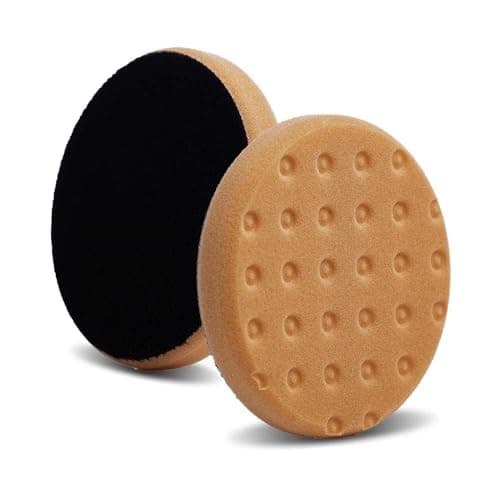
| 01 | Lake Country CCS 5.5" Foam PadsThe reference foam pad detailers reach for by default: the CCS dimple pattern meters product and reduces sling, and colors run a consistent, well-documented cut-to-finish scale. | The safe default foam pad on any DA | | $26.76·Amazon |
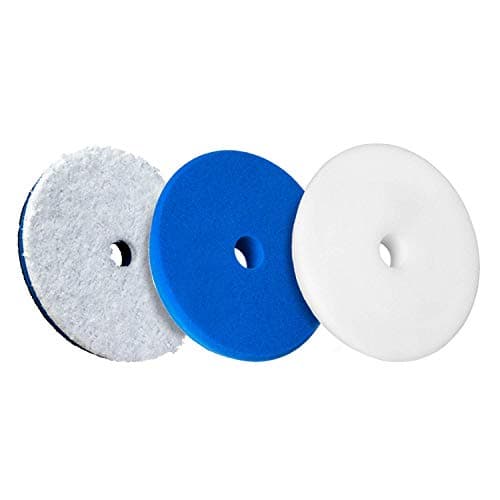
| 02 | Chemical Guys Hex-Logic Buffing Pad KitA ready-made set spanning cut to finish in one order, with the Hex-Logic groove pattern that spreads product evenly — the simplest way to own the whole pad range at once. | Owning cut-to-finish in a single kit | | $79.99·Amazon |
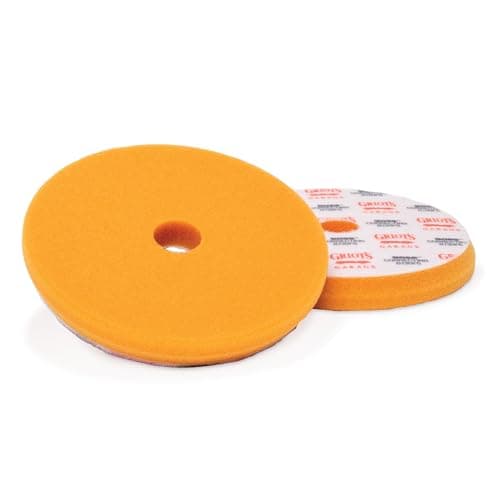
| 03 | | Long-throw DAs (15/21 mm) | | $23.00·Amazon |
| 04 | | Buyers already in the Adam's ecosystem | | $38.24·Amazon |
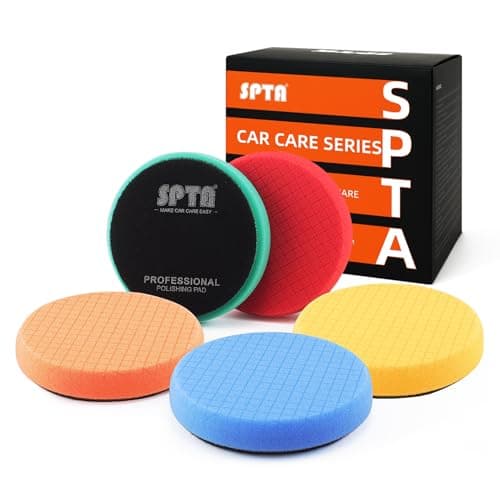
| 05 | SPTA 5.5" Buffing & Polishing Pad KitThe budget way to fill out a pad drawer: a multi-pad kit that usually ships with a backing plate, so beginners can practice without spending finisher money on every color. | Cheap practice pads while you learn | | $21.59·Amazon |
#ad · Live prices from the Amazon Product API, as of Jul 21, 2026. Where we have no verified live price, we show none — we would rather leave a gap than print a number that has rotted.
In detail
The safe default foam pad on any DA
5.5 inCCS dimpled foamColor-coded cutDA/rotary
The reference foam pad detailers reach for by default: the CCS dimple pattern meters product and reduces sling, and colors run a consistent, well-documented cut-to-finish scale.
- Cut range
- 8.6
- Durability
- 8.2
- Finish quality
- 8.8
- Value
- 8.2
Pros
- +CCS dimples hold product and cut sling and hopping
- +Color-to-aggressiveness scale is consistent and documented
- +Widely available in every cut level
Cons
- −Sold per-pair, so a full set adds up
- −Foam wears faster than microfiber on heavy cut
Don't buy this if…
…you want maximum cut in one pass — a microfiber cutting pad removes more, faster.
Owning cut-to-finish in a single kit
Multi-pad kitHex-Logic groovesColor-codedCut → finish
A ready-made set spanning cut to finish in one order, with the Hex-Logic groove pattern that spreads product evenly — the simplest way to own the whole pad range at once.
- Cut range
- 8.4
- Durability
- 7.9
- Finish quality
- 8
- Value
- 8.5
Pros
- +One purchase covers the full cut-to-finish range
- +Hex grooves spread product and aid cooling
- +Color-coded so grabbing the right pad is foolproof
Cons
- −Kit sizing varies by listing — check the plate fit
- −Individual pads aren't the plushest finishers
Don't buy this if…
…you only need one cut level — buy that single pad instead of the whole kit.
Long-throw DAs (15/21 mm)
5.5 inFor long-throw DACorrecting foamLow flex
Foam engineered around long-throw DAs, so they stay stable and cool on a 15/21 mm machine where thinner pads flex and overheat — the natural pairing for a modern long-throw tool.
- Cut range
- 8
- Durability
- 8.4
- Finish quality
- 8.4
- Value
- 7.9
Pros
- +Designed to stay flat and cool on long-throw machines
- +Consistent correcting cut across the pad face
- +Backed by Griot's support
Cons
- −Priced above generic foam
- −Fewer cut levels than a big kit
Don't buy this if…
…you run a short 8 mm orbit — thinner pads transfer that small throw better.
Buyers already in the Adam's ecosystem
Foam pad bundleColor-codedFor DACut → finish
A tidy branded bundle that pairs cleanly with Adam's polishers and correction liquids — a low-friction choice if you're already buying into the Adam's ecosystem.
- Cut range
- 7.9
- Durability
- 8
- Finish quality
- 8.1
- Value
- 7.8
Pros
- +Matched to Adam's plates and correction liquids
- +Color-coded aggressiveness levels
- +Bundle pricing versus buying singly
Cons
- −Best value only inside the Adam's system
- −Bundle contents vary by listing
Don't buy this if…
…you run another brand's compounds — a neutral pad line mixes more freely.
Cheap practice pads while you learn
5.5 inMulti-pack kitBacking plate often includedHook-and-loop
The budget way to fill out a pad drawer: a multi-pad kit that usually ships with a backing plate, so beginners can practice without spending finisher money on every color.
- Cut range
- 7.4
- Durability
- 6.8
- Finish quality
- 7.2
- Value
- 8.8
Pros
- +Lowest cost per pad to learn on
- +Kit usually includes a backing plate
- +Fine for practicing technique before buying premium foam
Cons
- −Foam consistency less refined than premium brands
- −Shorter working life under heavy cut
Don't buy this if…
…you're chasing a flawless show finish — a premium finishing pad earns its price there.
How to choose a pad
The specs that actually matter
Diameter first — it has to suit your backing plate (5.5 in fits the 5 or 5.5 in plates on most dual-action polishers). Beyond size, look for the printed cut or aggressiveness rating rather than trusting color alone, since color schemes are brand-specific — see our full pad color guide. Foam cell structure (dense and closed for cutting, open and soft for finishing) and whether the pad is rated for long-throw machines are the two specs worth reading before diameter and color. A pad built for an 8 mm-throw DA can flex and overheat on a 15 or 21 mm long-throw machine, and vice versa, so check the pad against the polisher you actually own, not just the panel you're working on.
The cost math: buy fewer pads by buying the right ones
The real cost isn't the pad price, it's buying pads you don't need. A cutting pad and a finishing pad cover the two ends of almost every home correction job — most driveway details never touch a dedicated middle "polishing" pad. Start with one cutting and one finishing pad per size and plate you own, add a middle pad only if you find yourself needing to bridge a bigger gap, and you'll own two or three pads doing the job a five-pad kit was sold to solve.
The common mistake
Buying a single "cutting" pad and expecting it to also deliver a flawless finish is the most common misstep in this category. A cutting pad's entire job is defect removal — it's built to be aggressive, and aggressive foam leaves its own light haze behind. Pair every cutting pad with at least a finishing pad, and a milder compound in it — see our rubbing compound picks — or the correction will look unfinished no matter how good the cutting pad is.
How we picked
We compiled published specifications, manufacturer data sheets and aggregated owner reviews, computed the cost of ownership from real sizes and coverage, then scored each product against a published rubric. The scores are judgments from documented research — they are not measurements we took, because we do not own a lab and we are not going to pretend we do. Where a number came from someone else, we name them and link them in Sources.
Questions
What pads do I need for a DA polisher?+
At minimum, one cutting-level pad to remove defects and one finishing-level pad to refine the result — most home correction jobs never need more than those two, plus a dedicated pad for wax or sealant application if you use one.
What size pad for a 5-inch backing plate?+
Use a 5.5-inch foam pad on a 5 or 5.5-inch backing plate. Going much larger causes the pad edge to flare and slap paint, while a smaller pad can expose the plate's hook-and-loop.
How many pads do I need to do a car?+
One pad per aggressiveness level is enough for a full car if you clean it between panels — you don't need a fresh pad per panel, just a clean, dry one.
Foam or microfiber for a beginner?+
Foam. It's more forgiving under uneven pressure and covers the whole cut-to-finish range on its own, while microfiber cuts faster but leaves a coarser finish that needs a separate pad to refine.
How do I clean foam pads?+
Rinse or brush out spent compound between panels, spin or squeeze them dry before the next section, and let them fully air-dry before storage so the foam doesn't mildew or compress.
Receipts
We do not run a testing lab, and we do not pretend to. Where a measured number came from someone else's lab, we name them and link them. Where we could not verify something, we say so on the page rather than quietly leaving it out. Read our full method.