Yes. Polishing removes clear coat — that is the entire mechanism. A compound or polish is a suspension of abrasive particles; dragging them across the surface under a pad shaves off a thin layer of clear, and a scratch disappears because the surrounding surface has been brought down to the bottom of the scratch. There is no chemistry that "fills" a scratch permanently and no machine that removes a defect without removing material. Anything that appears to do so is a glaze or a filler that will wash off.
The useful questions are therefore not whether polishing removes clear coat but how much clear you have, how much a pass costs, and how to spend the least of it for the result you want. That is what the rest of this page is about.
How much clear coat is there?
Automotive paint is measured in mils (thousandths of an inch) or microns. A typical modern factory finish runs somewhere around 4 to 6 mils total across primer, base coat and clear, of which the clear coat itself is commonly in the region of 1.5 to 2 mils — roughly 40 to 50 microns. That is a layer about half the thickness of a sheet of office paper, and it is the only part of the paint you are allowed to touch.
Those are typical figures and not a measurement of your car. Thickness varies by manufacturer, by plant, by panel, and above all by whether the panel has ever been repainted — body shop clear can be considerably thicker or thinner than factory, and it is often applied unevenly. It also varies within a panel: the crown of a hood, the peak of a fender arch and the edge of a door are consistently the thinnest places on any car, because paint flows away from high points as it is sprayed. Those are the places that fail first and the places you should polish last and lightest.
| Operation | Roughly what it costs you | Notes |
|---|
| Finishing polish on a soft pad | A fraction of a micron per pass | Effectively free; you can do this many times over a car's life |
| Medium polish on a light-cut foam pad | Low single-digit microns for a full correction | The normal swirl-removal job on most cars |
| Heavy compound on a microfiber or wool pad | Several microns, more on repeated sections | Reserve for defects you have confirmed need it |
| Wet sanding followed by compounding | The largest single spend available to a detailer | A one-time operation per panel, realistically |
Published figures for material removal vary with pressure, pad, speed and paint hardness, so treat the column above as orders of magnitude rather than numbers to budget against. The shape of the conclusion is what matters: a careful one-step polish is a small withdrawal from a finite account, and an aggressive multi-stage correction is a large one.
So how many times can a car be polished?
The honest answer is "several full corrections and a great many light ones, if nobody overdoes it." A practical rule many detailers work to is that a car can take a handful of genuine cutting corrections across its life before clear-coat thickness becomes the limiting factor, and effectively unlimited light polishes. The variables that actually decide it are how aggressive each correction was, whether anyone concentrated on edges, and whether the car was washed well enough between corrections to need fewer of them.
Which leads to the point that matters more than any product on this page: the way to preserve clear coat is to stop installing the defects that make you remove it. Nearly all swirl marks on a well-kept car are wash damage. Fixing the wash is cheaper than fixing the paint, and it is the only intervention that compounds in your favor over years — how to wash a car without scratching it is the method, and how often you should polish your car puts a realistic interval on the rest.
The signs you are running out
Clear coat failure does not creep up quietly; it has a look. Learn these three and you will never be surprised by it.
- Cloudy, milky patches that do not improve with polishing. This is clear coat that has degraded through its thickness. Polishing a failing clear accelerates it.
- A visible edge or "map line" where the clear has lifted. Delamination. The boundary will grow. No detailing product reattaches it.
- A dull, slightly different-colored patch at a high point or edge. You are at or through the base coat. Stop immediately and mask that area out of future work.
There is a measuring instrument for this — a paint thickness gauge, which reads total film build with a magnetic or eddy-current probe. We do not include one in the picks below because we have no verified live listing for one in our catalog, and recommending an instrument we cannot price honestly would be worse than saying so. If you are planning heavy correction on an older or repainted car, borrowing or renting one is genuinely worth it; a reading that comes back far below the typical range is the clearest possible signal to polish lightly or not at all.
How to spend the least clear coat for the result
The method is the same one we give everywhere on this site, which is itself the evidence that it is not a sales position: use the least aggressive thing that works.
- Decontaminate first. Polishing over bonded grit means dragging that grit through the clear and then removing more clear to fix the new marks. Iron remover vs clay bar covers which your car needs.
- Test the mildest combination first, on a small section of a low-visibility panel. If a finishing polish on a soft pad clears the defects, you are done, and you have spent almost nothing.
- Escalate the pad before the liquid. A firmer pad with the same polish raises cut in a way you can reverse on the next panel; buying a heavy compound commits you to it. Our polishing vs finishing pads page maps that ladder.
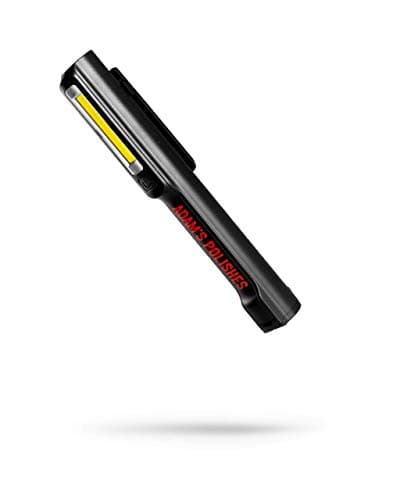
- Inspect under a hard light after a panel wipe, never under garage fluorescents and never while polishing oils are still on the paint. Oils make a corrected panel and an uncorrected one look identical.
- Accept some defects. A deep scratch your fingernail catches in has reached past the clear, and chasing it means removing clear from the whole surrounding panel to level down to its base. On most cars that is a worse outcome than living with the scratch.
- Protect what is left. Wax, sealant or a coating does not add clear coat, but it does take the UV and the chemical attack that would otherwise degrade it.
If this is your first correction, paint correction for beginners runs the whole process at a slower pace, and will rubbing compound damage clear coat answers the same question from the compound end of the shelf.
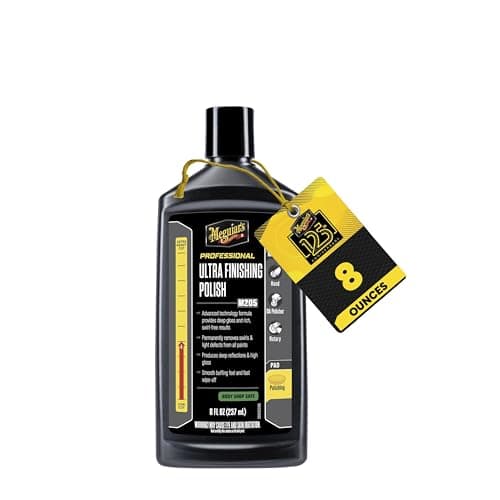
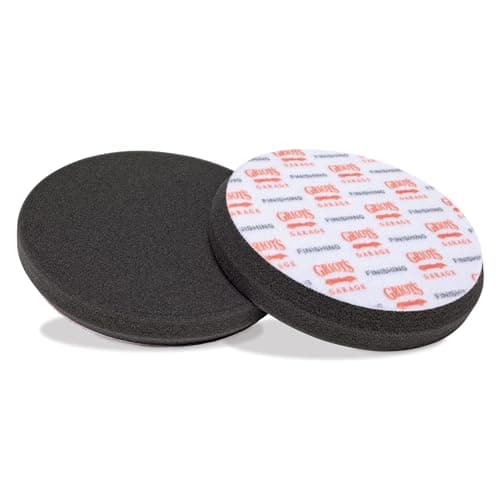
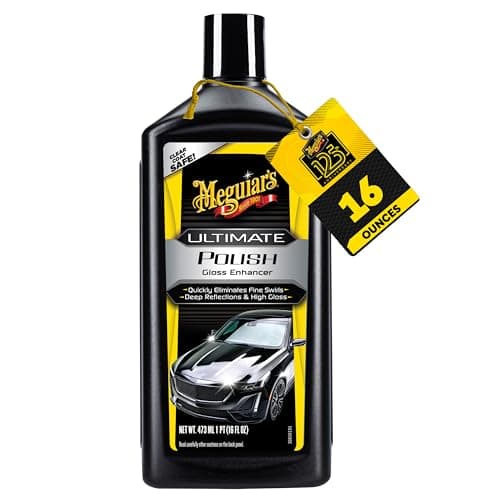
The picks below are the low-cost end of the ladder: two finishing polishes that remove the least material for a visible gain, the soft pad that keeps them gentle, and the inspection light that tells you when to stop. Prices are read live and stamped with the date we verified them.