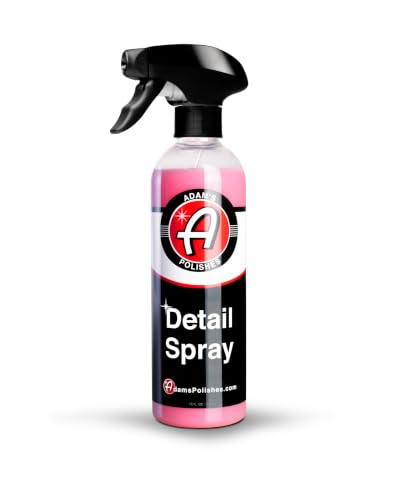
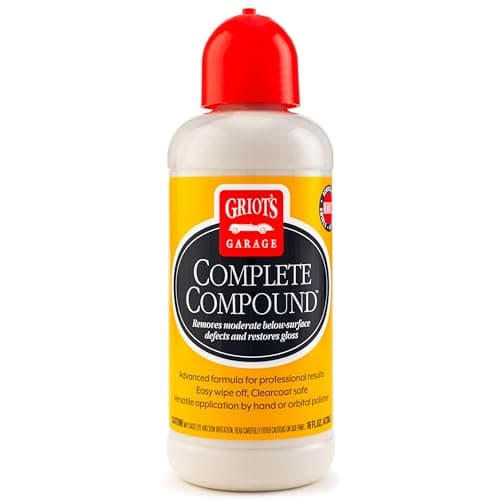
If you are replacing one Meguiar's bottle, start with Griot's Garage Complete Compound — it is the swap for Ultimate Compound, the product this search names more than any other, and it corrects moderate defects while finishing clean enough to go straight to protection on most paint. The budget pick is Adam's Detail Spray, the cheapest bottle on this page and the swap for Gold Class Quik Detailer if you want a spray that tops up protection rather than only adding gloss. Prices come from the live price layer, as of November 23, 2026.
A word on framing first, because it decides whether the rest of this page is useful. Nothing here is an argument that Meguiar's is a weak brand. It is not. Meguiar's products hold the top spot in several categories on this site on merit, and the brand's defining strength is something most of its competitors cannot match: it is the most available and most forgiving range in car care. You can buy it in any parts store in the country, the consumer line is formulated so that a first-timer with a bottle and a towel gets a decent result, and the Mirror Glaze professional line behind it is a genuine body-shop standard.
That is also exactly why people go looking for alternatives. Forgiving formulations are tuned for the middle of the market, so there are three recurring reasons to swap a specific Meguiar's bottle:
You want a filler-free, body-shop-honest formula. Some consumer products across the whole industry contain oils that temporarily hide what they did not remove. Meguiar's Ultimate Compound is explicitly not one of them — but if you want the professional lines that publish their cut and gloss ratings and state outright that they are silicone- and filler-free, that is a different shelf.
You want more cut, or more refinement, than the middle of the range. A one-step compound is a compromise by design. When the defects are past what a one-step will level, or when the paint is dark enough that only an optical-grade finishing polish will do, the answer is a dedicated product at each end rather than a stronger general-purpose one.
You want a published figure where Meguiar's publishes a description. Several products below were picked because their makers state something specific — a cut rating, a non-acid formula, an added SiO2 content — that you can act on without owning both bottles.
The swaps, line by line
Ultimate Compound → Griot's Garage Complete Compound. Both are clear-coat-safe one-step machine compounds that correct moderate swirls and finish clean. Complete Compound is the swap if you are building around Griot's pads and polishers and want the abrasive calibrated to the same system, and it dusts noticeably less than the consumer compounds, which matters on a long job. What you give up is cost per ounce and raw bite: Ultimate Compound is cheaper, and neither has the cut for deep damage. If you want the full category, that is best rubbing compound for cars, where Ultimate Compound is still ranked on merit.
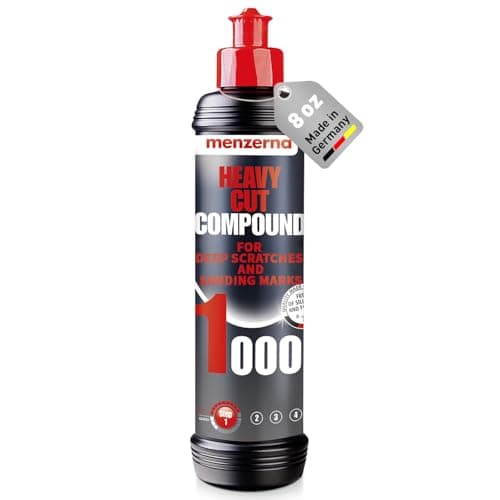
Mirror Glaze M105 → Menzerna Heavy Cut Compound 1000. M105 is the body-shop heavy cutter, and the reason to look past it is almost always that you want the numbers. Menzerna rates HCC 1000 at 9 for cut and 3 for gloss on its own scale and states the product is silicone- and filler-free, which tells you two useful things before you open it: it will level P1500 to P2000 refinish sanding marks, and it will always need a polish stage behind it. The trade is bottle size — eight ounces is small for a whole car — and that a gloss rating of 3 means this is categorically not a one-step. The ladder is on best cutting compound for paint correction.
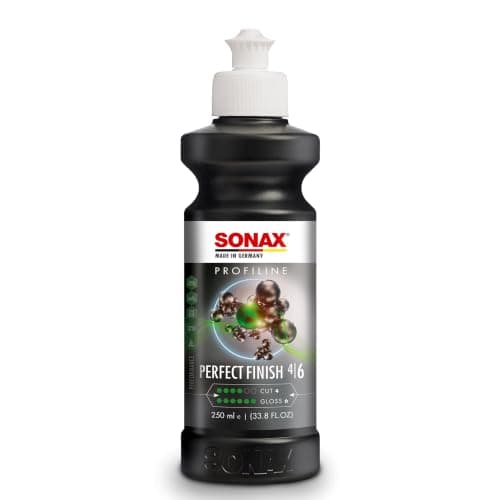
Ultimate Polish → SONAX Perfect Finish. Ultimate Polish is a very fine finishing polish with essentially no cut — its job is depth on dark paint after compounding, and it is one of the cheapest bottles in the category. Perfect Finish is the swap when you want one bottle to do slightly more: it carries enough abrasive to take out light swirls and enough refinement to leave gloss, which turns two stages into one on ordinary daily-driver damage. You pay more per ounce and you still cannot use it on real defects. Full field: best polishing compound for cars.
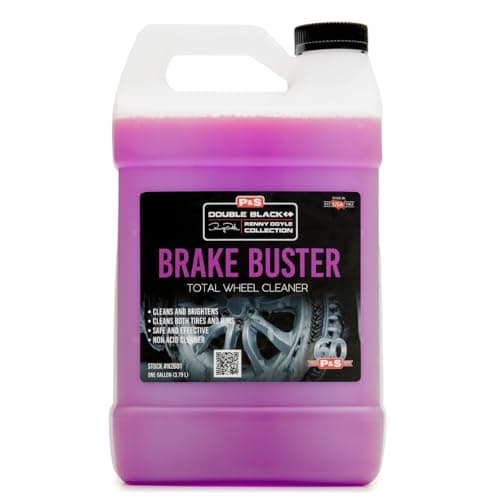
Hot Rims and Wheel Brightener → P&S Brake Buster. Meguiar's wheel range splits by finish and by severity: Hot Rims Black is formulated specifically for black matte, satin and gloss wheels, and Wheel Brightener sits in the professional line for heavy conditions. Either way you are choosing a cleaner for a finish. Brake Buster is the swap for people who do not want to make that choice — P&S states the formula is non-acid and safe for all wheel types, which is why detail shops run it on customer cars whose wheels they did not specify. It arrives as a gallon of concentrate, so you need your own spray bottle and a dilution plan before you can use it, and there is no color-change indicator to watch. The category is on best wheel cleaner.
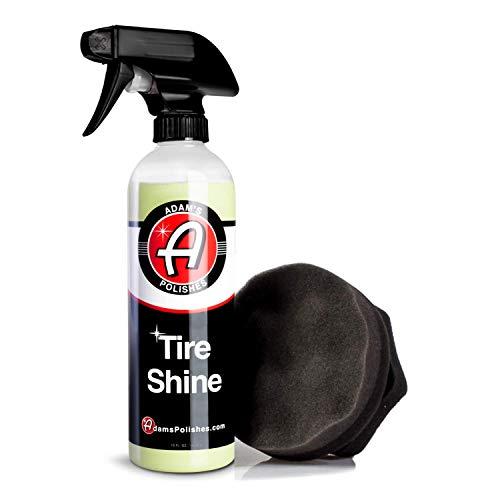
Hyper Dressing → Adam's Tire Shine. Hyper Dressing is Meguiar's dilutable professional-line dressing, and dilution is its whole argument: you mix the gloss level you want and the cost per tire is tiny. Adam's Tire Shine is the swap if you would rather not mix anything: it is ready to use, Adam's publishes a silica-infused formulation with lasting SiO2 protection rather than a plain silicone film, and it states the dressing will not run when properly applied. Two honest trades — it is sold as a combo with Adam's applicator rather than as a bare bottle, so it costs more per use than diluted Hyper Dressing, and it still needs the wipe-level step to stay sling-free. The rest of the field is on best tire shine.
Gold Class Premium Quik Detailer → Adam's Detail Spray. Both are quick detailers and both lubricate well enough to clay with. The Meguiar's bottle is 24 oz at parts-store pricing and preserves the wax underneath rather than stripping it, which is honestly hard to beat on value. Adam's is the swap for one reason: it tops up the protection already on the paint instead of sitting inert on it, which makes it the better bottle to keep beside a waxed or coated car. It is the most expensive per ounce of the two, and like every "waterless" spray it is only genuinely safe on light dust. See best detail spray for the full set.
How we picked the swaps
Match on a stated strength, not on a vibe. Every pick above beats the Meguiar's product it replaces on one specific, published property — a cut rating, a non-acid formula, added SiO2, system calibration — or it does the same job in a format you may prefer. None of them is better across the board, and we do not say otherwise.
Registry products only. Every alternative here is a product we already rank somewhere else on this site, with its own write-up, pros, cons and don't-buy-if. Nothing was added to fill a slot on this page.
No comparative testing claims. We have not run these bottles side by side against their Meguiar's counterparts. Every rating and formula claim above is attributed to the maker that published it, and how we research sets out exactly what our scores are built from. For the brand-level view rather than the product-level one, read Meguiar's vs Chemical Guys or best car detailing brands.
Switching off Meguiar's without wasting money
Swap one bottle, not the shelf
Replace the single product you are least happy with and keep everything else constant for a wash or two. It is the only way to find out whether the bottle was the problem or the technique was — and on a forgiving range like Meguiar's, the technique often is.
Abrasives are systems, so re-run your test spot
Compounds are calibrated with the pads they are sold beside. Moving from Meguiar's to Menzerna or Griot's means re-establishing the least aggressive pad-and-product combination that clears your defects before you start on the car — paint correction for beginners has the procedure, and the pad color guide explains why the pad changes the result as much as the bottle.
Do not swap a one-step for a two-stage system by accident
This is the expensive mistake on this page. HCC 1000 is not a replacement for Ultimate Compound; it is the first half of a two-product process and it needs a finishing polish behind it. If you buy the heavy cutter alone you will end up with a hazed panel and a second shopping trip. Polish vs compound is the ten minutes that prevents it.
Keep the Meguiar's products that win their category
Several do, on this site, on merit. Ultimate Compound is still the pick we recommend most often for one-step correction, M205 is still a reference finishing polish, and the Gold Class wash gallon is still the lowest cost per wash we rank. Switching brands on principle is how people end up with worse results and a cupboard of part-used bottles. If a bottle is working, the correct number of alternatives to buy is zero.
Check availability before you commit to a boutique brand
The quiet advantage you give up when you leave Meguiar's is that you can no longer replace a product mid-job on a Sunday afternoon. Menzerna, SONAX and P&S are mail-order for most people. If running out halfway around the car would ruin your weekend, buy the second bottle up front or keep the parts-store product as your backup.
Watch the format, not just the formula
Two of the swaps above change what you are buying as much as what is in it. Brake Buster is a gallon of concentrate rather than a ready-to-use trigger bottle, and HCC 1000 is an eight-ounce bottle rather than a pint. Both are good value per use and both need a different plan than the thing they replace.
If the complaint is price rather than performance
Meguiar's is rarely the expensive option, so "cheaper than Meguiar's" is a narrow search. Where it exists, it is usually in wax rather than abrasives — best car wax under $20 has the band, and Turtle Wax alternatives works the same question from the other end of the shelf.