Every clay product here does the same basic job — physically shearing bonded contamination off paint that a wash alone cannot touch — but they differ in grade (aggressiveness), format (bar vs. reusable mitt) and how forgiving they are of a first attempt. If you failed the baggie test and your paint feels gritty rather than glass-smooth, one of these five is the fix before you ever pick up a polisher. How often to repeat it is a separate question, answered in how often should you clay bar your car.
Grade matters more than brand. A mild/fine bar is the safest choice for a first job or paint that is only lightly contaminated; a medium bar clears heavier fallout and overspray faster but demands more lubricant and a slower hand to avoid marring soft clear coats. A clay mitt trades some of that per-pass grade precision for speed and reuse — it covers a car quickly and survives being dropped, where a bar is done the moment it hits the driveway.
If your contamination is mostly metallic — brake dust and rail fallout rather than general grime — pair whichever clay you pick with a proper iron remover first; it dissolves embedded iron chemically so the clay is doing less mechanical work, which is safer for the paint. And once the surface passes the feel test again, move on to actual correction with a rubbing compound rather than stopping at decon and calling it done — clay removes contamination, it does not remove swirls.
Kits are worth the small premium over a bare bar for a first job, since a bundled bottle of detailer means you are not guessing at how much lubricant is enough. A mitt is the better buy once you know you will be decontaminating more than one car, or the same car more than once a year — the higher upfront cost stops mattering after the second or third use, where a bar is already long gone after the first drop.
Whichever format you buy, do not make it the first step. Embedded iron particles are hard and sharp, and clay cannot dissolve them — it either carries them in its face for the rest of the car or skates over them, and the first of those is the single most common cause of marring during decontamination. Dissolve the iron chemically first: iron remover vs clay bar explains the order and how to tell which stages your car genuinely needs.
The short answer
| # | Product | Best for | Score | Price |
|---|
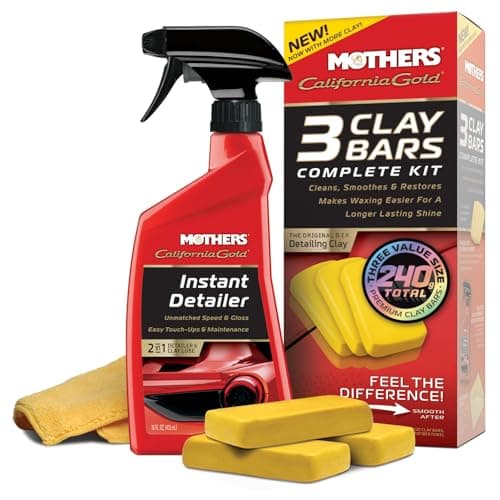
| 01 | Mothers California Gold Clay Bar SystemThe lowest-cost way to learn claying: three mild bars plus detailer that safely pull bonded contamination off paint, and forgiving enough that a first-timer won't marr the finish. | A first clay job at the lowest cost of entry | | $21.46·Amazon |
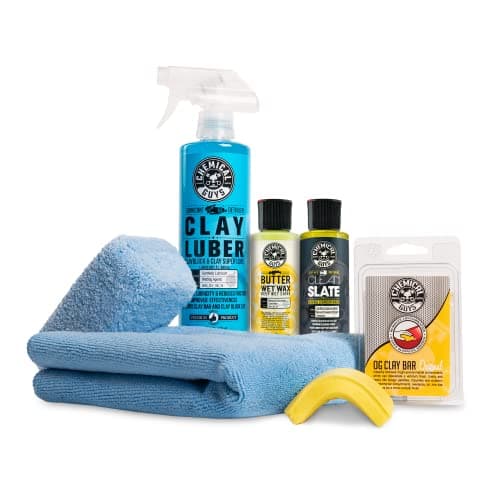
| 02 | Chemical Guys Clay Bar & Luber KitA beginner-focused kit with generous lubricant, which is the real key to safe claying — plenty of luber means you work slowly and never drag clay across dry paint. | Beginners who want plenty of lubricant to work slowly | | $29.99·Amazon |
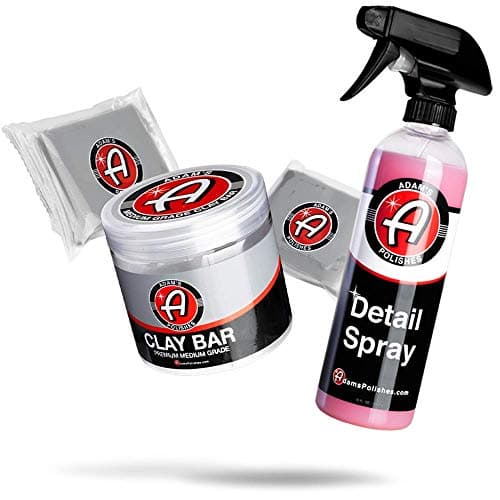
| 03 | Adam's Polishes Medium Grade Clay Bar KitThe pick for genuinely dirty paint: a medium-grade bar that keeps up with heavier fallout and overspray where a fine bar just glazes over — pair it with plenty of lube. | Heavily contaminated paint fine clay can't keep up with | | $25.49·Amazon |
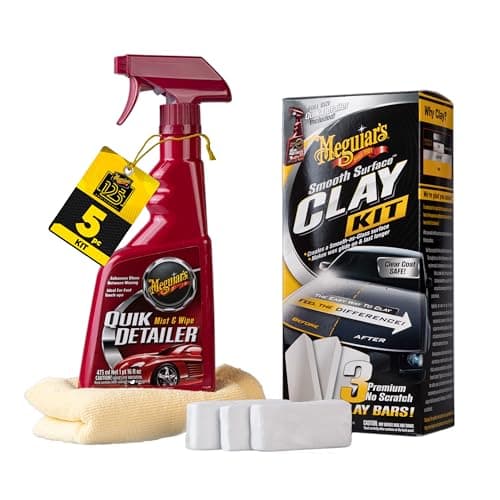
| 04 | Meguiar's Smooth Surface Clay KitThe most beginner-proof clay kit: a mild bar, quik detailer as lube, and a wax to finish, all matched to work together — the closest thing to a zero-risk introduction to claying. | An absolute first-timer who wants zero risk | | $17.19·Amazon |
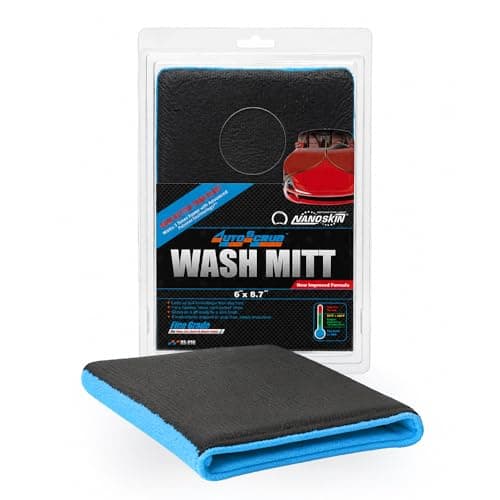
| 05 | Nanoskin AutoScrub Clay Mitt (Fine)The reusable upgrade over a clay bar: a rubber-polymer mitt that decontaminates a whole car fast and survives being dropped, so it pays for itself over a few details. | Fast decontamination you reuse for years | | $52.99·Amazon |
#ad · Live prices from the Amazon Product API, as of October 19, 2026. Where we have no verified live price, we show none — we would rather leave a gap than print a number that has rotted.
In detail
A first clay job at the lowest cost of entry
Mild/fine clayThree 80 g barsIncludes detailerBeginner-safe
The lowest-cost way to learn claying: three mild bars plus detailer that safely pull bonded contamination off paint, and forgiving enough that a first-timer won't marr the finish.
- Decontamination
- 7.6
- Marring safety
- 8.8
- Kit completeness
- 8.2
- Value
- 8.8
Pros
- +Cheap, complete starter kit
- +Mild grade is forgiving on clear coat
- +Widely available
Cons
- −Mild bar is slow on heavy contamination
- −A dropped bar is scrap — though you get three
Don't buy this if…
…the paint is heavily contaminated — a medium clay or a clay mitt works faster.
Beginners who want plenty of lubricant to work slowly
Clay + luberGenerous lube volumeMedium gradeKit
A beginner-focused kit with generous lubricant, which is the real key to safe claying — plenty of luber means you work slowly and never drag clay across dry paint.
- Decontamination
- 8
- Marring safety
- 8.2
- Kit completeness
- 8.4
- Value
- 8.2
Pros
- +Lots of lubricant reduces marring risk
- +Grade suits typical daily-driver contamination
- +Good value bundle
Cons
- −Medium grade can marr very soft paint if rushed
- −Clay bars are single-drop mortal
Don't buy this if…
…you want a reusable tool that survives drops — a clay mitt lasts for years.
Heavily contaminated paint fine clay can't keep up with
Medium gradeFaster deconIncludes detailerKit
The pick for genuinely dirty paint: a medium-grade bar that keeps up with heavier fallout and overspray where a fine bar just glazes over — pair it with plenty of lube.
- Decontamination
- 8.4
- Marring safety
- 7.8
- Kit completeness
- 8.2
- Value
- 7.9
Pros
- +Cuts through heavier contamination quickly
- +Comes with detailer to lube as you go
- +Consistent Adam's quality
Cons
- −Medium grade needs more care on soft clear
- −Pricier than a basic mild kit
Don't buy this if…
…your paint is fairly clean — a mild bar is safer for light maintenance decon.
An absolute first-timer who wants zero risk
Mild clayDetailer + waxMatched kitBeginner-proof
The most beginner-proof clay kit: a mild bar, quik detailer as lube, and a wax to finish, all matched to work together — the closest thing to a zero-risk introduction to claying.
- Decontamination
- 7.4
- Marring safety
- 9
- Kit completeness
- 8.6
- Value
- 8.4
Pros
- +Everything matched to work together
- +Mild bar is very hard to marr with
- +Includes a finishing wax step
Cons
- −Mild grade struggles with heavy fallout
- −Smaller bar than standalone options
Don't buy this if…
…your paint has heavy industrial fallout — reach for an iron remover plus a medium clay.
Fast decontamination you reuse for years
Rubber-polymer mittReusableFine gradeFast coverage
The reusable upgrade over a clay bar: a rubber-polymer mitt that decontaminates a whole car fast and survives being dropped, so it pays for itself over a few details.
- Decontamination
- 8.6
- Marring safety
- 7.8
- Kit completeness
- 7.6
- Value
- 8.6
Pros
- +Covers a car far faster than a bar
- +Survives drops — rinse and keep going
- +Reusable for many details
Cons
- −Needs plenty of lube to stay marr-safe
- −Higher up-front cost than a bar
Don't buy this if…
…you only ever decon one car once — a cheap clay bar is enough for a single job.
How to choose a clay bar
Grade first, brand second
Clay is sold by aggressiveness — usually labeled mild/fine, medium or heavy. Mild is the right default for maintenance decon on paint that is only lightly contaminated, and it is the hardest grade to marr with. Medium earns its keep on genuinely dirty paint — heavy fallout, overspray, sap buildup — where a mild bar just glazes over the top without actually clearing it. There is rarely a reason to reach for a heavy-cut clay on a daily driver; save it for neglected paint you already expect to compound afterward anyway.
Lubricant is the real safety feature
Marring from claying almost always comes from working a dry or under-lubricated panel, not from the clay grade itself. A generous quick detailer or dedicated clay lube keeps the bar gliding rather than dragging, and it is the cheapest insurance against adding fine scratches while removing contamination. Kits that bundle a full bottle of detailer, not just a sample packet, are worth the small premium for that reason alone.
The cost math: bar vs. mitt
A clay bar is single-use in the sense that matters — drop it on the ground once and it is contaminated with grit and done. A clay mitt is rubber-polymer on a washable glove, so it survives drops and rinses clean between panels, which means its higher upfront cost amortizes across every detail you do afterward. If you are clay-ing one car once, a bar kit is the cheaper choice; if you expect to decon several cars or the same car every few months, a mitt pays for itself within a couple of uses.
The common mistake
Treating clay as a substitute for washing, or as a substitute for an iron remover, are both versions of the same error: skipping a step and asking clay to do a job it is only partly suited for. Wash first so you are not grinding loose dirt into the paint, decon iron chemically where it applies, then clay what is left. Clay last, correct after — never the other way around.
How we picked
We compiled published specifications, manufacturer data sheets and aggregated owner reviews, computed the cost of ownership from real sizes and coverage, then scored each product against a published rubric. The scores are judgments from documented research — they are not measurements we took, because we do not own a lab and we are not going to pretend we do. Where a number came from someone else, we name them and link them in Sources.
Questions
What does a clay bar do?+
It physically shears bonded contamination — rail dust, brake dust, tree sap, overspray — off the clear coat that a normal wash can't remove, leaving the paint smooth to the touch again.
How often should you clay a car?+
Most daily drivers only need it every few months, or whenever the baggie test shows the paint has gone gritty again — it depends far more on your environment than a fixed schedule.
Clay bar vs. clay mitt?+
A bar is cheaper for a single job and slightly more precise about grade; a mitt covers a car faster and survives being dropped, so it pays off if you'll decon more than once.
Do you need to polish after claying?+
Clay only removes contamination sitting on top of the clear coat — it does not remove swirls or oxidation baked into the surface, so a compound or polish pass is still a separate step if defects are present.
Can a clay bar damage paint?+
Yes, if it's used dry or with too little lubricant, or if a dropped bar is reused without inspecting it for embedded grit — proper lube and frequently folding the bar to a clean face avoids this.
Receipts
We do not run a testing lab, and we do not pretend to. Where a measured number came from someone else's lab, we name them and link them. Where we could not verify something, we say so on the page rather than quietly leaving it out. Read our full method.