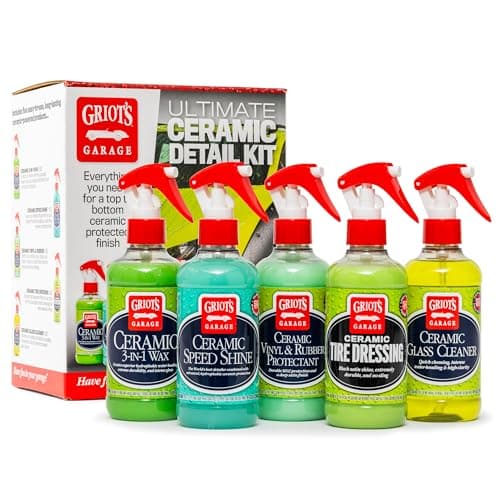
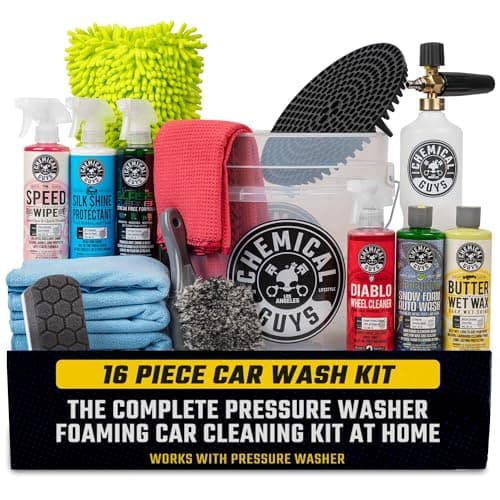
A detailing kit is the most sensible first purchase in this hobby and the most commonly misunderstood one. People buy a box expecting it to make a tired car look new, and what they actually get is a very good set of tools for keeping an already good car looking good. Those are different jobs, and the gap between them is where the disappointment lives.
So this page ranks kits on a single question: how much of the real workflow is inside the box, and what is still missing when you open it. That turns out to be the only criterion that predicts whether somebody is happy with their purchase a month later, and it is the one almost nobody applies, because piece counts photograph better than coverage does.
The four stages, and where every kit stops
Every exterior detail is the same four stages in the same order, and each one does something the next cannot do for it.
- Wash removes loose dirt. It is the stage that decides whether you are adding swirl marks or removing them, which is why the wash media in a kit matters more than the number of bottles.
- Decontaminate removes what washing cannot: bonded iron fallout, tar, tree sap and the embedded grit you feel as roughness. This is clay and chemical work.
- Correct removes defects from the clear coat itself - swirls, etching, light scratches - by abrading a few microns away with a machine, a pad and a compound.
- Protect puts a wax, sealant or coating on top so the result survives the next few months of weather.
Here is the thing worth knowing before you spend any money: no kit on this page corrects paint, and essentially no kit sold as a "detailing kit" ever does. Kits cover stage one and stage four, one of them reaches into stage two, and stage three is always a separate purchase, because it needs a machine. If the problem you are trying to solve is swirl marks in direct sunlight, the honest answer is that you want a paint correction kit instead - a different product class that we rank separately, built around a polisher rather than a bucket.
How we ranked them
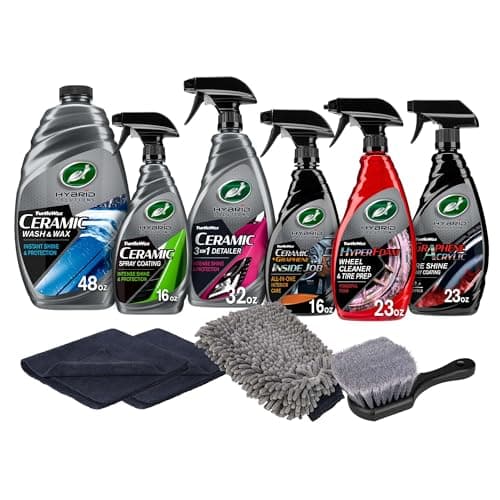
Workflow coverage - how many of the four stages the box genuinely addresses, counted from what each listing itemizes rather than from the piece count on the front. A kit with a clay bar covers more real ground than a kit with four towels.
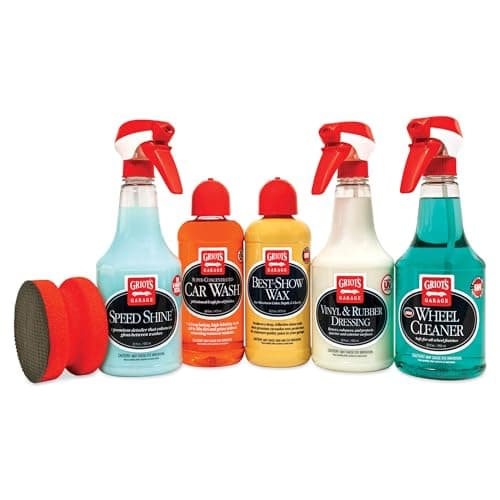
Chemical quantity - full working sizes or trial bottles. Six 16 oz bottles will see you through a season on one car. Five 8 oz bottles are a taster of a line, which is a legitimate thing to buy as long as you know that is what you bought.
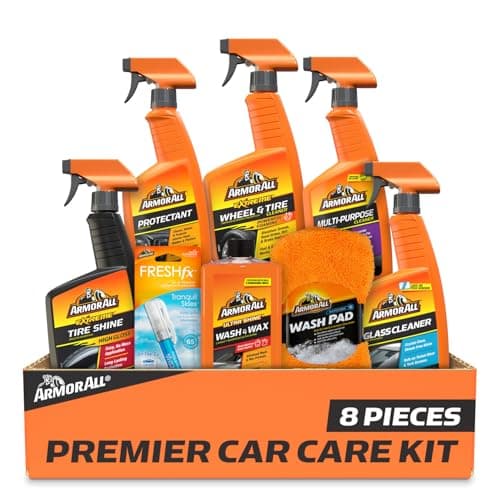
Wash media safety - the single most consequential item in any kit. A deep-pile mitt lifts grit up and away from the paint; a flat foam pad drags it across the surface. The cheapest kit here includes a wash pad, and it is the reason it ranks last on this measure despite being excellent value overall.
Value - cost per stage actually covered, not cost per item. By that measure the cheapest box on the page is not automatically the best value, and the most expensive is not automatically the worst.
We do not test products in a lab, and nothing on this page claims we did - how we research explains exactly what our scores are built from. Kit contents below come only from what each listing or maker itemizes; where a kit does not publish what is in it, we left it off rather than guess.
The three shapes a kit comes in
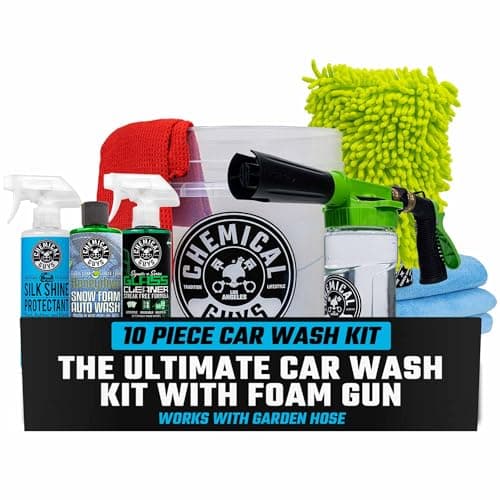
Wash-system kits are built around a foaming device - a pressure-washer cannon or a hose-fed gun - plus the chemicals that feed it. They are the right buy if your paint is in decent shape and your goal is to stop making it worse. The foam pre-soak is genuinely the most valuable thing in this category, because it lifts grit before a mitt touches the panel, and that is what washing a car without scratching it comes down to.
Broad care kits try to cover every surface on the car - paint, glass, wheels, tires, interior - in consumer-size bottles. They are the best fit for someone who wants one order to arrive and cover everything, and the trade is depth: you will run out of the two products you use most while three others sit full.
Maintenance or top-up kits skip washing entirely and give you the protection and detailing chemistry a clean car consumes. They are the cheapest way into a brand and the wrong first purchase, because they assume you already own soap, a bucket and wash media.
What makes a kit worse value than buying separately
Kits are not automatically cheaper. Three specific things turn a kit into a worse deal than a short shopping list, and all three are visible before you buy.
Sample-size bottles. A box of eight 4 oz bottles looks generous and is mostly packaging. You will replace the soap and the spray wax first, in full size, from the same brand, at which point the kit was a trial rather than a stock-up.
Items you already own or will not use. If you have a clay bar, the one thing that justifies a kit over its parts has just been removed from the equation. The same goes for interior chemistry in an exterior-focused purchase.
Wash media that is a downgrade. Wash pads, thin towels and applicator sponges are where kits save money, and they are the parts that touch your paint. A good wash mitt and a proper drying towel cost less than most people expect and matter more than any bottle in the box.
Prices in this category run from roughly the cost of two bottles of shampoo at the bottom end to several times that for a foam cannon kit - we show the live price on every card above rather than quoting a number here that would be stale by the time you read it.
What to buy alongside almost any kit
Three purchases turn any kit on this page into a genuinely complete setup, and none of them is expensive. A second bucket with a grit guard, so dirty water never goes back on the car. A plush wash mitt, if the kit ships a pad. And a dedicated drying towel with real absorbency, because drying with the thin microfiber a kit includes is the other half of where swirls come from.
After that, the next upgrade is not another chemical. It is the machine the kits cannot include - and if you have got as far as asking which polisher, the long-throw-versus-short question in Griot's G9 vs G15 is the one most buyers actually have to answer. If you simply want the shortlist for the chemistry rather than a boxed set, the individual picks are in best car detailing products.
How to choose a detailing kit
Start from the gap, not from the box
Write down what you already own: soap, bucket, mitt, towels, wax, clay, wheel cleaner. Buy the kit that fills the most boxes you cannot tick. This sounds obvious and it is the step people skip, which is why so many garages hold three bottles of spray wax and no clay bar.
Read the contents, not the piece count
"16-piece" counts microfiber towels and an applicator pad as four pieces. Find the itemized list - good listings publish one - and count the chemicals and their sizes. Every kit on this page was chosen partly because its contents are published; the ones that only advertise a piece count were left off.
Match the foaming device to your water supply
A foam cannon needs a pressure washer and makes thick, clinging foam. A foam gun runs off a garden hose and makes thinner foam that still helps. Buying the wrong one is the most common mis-purchase in this category: a cannon with no pressure washer is a paperweight, and a hose gun is a mild disappointment to somebody who already owns a pressure washer.
Treat the wash media as the critical item
If a kit includes a sponge or a flat pad, plan to replace it before the first wash and price that in. The chemicals in these kits are broadly similar in quality across brands; the thing that will actually decide how your paint looks in two years is what you rub it with. The same logic runs through our microfiber towel picks.
Plan the correction step separately
If the car has swirls, etching or scratches, no kit here will remove them, and adding a second kit will not either. That is a machine, pads and an abrasive - costed out in DIY detailing cost vs a shop and sequenced in paint correction for beginners. Buy the kit for maintenance, buy the machine for correction, and do not expect either to do the other's job.
Do not buy a brand you cannot refill locally
Kits are a brand on-ramp. You will rebuy the soap and the detailer, probably in the same line, so a kit from a brand you can buy in a store on a Saturday morning has a quiet practical advantage over one you can only order. This is the one argument in favor of the supermarket-shelf kits that enthusiast forums tend to dismiss.
Know when a kit is the wrong purchase entirely
Three cases: the car needs correcting rather than cleaning; you already own the wash essentials and only need one missing product; or you want the best version of a single thing rather than a competent version of six. In all three you are better served by individual picks - and in the first, by a correction kit built around a polisher.
Finish the car the kit forgot about
Most kits include something for tires, and it is usually the weakest bottle in the box - a thin dressing that looks wet for a day and slings onto your freshly washed paint in the first rain. If that is the part of the result that keeps letting you down, the chemistry worth knowing about is in best tire shine, which ranks dressings on sling resistance rather than on day-one gloss.