Skip to content
Pad & Polish

HUB 01 · Machine Polishers

Best Mini Polisher

Five small-pad machines for the panels a full-size DA physically cannot correct — and an honest answer on whether you need one at all.

By Stephen V.Updated How we research
#ad

We earn a commission when you buy through our Amazon links, at no extra cost to you. It never affects our rankings, and we say so when the cheaper product is the better buy. How this works.

Start with the honest part: a mini polisher is a second machine, not a first one. If you own no polisher at all, buy a full-size dual-action — it will correct ninety percent of the surface area on any car, and no mini will. This page is for the point after that, when you have corrected the hood and the doors to a mirror and the A-pillars, mirror caps, bumper returns and the strip below the door handles still look exactly as they did before you started.

That gap is geometry, not technique. A 5.5-inch pad on a 5-inch backing plate needs a reasonably flat area to sit on. Put it on a mirror housing and only its edge contacts the paint, which is both ineffective and the fastest way to burn a corner. Drop to a 3-inch pad and the same machine motion suddenly fits the panel. Drop to 2 inches and you can work a pillar or the face of a door handle.

What changes when the pad gets smaller

Two things, and they pull in opposite directions. First, the contact patch shrinks dramatically — a 3-inch pad has roughly a quarter of the face area of a 6-inch one — so the same downward force becomes far more pressure per square inch. Correction speeds up, and so does your ability to do damage if you dwell. Second, the pad is closer to the machine's center of rotation, which makes small tools feel twitchier than the large ones they are derived from.

The practical consequence is to slow down and lighten up. Everything you learned about keeping the pad flat and moving from how to polish a car step by step still applies, just with less pressure and shorter passes. Use a less aggressive combination than you would on a big flat panel — this is not the place to introduce a heavy-cut microfiber disc and a compound you have never run before.

Corded or cordless, for a mini specifically

The corded-versus-cordless argument flips here. On a full-size machine, cordless costs you torque and runtime for freedom you only sometimes need. On a mini, the freedom is most of the point: the panels you are reaching for are awkward, often near the ground or up under a mirror, and a cable is fighting you the entire time. Battery life is also far less of a constraint, because a mini is working a few square feet, not a whole car.

The counter-argument is money. Corded minis cost meaningfully less for the same orbit, and if you already have a battery platform in the garage, a bare tool on that platform is the cheapest cordless route there is. Both cases are represented below.

Orbit size on a small machine

Minis run smaller throws than full-size machines — typically 8 to 13 mm on the orbital ones — and the reasoning matches the full-size logic in the dual-action roundup: a shorter throw is more controllable and slower, a longer one clears defects faster and is less forgiving. On panels this small and this contoured, controllable usually wins. The time you save with a bigger orbit on a mirror cap is measured in seconds; the paint you can ruin is measured in body shop invoices.

Pads for these machines are their own small ecosystem. Confirm the backing plate diameter before ordering — 2-inch and 3-inch systems are not interchangeable — and read the pad color guide before assuming the small pads in a kit match the aggressiveness you are used to.

The short answer

Quick picks

#ProductBest forScorePrice
01
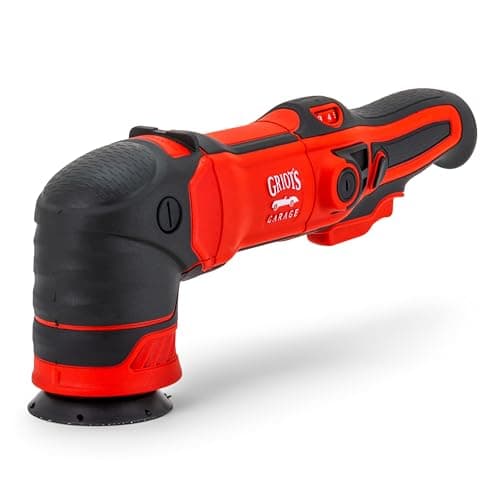
Griot's Garage Griot's Garage G8 Orbital Polisher
Griot's Garage G8 Orbital Polisher

The compact orbital built around a 3-inch pad, from the brand whose full-size machines already anchor our polisher picks — the one to buy if you want mirror caps, pillars and bumper corners corrected to the same standard as the hood.

Correcting the panels a 5.5-inch pad cannot sit flat on
8.1
$144.99Amazon
02
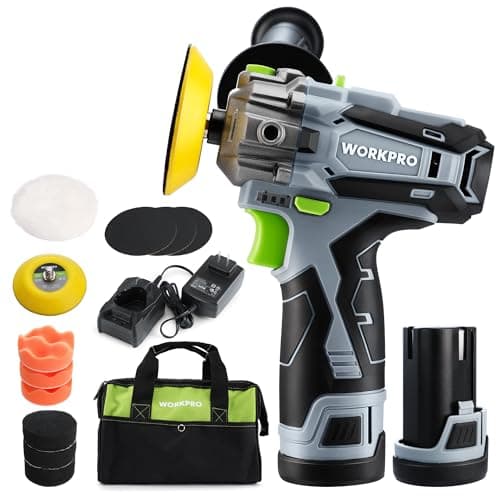
SPTA SPTA 12 V Cordless Mini Polisher (RO/DA)
SPTA 12 V Cordless Mini Polisher (RO/DA)

The cheapest honest way to own a cordless detail polisher: a mini RO/DA head with small pads for badges, mirrors and headlights, at a price where it does not have to be your main machine to make sense.

Cheap cordless spot work on badges, mirrors and headlights
8.0
$114.00Amazon
03
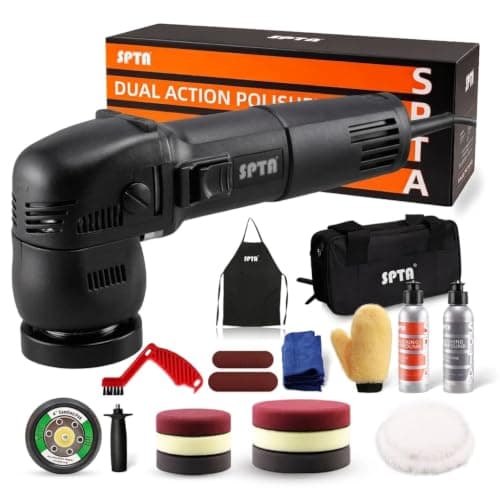
SPTA SPTA 3-Inch Mini Orbital Polisher
SPTA 3-Inch Mini Orbital Polisher

A corded 3-inch dual-action with a larger 10 mm throw than most minis, sold with pads and sanding discs already in the case — the cheapest credible way to add a detail polisher to a garage that already has a full-size machine.

A corded detail polisher with the accessories included
8.2
$99.99Amazon
04
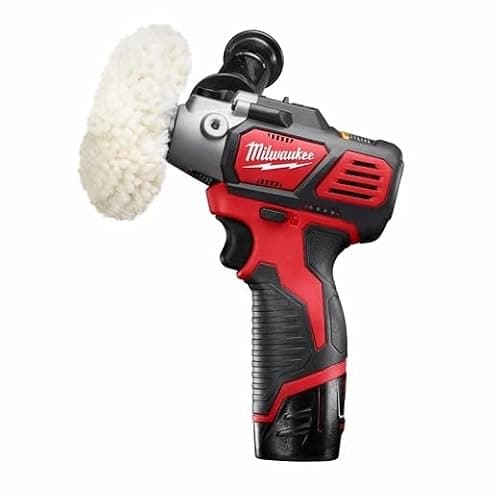
Milwaukee Milwaukee 2438-22X M12 Cordless Polisher/Sander Kit
Milwaukee 2438-22X M12 Cordless Polisher/Sander Kit

A compact cordless spot tool for the places a 5-inch pad cannot reach — mirror caps, pillars, door handles, motorcycle tanks — and an obvious buy if M12 batteries are already in your garage.

Tight spots and anyone already on the M12 battery platform
7.9
$229.99Amazon
05
ZOTA ZOTA 2-inch/3-inch Mini Random Orbital Polisher
ZOTA 2-inch/3-inch Mini Random Orbital Polisher

Ships with both a 2-inch and a 3-inch backing plate, which is the practical difference between reaching a mirror cap and giving up on it — the budget mini that covers the most awkward geometry per dollar.

The tightest panels, on the smallest budget
8.0
$63.98Amazon

#ad · Live prices from the Amazon Product API, as of Sep 4, 2026. Where we have no verified live price, we show none — we would rather leave a gap than print a number that has rotted.

In detail

The picks, in full

01
Griot's Garage Griot's Garage G8 Orbital Polisher

Correcting the panels a 5.5-inch pad cannot sit flat on

Griot's Garage G8 Orbital Polisher

3-inch pad class8 mm orbitVariable speedLifetime warranty
8.1/10

The compact orbital built around a 3-inch pad, from the brand whose full-size machines already anchor our polisher picks — the one to buy if you want mirror caps, pillars and bumper corners corrected to the same standard as the hood.

Ergonomics
9
Correction power
7.8
Beginner-safe
8.8
Value
6.6

Pros

  • Nearly the same orbit as the G9, so technique carries straight across
  • Reaches A-pillars, mirror caps and bumper returns a full-size DA skips
  • Griot's lifetime warranty applies here too

Cons

  • Costs nearly as much as a full-size DA for a fraction of the coverage
  • Far too slow to correct a whole car on its own

Don't buy this if…

you do not already own a full-size polisher — buy that one first.

$144.99View on Amazon

Price as of Sep 4, 2026. Prices change — Amazon's is the one that counts.

#ad · we may earn a commission from this link to Griot's Garage G8 Orbital Polisher

02
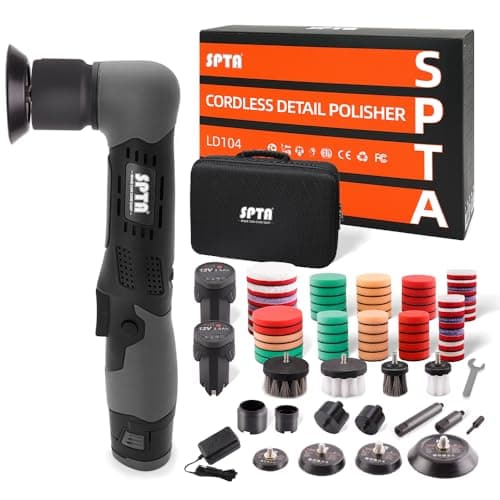
SPTA SPTA 12 V Cordless Mini Polisher (RO/DA)

Cheap cordless spot work on badges, mirrors and headlights

SPTA 12 V Cordless Mini Polisher (RO/DA)

12 V cordlessRO/DA headMini pads (1–3 in)Foam + wool pads included
8.0/10

The cheapest honest way to own a cordless detail polisher: a mini RO/DA head with small pads for badges, mirrors and headlights, at a price where it does not have to be your main machine to make sense.

Ergonomics
8.2
Correction power
6.2
Beginner-safe
8.6
Value
8.8

Pros

  • Costs a fraction of a name-brand cordless polisher
  • Comes with the small pads the tool actually needs
  • Genuinely useful for headlight restoration and trim work

Cons

  • Build quality is budget-grade — treat it as a consumable tool
  • Tiny pad area makes any large panel painfully slow

Don't buy this if…

you want to correct panels — this is a detail tool, and a full-size DA is the right buy.

$114.00View on Amazon

$119.995% off

Price as of Sep 4, 2026. Prices change — Amazon's is the one that counts.

#ad · we may earn a commission from this link to SPTA 12 V Cordless Mini Polisher (RO/DA)

03
SPTA SPTA 3-Inch Mini Orbital Polisher

A corded detail polisher with the accessories included

SPTA 3-Inch Mini Orbital Polisher

3-inch pad10 mm orbit780 W motorPads + discs included
8.2/10

A corded 3-inch dual-action with a larger 10 mm throw than most minis, sold with pads and sanding discs already in the case — the cheapest credible way to add a detail polisher to a garage that already has a full-size machine.

Ergonomics
7.8
Correction power
8
Beginner-safe
8
Value
8.8

Pros

  • A 10 mm throw corrects faster than the 8 mm minis in this class
  • Corded, so it never runs out mid-panel like a battery mini
  • Pads and backing plates are in the box rather than a second order

Cons

  • Cable is a nuisance in exactly the tight spots this tool is for
  • Support and parts availability are thinner than a name-brand tool

Don't buy this if…

the whole reason you want a mini is to get away from a cord.

$99.99View on Amazon

Price as of Sep 4, 2026. Prices change — Amazon's is the one that counts.

#ad · we may earn a commission from this link to SPTA 3-Inch Mini Orbital Polisher

04
Milwaukee Milwaukee 2438-22X M12 Cordless Polisher/Sander Kit

Tight spots and anyone already on the M12 battery platform

Milwaukee 2438-22X M12 Cordless Polisher/Sander Kit

M12 12 V cordlessVariable speedCompact spot headTwo batteries included
7.9/10

A compact cordless spot tool for the places a 5-inch pad cannot reach — mirror caps, pillars, door handles, motorcycle tanks — and an obvious buy if M12 batteries are already in your garage.

Ergonomics
9
Correction power
6.8
Beginner-safe
8.4
Value
7.2

Pros

  • Gets into trim, pillars and handles a full-size DA cannot touch
  • Batteries and charger are in the box, and they fit the rest of M12
  • Small enough to work one-handed on vertical panels

Cons

  • Far too small to correct a full panel, let alone a car
  • Tool-plus-battery pricing is steep for the coverage you get

Don't buy this if…

this is your only polisher — it is a supplement to a full-size machine, never a replacement.

$229.99View on Amazon

Price as of Sep 4, 2026. Prices change — Amazon's is the one that counts.

#ad · we may earn a commission from this link to Milwaukee 2438-22X M12 Cordless Polisher/Sander Kit

05
ZOTA ZOTA 2-inch/3-inch Mini Random Orbital Polisher

The tightest panels, on the smallest budget

ZOTA 2-inch/3-inch Mini Random Orbital Polisher

2-inch + 3-inch plates8 mm orbitRandom orbitalCorded
8.0/10

Ships with both a 2-inch and a 3-inch backing plate, which is the practical difference between reaching a mirror cap and giving up on it — the budget mini that covers the most awkward geometry per dollar.

Ergonomics
7.6
Correction power
7.2
Beginner-safe
8.2
Value
9

Pros

  • Two plate sizes in the box instead of one
  • 8 mm random orbit keeps the beginner-safe stall behavior
  • Cheapest way into dedicated small-panel correction

Cons

  • Motor has the least reserve of the minis here under real pressure
  • Build quality is budget-tier next to the Griot's machine

Don't buy this if…

you will lean on it hard for hours — the pricier minis hold speed better.

$63.98View on Amazon

$84.9925% off

Price as of Sep 4, 2026. Prices change — Amazon's is the one that counts.

#ad · we may earn a commission from this link to ZOTA 2-inch/3-inch Mini Random Orbital Polisher

How to choose a mini polisher

The decision has three inputs: which plate sizes you need, whether you want a cord, and how much of a machine you are willing to buy for what is genuinely a supporting tool.

Plate size first

A 3-inch plate handles most of what a full-size machine misses: bumper returns, the lower third of a door below a swage line, headlight surrounds, the flat of a mirror cap. A 2-inch plate is a specialist — pillars, door handle faces, the tight radius where a spoiler meets the trunk. If a machine ships with both, that is genuinely worth something, because buying a second plate and a second set of pads later usually costs more than the difference at purchase.

Orbital or rotary

Some mini polishers are random orbitals, some are rotaries, and a few switch between the two. Everything said in dual-action vs rotary holds here, only more so — the small contact patch means a rotary builds heat in one place extremely quickly. Unless you already run a rotary comfortably on flat panels, choose a random orbital.

How much machine to buy

  • Occasional touch-ups — a budget corded mini with two plate sizes is plenty. It will sit in a drawer most of the year.
  • Regular correction work — buy a name-brand tool with a real warranty and a supported pad range. You will use it on every car.
  • Already own a battery platform — a bare-tool cordless mini on that platform is the cheapest good answer available.

What a mini will not do

It will not correct a car. Working a hood with a 3-inch pad is measured in hours, and the result is less uniform than a full-size machine produces in twenty minutes. It also will not rescue a machine-shy beginner: small pads are less forgiving, not more. If you are nervous about your first correction, start with a beginner-safe full-size DA on a flat panel and add a mini later, once the motion is automatic.

The consumables question

Small pads saturate fast — there is simply less foam to absorb spent product. Buy more pads than feels reasonable, and wash them properly between panels rather than pushing a clogged pad through another section. The pad care routine in how to clean polishing pads matters more on a mini than anywhere else on the car.
How we picked

We do not run a testing lab

We compiled published specifications, manufacturer data sheets and aggregated owner reviews, computed the cost of ownership from real sizes and coverage, then scored each product against a published rubric. The scores are judgments from documented research — they are not measurements we took, because we do not own a lab and we are not going to pretend we do. Where a number came from someone else, we name them and link them in Sources.

Questions

Frequently asked

Do I need a mini polisher?
Only as a second machine. A full-size dual-action corrects the overwhelming majority of a car's surface. A mini exists for mirror caps, pillars, bumper returns and door handle faces, where a 5.5-inch pad cannot sit flat.
What size pad should a mini polisher use?
A 3-inch pad covers most panels a full-size machine misses; a 2-inch pad is for pillars, handles and tight radii. Plate and pad diameters must match, and 2-inch and 3-inch systems are not interchangeable.
Are mini polishers safe for beginners?
Less so than a full-size dual-action, not more. The small contact patch concentrates pressure, so correction and damage both happen faster. Learn the motion on a flat panel with a full-size machine first.
Should a mini polisher be corded or cordless?
Cordless suits a mini better than a full-size machine — the panels you're reaching are awkward and a cable fights you the whole time, while the small working area means runtime is rarely the limit. Corded minis cost less for the same orbit.
Can a mini polisher apply ceramic coating?
It can spread product, but a coating is applied with a suede-wrapped block by hand, not a machine. A mini's job in a coating install is polishing the small panels beforehand so the coating goes over corrected paint.

Keep reading

Receipts

Sources

We do not run a testing lab, and we do not pretend to. Where a measured number came from someone else's lab, we name them and link them. Where we could not verify something, we say so on the page rather than quietly leaving it out. Read our full method.