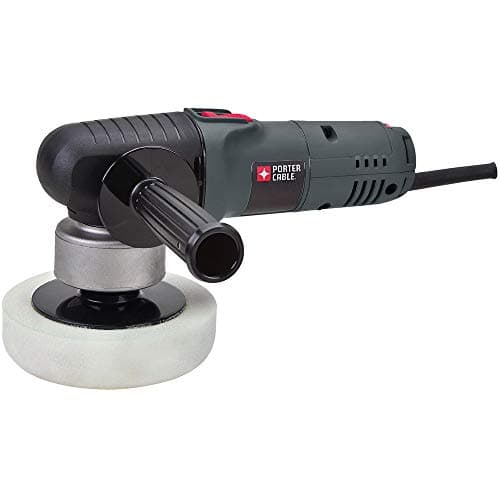
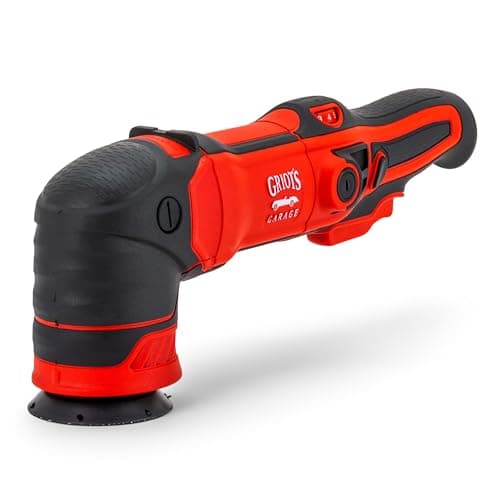
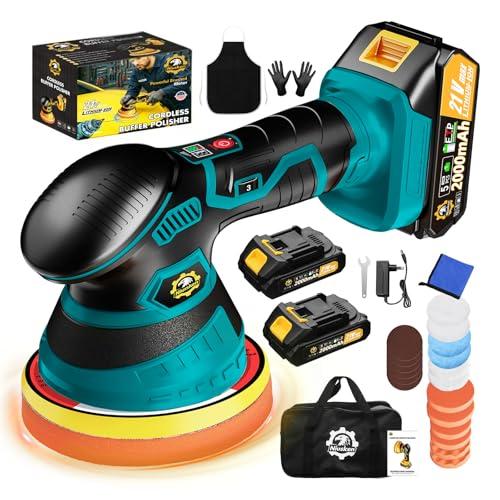
The Griot's Garage G9 is the best car polisher under $200, and it is not close — a 9 mm orbit on a 1,000 W motor, a six-speed dial and a lifetime warranty, which is the machine most experienced detailers would hand a beginner. The budget pick is the Niusken cordless kit at the bottom of the page — the cheapest tool here that still corrects paint, bought for spot work rather than a whole car. Prices come from the live price layer and every machine on this page was under $200 as of November 23, 2026.
This band matters because it is where the pad gets bigger. Under $100 you are buying a 3-inch tool and a weekend of work; at $130 to $180 you are buying a full-size 5.5 or 6-inch dual action, and a whole-car correction becomes an afternoon. The jump in capability between those two price points is larger than the jump between $200 and $500.
What the extra money buys over the $100 band
Pad area. A 5.5-inch pad works roughly three times the area of a 3-inch pad. Everything about how long a correction takes follows from that one number.
Motor torque. The cheap machines bog down when you lean on them, which is precisely when you need them not to. A 1,000 W motor holds its speed under pad pressure on a vertical door, and that is where cheap dual-actions give up.
Support and documentation. Griot's lifetime warranty and the Porter-Cable's two decades of tutorials are worth real money on a first machine. When something goes wrong on a budget tool from a brand with no footprint, you are on your own.
Sensible speed range. A six-speed dial that goes genuinely slow lets the same machine spread a finishing polish and apply a sealant. A single-speed tool corrects or nothing.
How we ranked them
Coverage per pass — plate size and published orbit together, because those two numbers decide whether the car is a day or a weekend.
Motor under load — published wattage, and whether the maker claims speed is held under pressure. A number on the box that collapses on a door panel is not a spec.
Beginner safety — stall-protected dual action throughout this page. We deliberately did not rank the budget rotary that sits in this band; it cuts well and it burns clear coat, and on a first machine that trade is not worth making.
Total cost to first correction — the tool plus the pads plus the plate. The kit machines look more expensive and often are not. We own no lab; how we research sets out the rubric.
Where this band stops
It stops at the orbit. Every full-size machine under $200 is an 8 or 9 mm tool, and the 15 mm and 21 mm long-throw machines start above the line — those are on best long throw polisher. A 9 mm machine corrects everything a 15 mm machine does; it simply takes more passes to do a whole car. For one car a year that is a non-issue. For a car a week it is the upgrade to make.
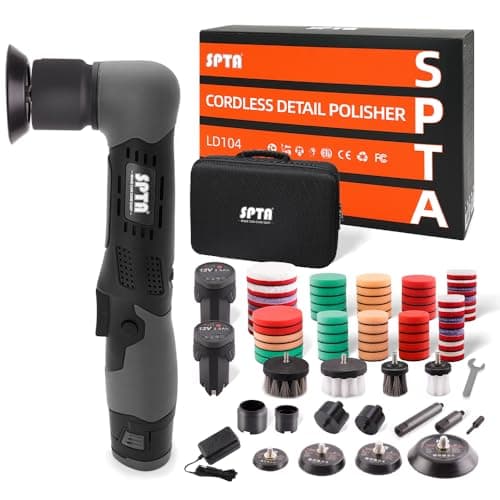
The other thing this band does not buy is reach. A 5.5-inch pad will not sit flat on a mirror cap or an A-pillar, which is why the two small machines are on this page at all: not as a main tool, but as the thing you reach for when the big one runs out of panel. Two of the five picks here are those small tools, and they are ranked honestly as second machines.
And as always, the machine is not the limiting factor. A $180 polisher with the wrong pad and a filler-heavy compound will do worse work than a $130 one with the right pair. Budget for the consumables.
Spending $200 well
Buy the bare tool, buy the pads separately
Bundled starter pads are usually basic foam. If the machine you want comes bare, the money you save goes further on two good cutting pads and two finishing pads than on whatever was in the box. How many polishing pads do I need has the realistic count for one car.
5.5-inch plate, not 6-inch
A smaller plate keeps pressure per square inch high enough to cut and is easier to keep flat on a curve. The 6-inch option looks like more machine and usually corrects more slowly. 5-inch vs 6-inch pads has the detail.
Do not buy a rotary to save money
There are rotaries in this band and below it with more raw power than any dual action here. They have no stall protection and modern clear coat is around a tenth of a millimetre. If you want more cut, change the compound, not the drive type — dual action vs rotary explains why.
Run a test spot, every single time
One two-foot square, least aggressive combination that works, then the car. This is the step that separates a good result from a corrected-and-then-hazy result, and it costs ten minutes. Paint correction for beginners covers the whole sequence.
Prep is not optional
A polisher drags whatever is on the paint across the paint. Wash, then chemically decontaminate, then clay, and only then switch the machine on. Skipping it is the most common way a new polisher adds scratches instead of removing them.
Know what you will want next
Almost everyone who buys a full-size machine in this band buys a 3-inch tool within a year, because the tight panels do not go away. If you can stretch, buying the full-size machine now and the small one later is the right order — not the other way round. If the small one is the whole plan and you want it cordless, best cordless polisher under $200 ranks that band.