Skip to content
Pad & Polish

HUB 01 · Machine Polishers

Best Long Throw Polisher

A long throw is the single biggest change you can make to how fast a correction goes. Four machines with a 15 mm orbit or larger, ranked on what the makers publish - and an honest account of what a longer orbit costs you in tight spaces.

By Stephen V.Updated How we research
#ad

We earn a commission when you buy through our Amazon links, at no extra cost to you. It never affects our rankings, and we say so when the cheaper product is the better buy. How this works.

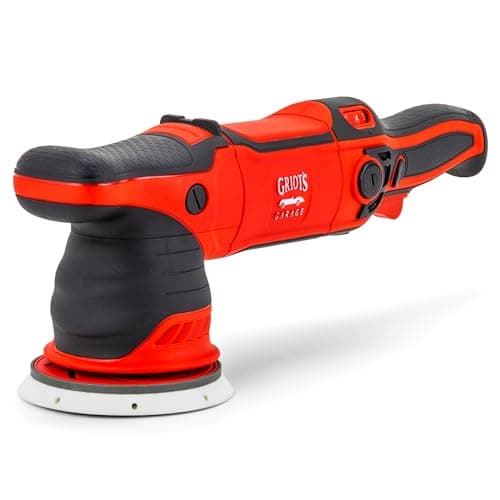
The Griot's Garage G15 is the long-throw polisher to buy for almost everyone — Griot's publishes a 15 mm throw on an 1,100 W motor and backs the machine with its lifetime warranty, which is what makes a long throw a safe purchase rather than an experiment. It is also the cheapest machine on this page that is genuinely long-throw, so the G15 is the budget pick as well as the winner— the least you can spend and still be buying the thing this page is about. If you want the largest orbit in the consumer field, the Maxshine M21 Pro's 21 mm throw clears a hood in fewer passes than anything else here. Prices below come from the live price layer, as of November 23, 2026.

"Long throw" means the orbit — the diameter of the small circle the backing plate wanders in on top of its own rotation. Entry dual-actions are built around 8 or 9 mm. The machines on this page are 15 mm and 21 mm, and the difference is not subtle: a longer orbit sweeps more abrasive across more clear coat per second, so the same compound on the same pad cuts faster. On a whole-car correction that is the difference between an afternoon and a weekend.

Why a longer orbit corrects faster

A dual-action polisher does two things at once. The plate spins, and the whole spindle also orbits around an offset centre. The cutting happens because the abrasive is dragged in a constantly changing direction, which is also why a DA is hard to burn paint with — if the pad binds, the rotation stalls and the orbit carries on harmlessly.

Widen the orbit and you widen the band of paint each rotation touches. A 15 mm machine works a noticeably larger area than a 9 mm machine at the same speed setting, and the 21 mm Maxshine is wider again. None of these makers publishes a correction-rate figure and we have not measured one — but the geometry is not in dispute, and it is why professional correction work moved to long-throw tools in the first place.

The cost is reach and control. A 15 mm orbit needs flat space to work in. On a mirror cap, an A-pillar or the tight return at the end of a bumper the pad spends much of its time partly off the panel, which stalls the rotation and leaves you buffing air. Griot's is candid about the second cost in its own specifications: the G15's lowest published speed is 3,000 OPM against 2,000 on the 9 mm G9. The long-throw machine is less controllable at the slow end, which is exactly where you want to be when you are spreading a finishing polish or applying a wax.

How we ranked them

Published throw and motor. The orbit figure is the reason the category exists, and the motor has to hold that orbit under pad pressure. A long throw with a weak motor bogs down on a vertical panel, which is worse than a short throw that does not.

Controllability at the slow end. The published minimum speed, the speed controller and the trigger. A machine that cannot go slow is a correction-only tool, and most people want one machine that does both jobs.

Plate size and pad ecosystem. A long orbit needs pads built for it. Thin short-throw foam flexes and overheats on a 21 mm machine, and a 6-inch plate on a long throw is a lot of swept area to keep flat.

Support and warranty. These are among the most expensive tools on this site. Griot's lifetime warranty and Adam's pad compatibility across its own range are real money. We run no lab — how we research sets out exactly what the scores are built from.

Who should not buy one

If this is your first polisher, buy a 9 mm machine. Every long-throw tool here is harder to keep flat, heavier on vertical panels and less forgiving while you are still learning where the edges of a panel are. Our best car polisher for beginners picks exist for that reason, and long throw vs short throw walks the trade-off in detail.

If most of your work is spot repairs, badges, mirror caps and bumper corners, a long throw actively fights you. That is mini polisher territory, and the honest answer for a lot of people is one long-throw machine for the big flat panels plus a 3-inch tool for everything else.

The short answer

Quick picks

#ProductBest forScorePrice
01
Griot's Garage Griot's Garage G15 Long Throw Orbital Polisher
Griot's Garage G15 Long Throw Orbital Polisher

The long-throw version of the machine most beginners are told to buy: a 15 mm throw on an 1,100 W motor clears defects across open panels faster than a 9 mm tool, at the cost of weight, reach into tight areas and a higher minimum speed.

Correcting whole cars rather than spot-fixing
8.3
$249.99Amazon
02
Maxshine M21 Pro Long-Throw Dual-Action Polisher

The long-throw end of the dual-action range: the same stall-protected action a beginner tool has, wrapped around an orbit big enough to take a whole car's moderate defects out in a fraction of the passes.

Correcting whole cars in the fewest passes
8.1
Check price →
03
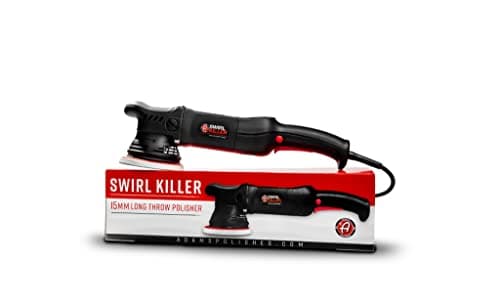
Adam's Polishes Adam's Swirl Killer 15 mm Polisher
Adam's Swirl Killer 15 mm Polisher

A long-throw 15 mm DA that covers ground fast, so a full-car correction takes fewer passes — the tool to reach for when the whole car needs work, not just a panel.

Correcting a whole car in fewer passes
8.3
$202.29Amazon
04
Adam's Polishes Adam's Cordless 15 mm Swirl Killer Polisher
Adam's Cordless 15 mm Swirl Killer Polisher

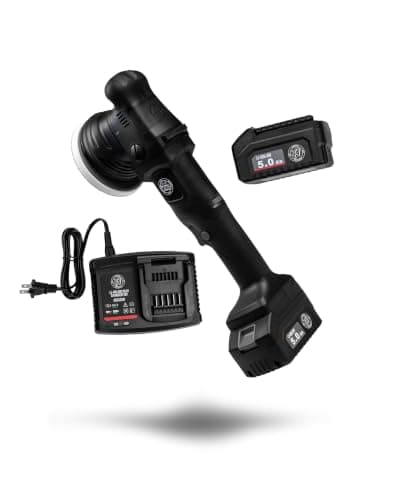
The only cordless machine here that corrects a whole car rather than a panel: Adam's puts a 15 mm long throw and a full 5-inch plate on a battery, so the tool you use on the hood is the tool you use where there is no outlet.

Whole-car correction with no cord at all
7.8
$488.74Amazon

#ad · Live prices from the Amazon Product API, as of November 23, 2026. Where we have no verified live price, we show none — we would rather leave a gap than print a number that has rotted.

In detail

The picks, in full

01
Griot's Garage Griot's Garage G15 Long Throw Orbital Polisher

Correcting whole cars rather than spot-fixing

Griot's Garage G15 Long Throw Orbital Polisher

15 mm throw1,100 W motor3,000-5,300 OPM5 in backing plate
8.3/10

The long-throw version of the machine most beginners are told to buy: a 15 mm throw on an 1,100 W motor clears defects across open panels faster than a 9 mm tool, at the cost of weight, reach into tight areas and a higher minimum speed.

Ergonomics
7.8
Correction power
9.3
Beginner-safe
8.2
Value
8

Pros

  • Griot's publishes a 15 mm throw against the G9's 9 mm — far more area worked per rotation, which is where the speed gain comes from
  • Higher-wattage motor than the G9 (1,100 W vs 1,000 W), so it holds speed under pad pressure on a large flat panel
  • Ships with a 5 in BOSS fanned backing plate, a smarter pairing for a long throw than a 6 in plate

Cons

  • Griot's lowest published speed is 3,000 OPM against the G9's 2,000, so it is less controllable for spreading a wax or finessing a small area
  • Griot's publishes no weight for either machine, but a 15 mm head needs a larger counterweight than a 9 mm one, so expect a bulkier tool on vertical panels
  • A 15 mm orbit needs flat space; on tight curves, pillars and bumper returns the pad stalls where a 9 mm keeps cutting

Don't buy this if…

…most of your work is small panels, edges and spot repairs — the longer throw fights you there, and the G9 or the G8 mini finishes the job faster.

$249.99View on Amazon

Price as of November 23, 2026. Prices change — Amazon's is the one that counts.

#ad · we may earn a commission from this link to Griot's Garage G15 Long Throw Orbital Polisher

02

Correcting whole cars in the fewest passes

Maxshine M21 Pro Long-Throw Dual-Action Polisher

21 mm throw1,000 W motor2,200–5,000 OPM6 in backing plate
8.1/10

The long-throw end of the dual-action range: the same stall-protected action a beginner tool has, wrapped around an orbit big enough to take a whole car's moderate defects out in a fraction of the passes.

Ergonomics
7.6
Correction power
9.2
Beginner-safe
7.2
Value
8.4

Pros

  • The largest orbit in the consumer field — a hood or door skin takes noticeably fewer passes
  • A six-speed controller and a locking progressive trigger, so the bottom of the range is slow enough to spread a compound without slinging it
  • Maxshine specifies a CNC-machined steel counterweight and an adjustable D-handle mount, which is what keeps a 21 mm orbit's vibration manageable over a full car

Cons

  • Big and nose-heavy on bumpers, mirror caps and tightly curved panels
  • Needs pads built for a long throw — thin short-throw foam flexes and overheats on it
  • Maxshine is a detailing-specialist brand, so dealer support and spare plates are thinner on the ground than Griot's or Adam's

Don't buy this if…

…this is your first polisher — a shorter orbit is far easier to keep flat while you learn.

Check price on Amazon →

We don't have a verified live price for this right now, so we aren't showing one.

#ad · we may earn a commission from this link to Maxshine M21 Pro Long-Throw Dual-Action Polisher

03
Adam's Polishes Adam's Swirl Killer 15 mm Polisher

Correcting a whole car in fewer passes

Adam's Swirl Killer 15 mm Polisher

15 mm long throwVariable speedDigital readoutFull-size DA
8.3/10

A long-throw 15 mm DA that covers ground fast, so a full-car correction takes fewer passes — the tool to reach for when the whole car needs work, not just a panel.

Ergonomics
8
Correction power
9
Beginner-safe
8
Value
8

Pros

  • Large 15 mm orbit clears defects over big panels quickly
  • Digital speed readout makes repeatable results easy
  • Strong correction for a consumer tool

Cons

  • Long throw is less nimble on tight/curved panels than an 8 mm
  • Overkill for pure spray-coating application

Don't buy this if…

…you mostly work small, contoured areas — an 8 mm tool is easier to control there.

$202.29View on Amazon

$237.9915% off

Price as of November 23, 2026. Prices change — Amazon's is the one that counts.

#ad · we may earn a commission from this link to Adam's Swirl Killer 15 mm Polisher

04
Adam's Polishes Adam's Cordless 15 mm Swirl Killer Polisher

Whole-car correction with no cord at all

Adam's Cordless 15 mm Swirl Killer Polisher

15 mm long throw5-inch backing plateBrushless motorVariable speed control
7.8/10

The only cordless machine here that corrects a whole car rather than a panel: Adam's puts a 15 mm long throw and a full 5-inch plate on a battery, so the tool you use on the hood is the tool you use where there is no outlet.

Ergonomics
8
Correction power
9
Beginner-safe
8.2
Value
6

Pros

  • A full 15 mm long throw on a 5-inch plate — the only cordless here that covers a hood at a sensible rate
  • Adam's publishes up to roughly 45 minutes of working time per battery under load
  • Takes the same pads and plates as Adam's corded Swirl Killer machines, so an existing kit carries over

Cons

  • By far the most expensive machine on this page, and several times what a corded 15 mm equivalent costs
  • Tied to Adam's own battery platform — a DEWALT or Milwaukee pack in your garage is no help

Don't buy this if…

…a cord is only a mild nuisance where you work — a corded 15 mm machine does the same correction for a fraction of the money.

$488.74View on Amazon

Price as of November 23, 2026. Prices change — Amazon's is the one that counts.

#ad · we may earn a commission from this link to Adam's Cordless 15 mm Swirl Killer Polisher

Running a long-throw machine

Buy pads made for a long throw

This is the mistake that makes people think they bought a bad tool. A thin short-throw foam pad on a 21 mm machine flexes at the edges, heats up and stops cutting. Pads rated for long-throw use are thicker and stiffer through the face. Start with a proper cutting pad and keep a finishing pad for the last stage.

Match the plate to the orbit, not to your old tool

Griot's ships the G15 with a 5-inch plate rather than a 6-inch one, which is the smarter pairing: a long orbit already sweeps a wide band, and a smaller plate keeps the pressure per square inch high enough to cut. Backing plates covers the sizing, and 5-inch vs 6-inch pads covers why going bigger is not an upgrade.

Let the machine set the pace

A long throw does the work if you let it. Slow arm speed, light pressure, and overlap each pass by half the pad. Leaning on a 15 mm machine does not speed it up; it stalls the rotation and generates heat, which is how you get buffer trails on a tool that is supposed to be incapable of them.

Do a test spot before you commit to the car

A long-throw machine changes how much a given compound cuts, so the pad-and-polish combination you used on a 9 mm tool is no longer calibrated. Pick one two-foot square, establish the least aggressive combination that works, and only then start on the car. Paint correction for beginners runs the full process.

Expect to own a small polisher too

Nobody corrects a modern car entirely with a 15 mm machine. Door handles, mirror housings, pillars and bumper returns all need something that sits flat on a curve. Budget for a 3-inch tool from the start rather than discovering it halfway through a weekend.

The cordless question

Only one machine here cuts the cord without cutting the orbit, and it costs roughly double the corded 15 mm equivalents. That is the entire decision: if a cord is a genuine obstacle — no outlet, a shared lot, a mobile detailing business working on driveways — it is worth it. If the cord is merely annoying, it is not. Best cordless polisher covers the rest of that category.
How we picked

We do not run a testing lab

We compiled published specifications, manufacturer data sheets and aggregated owner reviews, computed the cost of ownership from real sizes and coverage, then scored each product against a published rubric. The scores are judgments from documented research — they are not measurements we took, because we do not own a lab and we are not going to pretend we do. Where a number came from someone else, we name them and link them in Sources.

Questions

Frequently asked

What counts as a long throw polisher?
In practice, an orbit of 12 mm or more, with 15 mm and 21 mm the two common sizes. Entry dual-action polishers use 8 or 9 mm. The number refers to the diameter of the orbit the backing plate travels in on top of its own rotation, and a bigger number means more paint worked per rotation - which is why long-throw tools correct faster at the same speed setting.
Is a long throw polisher better than a short throw?
Better at correcting large flat panels quickly, worse at everything tight and worse at slow, controlled work. A 15 mm or 21 mm machine will take the swirls out of a hood in fewer passes than a 9 mm tool. It will also stall on a mirror cap, weigh more on a door, and start at a higher minimum speed, which makes spreading a finishing polish harder. Most people who correct cars regularly end up owning one of each.
Can a beginner use a long throw polisher?
Yes, but it is not the easiest way to learn. A long-throw dual action still has the stall protection that makes a DA hard to burn paint with, so the risk is low. The difficulty is mechanical: it is heavier, it wants flat space, and keeping the pad flat at the edge of a panel takes practice. Learning on a 9 mm machine first is the lower-frustration route.
Do I need special pads for a long throw polisher?
Yes. Pads built for short-throw tools are often too thin and too soft through the face; on a 15 mm or 21 mm orbit they flex, overheat and stop cutting, and they wear out fast. Use pads the maker rates for long-throw machines, keep them clean, and swap to a fresh one far sooner than you would on an 8 mm tool.
Is 21 mm better than 15 mm?
It covers more ground per pass, which is the whole argument for it. The trade is bulk: a 21 mm head is nose-heavy on bumpers and tightly curved panels, and it needs pads and a counterweight built for that orbit. On a large flat vehicle it is the faster tool. On a small hatchback with a lot of curves, 15 mm is the more useful machine.
How much does a long throw polisher cost?
The corded 15 mm and 21 mm machines on this page all sit close together in one band, with the cordless 15 mm option costing roughly double. Live prices and the date they were checked are in the Quick Picks table above - we only ever show a number the price layer has verified, and the cheapest machine here that is genuinely long-throw is named as the budget pick.

Keep reading

Receipts

Sources

We do not run a testing lab, and we do not pretend to. Where a measured number came from someone else's lab, we name them and link them. Where we could not verify something, we say so on the page rather than quietly leaving it out. Read our full method.