Skip to content
Pad & Polish

HUB 02 · Cutting & Polishing Pads

5-Inch vs 6-Inch Polishing Pads

Pad diameter is the one kit decision that locks in everything else you buy afterwards. Here is what the extra inch actually costs and buys.

By Stephen V.Updated How we research
#ad

We earn a commission when you buy through our Amazon links, at no extra cost to you. It never affects our rankings, and we say so when the cheaper product is the better buy. How this works.

Pad diameter looks like a detail and behaves like a commitment. The size you pick determines the backing plate you buy, and the plate determines which pads you can use next time, and within a year you own a drawer full of one size and a machine set up for it. It is worth thinking about for ten minutes now rather than discovering it later.

A quick note on naming, because it causes real confusion. A "5-inch pad" is almost always a 5.5-inch pad sold to fit a 5-inch backing plate. A "6-inch pad" is usually 6.5 inches on a 6-inch plate. The overhang is deliberate: it keeps the plate's rigid rim off your paint when the machine tilts. If two products disagree by half an inch, that is usually why.

The case for 5.5-inch pads

This is the consumer standard, and there are three good reasons for it.

Control. A smaller pad has less surface fighting you when the panel curves. On bumpers, arches, mirror housings and the sculpted bodywork nearly every modern car has, a 5.5-inch pad keeps its whole face in contact where a 6.5-inch pad is already riding on one edge.

Motor load. Pressure is force divided by area. A smaller pad concentrates the same downward force into less contact patch, so it cuts harder for the same effort and draws less from the motor doing it. On a mid-range dual-action, that is the difference between a pad that keeps rotating under working pressure and one that quietly stalls.

Availability. The overwhelming majority of pad multi-packs, kits and bundles are 5.5 inches. Standardize there and you never struggle to find a replacement or a color you are missing. Our DA pad roundup is built almost entirely around this size for exactly that reason.

The case for 6.5-inch pads

Coverage. A 6.5-inch pad has roughly 40% more face area than a 5.5-inch one. On a hood, a roof or a van flank, that is meaningfully fewer passes to cover the same paint, and over a full car it adds up.

Finishing. The larger contact patch spreads pressure more evenly, which suits a final refining pass on a big flat panel — one of the reasons some one-step and finishing pads are sold predominantly in the larger size.

Vehicle shape. If you mostly work trucks, vans, estates or older cars with genuinely flat panels, the larger pad plays to the bodywork you have. On a modern hatchback with almost no flat surface, it does not.

Where the extra inch costs you

More area means less pressure per square inch, so a 6.5-inch pad cuts more slowly than a 5.5-inch pad under the same hand pressure — and pushing harder to compensate is exactly what makes a weaker machine stall. More area also means more mass swinging through the orbit, which a long-throw machine feels as vibration and your forearms feel as fatigue.

There is a heat argument too. A bigger pad holds more spent product and takes longer to clean out, so it saturates further into a job before you notice. That matters most on cutting work, where a saturated pad stops correcting and starts smearing.

What about 3-inch pads?

They are not a competitor to either size — they are the answer to the areas neither can reach. Pillars, mirror bases, the strip between a headlight and a bumper, the recess around a door handle: a 3-inch pad on a mini polisher does those in minutes and a full-size machine does them badly or not at all. Most people who correct properly own one size for panels and 3-inch for everything else.

The recommendation

Buy 5.5-inch unless you have a specific reason not to. It fits more machines, matches more pad ranges, handles curved bodywork better, and asks less of a consumer motor. Move to 6.5-inch if your vehicles are genuinely large and flat and your machine has the torque to drive it — a strong long-throw dual-action, not an entry-level tool.

Then buy the backing plate to match, and only that one. Owning plates in two sizes sounds like flexibility and in practice means you are always unscrewing something. The plate field is ranked in best backing plate for a polisher.

The short answer

Quick picks

#ProductBest forScorePrice
01
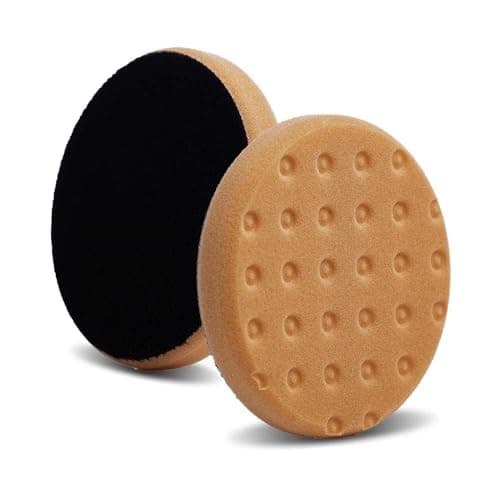
Lake Country Lake Country CCS 5.5" Foam Pads
Lake Country CCS 5.5" Foam Pads

The reference foam pad detailers reach for by default: the CCS dimple pattern meters product and reduces sling, and colors run a consistent, well-documented cut-to-finish scale.

The safe default foam pad on any DA
8.5
$26.76Amazon
02
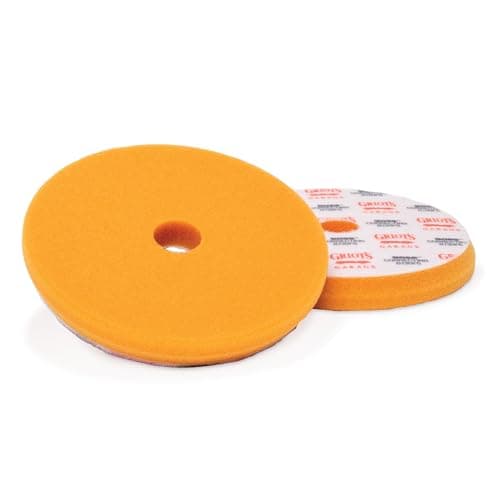
Griot's Garage Griot's Garage BOSS 5.5" Correcting Foam Pads
Griot's Garage BOSS 5.5" Correcting Foam Pads

Foam engineered around long-throw DAs, so they stay stable and cool on a 15/21 mm machine where thinner pads flex and overheat — the natural pairing for a modern long-throw tool.

Long-throw DAs (15/21 mm)
8.2
$26.99Amazon
03
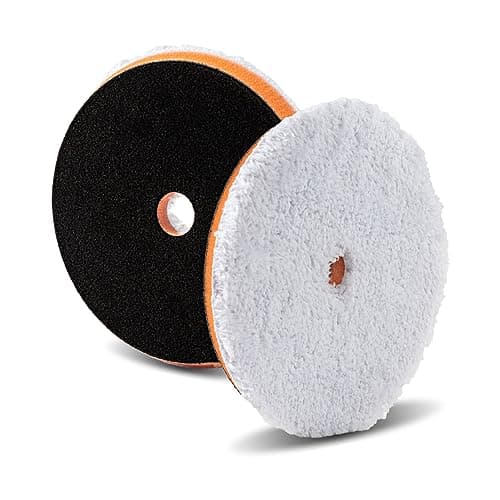
Lake Country Lake Country 6.5" HDO Light Cutting Microfiber One-Step Pad (2-Pack)
Lake Country 6.5" HDO Light Cutting Microfiber One-Step Pad (2-Pack)

Tuned for one-step work: enough cut to clear ordinary daily-driver swirls, restrained enough to finish acceptably in the same pass, which is exactly what most people actually want from a weekend correction.

One-step corrections that skip the finishing pass
8.4
$34.99Amazon
04
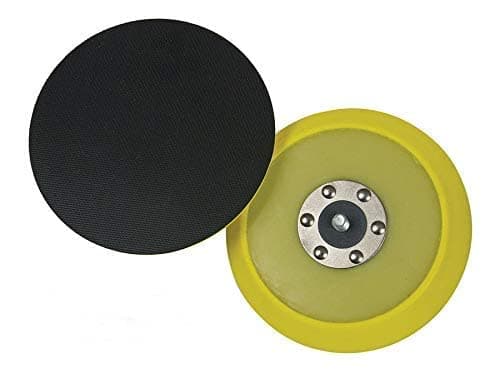
Lake Country Lake Country 5" Dual-Action Backing Plate
Lake Country 5" Dual-Action Backing Plate

The plate most enthusiasts end up on: a flexible face over an inner steel core, so it follows a curved panel without developing the wobble a cheap all-plastic plate gets once the foam heats up.

A 5.5-inch pad on almost any consumer DA
8.4
$25.50Amazon

#ad · Live prices from the Amazon Product API, as of Sep 4, 2026. Where we have no verified live price, we show none — we would rather leave a gap than print a number that has rotted.

In detail

The picks, in full

01
Lake Country Lake Country CCS 5.5" Foam Pads

The safe default foam pad on any DA

Lake Country CCS 5.5" Foam Pads

5.5 inCCS dimpled foamColor-coded cutDA/rotary
8.5/10

The reference foam pad detailers reach for by default: the CCS dimple pattern meters product and reduces sling, and colors run a consistent, well-documented cut-to-finish scale.

Cut range
8.6
Durability
8.2
Finish quality
8.8
Value
8.2

Pros

  • CCS dimples hold product and cut sling and hopping
  • Color-to-aggressiveness scale is consistent and documented
  • Widely available in every cut level

Cons

  • Sold per-pair, so a full set adds up
  • Foam wears faster than microfiber on heavy cut

Don't buy this if…

you want maximum cut in one pass — a microfiber cutting pad removes more, faster.

$26.76View on Amazon

Price as of Sep 4, 2026. Prices change — Amazon's is the one that counts.

#ad · we may earn a commission from this link to Lake Country CCS 5.5" Foam Pads

02
Griot's Garage Griot's Garage BOSS 5.5" Correcting Foam Pads

Long-throw DAs (15/21 mm)

Griot's Garage BOSS 5.5" Correcting Foam Pads

5.5 inFor long-throw DACorrecting foamLow flex
8.2/10

Foam engineered around long-throw DAs, so they stay stable and cool on a 15/21 mm machine where thinner pads flex and overheat — the natural pairing for a modern long-throw tool.

Cut range
8
Durability
8.4
Finish quality
8.4
Value
7.9

Pros

  • Designed to stay flat and cool on long-throw machines
  • Consistent correcting cut across the pad face
  • Backed by Griot's support

Cons

  • Priced above generic foam
  • Fewer cut levels than a big kit

Don't buy this if…

you run a short 8 mm orbit — thinner pads transfer that small throw better.

$26.99View on Amazon

Price as of Sep 4, 2026. Prices change — Amazon's is the one that counts.

#ad · we may earn a commission from this link to Griot's Garage BOSS 5.5" Correcting Foam Pads

03
Lake Country Lake Country 6.5" HDO Light Cutting Microfiber One-Step Pad (2-Pack)

One-step corrections that skip the finishing pass

Lake Country 6.5" HDO Light Cutting Microfiber One-Step Pad (2-Pack)

6.5-inchOne-step light cut2-packFits 6-inch plate
8.4/10

Tuned for one-step work: enough cut to clear ordinary daily-driver swirls, restrained enough to finish acceptably in the same pass, which is exactly what most people actually want from a weekend correction.

Cut
7.8
Finish quality
8.6
Durability
8.8
Value
8.2

Pros

  • Cuts and finishes in a single pass on ordinary swirl damage
  • Two pads in the box covers most of a car without a wash break
  • HDO backing tolerates long-throw heat

Cons

  • 6.5-inch face is unwieldy on tight, contoured panels
  • Not aggressive enough for heavy sanding marks or deep oxidation

Don't buy this if…

your paint needs real cutting — step up to a heavy-cut microfiber.

$34.99View on Amazon

Price as of Sep 4, 2026. Prices change — Amazon's is the one that counts.

#ad · we may earn a commission from this link to Lake Country 6.5" HDO Light Cutting Microfiber One-Step Pad (2-Pack)

04
Lake Country Lake Country 5" Dual-Action Backing Plate

A 5.5-inch pad on almost any consumer DA

Lake Country 5" Dual-Action Backing Plate

5-inch faceHook-and-loopInner steel constructionFlexible edge
8.4/10

The plate most enthusiasts end up on: a flexible face over an inner steel core, so it follows a curved panel without developing the wobble a cheap all-plastic plate gets once the foam heats up.

Build quality
9
Flex & conformity
8.8
Fitment breadth
8
Value
7.6

Pros

  • Steel core keeps the plate true under pad pressure
  • Flexible face follows body lines instead of fighting them
  • Correct size for the 5.5-inch pads most roundups recommend

Cons

  • Costs more than the two-pack generics
  • Thread pitch still has to be checked against your machine

Don't buy this if…

your polisher already came with a good plate — this is a replacement, not an upgrade path.

$25.50View on Amazon

$26.765% off

Price as of Sep 4, 2026. Prices change — Amazon's is the one that counts.

#ad · we may earn a commission from this link to Lake Country 5" Dual-Action Backing Plate

Choosing a size and sticking to it

The sizing rule

Pad diameter should exceed plate diameter by roughly a half inch total — a 5.5-inch pad on a 5-inch plate, a 6.5-inch pad on a 6-inch plate. Equal sizes put a hard plate rim near your clear coat. Excessive overhang leaves an unsupported foam ring that folds and overheats.

Check what your machine is happiest with

Entry-level and mid-range dual-actions are generally specified around a 5-inch plate. Fitting a 6-inch plate and a 6.5-inch pad to one of those adds load the motor was not designed for, and the symptom is a pad that stops rotating under pressure — which reads as "this compound does not work."

Think about what you actually polish

  • Modern car with sculpted panels — 5.5-inch, without much debate.
  • Truck, van or large estate — 6.5-inch pays for itself in passes saved, if the machine can drive it.
  • Mixed fleet — 5.5-inch. The size that works everywhere beats the size that is optimal somewhere.

One size, one plate, more pads

The money that would go into a second plate size is better spent on more pads in the size you already run. A correction needs several pads in rotation, not several diameters — see how often to replace polishing pads for why.
How we picked

We do not run a testing lab

We compiled published specifications, manufacturer data sheets and aggregated owner reviews, computed the cost of ownership from real sizes and coverage, then scored each product against a published rubric. The scores are judgments from documented research — they are not measurements we took, because we do not own a lab and we are not going to pretend we do. Where a number came from someone else, we name them and link them in Sources.

Questions

Frequently asked

Are 5-inch or 6-inch polishing pads better?
5.5-inch pads suit almost everyone: better control on curved panels, more cut per unit of pressure, less load on the motor, and far wider availability. 6.5-inch pads cover large flat panels faster, if your machine has the torque for them.
Can I use a 6-inch pad on a 5-inch backing plate?
Not sensibly. The unsupported outer ring folds under load, flaps at speed and builds heat where nothing is holding the foam flat. Match the pad to the plate with about a half-inch of overhang.
Why is a 5.5-inch pad sold as a 5-inch pad?
It is named for the backing plate it fits, not its own diameter. The pad is deliberately larger than the plate so the plate's rigid rim never touches paint when you tilt the machine on a curve.
Does pad size change how aggressive the correction is?
Yes. The same downward force spread over a smaller pad means more pressure per square inch, so a 5.5-inch pad cuts faster than a 6.5-inch pad under identical hand pressure and product.
Should I buy pads in both sizes?
No. Standardize on one diameter and one backing plate, then spend the difference on more pads in that size. A correction needs several pads in rotation far more than it needs a second diameter.

Keep reading

Receipts

Sources

We do not run a testing lab, and we do not pretend to. Where a measured number came from someone else's lab, we name them and link them. Where we could not verify something, we say so on the page rather than quietly leaving it out. Read our full method.