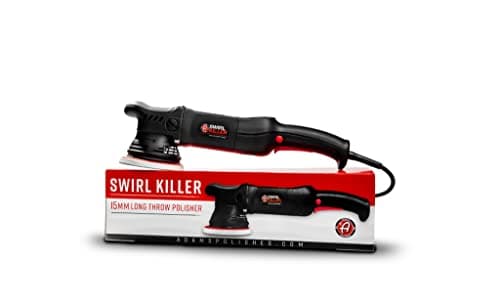
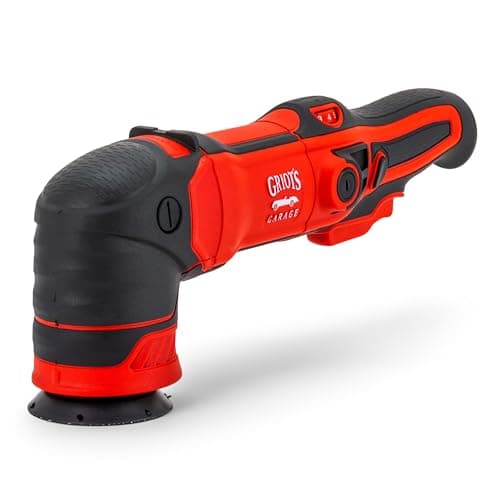
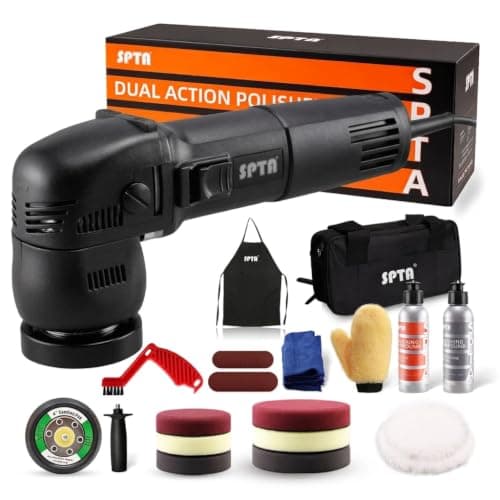
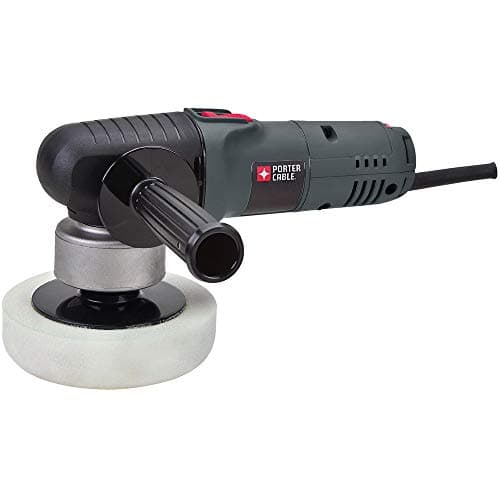
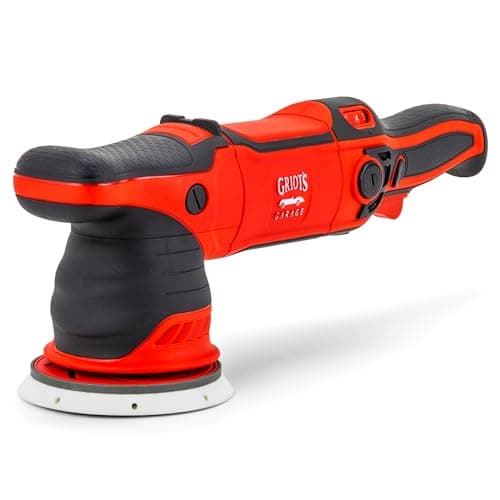
If you are shopping a Rupes BigFoot LHR15, the Griot's Garage G15 is the alternative to buy — it matches the one specification the LHR15 is bought for, a 15 mm orbit, and adds Griot's lifetime warranty. The budget pick is the Porter-Cable 7424XP: the cheapest machine here that still corrects a whole car properly, with a shorter 8 mm orbit and two decades of tutorials behind it. If what you actually want is an iBrid Nano, skip to the two compact tools lower down. Prices come from the live price layer, as of November 23, 2026.
A note on how to read this page: we do not sell Rupes and we are not going to pretend the brand is overrated. It is not. Rupes created the long-throw random-orbital category, and the current LHR15 Mark V is a genuinely well-engineered tool. The question this page answers is narrower and more useful — what else buys the thing you were buying a Rupes for.
What Rupes is known for
Two machines account for almost all of the search interest. The BigFoot random-orbital line — the LHR15 and the larger LHR21 — and the compact iBrid Nano.
For the BigFoot LHR15 Mark V, Rupes publishes a 125 mm backing pad and a 15 mm orbit, and the Mark V revision is sold on three specific changes rather than on more power: new PrecisionPro backing pads with a protective rubber edge for working near trim and panel edges, a centre of gravity lowered by 13 mm against previous models for stability, and an extended five-year warranty on product registration. That is the premium, stated plainly: refinement, balance and support, on top of an orbit figure other makers now also offer.
The iBrid Nano is a different proposition — a compact polisher for the panels a full-size machine cannot sit flat on, with interchangeable heads. People search for an alternative to it for the same reason they search for an alternative to the BigFoot: they want the capability without the outlay.
Matching the BigFoot: three 15 mm and 21 mm machines
The orbit is the specification that matters, and three machines on this page publish 15 mm or more.
The Griot's G15 is the closest match on paper and the easiest to live with: 15 mm throw, 1,100 W, a 5-inch BOSS plate in the box, lifetime warranty. The Adam's Swirl Killer 15 mm matches the orbit and adds a digital speed readout, which makes a setting repeatable across sessions. The Maxshine M21 Pro goes further than the LHR15 and matches the larger LHR21 at 21 mm, with a CNC-machined steel counterweight and an adjustable D-handle — the hardware a long orbit needs if it is not going to vibrate your hands numb.
What none of them matches is the five-year registered warranty, and only Griot's beats it with a lifetime one. If warranty length is the reason you were buying Rupes, that is the honest comparison to make.
Matching the iBrid Nano: two compact tools
The Griot's G8 is the premium answer — an 8 mm orbit on a 3-inch pad class, nearly the same orbit as the full-size G9 so technique carries straight across, and the same lifetime warranty. The SPTA 3-inch mini is the value answer: a corded 10 mm throw with pads and sanding discs in the case, for a fraction of either branded option. Neither has the Nano's interchangeable head system. Both get the pad onto a mirror cap, which is the job.
How we ranked them
Match on the stated strength first — published orbit for the BigFoot shoppers, head size for the Nano shoppers. A cheaper machine that does not match the spec is not an alternative, it is a different purchase.
Then support. Warranty length and parts availability, because the Rupes premium is substantially a support premium and an alternative has to be judged on the same axis.
Then price. Every machine here costs less than the Rupes it stands in for. We have not tested any of these side by side against a Rupes and we do not claim to — how we research sets out what our scores are built from, which is published specifications and documented owner reports.
If none of this persuades you, that is a reasonable outcome too. The best long throw polisher page ranks the same long-throw field without the Rupes framing, and long throw vs short throw is the page to read if you are not yet certain a 15 mm machine is what you need at all.
Switching off the Rupes ecosystem
Your pads probably do not transfer
Rupes pads are sized around its own plates, and a different machine means a different plate diameter and a different hole pattern. Budget for pads with the tool rather than assuming a drawer full of Rupes foam carries over — backing plates covers what fits what.
Buy pads rated for a long throw
This is the most common reason an alternative feels worse than the Rupes someone tried at a training day. Thin, soft short-throw foam on a 15 mm or 21 mm machine flexes, overheats and stops cutting. Cutting pads and finishing pads both matter here.
Check what the warranty actually covers
Rupes publishes an extended five-year warranty on registration. Griot's offers a lifetime warranty. The specialist brands offer considerably less, and a long-throw machine's counterweight and bearings are the parts that wear. On a tool you expect to keep, this line is worth as much as a spec.
Expect a different feel, not a worse result
Vibration and balance are where the money goes at the top of this category, and the cheaper machines are measurably busier in the hands over a long session. The correction they leave behind, with the same pad and the same abrasive, is not meaningfully different. Judge an alternative on fatigue, not on finish.
Do not buy a long throw as a first machine
If this would be your first polisher and Rupes was the aspirational pick, buy a 9 mm machine and learn on it. Every 15 mm tool is harder to keep flat and starts at a higher minimum speed. Best car polisher for beginners is the honest starting point.
One big machine plus one small one beats one of anything
This is true whichever brand you land on. A 15 mm machine for the flat panels and a 3-inch tool for the pillars, mirrors and bumper returns covers a modern car. Two mid-priced tools cover more of a car than one expensive one.