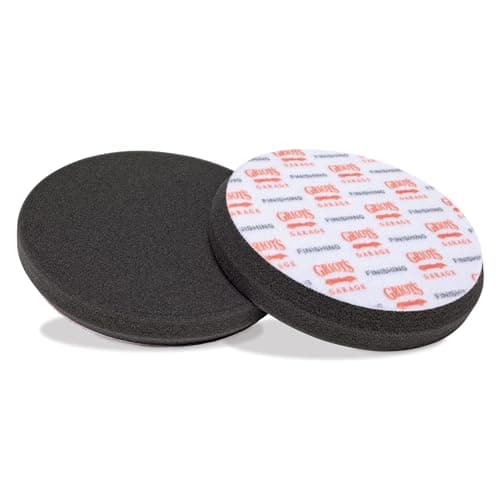
A cutting pad's job is to remove defects. It is not to leave a flawless finish, and it never does — every cutting pad leaves a faint haze of its own, made up of the extremely fine marks its own abrasion put there. On light-colored paint you may never notice. On black, dark gray or deep blue, that haze is the difference between "better than it was" and the wet, liquid gloss people are actually chasing when they buy a polisher. A finishing pad is also the right pad for the other job a machine does well — applying wax by machine.
A finishing pad clears it. It is soft, open-celled foam (or a short-nap microfiber) with essentially no cut of its own, run with a fine polish at a moderate speed. The pad does almost nothing except let the polish refine the surface without introducing anything new. That is the whole job, and it is the step most first-time correctors leave out — which is why so many first attempts end at "good" rather than "finished."
What makes a pad a finishing pad
Not the color, though the industry convention is broadly useful and covered in our pad color guide. What actually makes a finishing pad is cell structure: soft, open foam that compresses easily and does not transmit much mechanical energy into the paint. A cutting pad is firm and closed-celled so it can drive abrasive into the surface. A finishing pad deliberately gives that up.
The practical consequence is that a finishing pad cannot rescue a bad correction. If you run one over paint that still has swirls, you will get glossy swirls. The order is not negotiable: decontaminate, correct with a cutting pad and an appropriate compound, then finish. Reversing those steps wastes an afternoon. If you are not certain the pad in your hand is a finisher at all, polishing vs finishing pads covers how the two grades differ and how to tell them apart by feel.
Foam or microfiber for finishing
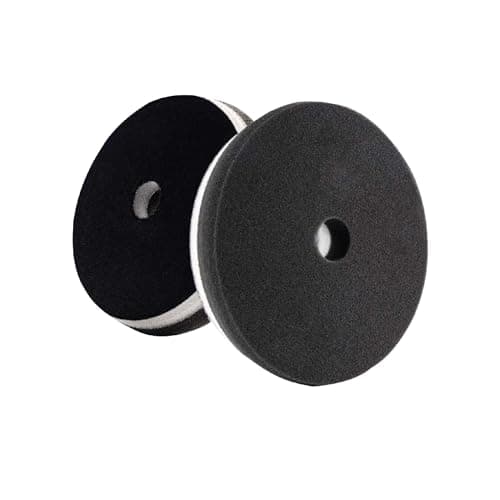
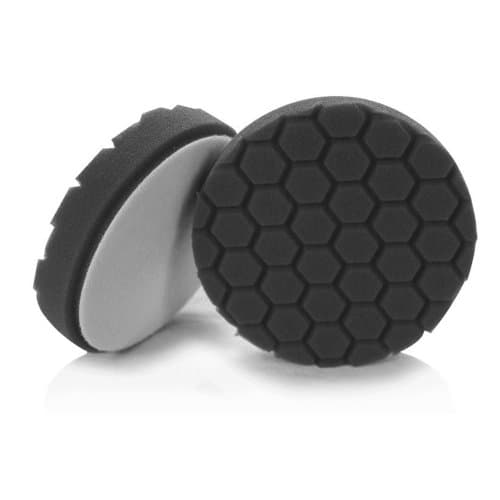
Soft foam is the traditional and still the most forgiving answer. It is almost impossible to mar paint with a black finishing pad and a fine polish, which is exactly what you want at the point in the job where mistakes are most annoying to fix.
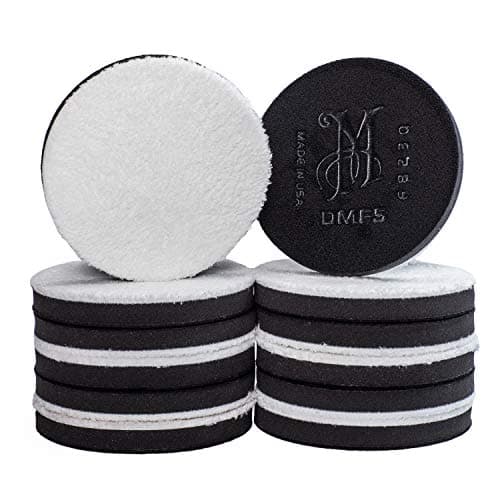
Microfiber finishing discs are the other route. They carry a little more cut than soft foam — useful when your correction pass left slightly more behind than expected — and they finish down well, but they need washing far more often and are less tolerant of a heavy-handed pass. The wider material comparison is in foam vs microfiber pads. For a first finishing set, buy foam.
Buy more than one
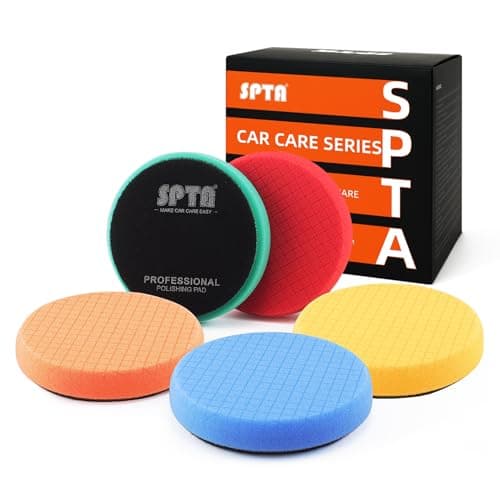
Finishing pads saturate. Fine polish plus removed material plus a little pad dust fills the cells within a couple of panels, and a saturated finishing pad stops finishing — it smears. One pad is not enough for a car, and swapping to a fresh one mid-job is far faster than trying to clean and dry one in the middle of a session. Two pads is a workable minimum for a sedan; three or four removes the pressure entirely. The routine that keeps them alive between jobs is in how to clean polishing pads.
That quantity requirement is why price per pad matters more here than it does for cutting pads, and why the ranking below is not simply "the best-made pad first." A pad you can afford three of usually beats a better pad you only own one of.
How to choose a finishing pad
Three decisions: size, material, and how many you are prepared to buy. None of them is difficult once you know what the pad is actually being asked to do.
Match the pad to the plate, not the machine
A 5.5-inch pad belongs on a 5-inch backing plate; a 6.5-inch pad belongs on a 6-inch plate. The pad should overhang the plate slightly so the plate edge never contacts paint, but not so much that the foam folds under load. Buying a pad that does not match your plate is the single most common ordering mistake in this category, and it produces a pad that wobbles instead of gliding.
Softness, and what it costs you
- Soft black foam — the standard finishing pad. Effectively zero cut, and very hard to mar paint with. This is the default.
- Heavy-duty finishing foam — the same softness with a backing built to survive the heat and flex a long-throw machine generates. Worth it if you run a 15 mm or 21 mm orbit.
- Microfiber finishing discs — slightly more cut, finishes down well, washes more often. Choose these when your correction step tends to leave more than you expected.
Pair it with the right polish
A finishing pad with a cutting compound on it is not a finishing step — the compound is doing the work and the soft pad is just making it slower. Load a fine finishing polish instead. The picks in best polishing compound for cars are formulated for exactly this pairing, and the combination is what actually produces gloss.
Speed and pressure
Finishing runs slower and lighter than correcting. High speed on a soft pad generates heat without gaining much refinement, and heavy pressure collapses the foam so the pad stops conforming to the panel. Moderate speed, the weight of the machine plus a little, and slow overlapping passes. If nothing seems to be happening, that is close to correct — the change a finishing pass makes is visible in reflections, not in the pad.
When to skip finishing altogether
On white and silver paint after a genuinely mild one-step, the finishing pass often changes so little that it is not worth the time. Dark paint is the opposite — it is where the entire step earns its place. If your car is black or a dark metallic, treat finishing as mandatory rather than optional, and read the dark-paint compound picks for the products that pair with it.