Skip to content
Pad & Polish

HUB 01 · Machine Polishers

Griot's Garage G9 vs G15

Same brand, same pads, same guarantee. One number is different, and it decides whether you correct a whole car in an afternoon or fight the machine around every curve.

By Stephen V.Updated How we research
#ad

We earn a commission when you buy through our Amazon links, at no extra cost to you. It never affects our rankings, and we say so when the cheaper product is the better buy. How this works.

Buy the G9. For a first machine, for a single car, for modern bodywork full of curves and short panels, the 9 mm tool is the better buy and it is not close: it runs slower when you need slow, it keeps the pad rotating in places the long-throw gives up, and it is the machine this site recommends to beginners for reasons that have nothing to do with price. Buy the G15 if you are correcting whole cars rather than panels, if those cars are trucks, SUVs or anything with large flat surfaces, and if you already know what a working pad looks like on paint.

Everything else about these two machines is the same. Same 6-speed dial, same 10 ft quick-connect cord, same BOSS hook-and-loop pad system, same Griot's guarantee. The whole decision is one published number - 9 mm against 15 mm - and the knock-on effects it has on speed range, backing plate and where the pad will and will not keep turning.

The published numbers

Everything in this table comes from Griot's own product pages for the two machines. We have not measured any of it, and neither tool was in our hands.

G9 Random OrbitalG15 Long Throw Orbital
Throw9 mm15 mm
Motor1,000 W1,100 W
Speed range6 settings, 2,000-6,400 OPM6 settings, 3,000-5,300 OPM
Backing plate included6 in vented orbital5 in BOSS fanned orbital
Cord10 ft quick-connect10 ft quick-connect

Two of those rows surprise people. The long-throw machine has a narrower speed range, and its slowest setting is 50% faster than the G9's. The next section is why, and it is the most useful thing on this page.

What throw length actually changes

On a dual-action polisher the pad does two things at once: it spins on its own axis, and the whole spindle orbits around a second center. The throw is the diameter of that orbit. A 9 mm throw drags the pad through a small circle; a 15 mm throw drags it through a circle nearly twice as wide.

That matters because correction is a function of how much pad travels across how much paint. Multiply the throw by the oscillations per minute and you get a rough measure of pad travel, and the arithmetic explains the speed ranges: a 15 mm orbit at 3,000 OPM moves the pad about as far per minute as a 9 mm orbit at 5,000 OPM. Griot's does not need to offer you 6,400 OPM on the G15, because the throw is already doing that work - and it cannot safely offer you 2,000, because 2,000 OPM on a 15 mm orbit is still a lot of pad movement in a place you may be trying to be gentle.

So the honest summary of a long throw is: more correction per pass, less granularity at the slow end. You buy speed over a hood and you give up control over a mirror cap.

Where the long throw gives up

A DA pad only cuts while it is rotating. Press too hard, run across a tight curve, catch an edge or a raised body line, and the pad stops spinning and just oscillates in place - which is exactly the built-in safety that makes these machines beginner-friendly, and also exactly what it feels like when nothing is happening.

A larger orbit reaches that point sooner, because it needs more flat contact area to keep the rotation going. On a flat hood or a van side, that is irrelevant. On an A-pillar, a bumper return, a wheel-arch curve or the dished area around a door handle, the G15 stalls where the G9 keeps cutting. This is the single most common complaint from people who bought a long throw as a first machine: not that it is unsafe, but that half the car suddenly needs a second, smaller tool.

That second tool is usually a mini. The mini polisher picks cover the class, and Griot's own answer is in the pick list above - a 3 in machine for the areas neither full-size tool handles well.

The backing plates are the tell

Notice that the faster machine ships with the smaller plate: 5 in on the G15 against 6 in on the G9. That pairing is deliberate on Griot's part and it is worth understanding before you order pads.

A long throw already moves a lot of pad. Put a big pad on top of that and you ask the motor to drive a large contact patch through a wide orbit, which is where DA machines bog down and stop rotating under pressure. Keeping the plate smaller preserves rotation and keeps the pad pressure concentrated, which is what actually removes a defect. The practical consequence: on the G15 you should be thinking in 5 in and 5.5 in pads, not the 6.5 in discs a lot of people have in a drawer already. Pads are the real consumable in this hobby, and the matched sets are in best polishing pads for a DA with the size argument made in full in 5 inch vs 6 inch polishing pads.

Which one, for your car

First machine, one car, mixed panels: G9. It is the machine behind our G9 review and the reason it keeps appearing in the best dual-action polisher picks. Slower floor speed means it doubles as a wax and sealant spreader, and the 6 in plate covers ground fast enough on flat areas that most people never feel limited.

Whole-car corrections, large flat panels, repeat work: G15. If you are correcting a pickup or a three-row SUV, or several cars a year, the throw difference compounds into real hours saved. The extra 100 W helps it hold speed when you lean on it, which is when a lesser machine bogs.

Tight modern bodywork, lots of curves: G9, and budget for a mini. Small hatchbacks, sports cars and anything with aggressive creases spend more time in places a 15 mm orbit dislikes than on surfaces where it shines.

Neither, yet, if the paint is not decontaminated. A machine is the third stage of a four-stage job, and the stage people skip is the one before it. If the car has never been clayed, start with the detailing kit picks and the clay options, then buy the machine.

What does not change between them

Both are dual-action machines with the forgiving stall behavior that makes the class safe to learn on, both run Griot's BOSS pads, and both are governed by the same technique: a test spot first, four to six slow passes per section, light pressure, let the pad and the liquid do the work. None of that changes with throw length, and it is covered step by step in how to use a dual-action polisher.

It is also worth saying plainly that the pad and the liquid matter more than the machine does. A G15 running a tired foam pad and a finishing polish will correct less than a G9 running a fresh microfiber cutting pad and a proper compound. If your budget forces a choice, buy the cheaper machine and the better consumables - the category-level version of this argument is in long throw vs short throw polishers, which compares the classes rather than these two specific tools.

The short answer

Quick picks

#ProductBest forScorePrice
01
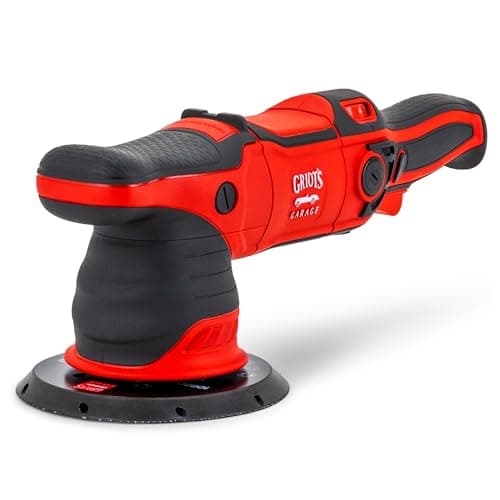
Griot's Garage Griot's Garage G9 Random Orbital Polisher
Griot's Garage G9 Random Orbital Polisher

The dual-action most enthusiasts would tell a beginner to buy: a smooth 9 mm orbit, a strong motor and a lifetime warranty, so it corrects real defects without the wobble cheaper units get under pressure.

A first polisher you won't outgrow
8.8
$179.99Amazon
02
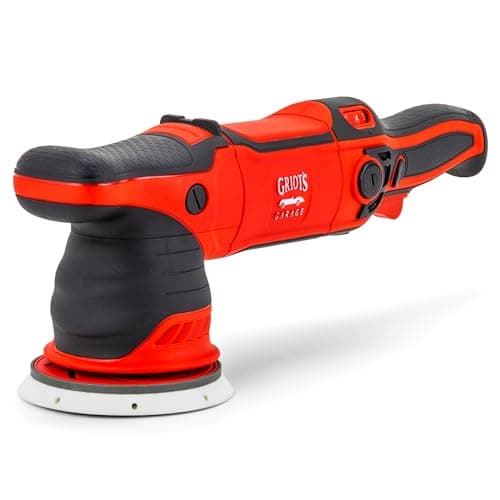
Griot's Garage Griot's Garage G15 Long Throw Orbital Polisher
Griot's Garage G15 Long Throw Orbital Polisher

The long-throw version of the machine most beginners are told to buy: a 15 mm throw on an 1,100 W motor clears defects across open panels faster than a 9 mm tool, at the cost of weight, reach into tight areas and a higher minimum speed.

Correcting whole cars rather than spot-fixing
8.3
$249.99Amazon
03
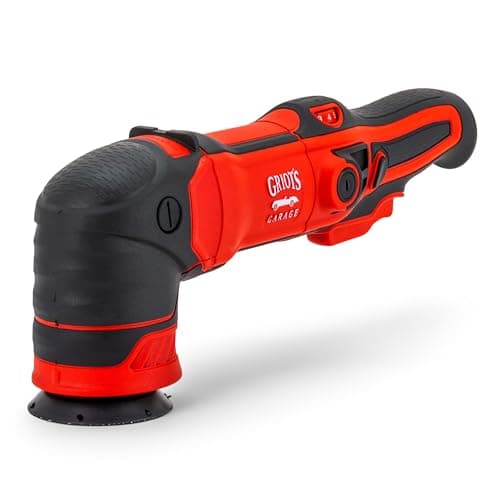
Griot's Garage Griot's Garage G8 Orbital Polisher
Griot's Garage G8 Orbital Polisher

The compact orbital built around a 3-inch pad, from the brand whose full-size machines already anchor our polisher picks — the one to buy if you want mirror caps, pillars and bumper corners corrected to the same standard as the hood.

Correcting the panels a 5.5-inch pad cannot sit flat on
8.1
$144.99Amazon
04
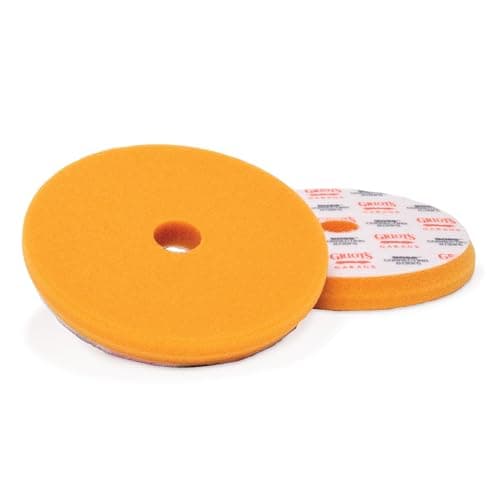
Griot's Garage Griot's Garage BOSS 5.5" Correcting Foam Pads
Griot's Garage BOSS 5.5" Correcting Foam Pads

Foam engineered around long-throw DAs, so they stay stable and cool on a 15/21 mm machine where thinner pads flex and overheat — the natural pairing for a modern long-throw tool.

Long-throw DAs (15/21 mm)
8.2
$27.99Amazon

#ad · Live prices from the Amazon Product API, as of October 23, 2026. Where we have no verified live price, we show none — we would rather leave a gap than print a number that has rotted.

In detail

The picks, in full

01
Griot's Garage Griot's Garage G9 Random Orbital Polisher

A first polisher you won't outgrow

Griot's Garage G9 Random Orbital Polisher

9 mm orbit1000 W motor6-speed dialLifetime warranty
8.8/10

The dual-action most enthusiasts would tell a beginner to buy: a smooth 9 mm orbit, a strong motor and a lifetime warranty, so it corrects real defects without the wobble cheaper units get under pressure.

Ergonomics
8.8
Correction power
8.6
Beginner-safe
9.2
Value
8.4

Pros

  • Enough torque to hold speed under pad pressure, where budget DAs bog down
  • Longer 9 mm orbit corrects faster than the old 5 mm entry tools
  • Griot's lifetime warranty is genuinely lifetime

Cons

  • Heavier than a bare-bones DA
  • Pads and compounds sold separately

Don't buy this if…

…you only ever want to apply a spray coating — a cheaper spot polisher is plenty.

$179.99View on Amazon

Price as of October 23, 2026. Prices change — Amazon's is the one that counts.

#ad · we may earn a commission from this link to Griot's Garage G9 Random Orbital Polisher

02
Griot's Garage Griot's Garage G15 Long Throw Orbital Polisher

Correcting whole cars rather than spot-fixing

Griot's Garage G15 Long Throw Orbital Polisher

15 mm throw1,100 W motor3,000-5,300 OPM5 in backing plate
8.3/10

The long-throw version of the machine most beginners are told to buy: a 15 mm throw on an 1,100 W motor clears defects across open panels faster than a 9 mm tool, at the cost of weight, reach into tight areas and a higher minimum speed.

Ergonomics
7.8
Correction power
9.3
Beginner-safe
8.2
Value
8

Pros

  • Griot's publishes a 15 mm throw against the G9's 9 mm — far more area worked per rotation, which is where the speed gain comes from
  • Higher-wattage motor than the G9 (1,100 W vs 1,000 W), so it holds speed under pad pressure on a large flat panel
  • Ships with a 5 in BOSS fanned backing plate, a smarter pairing for a long throw than a 6 in plate

Cons

  • Griot's lowest published speed is 3,000 OPM against the G9's 2,000, so it is less controllable for spreading a wax or finessing a small area
  • Griot's publishes no weight for either machine, but a 15 mm head needs a larger counterweight than a 9 mm one, so expect a bulkier tool on vertical panels
  • A 15 mm orbit needs flat space; on tight curves, pillars and bumper returns the pad stalls where a 9 mm keeps cutting

Don't buy this if…

…most of your work is small panels, edges and spot repairs — the longer throw fights you there, and the G9 or the G8 mini finishes the job faster.

$249.99View on Amazon

Price as of October 23, 2026. Prices change — Amazon's is the one that counts.

#ad · we may earn a commission from this link to Griot's Garage G15 Long Throw Orbital Polisher

03
Griot's Garage Griot's Garage G8 Orbital Polisher

Correcting the panels a 5.5-inch pad cannot sit flat on

Griot's Garage G8 Orbital Polisher

3-inch pad class8 mm orbitVariable speedLifetime warranty
8.1/10

The compact orbital built around a 3-inch pad, from the brand whose full-size machines already anchor our polisher picks — the one to buy if you want mirror caps, pillars and bumper corners corrected to the same standard as the hood.

Ergonomics
9
Correction power
7.8
Beginner-safe
8.8
Value
6.6

Pros

  • Nearly the same orbit as the G9, so technique carries straight across
  • Reaches A-pillars, mirror caps and bumper returns a full-size DA skips
  • Griot's lifetime warranty applies here too

Cons

  • Costs nearly as much as a full-size DA for a fraction of the coverage
  • Far too slow to correct a whole car on its own

Don't buy this if…

…you do not already own a full-size polisher — buy that one first.

$144.99View on Amazon

Price as of October 23, 2026. Prices change — Amazon's is the one that counts.

#ad · we may earn a commission from this link to Griot's Garage G8 Orbital Polisher

04
Griot's Garage Griot's Garage BOSS 5.5" Correcting Foam Pads

Long-throw DAs (15/21 mm)

Griot's Garage BOSS 5.5" Correcting Foam Pads

5.5 inFor long-throw DACorrecting foamLow flex
8.2/10

Foam engineered around long-throw DAs, so they stay stable and cool on a 15/21 mm machine where thinner pads flex and overheat — the natural pairing for a modern long-throw tool.

Cut range
8
Durability
8.4
Finish quality
8.4
Value
7.9

Pros

  • Designed to stay flat and cool on long-throw machines
  • Consistent correcting cut across the pad face
  • Backed by Griot's support

Cons

  • Priced above generic foam
  • Fewer cut levels than a big kit

Don't buy this if…

…you run a short 8 mm orbit — thinner pads transfer that small throw better.

$27.99View on Amazon

Price as of October 23, 2026. Prices change — Amazon's is the one that counts.

#ad · we may earn a commission from this link to Griot's Garage BOSS 5.5" Correcting Foam Pads

Before you order either one

Count your flat panels

Walk around the car and ask how much of it is a surface you could rest a dinner plate on. If the answer is "most of it" - a truck, a van, an older sedan with slab sides - the long throw earns its money. If the answer is "the hood and the roof", the G9 will finish the whole car faster in practice, because it will not stall on the other two-thirds.

Buy the plate and pads together

The included plate sizes differ, so the pads you already own may not be the right size for the machine you are about to buy. Decide the pad diameter first, then order the plate that matches it, then stock three to four pads per stage - a correction pass eats pads faster than beginners expect, and a saturated pad stops cutting.

Do the test spot, whichever you buy

One hidden panel, your full pad-and-liquid combination, inspected under a light before you commit to the car. The machine does not change this and the longer throw makes it more important, not less, because it removes more per pass. A detailing light is what turns a test spot from a guess into a decision.

Do not buy throw length to fix technique

If a correction is not working, the cause is almost never the machine. It is a pad too soft for the defect, a polish that has dried out, too much pressure stalling the rotation, or paint harder than the abrasive. All four are cheaper to fix than a new polisher, and hard paint vs soft paint covers the one people most often miss.

Respect the slow end

If you intend to use one machine for everything, including spreading a sealant or a liquid wax, the G9's 2,000 OPM floor is a real advantage. Applying protection with a machine wants the lowest speed and the softest pad you own; a 3,000 OPM floor on a 15 mm orbit is more movement than that job needs, as waxing a car with a polisher explains.

Budget for the consumables, not just the tool

A polisher is the cheapest part of a correction once you count pads, compound, polish, panel wipe, tape and towels. Plan on the consumables costing a meaningful fraction of the machine on the first job - the full accounting is in DIY detailing cost vs a shop.
How we picked

We do not run a testing lab

We compiled published specifications, manufacturer data sheets and aggregated owner reviews, computed the cost of ownership from real sizes and coverage, then scored each product against a published rubric. The scores are judgments from documented research — they are not measurements we took, because we do not own a lab and we are not going to pretend we do. Where a number came from someone else, we name them and link them in Sources.

Questions

Frequently asked

Is the Griot's G15 better than the G9?
It corrects faster on large flat panels, which is the only thing a longer throw really buys. It is not better on tight curves, not better for spreading wax, and not better as a first machine - Griot's publishes a 3,000 OPM minimum on the G15 against 2,000 on the G9, so the G9 is the more versatile tool for one car.
What does throw length mean on a polisher?
It is the diameter of the orbit the pad is dragged through, independently of the pad's own rotation. A larger throw moves the pad across more paint per oscillation, which is why a 15 mm machine clears defects faster than a 9 mm machine at the same speed setting - and why it needs more flat contact area to keep rotating.
Can a beginner use a 15 mm long-throw polisher?
Yes, safely - it is still a dual-action machine and it still stalls rather than burning when you press too hard. The difficulty is not danger, it is that a long throw stalls on the curves, edges and small panels a first-time user spends a lot of time on, which makes the job feel harder than it should.
Does the G15 finish as well as the G9?
With the same pad and the same polish, yes - finishing quality is set by the abrasive and the pad, not by throw length. What changes is control at the slow end of the dial, which matters when you are refining a small area or applying protection rather than cutting.
Can I use 6 inch pads on the G15?
You can fit a larger plate, but it works against the design. Griot's ships the G15 with a 5 in plate because a wide orbit plus a large contact patch is what makes a DA bog down and stop rotating under pressure. Keep the pad small on the long throw and the rotation - and the cutting - stays.
Which one is better for a truck or a large SUV?
The G15. Big vehicles are mostly large flat panels, which is exactly where a 15 mm throw saves real time, and the 1,100 W motor holds speed better across a long session. Keep a smaller machine for the bumpers and pillars if the body has much shape to it.

Keep reading

Receipts

Sources

We do not run a testing lab, and we do not pretend to. Where a measured number came from someone else's lab, we name them and link them. Where we could not verify something, we say so on the page rather than quietly leaving it out. Read our full method.