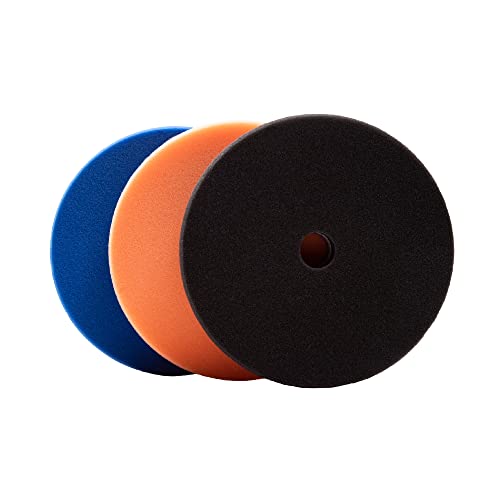
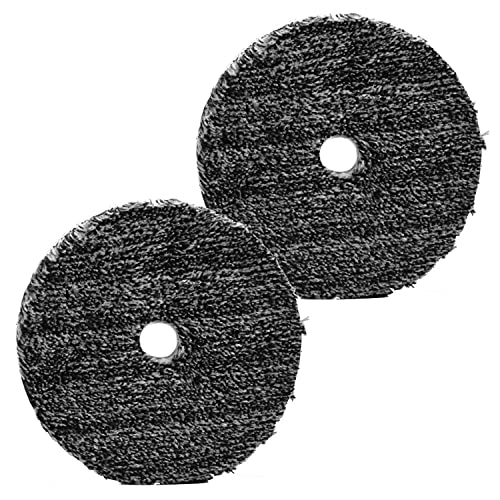
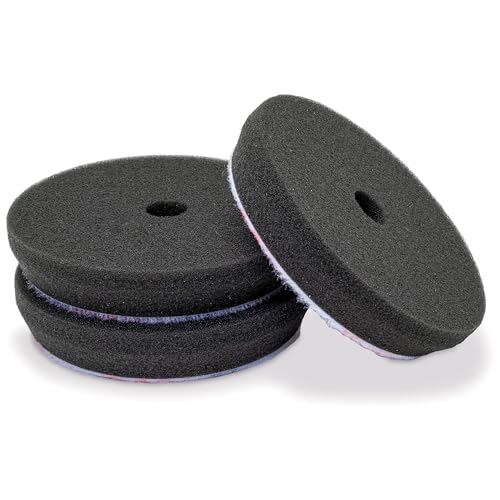
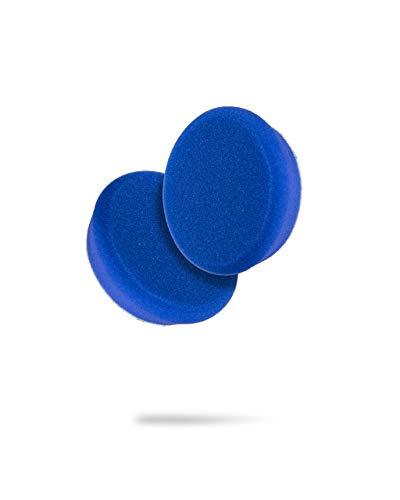
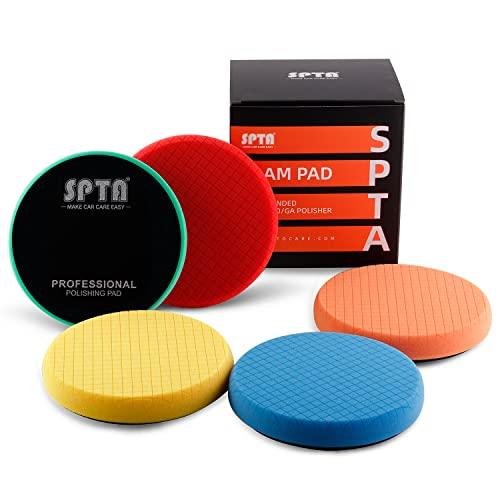
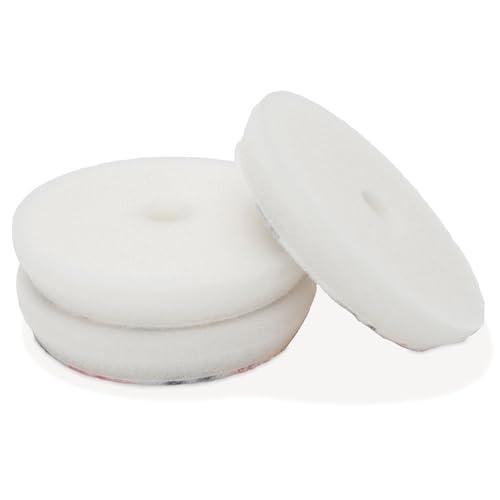
Griot's Garage BOSS 3" Fast Correcting Foam Pads are the best 3-inch polishing pads for most people — a genuine cutting grade rated for moderate to severe defects, three to a pack, which is the quantity small pads actually get used at. The budget pick is Adam's Blue Compound Pad, a named-brand cutting face at roughly half the price of the premium three-packs. If you would rather buy one box that covers the whole job, the Lake Country HDO kit is a graded set rather than three of the same pad. Every price on this page is rendered from the live price layer, as of November 27, 2026.
Two things are true about this category and neither is on the front of the bag. The first is that almost nothing sold as a "3 inch" pad has a 3-inch face. Adam's lists 3.5 in for a 3 in plate. Lake Country lists a 3.5" pad that fits a 3" backing plate. SPTA spells it out as a 3.5-inch face for a 3-inch 76 mm plate. That overhang is deliberate — the foam needs to extend past the plate so the edge can flex around a curve without the hard plate edge touching paint — but it means "3 inch" is a plate size, not a pad size, and the two numbers in a listing are not a contradiction.
The second is that you need the plate. A 3-inch pad will not attach to the 5-inch backing plate your dual-action polisher almost certainly shipped with, and nothing in most of these packs includes one. That is a separate purchase of around the cost of one pad, and best backing plate for polisher covers the fitment, because plate threads and pad diameters do not interchange as freely as the listings imply.
What small pads are genuinely for: the places a 5 or 6-inch pad cannot sit flat. A-pillars, mirror caps, door handles and their surrounds, bumper corners and valances, spoilers, the band between a door handle and the glass, motorcycle tanks and fairings, and any isolated scratch you do not want to polish a whole panel to fix. A big pad on a curved bumper contacts on two points and does nothing in between; that is the problem a small pad solves.
How we ranked these
Grade coverage per purchase first. Small-area correction still needs a cut step and a finish step, so a pack that gives you a usable progression beats a pack that gives you three of one grade. That is why a three-pad graded kit outranks several single pads here even though it contains less foam.
Then pads per pack, against how fast small pads load. A 3-inch pad has roughly a third of the face area of a 5.5-inch pad, so it fills with spent abrasive and removed clear coat in a fraction of the working time. One pad is not a purchase, it is a sample. How many polishing pads do I need runs the arithmetic for a full car; for small-pad work, assume you swap more often than that.
Then stated fitment.We rank listings that name the plate size and the face diameter above listings that say "3 inch" and leave you guessing, because this is the category where that guess costs you a return shipment.
Then finish quality on the grade it claims.A small pad concentrates the machine's pressure over a much smaller contact patch, which raises the pressure per square inch and makes every pad behave a little more aggressively than its color suggests. Pads that finish cleanly in spite of that earn the ranking.
Then price per pad, honestly. Two picks here are on the page because they are the cheapest ways to get started, and we say what you give up for that.
What changes when the pad gets small
Everything cuts more than you expect.Same machine, same pressure, less contact area: the pad works harder per square inch. Treat a small cutting pad as one grade more aggressive than the equivalent 5-inch pad, and drop to the finer polish you were going to skip. On soft clear coat that matters even more — best polish for soft paint covers the bottles that forgive it.
Heat concentrates. You are putting the same energy into a smaller patch of paint, usually on a panel with less metal behind it to carry heat away, like a plastic bumper. Keep the pass moving and do not dwell.
Long-throw machines and small pads do not love each other.A 15 or 21 mm orbit swinging a 3-inch pad is an unbalanced tool at the speeds you need, and the vibration goes into your wrists. Small pads belong on a short-throw DA, a dedicated mini polisher or a rotary — best mini polisher ranks the machines built for them, and long throw vs. short throw explains why.
You will use less product and more pads. The polish lasts almost forever at this pad size; the pads do not. Budget accordingly, which is the opposite of how most people budget for a correction.
How to choose
Start with the plate, not the pads
Confirm what your machine takes. Most home dual-action polishers ship with a 5-inch plate and accept a 3-inch plate as an accessory; most cordless mini polishers ship with a 3-inch plate already fitted. Buy the plate first, then buy pads with a face 0.5 inch larger than it. Our cordless polishers under $200 roundup is almost entirely 3-inch machines, which is the usual reason someone lands on this page.
Buy a progression, not a favorite
- One cutting face — for the actual defect. Foam for normal clear coat, microfiber if the defect is deeper than swirls.
- One finishing face — for the pass that removes what the cutting pad left, and for applying sealant in tight areas.
- A spare of whichever you use most — because a loaded pad is an aggressive pad, and swapping mid-panel is the cheapest quality upgrade there is.
Foam vs. microfiber pads covers which face to buy for which defect, and it applies unchanged at this size.
Do not use small pads for the whole car
It is physically possible and it is a bad trade: roughly three times the passes for the same area, three times the heat cycles, and a far higher chance of an uneven finish where passes overlap. Correct the panels with a 5 or 6-inch pad and keep the small pads for what they are good at. 5-inch vs. 6-inch polishing pads is the decision for the panel work, and polishing pads under $25 is the cross-grade set at the price most people want to spend.
Clean them more often than big pads
Less foam means less room for spent product. Brush or blow the face out after every small section, not every panel, and wash them properly at the end of the job — how to clean polishing pads has the routine. Small pads also tear at the edge sooner than large ones, so inspect before you mount; how often to replace polishing pads covers the retirement signs.
Watch what the pack actually contains
"20 piece" and "32 piece" small-pad kits are common, and the piece count usually includes backing plates, drill adapters, wool bonnets and a brush. Count the usable foam faces, not the pieces. The kits on this page are listed by their real pad counts for exactly that reason.
Where small pads are the only sensible tool
Three jobs justify the plate on their own. A single deep scratch on a door — polishing a 3-inch circle is far less clear coat spent than correcting the whole panel, and best compound for scratches pairs with that. Headlight restoration, where the lens is small, curved and plastic, and a 6-inch pad simply cannot follow the shape. And motorcycle, marine or spoiler work, where almost every surface is a curve with an edge nearby.
If you are buying your first polisher and wondering whether to start small, don't: start with a 5-inch machine and add a 3-inch plate later. Paint correction for beginners explains the order, and best car polisher for beginners covers the machine.