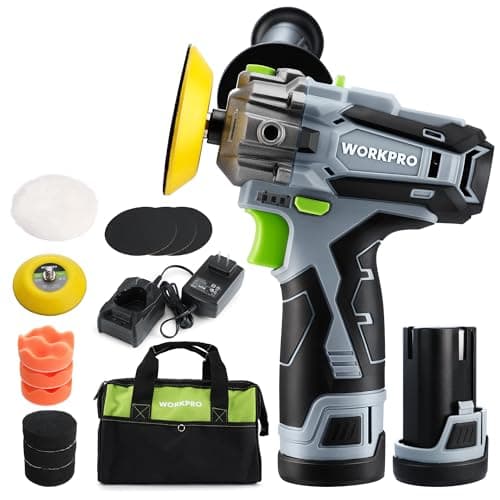
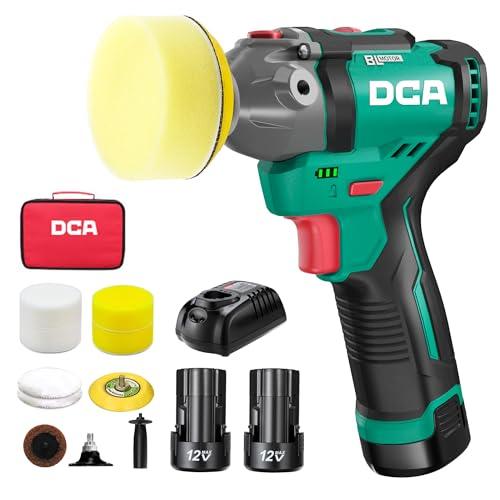
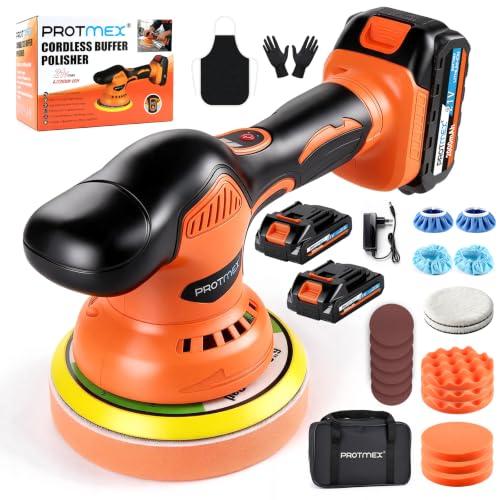
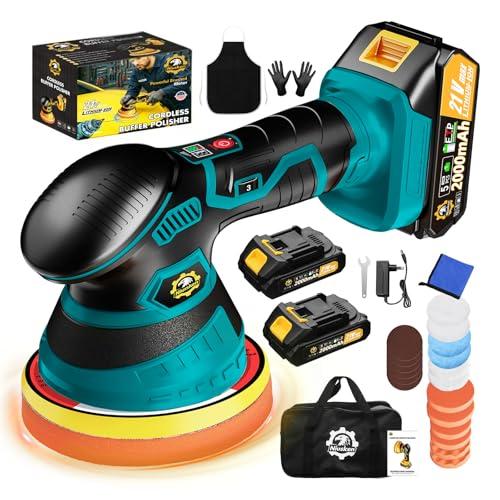
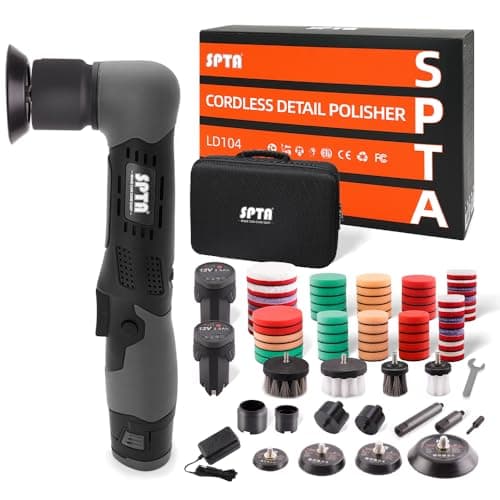
The SPTA 12 V cordless mini is the best cordless polisher under $200 for most people — a small RO/DA head with foam and wool pads in the box, which is exactly the job cordless is genuinely better at than corded. The budget pick is the Protmex 21 V cordless buffer, a 6-inch waxer with two batteries, six speeds and a drawer of bonnets for roughly a third of what the cheapest name-brand cordless costs. Every machine here was under $200 with a live Amazon price as of November 23, 2026.
The honest headline first, because the listings in this band imply otherwise. Under $200, cordless does not buy whole-car paint correction.The cordless machines that genuinely correct — the Adam's Swirl Killer 15 mm, the DeWalt rotary, the Milwaukee M12 kit — all sit above this line, and our cordless polisher page ranks that group. That page's winner costs more than twice this page's cap, which is precisely why this page is worth writing: the gap between the two is where most people actually shop.
What is under $200 is a different and perfectly real proposition. Four of these five are small-head machines, and small heads are where cordless wins outright. The job a battery tool does better than a corded one is not the hood — it is the pillar, the mirror cap, the bumper corner, the headlight, the door jamb, the area around a badge, and the half of a wheel arch where a cable would be dragging across the paint you just finished. On those areas a cord is an active nuisance, and a 3-inch cordless head is the correct tool rather than a compromise.
The fifth is a cordless 6-inch waxer, which is the band's other honest use: spreading wax or sealant on a whole car with no outlet, no extension lead and no cable to lift over the roof. That saves an hour of hand application every time you use it and it does not pretend to correct anything.
How we ranked these
The job it is honestly built for, first. A 3-inch mini and a 6-inch waxer are not better and worse versions of one tool. Ranking them on a single correction score would be useless to someone who came here because they cannot reach a mirror cap. The order below reflects how many people each machine serves well.
Then published specifications over claims."Professional" and "removes swirls" appear on nearly every listing in this band and mean nothing. A published speed range, a published battery voltage and capacity, a stated head size and a stated action type are checkable. Four of these five publish a speed range; the DCA and WORKPRO minis publish both their speed steps.
Then the battery platform, which is the whole cordless question. A cordless tool is a battery with a motor attached, and the band is full of proprietary 12 V and 21 V packs from brands that may not exist in three years. Two batteries in the box is the single most useful specification here, because it is also the honest signal that the maker knows one will not finish a job. All but one of these ship with two.
Then orbit throw, which almost nobody in this band publishes.On a dual-action machine, correction ability tracks how far the pad's center travels through its orbit. 5 mm applies wax. 8 to 9 mm is the entry point for real defect removal. 15 to 21 mm is long-throw. Griot's publishes 9 mm and 15 mm; Adam's publishes 15 mm; Maxshine publishes 21 mm. Among the five machines here, none publishes a throw figure. We refuse to invent one, and long throw vs short throw polisher explains why the silence matters.
And no claimed testing.We have not run these machines. Every figure quoted comes from the maker's own current listing, and the reasoning about what it means is ours.
What cordless actually costs you
Runtime.A 2.0 Ah 12 V pack under load is a matter of minutes of continuous polishing, not hours. On spot work that is irrelevant — you are doing a mirror cap, not a roof. On anything resembling a panel it is the limiting factor, and it is the real reason cordless machines in this band are small-head machines.
Torque under pressure. A corded motor holds speed when you lean on it; a small battery tool sags. That is safer in one sense (it stalls rather than burning through clear coat) and less effective in another. For wax application it does not matter at all.
Spares, in two or three years. Replacement batteries, backing plates and brushes for a no-name 21 V platform may simply not be available. That is a real argument for spending above this band if the machine is meant to last, and an entirely reasonable thing to ignore if it is meant to do one job on one car.
Which of these to buy
Headlights, badges, mirrors, trim and pillars. One of the three 3-inch minis. They differ mainly in whether the motor is brushless and what else is in the box, and best mini polisher ranks the category properly, corded and cordless together. If headlights are the specific job, best polisher for headlight restoration is the page.
Waxing a whole car without a cord. The Protmex 6-inch. Buy a stack of bonnets with it.
Spot fixes plus coating application. The Niusken kit, which is also on our under $100 page — it is the one machine here that straddles both bands, and it is cheap enough that it does not need to be your only polisher to make sense.
Correcting swirls across a car. None of these. Spend the money on a corded dual action instead; the band buys far more machine without a battery in the price. Our best car polisher under $200 page covers exactly that trade with the same cap.
How to choose a cordless polisher in this band
Head size decides everything else
A 3-inch pad covers roughly a quarter of the area of a 5.5-inch pad, which is both the point and the limitation. Small heads conform to curves, fit into recesses, and generate enough pressure per square inch to cut effectively with a small motor. They are also four times as many passes to cover a panel. Decide which problem you have before you look at anything else.
Count the batteries, then halve the claimed runtime
Every runtime figure in this category is measured at no load. Under a pad with pressure on it, expect substantially less. Two packs and a fast charger is the difference between finishing a job and stopping halfway through it.
Check whether a backing plate is included and what size
Minis usually ship with a 2-inch and a 3-inch plate, and that pairing is genuinely useful. A machine with one plate and no spare is an extra purchase you did not plan. Best backing plate for polisher covers sizing, and the rule is simple: the pad overhangs the plate slightly, never the reverse.
Brushless matters more on a battery tool
A brushless motor draws less current for the same work, which on a small battery translates directly into runtime as well as motor life. One machine here publishes brushless; where a maker does not state it, assume brushed.
Buy pads for the head you actually bought
3-inch pads are a different purchase from 5.5-inch pads and the cheap multipacks are mostly foam of unspecified grade. Polishing pads under $25 covers how to assemble a cut-to-finish set cheaply, and the same grade logic applies at 3 inches.
What a cordless mini is genuinely excellent at
- Headlights. A curved polycarbonate lens is the single best argument for a 3-inch head, and the pairing of a mini with a compound is the whole job. See best polish for headlights.
- Single scratches and localized defects. A machine you can hold in one hand over a two-inch area, without a cable pulling it off line.
- Applying coatings and sealants to wheels and trim. Light work, awkward geometry, no cord. Exactly the brief.
- Working away from power.Driveways without an outdoor outlet, car parks, storage units, someone else's driveway.
The honest summary
If what you want is a cordless machine to handle the places a full-size polisher cannot reach, this band is the right place to shop and you will not need to spend more. If what you want is to correct a swirled car without a cord, this band cannot do it and the next one up can — and a corded machine at the same price will do it better than either. The machines here are honest tools for a narrower job, which is a different thing from cheap versions of a better one.