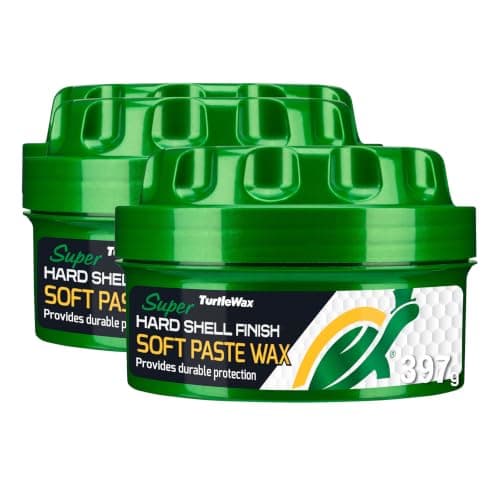
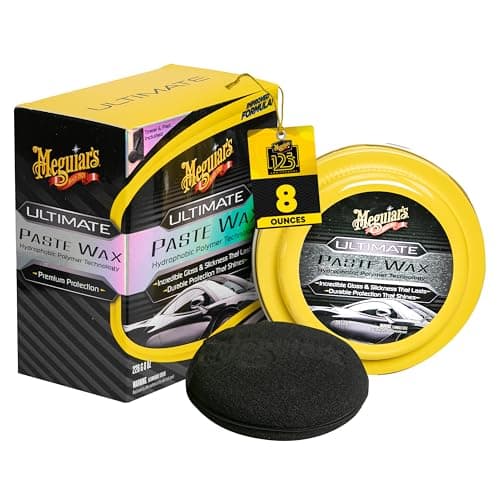
Meguiar's Ultimate Paste Wax is the best paste wax for most cars — a synthetic polymer paste rather than a carnauba, so it holds up to sun and heat far better than a traditional tin, it spreads in a thin film, and it does not chalk white on plastic trim the way paste waxes are notorious for. The budget pick is Turtle Wax Super Hard Shell: a few dollars of old-school paste that genuinely protects, named as the budget pick because nothing else protects paint this cheaply. If durability is the only thing you care about, Collinite 476S is rated 7 to 10 months by Collinite — the longest claim on the page. Prices come from the live price layer, as of November 23, 2026.
This page is paste only, deliberately. Liquid and spray waxes are easier, faster and covered elsewhere on the site — if what you want is the shortest route to protection, read best spray wax instead and ignore this page entirely. People buy a tin for a different reason: controlled, panel-at-a-time application where it is almost impossible to over-apply, and the ritual of doing it by hand.
Paste wax is not one chemistry
The format hides three completely different products, and picking the wrong one is the usual reason a paste wax disappoints.
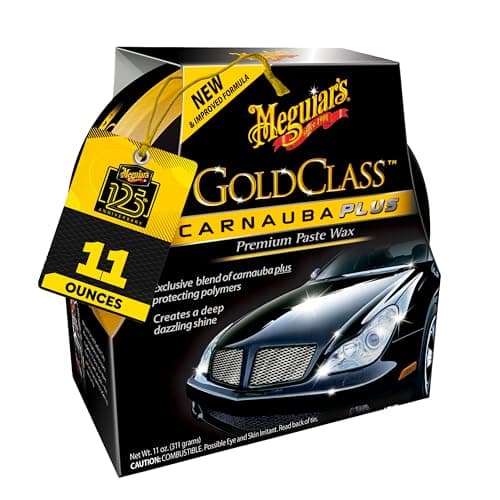
Carnauba pastes give the warm, wet, slightly amber look dark paint is famous for. They last weeks, not months. Meguiar's Gold Class is the classic easy one here.
Carnauba-plus-polymer pastes fix carnauba's weakness. Collinite 476S is the reference: Collinite rates it at 7 to 10 months, against 4 to 7 for its 845 liquid, and says it bonds without requiring a surgically clean multi-step decontamination first. You pay for that in labour — Collinite itself calls 476S the most labour-intensive wax it makes, and an owner review on Collinite's own product page advises taping off black trim because it is very hard to remove from it.
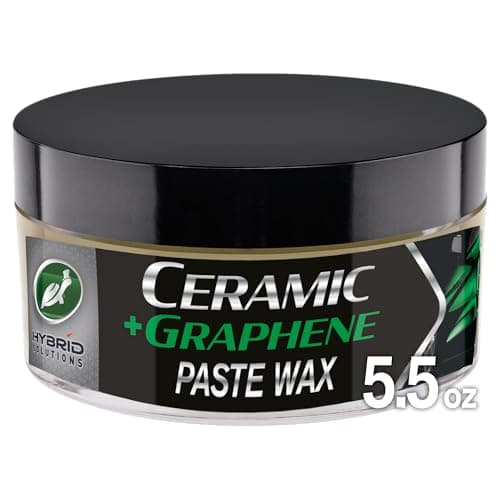
Synthetic and graphene pastes abandon the carnauba look for durability and UV resistance. Meguiar's Ultimate Paste Wax is the synthetic polymer version; Turtle Wax's graphene paste claims months of beading and chemical resistance from a single use, which no carnauba tin claims. The finish is cooler and glassier rather than warm. Carnauba vs synthetic wax takes that trade apart.
If the tin you already own is the supermarket paste at the bottom of this page and you are trying to work out whether the step up is worth it, Turtle Wax alternatives answers that specific question — what Collinite's rated months actually cost you in buffing effort, and the jobs where the cheap tin is still the right purchase.
How we ranked them
Application effort, weighted heaviest. A paste that fights you is a paste you stop using, and an unused tin protects nothing. How thin it spreads, how long the haze takes, and how hard the removal pass is at ordinary garage temperature.
Rated durability per application. Where the maker publishes a figure we use theirs and attribute it. Where the maker says "months" we say so rather than inventing a number.
Trim behaviour. The specific failure mode of this format. A paste that leaves white residue in textured plastic turns a wax job into an hour with a detailing brush.
Value per tin. Thin-film pastes go a very long way; a 9 oz tin applied correctly does many cars, so sticker price is a poor guide. We have run no durability test of our own — how we research sets out what our scores are built from.
Temperature is the hidden variable
Nothing changes a paste wax's behaviour as much as the temperature of the panel. Cold, and the paste will not spread — you end up pushing thick lumps around and then fighting them off. Hot, and the solvents flash off before you can buff, which is exactly how people conclude that a particular wax is impossible to remove.
The practical rule is shade and a cool panel. If the sheet metal is warm to the back of your hand, wait. The one product here that genuinely does not mind is Meguiar's synthetic — a polymer paste is far less temperature-fussy than a carnauba or a hard carnauba-polymer hybrid.
Paste waxes also go on after correction, never instead of it. A wax fills and hides nothing of consequence; swirls are still there under the gloss. If the paint has defects, polish first — how to remove swirl marks is the order of operations, and do you wax after polishing answers the question people actually have at that point.
If the tin itself is the appeal rather than the carnauba, best paste wax for cars ranks pastes only — carnauba, synthetic and graphene together — on how much effort one application costs you.
Two narrower versions of this page exist if your priority is clearer than "best": best paste wax for cars ranks tins only, and best long lasting car wax ranks purely on published months per application.
Both Collinite waxes carry the longest published durability figures of anything we rank, which is why they lead best long lasting car wax — the page that ranks on months per application and nothing else.
The simplest way to wax less often is to buy a wax rated to last longer. Best long lasting car wax ranks six picks on published durability per application, and lists the four habits that halve any wax's life.
Getting a tin on and off cleanly
Thin coats, always
A paste wax that is hard to buff off was almost always applied too thick. You want the thinnest film that still looks continuous — one light pass with a foam applicator, not a loaded one. Collinite is explicit that 476S must go on thin, and every other tin here behaves better that way too.
Tape off black plastic trim
This is the single most useful habit in the format. Textured plastic holds dried wax in its grain and it is genuinely difficult to get out. Low-tack tape on the trim takes two minutes and saves an hour. The exception is the synthetic paste, which Meguiar's specifically says does not leave the white residue.
Use an applicator, not the towel
A foam or microfiber applicator pad controls how much product leaves the tin, which is the whole game. Best wax applicator pads covers the options, and a separate plush towel does the removal pass.
Buff by feel, not by clock
Haze time varies with humidity and temperature, so the printed minutes on the tin are guidance. Swipe a fingertip across the film: if it comes away clean and the paint squeaks, it is ready. If it smears, wait.
Do one panel at a time
The classic paste-wax mistake is coating the whole car and then starting to remove it, which guarantees the first panel is overdue and the last is not ready. Apply and remove panel by panel. On a hot day, half-panel by half-panel.
Decontaminate first or the wax sits on grit
Wax bonds to what is on the paint, and on an un-decontaminated car that is bonded iron and road film. A wash, iron remover and clay ahead of a tin is the difference between a wax that lasts its rated life and one that fails in a month.
Know when to stop using a tin
If you want to wax once and forget it until spring, a paste wax is not the tool — a synthetic sealant or a ceramic spray lasts longer for less work. The tin is for people who want the control and enjoy the job.