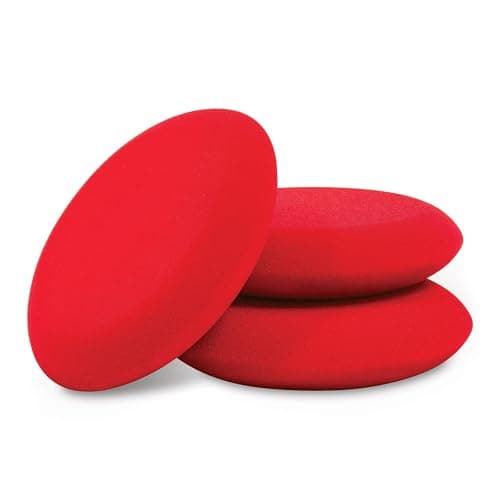
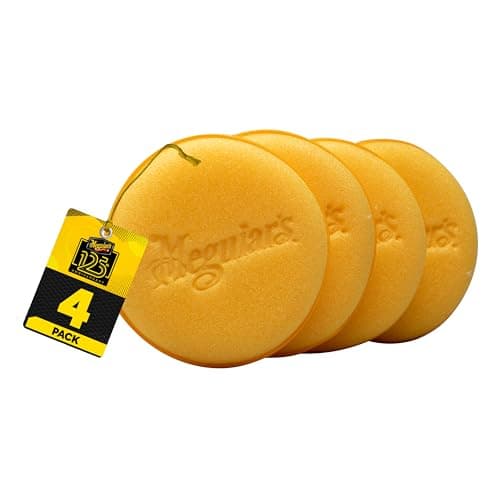
Buy the Meguiar's 4-inch foam applicator pads. Four soft rounds for a few dollars is the right answer for almost everyone, and the reason is not performance — it is that they are cheap enough to keep a separate pad for each product and to throw one away rather than use a contaminated one. If you wax whole cars by hand and your fingers ache by the rear quarter, the thicker Griot's Garage hand wax applicators are the upgrade worth paying roughly double for: deeper foam, enough body to grip properly, and even pressure across the face instead of your fingertips doing the work.
This is the least glamorous purchase in car care and one of the few where the cheap option is genuinely correct. What an applicator controls is film thickness — how much wax actually ends up on the paint — and a folded towel or a bare hand puts down three times what a panel needs, which is exactly how a wax ends up streaky and hard to remove.
Why the applicator decides the result
Wax works as a very thin, even film. Too much and it hazes unevenly, grabs the removal towel and leaves a smear on the cold side of a panel. Too little and you get bare patches that nobody sees until the first rain. A purpose-made foam applicator meters the product across a flat face and spreads it thin on its own, which is a mechanical advantage a towel does not have because a towel concentrates whatever pressure your fingers apply.
The second thing it controls is contamination. An applicator that has touched the ground, or that carries dried wax from last season, drags grit across the paint — and a wax pass over a clean, polished panel is the worst possible place to introduce a new scratch. Cheap applicators you replace without hesitating are a safety feature.
The field, in one table
| Pick | Form | Count | Best at |
|---|
| Meguiar's foam applicator pads | 4-inch flat foam rounds | 4 per pack | Everything, cheaply |
| Griot's Garage hand wax applicators | Deep foam body | Set of 3 | A whole car without hand fatigue |
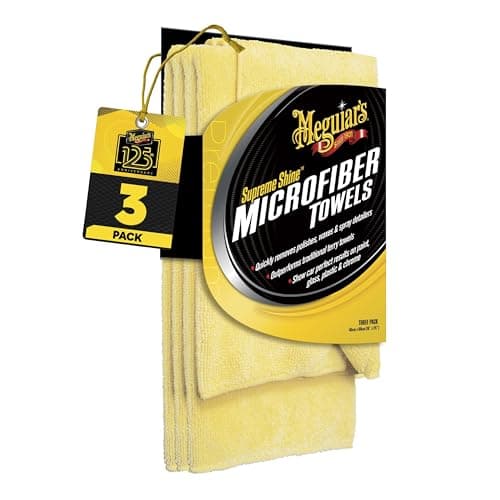
| Meguiar's Supreme Shine towels | 16 x 16 in plush microfiber | 3-pack | Taking the wax back off |
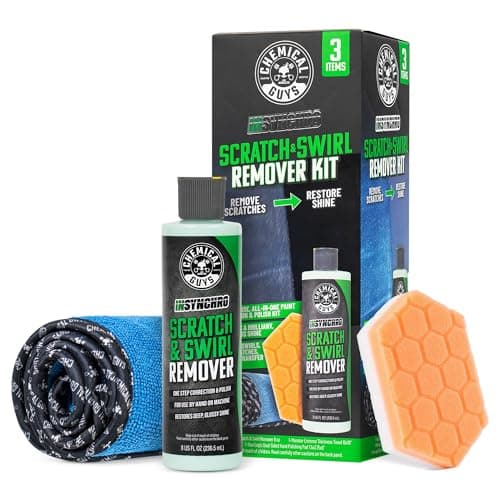
| Chemical Guys Insynchro hand kit | Polish plus its matched hand pad | 8 oz + pad | Correcting a spot before you wax it |
Flat rounds or deep pads
The practical difference is grip, not spreading. A 4-inch flat round spreads wax perfectly well; what it does not do is give your hand anything to hold, so pressure comes from your fingertips and varies as you tire. On one panel that is irrelevant. On a full car it is the difference between an even coat and a coat that gets heavier towards the end of the job.
A deeper applicator also stays cleaner, because your fingers sit further from the working face. The trade-offs are real though: it costs about twice as much, and the extra bulk makes it awkward around mirror bases and door handles. Most people who wax regularly end up owning both and reaching for the thin rounds in tight spaces.
The pad you should not use
Not every soft foam thing is an applicator. A coating needs the suede block that comes in the coating kit, not a foam round — suede lays a controlled, very thin film that foam cannot match, and foam will also soak up an expensive coating liquid. And a machine finishing pad is not a hand applicator either: it is sized and built for a backing plate, and using one by hand wastes product in the foam.
The other mistake is using an applicator to correct. Foam this soft does no cutting at all, so any defect you can still see after waxing was there before — that is a job for a polish and the method in how to polish a car by hand.
Buying and using applicators properly
One applicator per product
Wax on one, sealant on another, dressing on a third, and label them. Cross-contaminating a carnauba applicator with a cleaner wax means the next panel gets mild abrasives you did not intend to apply. This is the whole argument for buying them in multi-packs.
Prime it with a mist, then go thin
Foam soaks up the first application, so a new applicator uses more wax than you expect. Mist it lightly with water or a quick detailer first and the first panel takes a normal dose rather than a triple one. After that, the rule is a thin film you can barely see.
The removal towel is half the job
A wax that goes on perfectly can still be ruined coming off. A plush microfiber with a deep pile lifts the dried wax instead of dragging it, and a thin, cheap cloth does the opposite. Buy more towels than you think you need and fold each into quarters so you get eight clean faces; the wider towel field is ranked in best microfiber towels for detailing.
Wash them, and wash them separately
Foam applicators are washable and long-lived, and they are also the first thing people throw out. Rinse them while the wax is still soft, wash with the microfiber load and no fabric softener, and air-dry. Softener coats the foam and the towels alike and ruins both.
Retire them early
An applicator with a hardened edge, a torn face or embedded grit is a scratch waiting to happen on the one pass where the paint is at its cleanest. At a few dollars a pack, the replacement decision should take no thought at all.
Where applicators fit in the wax job
Applicator choice only matters once the paint is ready for wax — washed, decontaminated and dry. The sequence around it is in how to wax a car by hand, and the product you put on the pad is ranked in best car wax.