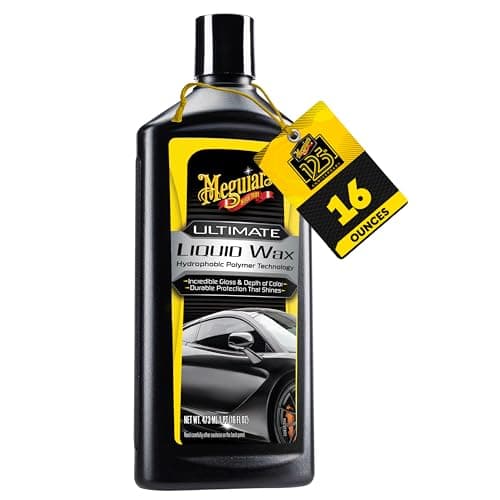
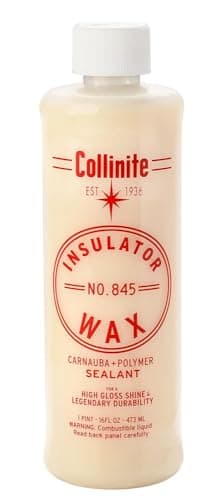
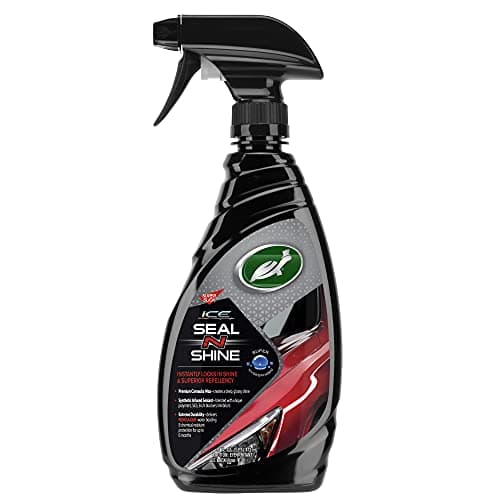
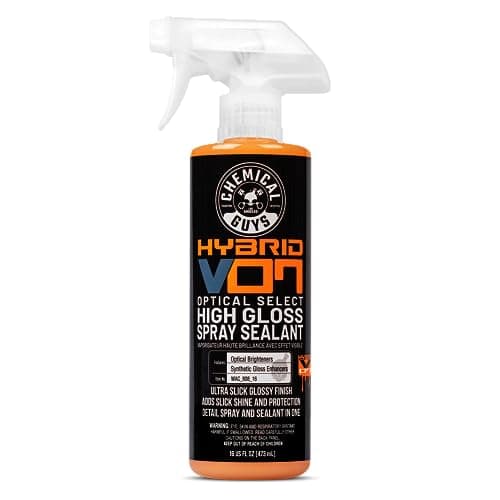
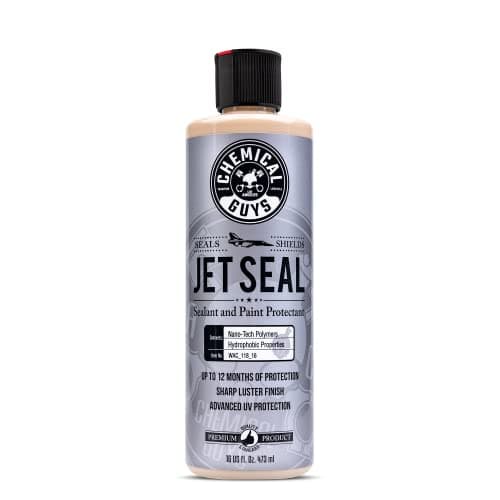
A paint sealant is the least glamorous product in car care and, for a lot of people, the most sensible one. It is a synthetic polymer that bonds to the clear coat and stays there for months — considerably longer than any carnauba wax, considerably less commitment than a ceramic coating, and applied in an evening with no controlled environment, no cure period and no risk of permanently sealing in a mistake.
The difference from wax is chemical, not marketing. Carnauba is a natural wax that sits on top of the paint as a physical layer and degrades under heat, detergent and UV in weeks to a couple of months. A synthetic sealant bonds to the surface and resists all three far better. The visible trade-off is appearance: sealants give a sharp, bright, slightly cool shine, where carnauba gives warmth and depth. Which you prefer is genuinely a matter of taste, and the three-way comparison is in wax vs sealant vs coating.
The cost-per-year argument
Sealants usually cost more per bottle than a mainstream wax and less than a ceramic coating, and comparing sticker prices misses the point entirely. What matters is bottle price divided by applications per year — and a sealant that holds through a season needs applying two or three times a year where a carnauba needs six or more. Do that arithmetic before deciding a sealant is expensive; it usually inverts the answer.
Time is the bigger cost anyway. Every application is an afternoon of your weekend regardless of what is in the bottle, so halving the number of applications is worth considerably more than the few dollars between products.
Preparation matters more than it does for wax
A sealant bonds chemically, and a bond needs a clean surface. Applying one over embedded contamination, old wax residue or polishing oils gives you a sealant that adheres to the contamination rather than the paint, and it will fail early no matter what the bottle claimed. Wash, chemically decontaminate, clay if the paint feels rough, and wipe down before application. The decontamination guide covers when clay is genuinely necessary.
Sealant plus wax is a real technique
The classic enthusiast layering is a synthetic sealant for durability with a carnauba wax on top for warmth — the sealant does the protecting, the wax does the looking. It works, and it is a reasonable answer to the appearance trade-off, with two conditions: let the sealant cure fully before the wax goes on, and accept that the wax layer will wear off in weeks while the sealant carries on underneath. Top it up with a spray wax rather than a full re-application.
If durability is your actual priority and you are willing to prepare properly, a ceramic coating outlasts every sealant here by years — see our coating picks. The sealant's advantage is that it demands far less of you and forgives far more.
The season these products earn their price is winter, when road salt and liquid brine are the actual threat and a carnauba would be gone in a month. Best car wax for winter re-ranks this same category on salt-season criteria — durability, grime release and whether you can still apply the thing in a cold garage.
How to choose a paint sealant
Durability versus appearance
The most durable sealants tend to look the most clinical: sharp, bright, glassy. Hybrid products that blend in carnauba give some warmth back and give up some longevity for it. There is no product that maximizes both, so decide which one you will notice more when you look at the car.
Application method
- Hand-applied liquid — the most control and the thickest, most durable film. Also the most work.
- Machine-applied — fast and very even across large panels, using a soft finishing pad on a low-speed buffer.
- Spray-on, wipe-off — minutes for a whole car, thinner film, shorter life.
- Rinse-off — applied to a wet car during the final rinse, which removes the application step entirely. The least durable, and by a distance the easiest.
Cure time is a real constraint
Most sealants need time to cure before they reach full durability, and rain or a wash during that window compromises the bond. Check the stated cure period and plan around the weather. This is the most common reason a sealant underperforms its claimed lifespan.
Bottle size against your actual usage
A 16 oz bottle covers a lot of cars — sealants are applied thinly, and applying more does not make them last longer. If you have one car, the small bottle is almost certainly a multi-year supply, and the value calculation should reflect that rather than the price on the shelf.
Application, in order
- Wash and dry thoroughly.
- Chemically decontaminate, and clay if the paint still feels rough.
- Correct any defects — a sealant seals them in for months.
- Wipe down with a panel prep or diluted alcohol so the bond is to bare clear coat.
- Apply thinly, panel by panel, in the shade on a cool surface.
- Let it haze for the stated time, then buff with a clean plush microfiber.
- Keep it dry for the full cure period.
The common mistake
Applying it too thickly, on the reasonable-sounding theory that more product means more protection. It does not — only what bonds to the paint contributes, and the excess simply becomes a difficult, streaky buff-off that tempts you into scrubbing freshly sealed paint. Thin, even, and let the chemistry do the work.