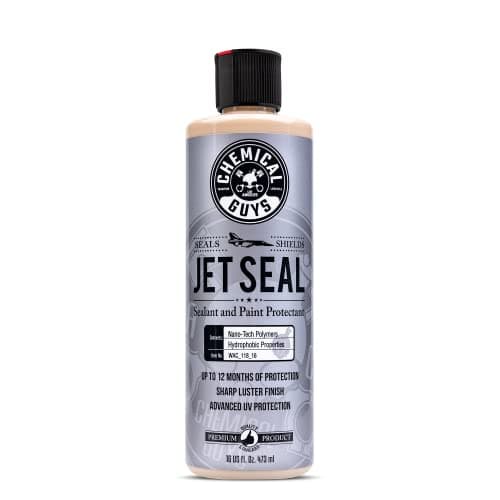
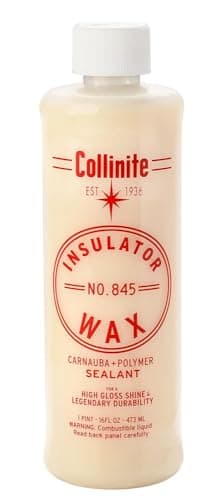
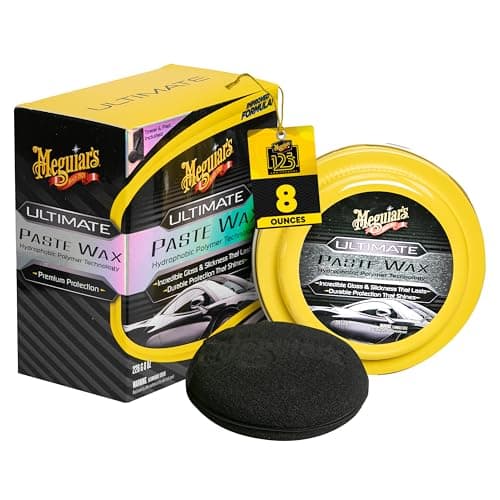
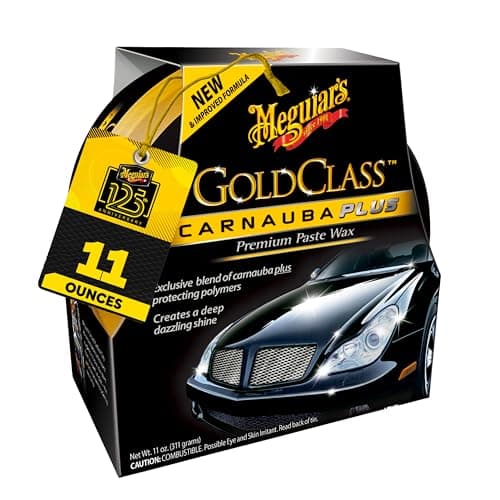
Carnauba is a natural wax harvested from the leaves of a Brazilian palm. Synthetic wax — usually sold as a paint sealant — is an engineered polymer. Everything people argue about in this comparison follows from that one difference, and once you understand it the decision takes about a minute.
Look
Carnauba wins, and it is not purely subjective. Carnauba has a high refractive index and the film it leaves is slightly less optically uniform than a synthetic one, which produces a warm, deep, faintly liquid look that people describe as glow. On dark paint — black, deep blue, dark metallics — the difference is genuinely visible.
Synthetics give a cooler, sharper, glassier reflection. On white, silver and light metallics, most of carnauba's advantage is invisible anyway, which is why our white-paint picks lean synthetic and our black-paint picks do not.
Durability
Synthetics win, decisively. Manufacturers quote carnauba in weeks and synthetic sealants in months, and real-world experience matches the ratio. The reason is chemistry rather than quality: a synthetic polymer bonds to the paint surface more tenaciously and does not have carnauba's low melting point.
That melting point is the crux. A dark hood in direct summer sun genuinely approaches the temperature at which natural carnauba softens, which is why a carnauba layer thins fastest exactly when you most want it there. If the car lives outdoors, this argument is over before the look argument starts — see best car wax for UV protection.
Ease of use
Roughly a tie, with a wrinkle. Carnauba pastes take more effort to spread and can be stubborn to buff off if left too long, but they are very forgiving of technique — an extra pass does no harm. Synthetics wipe on thinly and buff off easily, but many are less tolerant of being applied too thickly, which shows as streaking.
One genuine practical difference: traditional pastes can leave white residue in plastic trim seams, which is a nuisance to remove and glaringly visible on a dark car. Several synthetic products are formulated specifically not to.
Cost per year
Do the arithmetic rather than comparing bottle prices. A carnauba paste re-applied every couple of months and a synthetic sealant applied twice a year land closer together than the shelf prices suggest — and once you value the time, the synthetic usually wins comfortably. What flips it back is enjoyment: if you like waxing your car on a Sunday, the time is not a cost.
What about hybrids and "ceramic" waxes?
A large and growing middle ground: synthetic bases with SiO2 added, sold as ceramic waxes or hybrid sealants. They behave like very good synthetics with better water behavior, and they are the sensible default for most people who do not want to think about this question at all. They are not ceramic coatings, whatever the label implies — the distinction is in car wax vs sealant vs coating.
The answer most people should take
Own both, and layer them. Apply a synthetic sealant as the base layer for durability, let it cure, then add a carnauba on top for the look. The sealant does the protective work underneath and survives the summer; the carnauba is cosmetic and gets refreshed whenever it fades, without disturbing the base.
If you are only buying one: synthetic if the car is light-colored, parked outside, or you would rather wax twice a year than six times. Carnauba if the car is dark, garaged, and you actually enjoy the process — our carnauba wax picks rank that side on its own. Neither is a mistake, and both beat the genuine mistake, which is waxing over paint you have not decontaminated — a clay bar first does more for the result than either product choice.