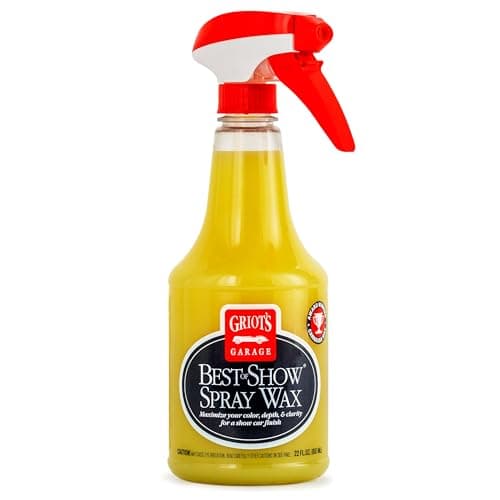
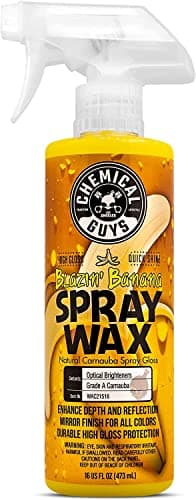
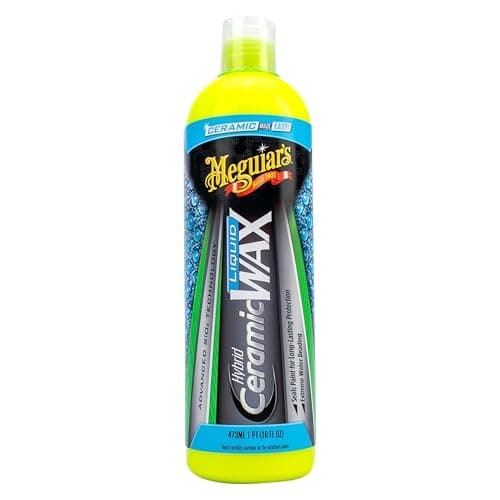
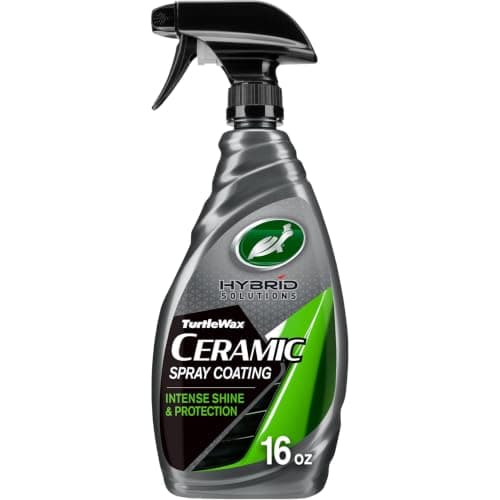
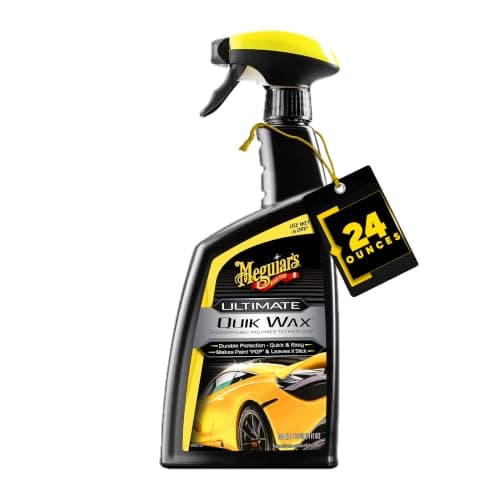
A spray wax is the product you will actually use. That is not a slight — it is the entire argument for the category. A paste wax gives a deeper, longer-lasting result and takes an afternoon, which means it happens twice a year at best. A spray wax takes the length of time it takes to dry the car, which means it happens after most washes, which means the car spends far more of its life with protection on it than it otherwise would.
The trade is honest and worth stating plainly: durability. Spray waxes lay down a much thinner film than a paste or a hand-applied sealant, so protection is measured in weeks rather than months. Anyone promising a spray you wipe on in four minutes will outlast a properly applied sealant is selling you something. What a spray wax is genuinely good at is keeping protection continuously topped up, which in practice often beats one perfect application that has since worn off.
Three different products under one name
Carnauba sprays put real carnauba into a spray bottle. They give the warm, deep look that carnauba is bought for, with the shortest durability of the three. If you like how a paste wax looks and hate how long it takes, this is the compromise.
Synthetic polymer sprays use the same chemistry family as paint sealants. They last noticeably longer than carnauba, produce a sharper, cooler shine, and are usually the most streak-resistant. This is the default pick for most people.
SiO2 and ceramic-infused sprays add silica to the mix, producing the strongest beading and the longest durability in the category — genuinely months rather than weeks on some products. They cost more and sit at the boundary with the spray-coating category proper, which we cover in best ceramic coating spray.
Where a spray wax fits in the routine
Two ways to use one, and both are legitimate. As a standalone, you spray and buff after every wash and the car is always protected, always slick, never brilliantly durable. As a topper, you apply a proper sealant or coating twice a year and use a spray wax after washes to refresh the gloss and beading — this is what most enthusiasts actually do, and it gets you the durability of the base layer with the appearance of a fresh application.
What a spray wax cannot do is fix paint. It adds no meaningful cut, so swirls, oxidation and etching all stay exactly where they were. If the paint underneath is dull, that is a compound question, and no amount of spray will substitute. It also should not go onto a dirty car — spraying over grit and wiping is a very efficient way to add swirl marks to paint you were trying to protect.
Use a clean, plush microfiber for the buff-off and turn to a fresh face often. On dark paint especially, the towel matters more than the product; our towel picks are the cheapest insurance in this whole routine.
It is worth being clear that the calendar logic on this page applies to waxing and to nothing else. Wax is additive, so a schedule makes sense — you can apply it fifty times and the paint underneath is unchanged. Polishing is subtractive and permanently spends clear coat, so it has no correct interval at all, only a condition at which it becomes worth doing. How often should you polish your car sets out the inspection that replaces the calendar.
How to choose a spray wax
Decide what you are actually buying
Warmth, durability or beading — the three chemistries above are genuinely better at different things, and no product wins all three. Carnauba for the look, synthetic polymer for the balance, SiO2 for beading and longevity. Once you know which of those you care about most, the shortlist collapses to one or two bottles.
Cost per use, not cost per bottle
Bottle sizes in this category range from small to very large, and a 24 oz bottle at a mainstream price is a fundamentally different proposition from a 16 oz boutique one, even before the sticker price. A spray wax you use fortnightly gets consumed at a real rate, so the per-application arithmetic is what should drive the decision.
Streak resistance is the usability spec
The most common complaint about any spray wax is streaking, and it is usually a technique issue with a product-dependent margin for error. Over-applying, working in direct sun on a hot panel, or buffing with a saturated towel all cause it. Products vary considerably in how much of that they tolerate, which matters far more day to day than the last week of durability.
Application, in order
- Wash first, always. A spray wax is not a cleaner. Applied over grit, it becomes a lubricant for putting scratches into your paint.
- Work panel by panel in the shade. Two to three mists per panel, no more. A hot panel flashes the product before you can level it.
- Spread with one towel, buff with another. Two towels is the single biggest improvement most people can make to their results.
- Turn the towel constantly. A loaded towel smears rather than buffs, and that is what streaks look like.
Layering
Spray waxes layer happily over an existing wax, sealant or coating, and this is where most of them earn their keep. The one combination to be careful with is a carnauba spray over a ceramic coating — carnauba can mask the coating's hydrophobic behavior rather than adding to it. Over a coating, use an SiO2-based spray instead, which tops the chemistry up rather than covering it over.
The common mistake
Using a spray wax as a substitute for washing. Misting a dusty car and wiping it down feels efficient and is, mechanically, dragging grit across clear coat. If the car needs cleaning, clean it — the spray wax comes afterwards, on a surface that is already safe to touch.