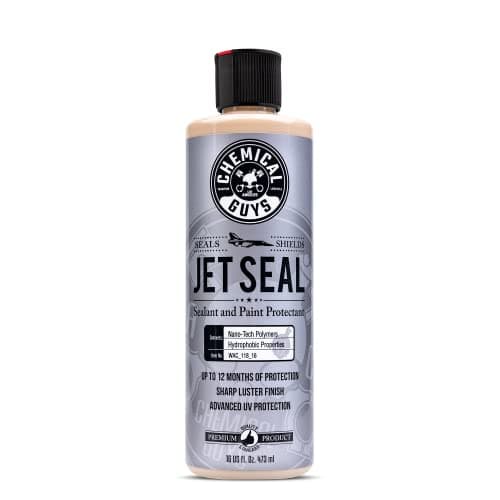
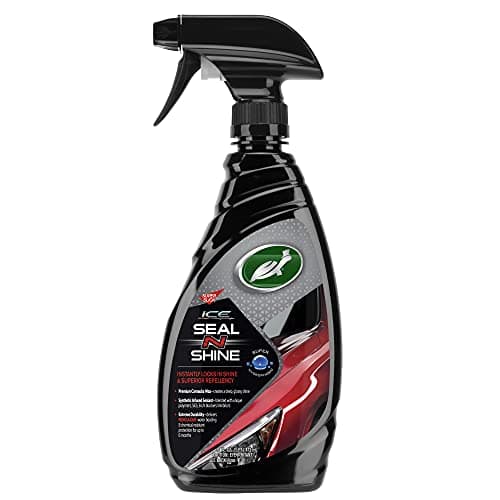
Collinite 476S Super Doublecoat is the longest-lasting car wax here — Collinite rates it at 7 to 10 months per application, the longest published figure of anything on this page, and the price is low enough that durability is not costing you a premium. The budget pick is Turtle Wax ICE Seal N Shine, the cheapest long-ish-life option here and the one with no application effort at all: you spray it on a wet car during the rinse and hose it off. If you want long life without 476S's labour, Chemical Guys JetSeal is the synthetic answer. Prices come from the live price layer, as of November 23, 2026.
This page ranks on one axis only. Not gloss, not warmth, not how good it feels to apply — just how many months one application is rated to deliver. That makes it a deliberately narrow page, and it is the right page if your actual question is "what do I put on once and stop thinking about". For the look, read best car wax or best carnauba wax instead.
Why pure carnauba cannot win this page
Carnauba is a natural wax with a melting point low enough that a dark panel in summer sun gets close to it. It gives the warmest look in car care and it does not stay on the paint — weeks on a car that lives outside, not months. No amount of layering changes the chemistry.
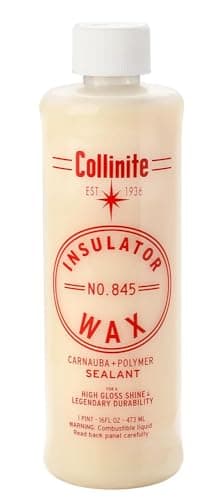
Everything at the top of this page is therefore either a synthetic polymer or a carnauba-polymer hybrid. The polymer is what cross-links to the clear coat and survives heat, detergent and rain; the carnauba, where present, is there for the look. Collinite is the clearest illustration — the brand is a cult name specifically because it put polymer into carnauba decades before anyone marketed it as a feature, and it publishes a different figure for each product: 7 to 10 months for the 476S paste, 4 to 7 for the 845 liquid.
If you want to go past this page entirely, the answer is not a wax. A bonded ceramic coating is rated in years rather than months — best ceramic coating for cars is where that conversation goes, and ceramic coating vs wax compares them properly.
How we ranked them
Published durability per application, weighted heaviest. The maker's own figure, attributed. Where a maker publishes no number we say so and rank the product below those that do, because an unfalsifiable claim is not evidence.
What it costs you to get that durability.476S's months come with real labour; JetSeal's do not. On a page about not thinking about it again, effort matters.
Resistance to what actually kills a wax — UV, alkaline detergent and heat. This is where synthetics beat natural wax decisively.
Cost per month of protection rather than cost per bottle. We have run no longevity test of our own and nothing here is a measurement we took — how we research sets out the rubric.
Four things that halve any wax's life
Bad prep. A wax bonds to whatever is on the paint. On an un-decontaminated car it bonds to bonded iron and road film, both of which are leaving soon and taking the wax with them. Wash, iron remover, clay, then wax.
Harsh soap. A strong alkaline detergent or a dish soap strips protection in one wash. A coated or waxed car wants a pH-neutral car wash soap.
Automatic car washes. The brushes are abrasive and the chemicals are aggressive. One trip through a tunnel wash undoes a lot of a wax's remaining life — how to wash a car without scratching it is the alternative.
Parking outdoors in sun. UV and heat are what the synthetic chemistries on this page are built against, and they are the reason a garaged car routinely doubles the life a daily driver sees from the same bottle.
Making one application last
Layer the right way round
If you want both durability and the warm look, the order is a synthetic sealant first, cured, then a carnauba on top. Reversing it means the sealant never touches the clear coat and bonds to wax instead. Allow the sealant its stated cure time before the topper.
Thin coats outlast thick ones
This is counter-intuitive and it is true of every product here. Only the molecules in contact with the clear coat do the bonding; the rest buffs off or sits there as haze. A thin even coat is more durable than a thick uneven one, and it uses a quarter of the product.
Give it a cure window
Synthetic sealants want hours, dry and ideally indoors, before the first rain. Applying one an hour before a storm is the most common way a 6-month product delivers six weeks.
Top up rather than reapply
A quick spray wax or an SiO2 detail spray after a wash keeps the surface slick and extends the base layer, and it takes ten minutes. That is a far better use of time than stripping and redoing a full application twice a year.
Test with water, not with the calendar
Protection does not expire on a date. Spray a panel: if the water sheets off in tight beads and the paint feels slick, it is working. When the water starts to sit in flat sheets and the paint grabs a microfiber, it is time.
Be honest about whether you want a coating instead
If the appeal here is purely "do it once", the longest wax on this page is still under a year and a bonded coating is rated in years. The reasons to stay with wax are cost, the ability to change your mind, and not needing to correct the paint first. Is ceramic coating worth it is the decision laid out.