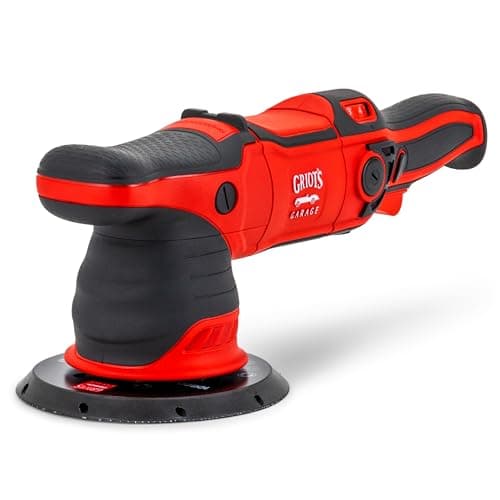
Dual-action is a mechanism, not a skill level — the same oscillating-plus-spinning action that makes a DA forgiving for a first-timer is also what a long-throw 15 mm machine uses to clear a whole car's defects in fewer passes. The five polishers below span that entire range, so the right one depends less on brand and more on how much orbit you need and how the tool feels loaded down with real pressure.
If you are brand new to machine polishing, start with our narrower beginner-focused picks instead — every polisher there is also a DA, just filtered for the most forgiving orbit and included kits. This roundup is the wider field: short-throw and long-throw, corded and cordless, bare tools and full kits, so you can match the spec to the job rather than the experience level.
The mechanical case for DA over the alternative is covered in full in dual-action vs rotary polisher, but the short version is that a DA's pad stalls instead of grinding when it is held too long in one place, which is what actually prevents burned paint. None of that margin depends on price — even the least expensive DA here has it. What separates these five is motor strength under load, orbit size, and whether they are corded for full-car stamina or cordless for spot work.
Pair whichever one you choose with pads sized for its orbit — see our pad picks for DA polishers — since a mismatched pad blunts the advantage of even the strongest motor.
Buying the machine is the easy half. The settings, the arm speed and the section discipline that decide whether it actually corrects anything are in how to use a dual-action polisher — worth reading before the first pass rather than after it.
If you arrived here trying to work out whether a "dual-action" and a "random orbital" are two different things you have to choose between, they are not: both phrases describe the same free-spinning mechanism from two different angles. Dual-action polisher vs random orbital clears the terminology up and names the one distinction that does change how a machine behaves — forced rotation.
The short answer
| # | Product | Best for | Score | Price |
|---|
| 01 | Griot's Garage G9 Random Orbital PolisherThe dual-action most enthusiasts would tell a beginner to buy: a smooth 9 mm orbit, a strong motor and a lifetime warranty, so it corrects real defects without the wobble cheaper units get under pressure. | A first polisher you won't outgrow | | $179.99·Amazon |
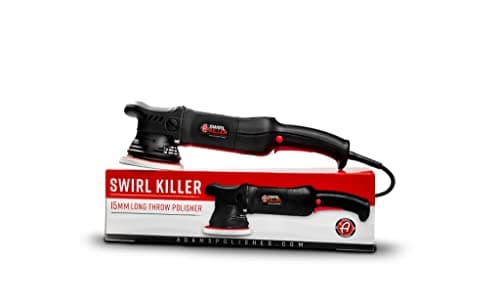
| 02 | Adam's Swirl Killer 15 mm PolisherA long-throw 15 mm DA that covers ground fast, so a full-car correction takes fewer passes — the tool to reach for when the whole car needs work, not just a panel. | Correcting a whole car in fewer passes | | $237.99·Amazon |
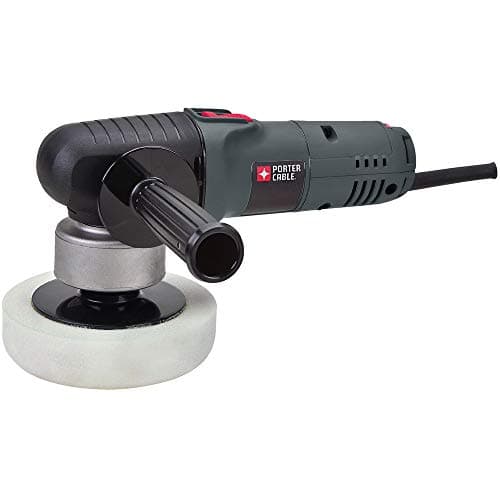
| 03 | | The lowest-risk way to learn machine polishing | | $159.00·Amazon |
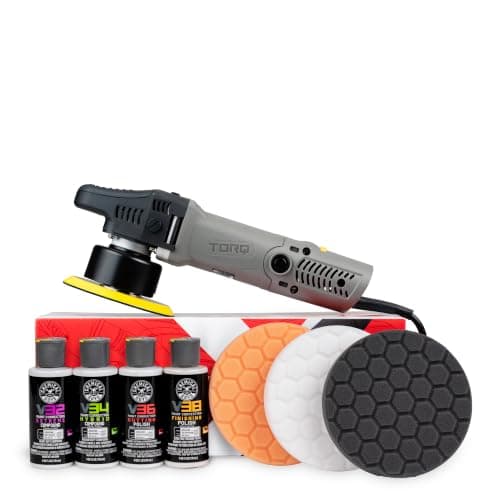
| 04 | Chemical Guys TORQX Random Orbital Polisher KitA first-timer's whole starting line-up in one box — polisher, backing plate, pads and a set of compounds/polishes — so you don't have to assemble a kit from five listings before your first pass. | A first-timer who wants everything in one box | | $219.99·Amazon |
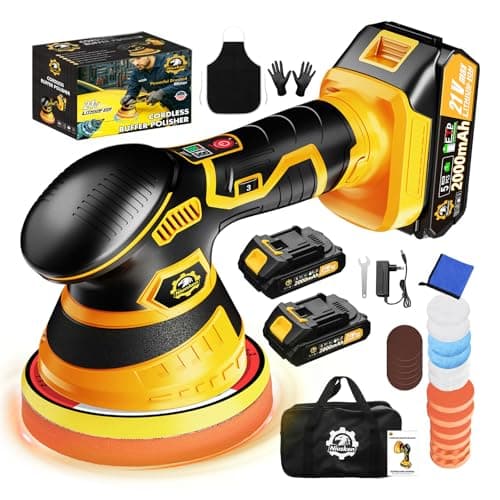
| 05 | Niusken Cordless Car Buffer Polisher KitA cordless DA for spot fixes, coating application and anywhere a cable is a nuisance — not a full-correction tool, but genuinely handy for top-ups and tight jobs. | Spot fixes, coating application and cordless convenience | | $59.99·Amazon |
#ad · Live prices from the Amazon Product API, as of October 19, 2026. Where we have no verified live price, we show none — we would rather leave a gap than print a number that has rotted.
In detail
A first polisher you won't outgrow
9 mm orbit1000 W motor6-speed dialLifetime warranty
The dual-action most enthusiasts would tell a beginner to buy: a smooth 9 mm orbit, a strong motor and a lifetime warranty, so it corrects real defects without the wobble cheaper units get under pressure.
- Ergonomics
- 8.8
- Correction power
- 8.6
- Beginner-safe
- 9.2
- Value
- 8.4
Pros
- +Enough torque to hold speed under pad pressure, where budget DAs bog down
- +Longer 9 mm orbit corrects faster than the old 5 mm entry tools
- +Griot's lifetime warranty is genuinely lifetime
Cons
- −Heavier than a bare-bones DA
- −Pads and compounds sold separately
Don't buy this if…
…you only ever want to apply a spray coating — a cheaper spot polisher is plenty.
Correcting a whole car in fewer passes
15 mm long throwVariable speedDigital readoutFull-size DA
A long-throw 15 mm DA that covers ground fast, so a full-car correction takes fewer passes — the tool to reach for when the whole car needs work, not just a panel.
- Ergonomics
- 8
- Correction power
- 9
- Beginner-safe
- 8
- Value
- 8
Pros
- +Large 15 mm orbit clears defects over big panels quickly
- +Digital speed readout makes repeatable results easy
- +Strong correction for a consumer tool
Cons
- −Long throw is less nimble on tight/curved panels than an 8 mm
- −Overkill for pure spray-coating application
Don't buy this if…
…you mostly work small, contoured areas — an 8 mm tool is easier to control there.
The lowest-risk way to learn machine polishing
6-inch pad2,500–6,800 OPM8 mm orbitVariable speed
The budget classic that taught a generation to machine polish — decades of tutorials use this exact tool, so every mistake you can make already has a video fix.
- Ergonomics
- 7.8
- Correction power
- 7.6
- Beginner-safe
- 8.8
- Value
- 8.8
Pros
- +The most-documented DA polisher ever made — endless tutorials
- +Cheap enough to learn on without fear
- +Huge aftermarket of backing plates and pads
Cons
- −Less torque than modern long-throw tools
- −Bare tool — no pads or compound included
Don't buy this if…
…you want to correct a whole car quickly — a 15 mm long-throw finishes faster.
A first-timer who wants everything in one box
8 mm throwPads + compounds includedCordedBeginner kit
A first-timer's whole starting line-up in one box — polisher, backing plate, pads and a set of compounds/polishes — so you don't have to assemble a kit from five listings before your first pass.
- Ergonomics
- 8.2
- Correction power
- 7.9
- Beginner-safe
- 9
- Value
- 8.6
Pros
- +Everything to start correcting is in the box — no add-on shopping
- +Forgiving 8 mm throw that's hard to burn paint with
- +Chemical Guys tutorial ecosystem is huge
Cons
- −Motor is milder than the G9 under load
- −Bundled pads are basic starter foam
Don't buy this if…
…you already own good pads and compounds — buy a bare tool and save the overlap.
Spot fixes, coating application and cordless convenience
CordlessVariable speedIncludes pads + batteryCompact
A cordless DA for spot fixes, coating application and anywhere a cable is a nuisance — not a full-correction tool, but genuinely handy for top-ups and tight jobs.
- Ergonomics
- 8.4
- Correction power
- 6.8
- Beginner-safe
- 8.2
- Value
- 7.8
Pros
- +No cord to drag across paint or trip over
- +Comes with pads and a battery to start immediately
- +Light and easy to hold at odd angles
Cons
- −Battery runtime limits full-car correction
- −Less torque than a corded long-throw
Don't buy this if…
…you plan to correct a whole neglected car — a corded tool won't run out of charge.
How to choose between these five
All five of these are dual-action, so the safety margin is the same across the board — what actually separates them is orbit size, motor strength, and whether they are built to go the distance corded or cut loose cordless. Pick by the job you will actually do most, not by whichever spec sheet reads the biggest.
Match orbit to the job, not the brand
An 8 mm short-throw tool is the more nimble, more forgiving choice for curved panels, bumpers, and anywhere trim gets in the way. A 15 mm long-throw machine clears a flat hood or door skin in noticeably fewer passes, which matters once you are correcting a whole car rather than touching up one spot. If you only buy one, an 8 mm tool comfortably handles more of a typical car's panels; a long-throw machine is the upgrade once full-car speed becomes the priority. Our long throw vs short throw comparison works that trade-off through in full, including where a 21 mm machine fits.
Corded stamina vs cordless convenience
A corded DA is still the right default for a full correction — no battery to manage mid-panel, and generally more torque held in reserve. A cordless DA earns its place for coating application, quick spot fixes, and tight areas where a trailing cord is a genuine hazard to paint you already corrected, but its runtime and torque both trail a corded tool on a full-car job.
The common mistake
The mistake that undoes a good polisher purchase is treating pads and compound as an afterthought. A strong motor with a mismatched pad — say, a firm cutting pad loaded with a finishing polish — corrects almost nothing, and the owner blames the tool instead of the combination that was actually loaded onto it. This shows up most often with a bare tool bought right after reading a roundup like this one: the polisher arrives, the pads and compound are still a separate order, and the first attempt gets made with whatever was already in the garage. Buy pads sized and rated for your polisher's orbit at the same time as the machine, not after a disappointing first attempt, so the very first pass you make actually reflects what the tool can do.
How we picked
We compiled published specifications, manufacturer data sheets and aggregated owner reviews, computed the cost of ownership from real sizes and coverage, then scored each product against a published rubric. The scores are judgments from documented research — they are not measurements we took, because we do not own a lab and we are not going to pretend we do. Where a number came from someone else, we name them and link them in Sources.
Questions
What is a dual action polisher?+
A dual-action (DA) polisher spins its pad while also oscillating it in a small random pattern, unlike a rotary that only spins. That extra motion is what makes a DA far more forgiving to learn on.
Short vs long throw — which is better?+
Neither is universally better: short-throw (8 mm) is easier to control on tight or curved panels, while long-throw (15/21 mm) clears defects over large panels in fewer passes. Many enthusiasts end up owning one of each.
Is a DA polisher good enough for real correction?+
Yes, for the vast majority of daily-driver swirls, light oxidation and one-step correction jobs. Only the most severe defects — deep scratches, heavy sanding marks — really call for a rotary and an experienced hand.
DA vs rotary?+
A DA is safer, slower and far more forgiving; a rotary corrects faster but has no built-in stall protection, so mistakes show up as burned paint instead of a stalled pad. We compare them fully in our head-to-head.
Receipts
We do not run a testing lab, and we do not pretend to. Where a measured number came from someone else's lab, we name them and link them. Where we could not verify something, we say so on the page rather than quietly leaving it out. Read our full method.