Skip to content
Pad & Polish

HUB 01 · Machine Polishers

Griot's Garage G9 Review

The dual-action most enthusiasts point beginners at — assessed against the two machines people actually cross-shop it with.

By Stephen V.Updated How we research
#ad

We earn a commission when you buy through our Amazon links, at no extra cost to you. It never affects our rankings, and we say so when the cheaper product is the better buy. How this works.

The Griot's Garage G9 is the machine that gets recommended in almost every "what polisher should I buy" thread, and unusually for a consensus pick, the reasoning holds up. It is a random-orbital dual-action with a 9 mm throw, a strong motor, a six-position speed dial, and a lifetime warranty that Griot's honors as written. That combination is the reason it costs roughly twice what the budget classic does, and this page is about whether that difference is worth paying.

Before the detail, the necessary disclosure: we have not disassembled a G9 or run one against a paint thickness gauge, because we do not operate a testing lab and are not going to pretend otherwise. What follows is built from Griot's published specifications, the mechanical behavior those specifications imply, and the patterns in aggregated owner reporting. Our full method is on how we research.

What the G9 actually is

Mechanically, the G9 is a free-spinning random orbital. The pad rotates on a bearing while the head carries it through a 9 mm circle, and critically, nothing forces the rotation — friction against the paint drives it. That is the whole safety story of a dual-action: when resistance rises past a point, the pad simply stops turning instead of continuing to grind heat into one spot. It is why a first-timer can hold a G9 in one place and get a spot that needed another pass, rather than a burned-through corner. The same mechanism, and the rotary alternative that lacks it, is covered in dual-action vs rotary polisher.

The 9 mm orbit, honestly

Nine millimeters sits right at the modern beginner standard, and it is a genuine middle ground rather than a compromise nobody wanted. It is small enough to keep flat on a curved fender, a bumper or a mirror housing without fighting you, and small enough that building damaging heat takes real carelessness. It is large enough to clear ordinary daily-driver swirls at a reasonable pace.

What it is not is fast across a whole car. A 15 mm long-throw machine covers a hood in noticeably fewer passes, and if you are correcting a full neglected vehicle rather than maintaining a tidy one, that difference compounds into hours. That is the single most honest criticism of the G9 and the reason a long-throw machine sits third on this page rather than being dismissed.

Motor behavior under load

This is where the price difference actually lands. Every dual-action's safety and correction ability depend on the pad staying in motion, and a weak motor lets real working pressure slow or stall that rotation. When that happens, correction stops — and the owner usually concludes the compound is bad or the technique is wrong, when the truth is that the motor gave up. The G9 has enough reserve to keep turning when you lean into a panel, and that single characteristic is what separates a satisfying first machine-polishing session from a frustrating one.

The warranty is a real part of the value

Griot's lifetime warranty is not a marketing asterisk with a three-year limit hiding underneath — it is the reason a lot of long-term owners buy the brand a second time. On a tool with bearings, brushes and a speed controller that all wear, that coverage is a meaningful part of what the higher price buys, and it is worth weighing against a cheaper machine that you may simply replace in a few years.

Who should buy something else

Two buyers should look elsewhere, and we would rather say so than pretend the G9 is universal. If you want the cheapest possible way to learn machine polishing and accept a slower, lower-torque tool for it, the budget classic below has decades of tutorials filmed on that exact machine — every mistake you can make already has a video fix. And if you are correcting whole cars rather than maintaining one, a long-throw 15 mm DA finishes the job in less time, at the cost of some nimbleness on tight panels.

There is also the obvious one: if you only ever plan to spread a spray coating or a liquid wax, no correcting DA is a sensible purchase. An orbital waxer does that job for a fraction of the money.

What you need alongside it

The G9 is a bare tool. It corrects nothing on its own — the pad and the compound loaded onto it do all of the actual work, and the most common way to waste this purchase is to pair it with whatever pads were already in the garage. Start with pads sized for a short-throw orbit, pick a compound matched to the defects you actually have, and walk through how to polish a car step by step before the first pass.

The verdict

The G9 is the machine to buy if you want one polisher that will still be the right tool in five years. It is not the cheapest way into machine polishing and it is not the fastest way through a full correction — it is the one with the fewest reasons to regret it. The two alternatives below are ranked underneath it because each wins on exactly one axis: price, and full-car speed.
The short answer

Quick picks

#ProductBest forScorePrice
01
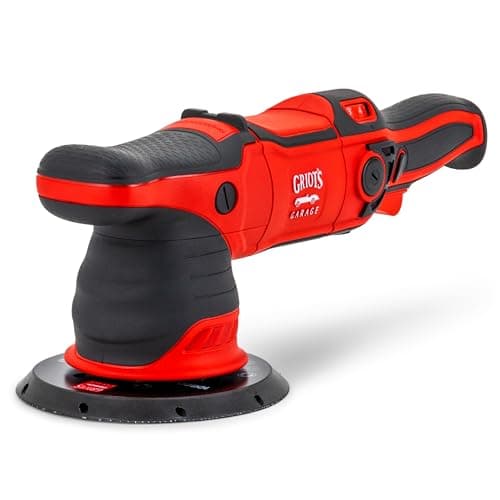
Griot's Garage Griot's Garage G9 Random Orbital Polisher
Griot's Garage G9 Random Orbital Polisher

The dual-action most enthusiasts would tell a beginner to buy: a smooth 9 mm orbit, a strong motor and a lifetime warranty, so it corrects real defects without the wobble cheaper units get under pressure.

A first polisher you won't outgrow
8.8
$179.99Amazon
02
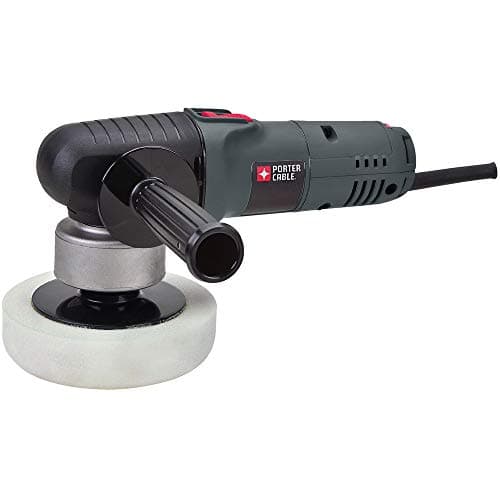
PORTER-CABLE PORTER-CABLE 7424XP Variable-Speed Polisher
PORTER-CABLE 7424XP Variable-Speed Polisher

The budget classic that taught a generation to machine polish — decades of tutorials use this exact tool, so every mistake you can make already has a video fix.

The lowest-risk way to learn machine polishing
8.3
$159.00Amazon
03
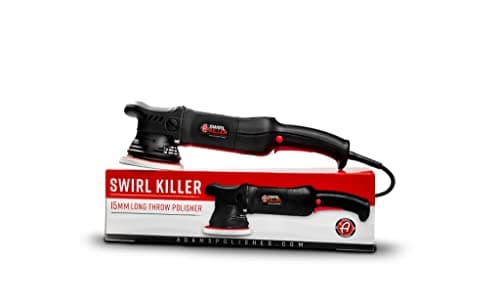
Adam's Polishes Adam's Swirl Killer 15 mm Polisher
Adam's Swirl Killer 15 mm Polisher

A long-throw 15 mm DA that covers ground fast, so a full-car correction takes fewer passes — the tool to reach for when the whole car needs work, not just a panel.

Correcting a whole car in fewer passes
8.3
$237.99Amazon

#ad · Live prices from the Amazon Product API, as of Sep 4, 2026. Where we have no verified live price, we show none — we would rather leave a gap than print a number that has rotted.

In detail

The picks, in full

01
Griot's Garage Griot's Garage G9 Random Orbital Polisher

A first polisher you won't outgrow

Griot's Garage G9 Random Orbital Polisher

9 mm orbit1000 W motor6-speed dialLifetime warranty
8.8/10

The dual-action most enthusiasts would tell a beginner to buy: a smooth 9 mm orbit, a strong motor and a lifetime warranty, so it corrects real defects without the wobble cheaper units get under pressure.

Ergonomics
8.8
Correction power
8.6
Beginner-safe
9.2
Value
8.4

Pros

  • Enough torque to hold speed under pad pressure, where budget DAs bog down
  • Longer 9 mm orbit corrects faster than the old 5 mm entry tools
  • Griot's lifetime warranty is genuinely lifetime

Cons

  • Heavier than a bare-bones DA
  • Pads and compounds sold separately

Don't buy this if…

you only ever want to apply a spray coating — a cheaper spot polisher is plenty.

$179.99View on Amazon

Price as of Sep 4, 2026. Prices change — Amazon's is the one that counts.

#ad · we may earn a commission from this link to Griot's Garage G9 Random Orbital Polisher

02
PORTER-CABLE PORTER-CABLE 7424XP Variable-Speed Polisher

The lowest-risk way to learn machine polishing

PORTER-CABLE 7424XP Variable-Speed Polisher

6-inch pad2,500–6,800 OPM8 mm orbitVariable speed
8.3/10

The budget classic that taught a generation to machine polish — decades of tutorials use this exact tool, so every mistake you can make already has a video fix.

Ergonomics
7.8
Correction power
7.6
Beginner-safe
8.8
Value
8.8

Pros

  • The most-documented DA polisher ever made — endless tutorials
  • Cheap enough to learn on without fear
  • Huge aftermarket of backing plates and pads

Cons

  • Less torque than modern long-throw tools
  • Bare tool — no pads or compound included

Don't buy this if…

you want to correct a whole car quickly — a 15 mm long-throw finishes faster.

$159.00View on Amazon

Price as of Sep 4, 2026. Prices change — Amazon's is the one that counts.

#ad · we may earn a commission from this link to PORTER-CABLE 7424XP Variable-Speed Polisher

03
Adam's Polishes Adam's Swirl Killer 15 mm Polisher

Correcting a whole car in fewer passes

Adam's Swirl Killer 15 mm Polisher

15 mm long throwVariable speedDigital readoutFull-size DA
8.3/10

A long-throw 15 mm DA that covers ground fast, so a full-car correction takes fewer passes — the tool to reach for when the whole car needs work, not just a panel.

Ergonomics
8
Correction power
9
Beginner-safe
8
Value
8

Pros

  • Large 15 mm orbit clears defects over big panels quickly
  • Digital speed readout makes repeatable results easy
  • Strong correction for a consumer tool

Cons

  • Long throw is less nimble on tight/curved panels than an 8 mm
  • Overkill for pure spray-coating application

Don't buy this if…

you mostly work small, contoured areas — an 8 mm tool is easier to control there.

$237.99View on Amazon

Price as of Sep 4, 2026. Prices change — Amazon's is the one that counts.

#ad · we may earn a commission from this link to Adam's Swirl Killer 15 mm Polisher

How we picked

We do not run a testing lab

We compiled published specifications, manufacturer data sheets and aggregated owner reviews, computed the cost of ownership from real sizes and coverage, then scored each product against a published rubric. The scores are judgments from documented research — they are not measurements we took, because we do not own a lab and we are not going to pretend we do. Where a number came from someone else, we name them and link them in Sources.

Questions

Frequently asked

Is the Griot's Garage G9 worth the money?
For most buyers, yes — the motor holds speed under working pressure, the 9 mm orbit is forgiving on curved panels, and the lifetime warranty is genuinely lifetime. If your budget is tight and you accept a slower tool, a cheaper classic DA still corrects paint properly.
What is the difference between the Griot's G9 and the older G8 and G15?
The number in a Griot's polisher name reflects the orbit family it sits in — the G9 is the 9 mm short-throw machine, while the long-throw 15 mm tools cover large panels in fewer passes. Short throw is more controllable on curves; long throw is faster on flat panels.
What size pads does the G9 take?
It is commonly run with 5.5-inch pads on a matching backing plate, which is the standard size for a short-throw DA. Confirm the plate and pad diameters match before your first pass — an oversized pad hangs off the plate and wobbles rather than gliding.
Can a beginner use the Griot's G9 safely?
Yes. Its dual-action head stalls rather than grinding when you dwell in one place, which is exactly the mistake most first-timers make. Keep the pad flat, keep it moving, and start with a light polish before reaching for an aggressive compound.
Does the G9 come with pads and compound?
The polisher itself is a bare tool, though it is often bundled into kits that add pads and a ceramic or correcting product. Budget for pads and compound at the same time as the machine — a polisher on its own removes nothing.

Keep reading

Receipts

Sources

We do not run a testing lab, and we do not pretend to. Where a measured number came from someone else's lab, we name them and link them. Where we could not verify something, we say so on the page rather than quietly leaving it out. Read our full method.