A waterless wash is a spray bottle that cleans a car with no water, no bucket and no hose. Spray a panel, wipe it with a plush microfiber towel, flip to a dry face, move on. For anyone in an apartment, a condo garage, an HOA with rules or a region under water restrictions, it is the only way to keep a car looking cared for between proper washes.
It is also the product class with the widest gap between what the marketing implies and what is actually safe. Every bottle here is being sprayed onto dry dirt and then wiped with a towel — which is, mechanically, the exact thing every detailing guide tells you never to do. The whole category works only because the formula carries enough lubrication to hold the dirt away from the clear coat while the towel takes it off, and that lubrication has a ceiling.
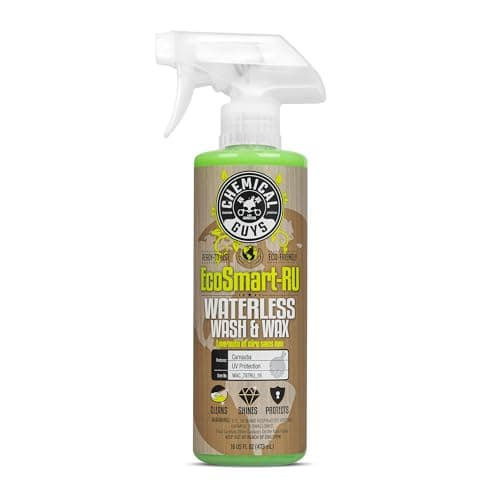
So this page ranks these six on lubricity first and gloss second, and it is blunt about the threshold. Chemical Guys is the only maker in the group that states the limit in its own listing — light dust, road film and weekly touch-ups, not a heavily soiled car — and that sentence is worth more to a buyer than any of the shine claims.
Waterless, rinseless, or neither
Three product classes get muddled, including by the people selling them. Griot's and Koch-Chemie both use the phrase "waterless car wash" in listings for products that are actually rinseless concentrates, so the confusion is not the reader's fault.
A waterless wash is ready to use, sprayed straight onto the panel, no water at all. It is for dust and light road film. Everything on this page is one.
A rinseless wash is a concentrate diluted into a bucket of water and applied with soaked towels. More lubricant reaches the paint, so it handles a genuinely dirty daily driver. Those are ranked separately in best rinseless wash.
A hose wash with real car wash soap and the two-bucket method is still the safest way to clean a dirty car, and nothing here replaces it. A waterless wash extends the interval between hose washes; it does not remove the need for them.
Where the limit actually is
The useful test is tactile, not visual. Run a clean finger down a panel. If it picks up a light film of dust and your fingertip stays smooth, a waterless wash is appropriate. If you can feel grit — distinct particles, the sensation of fine sand — then there is solid material on that paint, and no amount of polymer in a spray bottle will stop a towel from dragging it. That car needs water.
Concretely: a garage-kept car with a week of dust, a show car after a trailer ride, a commuter with road film after a dry week, a motorcycle, the top half of a car in winter. All fine. A car after a rainstorm with dried mud spray up the sides, a car that has been down a gravel road, a car with two months of neglect on it — not fine, at any price.
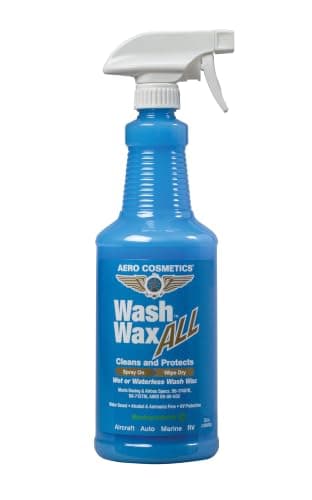
The one product here built to push that boundary is Aero Cosmetics' Wash Wax ALL, which publishes a damp-towel method rather than a spray-and-wipe instruction: spray the panel, wipe with a damp microfiber that lifts and absorbs the dirt rather than dragging it, then finish with a dry towel. Aero says it developed that method precisely because it handles genuinely dirty vehicles, and the logic is sound — a damp towel carries more lubricant and more capacity than a dry one. It also means you need a water source to dampen a towel, which is a small and honest tax on the "waterless" promise.
How we ranked them
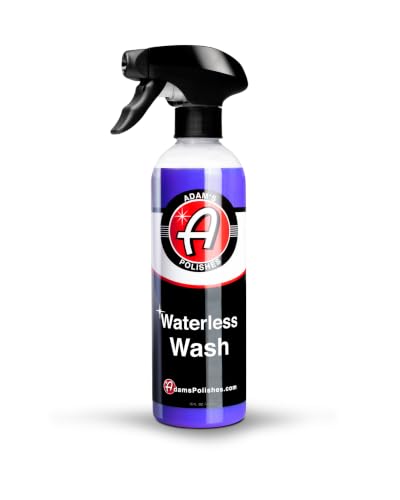
Lubricity — how much slip the formula claims, from the polymer and emulsifier chemistry each maker publishes. This is the only criterion in the category with a permanent downside, so it carries the most weight. Adam's leads its entire product description with lubrication and emulsifying polymers, which is the correct priority for this product class.
Cleaning power — how much film each is built to lift in one pass before the towel is loaded. A spray that needs three passes is three chances to mar the paint.
Gloss left behind — whether the product leaves protection, what kind, and whether that is what you want. Four of these six are wash-and-wax or SiO2 formulas; two deliberately leave nothing, which makes them the right pick before applying real protection.
Value — cost per car, not per bottle. A 16 oz trigger spray is one or two careful cars; a gallon refill changes the arithmetic entirely, and three of these are sold in bulk as well. We have run no controlled comparison — how we research explains what our scores are built from.
Wax, SiO2, or nothing
The formulas split into three groups, and the right one depends on what the car already wears.
Wash-and-wax sprays leave a thin carnauba-style gloss layer with each pass. On an unprotected or waxed car that is a small bonus — the finish stays slicker and the next dusting wipes off more easily. None of them publishes a durability figure, so read it as a top-up rather than a wax job.
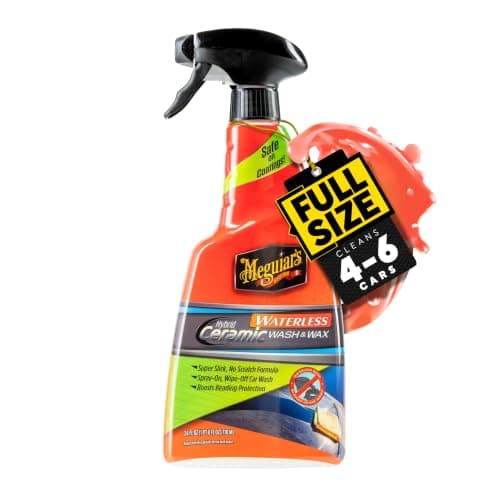
SiO2 formulas leave silica instead, which beads water rather than merely looking glossy. On a car that is already ceramic coated or running an SiO2 sealant, this is the correct choice: the weekly clean reinforces the same chemistry instead of masking it with wax. Meguiar's Hybrid Ceramic is the pick in that group.
Pure cleaners leave nothing. That sounds like a downside and is sometimes exactly what you want — before applying a sealant, a coating or a wax, anything left behind is contamination for the product going on next. Adam's Waterless Wash is the clean-only option here, and it is the one to reach for the day before a protection step.
One warning that applies across all three: a wash-and-wax or SiO2 spray is the wrong product immediately before a coating, for exactly the reason above. The proper pre-coating sequence ends with a panel wipe and nothing else.
Why the towels decide the outcome
You can do everything else wrong and get away with it if the towels are right, and you can buy the most lubricated spray on the market and still mar paint with two towels and impatience. This is a towel-limited method.
The numbers that work: six to eight plush microfiber towels for a full car, folded into quarters, one face per section, and a separate dry towel for the buff. A 350-500 GSM plush towel has the pile depth to let a dirt particle sit down into the nap instead of being pushed along the surface — which is the physical mechanism that makes this method survivable. A thin, flat, cheap towel has nowhere for the dirt to go. Best microfiber towels for detailing covers the grades.
Two habits matter as much as the towel grade. Never fold a used face back onto the paint, and never use the same towel for the lower third of the car as for the roof — the bottom eight inches of any car carries several times the grit of anything above the door handles, and that towel should be treated as contaminated from the first pass. The same thinking that governs how to wash a car without scratching it applies here with less margin for error, not more.
What a waterless wash will not do
It will not remove bonded contamination. Tree sap, tar, industrial fallout and embedded iron are chemically or mechanically attached to the clear coat, and a lubricating spray slides right over them. Those need a dedicated solvent, an iron remover or clay.
It will not fix water spots. A mineral deposit that has etched into clear coat is below the surface, and a cleaner cannot reach it.
It will not correct anything. A waterless wash adds gloss by leaving a film, which can make swirl marks slightly less obvious and does nothing to remove them. Correction is a machine, a pad and an abrasive — the ladder starts at best polishing compound for cars.
And it will not clean wheels properly. Brake dust is embedded metal particles in a baked-on film, and wiping that with a microfiber towel loads the towel with the most abrasive material on the car. Several of these sprays list wheels in their surface compatibility, which is true for a dusting and misleading for anything worse — best wheel cleaner covers the real job.
Getting a waterless wash right
Do the fingertip test first, every time
Light film that leaves your fingertip smooth: go ahead. Grit you can feel as particles: stop, and find water. This takes three seconds and it is the single decision that determines whether this product class helps your paint or costs you a polishing session.
Buy twice as many towels as you think
Six to eight plush towels for a car, plus two for the final buff. Running short is what forces the mistake — reusing a loaded face because the alternative is stopping halfway through. Towels are cheaper than paint correction by an enormous margin.
Work in sections, not panels
Half a door, a quarter of a hood, one mirror cap. Spray, wipe in one direction with a folded face, flip to a dry face, buff. Then turn the towel. A whole-panel pass with one face is how dirt gets redistributed instead of removed.
Top down, and treat the bottom as separate
Roof, glass, upper panels, doors, then the lower third last with towels you have mentally written off. The rockers and the area behind the wheels are where the grit lives; anything that touches them should not go near the hood afterwards.
Never in direct sun on a hot panel
Product that flashes off before the towel reaches it leaves its own residue, and a hot panel dries the lubricant out of the spray exactly when it is needed. Shade, or early morning, or a garage. CarPro is the only brand in the wider category that claims sun tolerance, and that product is a rinseless concentrate rather than one of these.
Try the damp-towel method on anything borderline
Aero Cosmetics publishes it and it is transferable: spray the panel, wipe with a damp plush microfiber, finish with a dry one. The damp towel lifts and absorbs rather than drags, and it genuinely raises the dirt level the method tolerates. It costs you a bowl of water, which is still a long way short of a hose.
Match the formula to what the car already wears
Coated or SiO2-sealed car: use an SiO2 waterless wash so the clean reinforces the same chemistry. Waxed or unprotected car: a wash-and-wax leaves a little gloss and slickness behind. About to apply a coating, sealant or wax: use the pure cleaner with nothing in it, because everything else leaves a film the next product has to bond through.
Buy the gallon if you use it weekly
Three of the six here are sold in bulk, and the per-ounce difference is large. A 16 oz trigger bottle is the right way to find out whether you like a formula and the wrong way to keep using it. Refill the sprayer; do not rebuy it.
Keep it off matte paint unless the label says otherwise
A gloss-leaving spray on a matte or satin finish produces shiny patches, which is a correction job on a finish that cannot be polished. Meguiar's Hybrid Ceramic lists glossy finishes only, and most of the rest simply do not say — treat silence as a no.