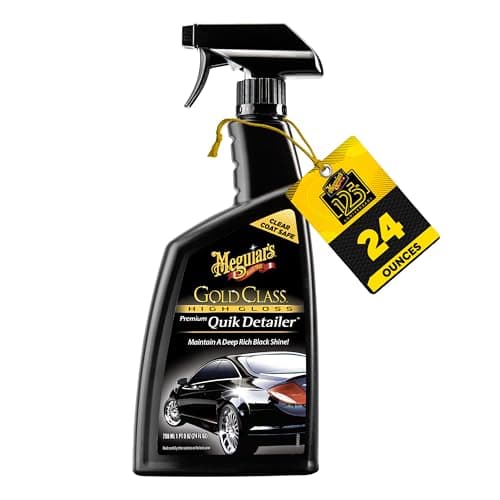
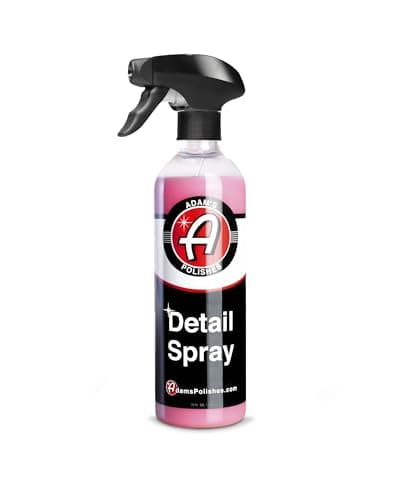
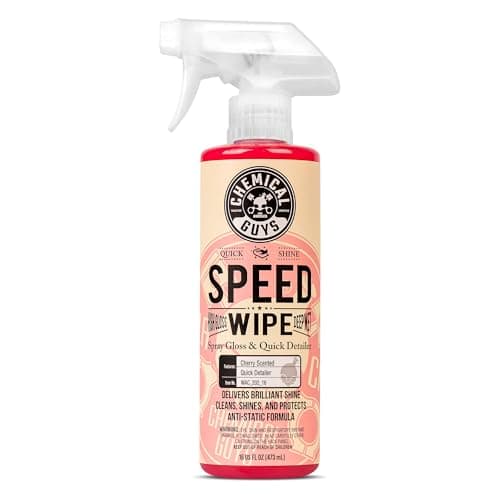
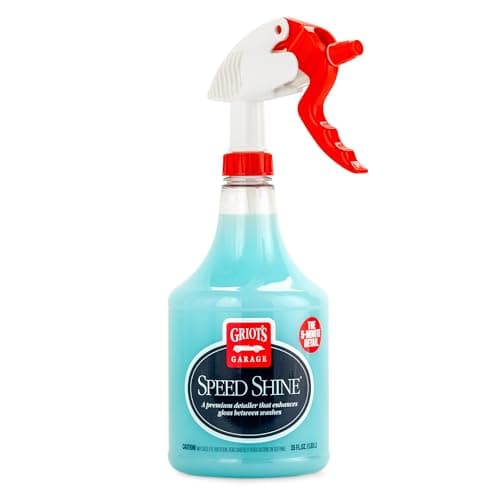
A detail spray is the most-reached-for bottle in most well-organized garages, and it earns that by doing four separate jobs adequately rather than one job brilliantly.
- Clay lubricant. Claying without lubrication drags a bar of abrasive resin across dry paint, which is exactly as bad as it sounds. A slippery detail spray is what makes the process safe — see how to clay bar a car.
- Drying aid. A light mist onto wet paint before the drying towel adds lubricity where a towel is otherwise dragging across bare, wet clear coat.
- Light dust removal. A garage-kept car that has picked up two days of settled dust does not need a full wash.
- Residue wipe during correction. Clearing polish oils and fingerprints between steps, so you are judging paint rather than product.
The warning that has to come first
A detail spray is not a waterless wash, whatever the bottle says, and the single most expensive mistake in this category is using one on a genuinely dirty car. There is nowhere for the dirt to go: you are wiping grit across paint with a towel, and the result is a full set of fresh swirl marks installed in about ten minutes.
The honest threshold is light, dry dust — the kind that leaves no visible mark on the towel beyond a faint gray. Anything you can see on the paint from a few feet away needs water. If it has rained, if the car has been on a motorway, or if there is any road film at all, wash it properly with a real shampoo.
Lubricity is the specification
Everything a detail spray is good for depends on how slippery it is. High lubricity is what lets clay glide instead of grab, what lets a drying towel skate instead of drag, and what lets dust lift instead of smear. Gloss is pleasant and largely temporary; lubricity is the property doing the work.
The practical test is claying. If a spray is slick enough to clay with safely, it is slick enough for everything else on the list. Products that specifically state they are rated as a clay lubricant are telling you where they sit.
Gloss enhancer, protectant or plain
Plain detailers add lubricity and a brief shine and leave essentially nothing behind. That is a virtue mid-correction, because anything left on the paint interferes with a sealant or coating going on next.
Wax-boosting detailers deposit a small amount of protection that tops up whatever is already on the car. Good for maintaining a waxed car between full applications; less good immediately before applying a coating, where you want bare paint.
SiO2 or ceramic detail sprays lay down a genuine, if thin, hydrophobic layer and blur the line with a proper ceramic topper. They are the right choice for maintaining a coated car, and they are covered in best ceramic coating spray rather than here.
Using one without leaving streaks
- Two towels. One to spread, one clean and dry to buff off. Trying to do both with one towel is the most common cause of streaking.
- Spray the towel, not the panel, for light work. It uses less product and puts nothing on your trim or glass that you then have to clean off.
- Small sections, out of direct sun. Product drying on hot paint is what produces the smears people blame on the formula.
- Fold the towel into quarters and turn it often. A loaded towel stops absorbing and starts spreading.
For claying, the rule is different: soak the panel. Over-lubricating costs you a little product; under-lubricating costs you paint.
What it will not do
It will not protect the car in any durable sense — a wax, sealant or coating does that, and the comparison is in car wax vs sealant vs coating. It will not remove bonded contamination, which is a clay bar job. And it will not remove a defect: a detail spray adds gloss on top of swirls, it does not touch the swirls themselves. That is a correction job.
How to choose a detail spray
Decide what you mostly need it for
- Claying and drying — buy for maximum lubricity, and buy the big bottle. You use far more than you expect.
- Maintaining a waxed car — a wax-boosting formula tops up protection as it cleans.
- Mid-correction wipe-downs — a plain, fast-wiping detailer that leaves nothing behind for the next step to fight.
Buy on volume, not bottle price
Claying a whole car uses a startling amount of spray. A 35-ounce bottle bought once usually beats a 16-ounce bottle bought three times, and gallon refills exist for a reason.
Check trim and glass compatibility
The sprays that state they are safe on all exterior surfaces — trim, glass, wheels — save you owning three bottles. Ones that are paint-only will leave a haze on plastic trim that then needs its own product to remove.
Do not use it as a substitute for washing
It is the fastest way to swirl a car. Light dust only. Everything else needs water, shampoo and two buckets.