Skip to content
Pad & Polish

HUB 06 · Paint Prep & Decontamination

Best Wheel Cleaner

Brake dust comes off almost any wheel with almost any cleaner. The finish underneath only gets ruined once - so this page ranks on what each maker will actually commit to in writing.

By Stephen V.Updated How we research
#ad

We earn a commission when you buy through our Amazon links, at no extra cost to you. It never affects our rankings, and we say so when the cheaper product is the better buy. How this works.

Wheels are the dirtiest part of a car by a wide margin, and they are also the part most likely to be permanently damaged by the product bought to clean them. Those two facts ought to shape the whole category and mostly do not. Shelves are full of cleaners sold on how fast they dissolve brake dust, and almost none of them lead with the only question that cannot be undone: is this safe on the finish my wheels are actually wearing?

Brake dust is not hard to remove. It is iron, carbon and resin binder, thrown hot onto a wheel and then baked there by the next few hundred miles of heat cycling. Any surfactant plus a brush plus a few minutes of dwell will take most of it off, which is why nearly every product in this category appears to work. What separates them is what happens to polished aluminum, bare metal, anodizing, matte paint and plastic dip while that cleaning is happening — and whether the maker is willing to put a safety claim in print.

So this page ranks on published finish safety first and cleaning power second. A cleaner that states it is non-acid and rated for all wheel types beats a stronger cleaner that says nothing about finishes, because the first one removes a risk and the second one transfers it to you. That ordering is why the cheapest bottle here, which cleans perfectly well, finishes last.

A wheel cleaner is not an iron remover

This is the most common confusion in the category, and the two products are genuinely different chemistry doing genuinely different jobs.

A wheel cleaner is a cleaning product: surfactants and builders that lift loose brake dust, road film, oily grime and tire residue off the surface so it can be agitated and rinsed away. It works on what is sitting on the wheel.

An iron remover is a decontamination product. It uses a thiol chemistry that reacts specifically with embedded iron particles, dissolving them into a soluble compound — the famous purple bleed — so that metal which has physically bonded into the clear coat or the wheel finish can be rinsed off rather than scrubbed off. It works on what is in the surface, and it does almost nothing for oily road film.

You want both, used in that order, and they are not interchangeable. Washing with an iron remover is expensive and leaves the grime behind; trying to remove bonded iron fallout with a wheel cleaner and a brush just means scrubbing harder on a wheel that needs chemistry instead. The decontamination side of the job — including which iron removers are worth buying and how the purple reaction actually works — is covered in best iron remover for wheels, and the broader order of operations is in iron remover vs clay bar.

A useful tell: if a product turns purple, it is doing iron-remover work, whatever the label calls it. Several hybrid "iron remover and wheel cleaner" bottles exist and they are fine products, but they are priced like decontamination chemistry and should be used like it — a few times a year, not every wash.

Acid, alkaline, pH-neutral: what each one eats

Wheel cleaners sit in three broad chemistry classes, and the class tells you more about the risk than the brand does.

Acidic cleaners work fast on baked-on brake dust and on the white oxidation that forms on neglected aluminum, because they attack the deposit chemically rather than waiting for a surfactant to lift it. They are also the class that etches. Bare and polished aluminum, anodized finishes and older chrome are all vulnerable, and the damage looks like permanent cloudy staining that no amount of further cleaning reverses. Professional acidic cleaners exist for a reason, but they are a tool for someone who knows exactly what the wheel is made of.

Alkaline cleaners are the workhorses of the category. They lift oily grime, tire dressing residue and road film efficiently and are generally kind to painted and clear-coated wheels, which covers the overwhelming majority of factory wheels made in the last thirty years. Strongly alkaline formulas can still stain bare aluminum if left to dry, which is why dwell time and rinsing matter more than people expect.

pH-neutral or pH-balanced cleaners trade outright speed for the widest compatibility. They are the right default for a wheel whose finish you are not certain about, for anything uncoated, and for maintenance washing on a wheel that is already protected. They need more dwell and more agitation on a neglected wheel, and that is the honest trade.

Note what this means for shopping: "non-acid" and "pH balanced" are real, checkable specifications. "Powerful" and "professional strength" are not.

Know your finish before you choose a cleaner

Almost all wheel-cleaner horror stories come down to a buyer not knowing what the wheels were made of. Six finishes cover nearly everything on the road.

  • Painted and clear-coated — the factory default. Durable, forgiving, and safe with any product on this page. The clear coat is doing the protecting, which also means a damaged clear coat lets corrosion start underneath it.
  • Chrome — plated, shiny and vulnerable to acid at the plating edges, where pitting starts and spreads. Stick to cleaners that name chrome explicitly.
  • Polished or bare aluminum — no protective layer at all. This is the finish acid ruins, and the finish pH-balanced chemistry exists for.
  • Anodized — an electrochemically grown oxide layer, common on aftermarket and motorcycle wheels. Strong acids and strong alkalis both attack it.
  • Matte and satin — usually a flattened clear coat. Chemically tougher than people assume, but anything that leaves a glossy residue behind shows up as blotching, which is why finish-specific products exist for black matte wheels.
  • Powder-coated and Plasti Dip — thick coatings with their own solvent sensitivities. Dip in particular can be lifted at the edges by aggressive chemistry, and only one product here commits to being safe on it.

If you genuinely do not know, there is a free test: look at the back of the spoke, where the finish is thinnest and least maintained. Bright, slightly dull metal with no paint edge means bare or polished aluminum. A visible paint edge or a chip revealing a different color underneath means painted and clear-coated. When in doubt, buy pH-balanced.

How we ranked them

Finish safety — what the manufacturer actually publishes, in its own words. A non-acid claim, a pH claim or a named list of safe finishes all score; marketing adjectives do not. A product with no published finish guidance is marked down for that absence, because the absence is the risk.

Brake dust cutting — how much work the chemistry does before you pick up a brush, inferred from the stated formulation class and the maker's own description. We have not run a side-by-side dwell test and will not imply we have; how we research sets out exactly what our scores are built from.

Coating compatibility — whether the product is sensible to use on a ceramic-coated or sealed wheel every week without degrading the protection. Gentler chemistry wins here, and this is the criterion most buyers do not think about until they have stripped a coating they paid for.

Value — cost per wheel, not price per bottle. A gallon of concentrate and a 16 oz boutique spray can be a ten-fold difference in cost per use, and the gallon is only better value if you will realistically dilute and store it.

Why the strongest cleaner is rarely the right one

The instinct in this category is to buy the most aggressive product available and trust that more power means less work. On wheels specifically that instinct is backwards, for a reason that has nothing to do with chemistry.

Wheels get cleaned every single wash. Paint gets corrected once or twice a year. A product you will use fifty times a year needs to be gentle enough that fifty uses do no cumulative harm — the same logic that governs wash soap selection, where a pH-neutral shampoo beats a stronger degreaser for exactly the same reason. The hard case of a badly neglected wheel is a one-off job for a one-off product, not a reason to buy aggressive chemistry for weekly use.

There is a second, quieter cost. Strong wheel cleaners strip whatever protection is on the wheel, which is why so many people conclude that wheel sealants "do not last". They often last fine; they are being removed every Saturday by the cleaner. If you have coated your wheels, the cleaner is now part of the maintenance plan rather than a separate decision.

Where wheels sit in the order of work

Wheels come first, before any paint is touched, and the reason is purely practical: wheel cleaner, brake dust and tire grime running down a freshly washed panel means washing that panel again. Clean the wheels and tires, rinse thoroughly, then start on the paint.

Work one wheel at a time and keep it wet. A cleaner that dries on a hot wheel is the most reliable way to stain a finish with a product that would otherwise have been perfectly safe — which is a dwell-time failure, not a chemistry failure. Park in the shade, let the brakes cool, and do not spray all four wheels before you pick up the brush.

Everything else follows in the usual order: wash, decontaminate, dry, correct, protect. The wheels get dressed and coated at the end alongside the tires, and best tire shine covers why the rubber is the last thing you touch. The very last job on the car is the glass, for the same reason the wheels are the first — see best car glass cleaner for why doing it any earlier wastes the effort.

What a wheel cleaner cannot fix

It cannot restore a finish that has already failed. Cloudy, pitted, white-spotted aluminum is corrosion that has started under or through the protective layer, and no cleaner reaches it — that is a polishing or refinishing job, and on a clear-coated wheel it means removing the clear coat entirely before you can touch the metal.

It cannot remove iron fallout bonded into the finish, which is the job of a dedicated decontamination product. If a wheel still looks faintly rust-speckled after a thorough clean, the problem is embedded iron and the fix is chemistry, not scrubbing.

It also cannot remove old, layered tire dressing that has migrated onto the wheel face, which is slippery, holds brake dust and resists most cleaners. That one is an application problem upstream, and the fix is wiping the wheel lip whenever you dress the tires rather than buying a stronger cleaner afterwards.

The short answer

Quick picks

#ProductBest forScorePrice
01
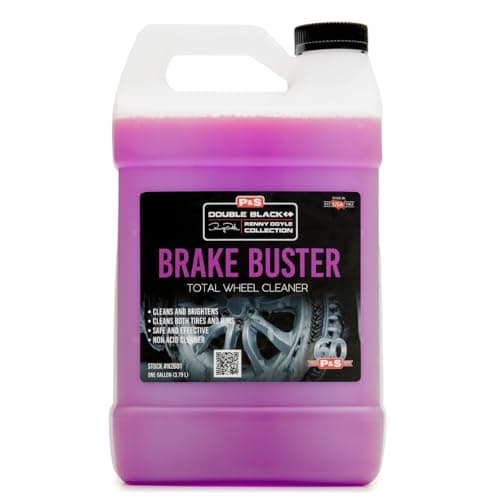
P&S Professional Detail Products P&S Brake Buster Wheel & Tire Cleaner
P&S Brake Buster Wheel & Tire Cleaner

The professional default, and the one wheel cleaner here that states outright it is non-acid and safe for all wheel types — which is the whole reason detail shops run it on customer cars they did not choose the wheels for.

Wheels whose finish you are not certain about
9.0
$36.99Amazon
02
Griot's Garage Griot's Garage Wheel Cleaner for All Finishes
Griot's Garage Wheel Cleaner for All Finishes

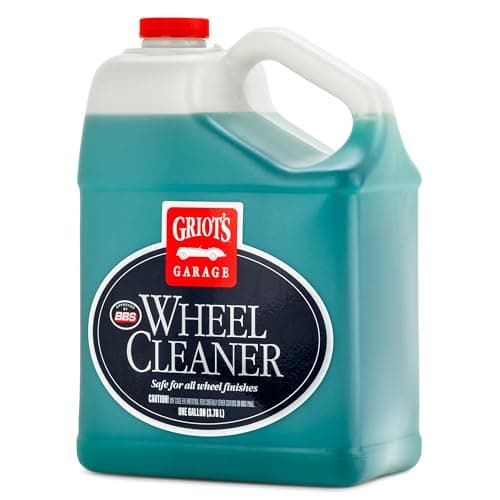
The only cleaner here that publishes a pH claim rather than a vague safety claim: Griot's calls it pH balanced and rates it for all wheel finishes, which is the specification you actually want on anodized, polished or bare aluminum.

Polished, anodized and bare-metal wheels
8.6
$34.99Amazon
03
Adam's Polishes Adam's Polishes Wheel Cleaner
Adam's Polishes Wheel Cleaner

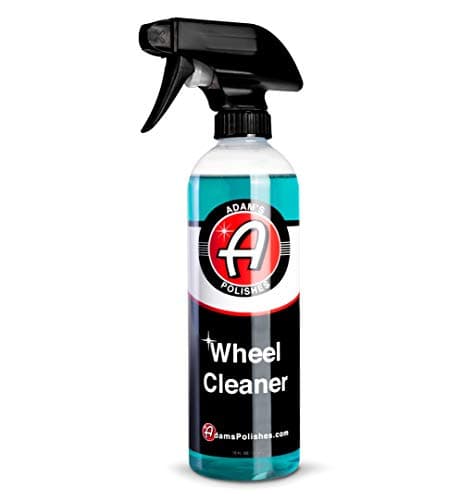
The most specific finish list in the category — Adam's names chrome, clear-coated and Plasti Dipped wheels — which makes it the easy answer if your wheels are wearing something other than factory paint.

Chrome, clear-coated and dipped wheels
8.4
$16.99Amazon
04
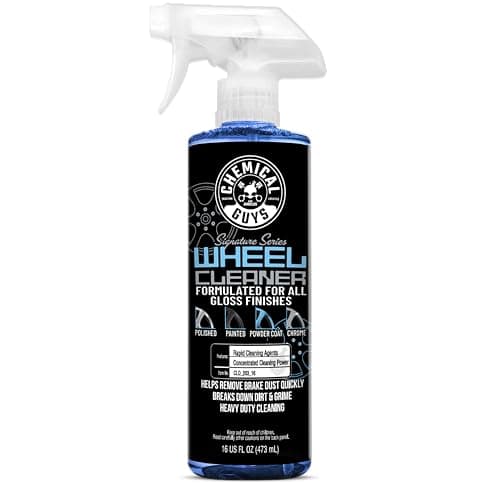
Chemical Guys Chemical Guys Signature Series Wheel Cleaner
Chemical Guys Signature Series Wheel Cleaner

The clinging-foam pick: Chemical Guys specifies a fast-acting foaming spray that hangs on the wheel instead of running off it, rated safe on chrome and painted rims, which is what you want on a deep-dish barrel.

Deep barrels and intricate spoke designs
8.5
$10.99Amazon
05
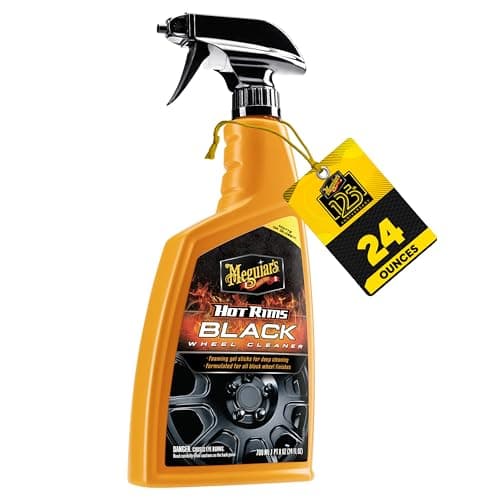
Meguiar's Meguiar's Hot Rims Black Wheel Cleaner
Meguiar's Hot Rims Black Wheel Cleaner

The one product here formulated for a specific finish rather than for wheels in general: Meguiar's builds this foaming gel for black matte, gloss, satin and chrome-black wheels, which is the finish most likely to be ruined by a general-purpose cleaner.

Matte and satin black wheels
8.5
$13.49Amazon
06
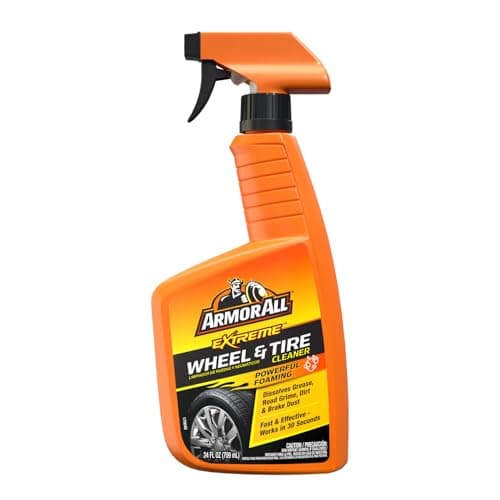
Armor All Armor All Extreme Wheel and Tire Cleaner
Armor All Extreme Wheel and Tire Cleaner

The supermarket-shelf option, and the honest reason it ranks last is not that it cleans badly — it is that Armor All publishes no finish-safety list for it, so you are taking the risk the four picks above remove.

Painted factory wheels on a budget
7.5
$4.97Amazon

#ad · Live prices from the Amazon Product API, as of October 30, 2026. Where we have no verified live price, we show none — we would rather leave a gap than print a number that has rotted.

In detail

The picks, in full

01
P&S Professional Detail Products P&S Brake Buster Wheel & Tire Cleaner

Wheels whose finish you are not certain about

P&S Brake Buster Wheel & Tire Cleaner

1 gallonNon-acid formulaSafe for all wheel typesRemoves light corrosion
9.0/10

The professional default, and the one wheel cleaner here that states outright it is non-acid and safe for all wheel types — which is the whole reason detail shops run it on customer cars they did not choose the wheels for.

Finish safety
9.4
Brake dust cutting
8.6
Coating compatibility
8.8
Value
9.2

Pros

  • P&S states the formula is non-acid and safe for all wheel types, which removes the one decision most people get wrong
  • A gallon at this price is the cheapest per-use cleaner on the page by a wide margin
  • P&S lists oil, dirt and light corrosion alongside brake dust, so it doubles as a wheel-well and tire cleaner

Cons

  • It arrives as a gallon jug — you need your own spray bottle, and ideally a dilution plan, before you can use it
  • No color-change indicator, so you are timing dwell by the clock rather than watching it work
  • Non-acid means it leans on dwell time and agitation rather than chemistry, so neglected wheels take two passes

Don't buy this if…

…you want a grab-and-spray bottle under the sink — a gallon of concentrate is a commitment to a process, not a quick fix.

$36.99View on Amazon

Price as of October 30, 2026. Prices change — Amazon's is the one that counts.

#ad · we may earn a commission from this link to P&S Brake Buster Wheel & Tire Cleaner

02
Griot's Garage Griot's Garage Wheel Cleaner for All Finishes

Polished, anodized and bare-metal wheels

Griot's Garage Wheel Cleaner for All Finishes

1 gallonpH balancedAll wheel finishesBrake dust and grime
8.6/10

The only cleaner here that publishes a pH claim rather than a vague safety claim: Griot's calls it pH balanced and rates it for all wheel finishes, which is the specification you actually want on anodized, polished or bare aluminum.

Finish safety
9.6
Brake dust cutting
7.8
Coating compatibility
9
Value
8.2

Pros

  • A published pH-balanced claim is more useful than 'safe' — it tells you the mechanism, not just the marketing
  • Rated by Griot's for all wheel finishes, which includes the uncoated metals that acidic cleaners etch
  • Griot's sells it in a gallon alongside a ready-to-use size, so the refill path is the same product

Cons

  • pH-balanced chemistry is the gentlest option here, which means the longest dwell and the most brushing on badly neglected wheels
  • The gallon is the most expensive bulk jug on this page
  • No foaming or clinging claim, so it runs off vertical barrel faces faster than the gel and foam picks

Don't buy this if…

…the wheels have years of baked-on brake dust — start with a stronger decontamination step and keep this for maintenance.

$34.99View on Amazon

Price as of October 30, 2026. Prices change — Amazon's is the one that counts.

#ad · we may earn a commission from this link to Griot's Garage Wheel Cleaner for All Finishes

03
Adam's Polishes Adam's Polishes Wheel Cleaner

Chrome, clear-coated and dipped wheels

Adam's Polishes Wheel Cleaner

16 oz sprayChrome safeClear-coat safePlasti Dip safe
8.4/10

The most specific finish list in the category — Adam's names chrome, clear-coated and Plasti Dipped wheels — which makes it the easy answer if your wheels are wearing something other than factory paint.

Finish safety
9.2
Brake dust cutting
8.2
Coating compatibility
8.6
Value
7.6

Pros

  • Names the specific finishes it is safe on instead of claiming 'all wheels', which is a more honest and more useful claim
  • Ready to use out of the bottle — no dilution, no second container
  • Explicitly rated for Plasti Dip, which almost nothing else in the category will commit to

Cons

  • 16 oz is a small bottle for a job that takes four wheels and a brush — expect to reorder
  • Adam's designs it to be used with a wheel brush, so it is not a no-touch spray-and-rinse product
  • Costs more per ounce than every other ready-to-use pick here

Don't buy this if…

…you want to clean a fleet or a gallon's worth of wheels — this is a per-car bottle at a per-car price.

$16.99View on Amazon

Price as of October 30, 2026. Prices change — Amazon's is the one that counts.

#ad · we may earn a commission from this link to Adam's Polishes Wheel Cleaner

04
Chemical Guys Chemical Guys Signature Series Wheel Cleaner

Deep barrels and intricate spoke designs

Chemical Guys Signature Series Wheel Cleaner

16 oz sprayFast-acting foamClings to wheelsChrome and painted safe
8.5/10

The clinging-foam pick: Chemical Guys specifies a fast-acting foaming spray that hangs on the wheel instead of running off it, rated safe on chrome and painted rims, which is what you want on a deep-dish barrel.

Finish safety
8.4
Brake dust cutting
8.4
Coating compatibility
8.2
Value
8.8

Pros

  • Foam that clings buys dwell time on vertical surfaces, where a thin liquid is already in the gutter
  • Rated by Chemical Guys for chrome and painted rims, the two most common factory finishes
  • The cheapest ready-to-use bottle on this page

Cons

  • 'All finishes' here does not name the uncoated metals — if your wheels are polished or anodized, the pH-balanced picks are the safer call
  • Foam is harder to rinse fully out of lug pockets than a liquid, so a final flush matters
  • No published dwell time, so you are judging it by eye

Don't buy this if…

…your wheels are polished or bare aluminum — buy a cleaner that publishes a pH claim instead of a finish list.

$10.99View on Amazon

Price as of October 30, 2026. Prices change — Amazon's is the one that counts.

#ad · we may earn a commission from this link to Chemical Guys Signature Series Wheel Cleaner

05
Meguiar's Meguiar's Hot Rims Black Wheel Cleaner

Matte and satin black wheels

Meguiar's Hot Rims Black Wheel Cleaner

24 ozDeep foaming gelFor black wheelsMatte, gloss and satin
8.5/10

The one product here formulated for a specific finish rather than for wheels in general: Meguiar's builds this foaming gel for black matte, gloss, satin and chrome-black wheels, which is the finish most likely to be ruined by a general-purpose cleaner.

Finish safety
8.8
Brake dust cutting
8
Coating compatibility
8.4
Value
8.6

Pros

  • Meguiar's names matte and satin black explicitly — the finishes that go blotchy when something glossy is left behind
  • Gel-thickness foam stays where it is sprayed better than any liquid on this page
  • 24 oz for the price of a 16 oz boutique bottle

Cons

  • It is a finish-specific product — on polished or chrome-silver wheels you are paying for formulation you do not need
  • Foaming gel needs a thorough rinse or it dries in the spoke corners
  • No published dwell time or dilution guidance

Don't buy this if…

…your wheels are not black — the all-finish picks above do the same job without the specialization premium.

$13.49View on Amazon

Price as of October 30, 2026. Prices change — Amazon's is the one that counts.

#ad · we may earn a commission from this link to Meguiar's Hot Rims Black Wheel Cleaner

06
Armor All Armor All Extreme Wheel and Tire Cleaner

Painted factory wheels on a budget

Armor All Extreme Wheel and Tire Cleaner

24 fl oz sprayWheel and tireWidely stockedNo published finish list
7.5/10

The supermarket-shelf option, and the honest reason it ranks last is not that it cleans badly — it is that Armor All publishes no finish-safety list for it, so you are taking the risk the four picks above remove.

Finish safety
6.4
Brake dust cutting
7.4
Coating compatibility
6.8
Value
9.4

Pros

  • Cheapest product on the page by a wide margin, and stocked in grocery stores and gas stations
  • One bottle covers wheels and tires, which suits a quick wash rather than a detail
  • Ready to use, with a spray head that works

Cons

  • Armor All publishes no list of safe wheel finishes for it, which is the single most important thing to know about a wheel cleaner
  • No pH or non-acid claim either way, so cautious buyers should keep it off anything uncoated or specialty-finished
  • No foaming or clinging claim, so dwell time on a vertical barrel is short

Don't buy this if…

…your wheels are anything other than ordinary painted factory wheels — the absence of a published finish list is a reason to spend more.

$4.97View on Amazon

$5.7113% off

Price as of October 30, 2026. Prices change — Amazon's is the one that counts.

#ad · we may earn a commission from this link to Armor All Extreme Wheel and Tire Cleaner

Cleaning wheels without damaging them

Cool wheels, in the shade, one at a time

A hot wheel flash-dries cleaner on contact, which concentrates the chemistry exactly where you least want it concentrated. Let the brakes cool after driving, work out of direct sun, and treat one wheel from spray to rinse before moving to the next. This single habit prevents most of the staining blamed on products.

Pre-rinse before you spray anything

A thorough rinse removes the loose grit that would otherwise be dragged around the wheel face by your brush. It also wets the surface so the cleaner spreads rather than soaking into dry dust in patches. Thirty seconds per wheel, and it is the difference between cleaning a wheel and sanding it.

Dilute the concentrate, and buy the bottle

If you buy a gallon, you need a chemical-resistant trigger sprayer and a note of the dilution you used. Guessing strong because strong seems safer is how a gentle, all-finish-rated cleaner starts behaving like an aggressive one. Mix what you will use that day; diluted product does not keep as well as concentrate.

Three brushes, not one

The wheel face wants something soft enough not to scratch a clear coat. The barrel wants something long and flexible that reaches behind the spokes, because the back of the wheel holds more brake dust than the front and is the part people skip for years. The lug pockets and valve stem want something small and stiff. One medium brush does all three jobs badly.

Keep the dwell honest

Most cleaners want one to three minutes of wet dwell, agitation while still wet, and then a rinse. Longer is not better and drying is actively bad. If the wheel is not clean after one cycle, do a second full cycle rather than leaving the first one on longer.

Rinse the backside, every time

Cleaner left in the barrel, behind the spokes or inside the lug pockets will dry there and leave a residue that attracts the next load of dust. Flush each wheel from several angles, including from behind if you can reach it, until the water runs clear.

Dry the wheel, then look at it properly

Drying prevents water spotting on the finish and, more usefully, lets you actually see what is left. A clean, dry wheel that still shows fine rust-colored speckles needs decontamination; one that shows cloudy gray patches has a finish problem, not a dirt problem. Use a towel you have retired from paint duty — the criteria for that are in best microfiber towels for detailing.

Protect the wheel so the next clean is easier

A sealed or coated wheel releases brake dust with far less chemistry and far less brushing, which is the real argument for doing it: not gloss, but a weekly job that gets shorter. The options and the prep they need are in best ceramic coating for wheels, and once a wheel is coated, the gentlest cleaner on this page becomes the right one.

Buy for the finish you have, not the one on the bottle

If your wheels are ordinary painted factory wheels, any product here will serve and you should buy on value. If they are polished, bare, anodized, matte or dipped, buy the product that names your finish in print and ignore everything cheaper. The price difference between the safest cleaner here and the riskiest is a few dollars; the price difference between a good wheel and a hazed one is a set of wheels.
How we picked

We do not run a testing lab

We compiled published specifications, manufacturer data sheets and aggregated owner reviews, computed the cost of ownership from real sizes and coverage, then scored each product against a published rubric. The scores are judgments from documented research — they are not measurements we took, because we do not own a lab and we are not going to pretend we do. Where a number came from someone else, we name them and link them in Sources.

Questions

Frequently asked

What is the best wheel cleaner for brake dust?
Any alkaline or non-acid cleaner on this page will lift normal brake dust given a couple of minutes of wet dwell and a brush. If the dust has been baked on for seasons and still speckles the wheel after a thorough clean, it has bonded into the finish and you need an iron remover rather than a stronger cleaner - that is a different chemistry doing a different job.
Is acid wheel cleaner safe?
On painted, clear-coated wheels, generally yes - and it is fast. On polished or bare aluminum, anodized finishes and older chrome it is the single biggest risk in the category, because the damage is etching rather than staining and it does not come back off. Unless you know exactly what your wheels are made of, buy a cleaner that states it is non-acid or pH balanced.
What is the difference between a wheel cleaner and an iron remover?
A wheel cleaner lifts what is sitting on the wheel: brake dust, road film, oily grime and tire residue. An iron remover uses a thiol chemistry that reacts with iron particles embedded in the finish, dissolving them so they rinse away - that is the purple bleed. You want both, a cleaner every wash and a decon product a few times a year, and neither does the other's job.
Can you use wheel cleaner on ceramic-coated wheels?
Yes, but choose the gentlest product that works. Strong wheel cleaners used weekly are the most common reason people conclude a wheel coating 'did not last' - the coating is being stripped, not worn out. A pH-balanced or non-acid cleaner with a short dwell keeps the coating intact, and a coated wheel needs much less chemistry anyway because the dust releases more easily.
What wheel cleaner is safe on black wheels?
Gloss black painted wheels are clear-coated and any product here is fine. Matte and satin black are the ones to be careful with, not because the chemistry attacks them but because anything leaving a glossy residue behind shows as blotching on a flat finish. That is why finish-specific black-wheel formulas exist, and why they are worth the premium on a matte wheel and pointless on a gloss one.
How often should you clean your wheels?
Every wash, which for most cars means weekly to fortnightly. Brake dust is hot iron landing on a finish and it bonds harder the longer it heat-cycles there, so frequent gentle cleaning genuinely is less work than occasional aggressive cleaning - and it is much kinder to whatever protection is on the wheel.

Keep reading

Receipts

Sources

We do not run a testing lab, and we do not pretend to. Where a measured number came from someone else's lab, we name them and link them. Where we could not verify something, we say so on the page rather than quietly leaving it out. Read our full method.