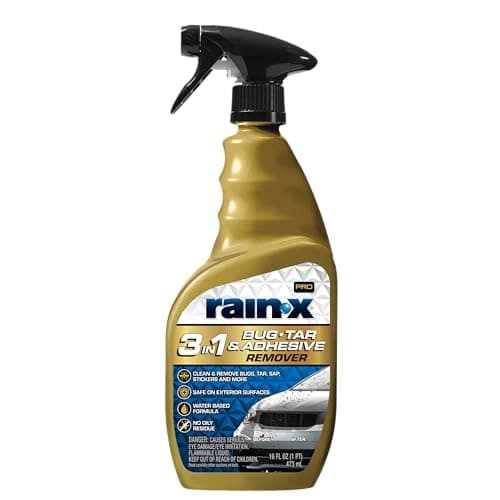
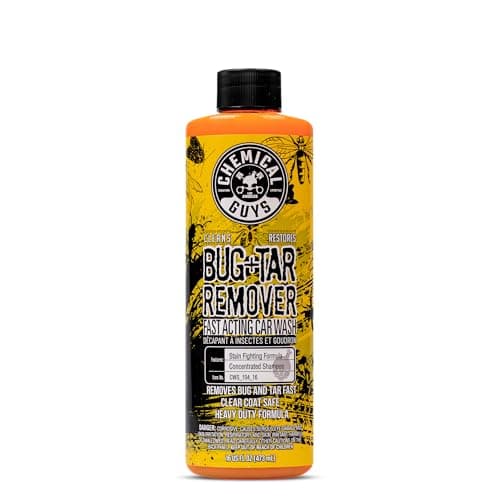
The front of a car after a summer road trip is the one detailing problem with a clock on it. Bug splatter is not merely ugly: insect remains are acidic, and as they dry and bake in the sun on a hot bumper they etch into clear coat. Leave them for a month and the mark stays after the bug is gone, and then it is a polishing job rather than a cleaning one.
Road tar is the opposite kind of problem. It is petroleum bitumen flicked off hot asphalt, and it does not etch — it bonds. Water will not touch it, car shampoo will not touch it, and a clay bar will drag it into a smear. It needs a solvent that dissolves the hydrocarbon, which is a completely different chemistry from the one that lifts bug protein.
That split is why this page exists and why "bug and tar remover" is a slightly dishonest product name. Of the six here, two are built primarily for bugs, two primarily for tar, and two genuinely try to do both. Buying the wrong one is the usual reason people conclude that these products do not work.
Two contaminants, two chemistries
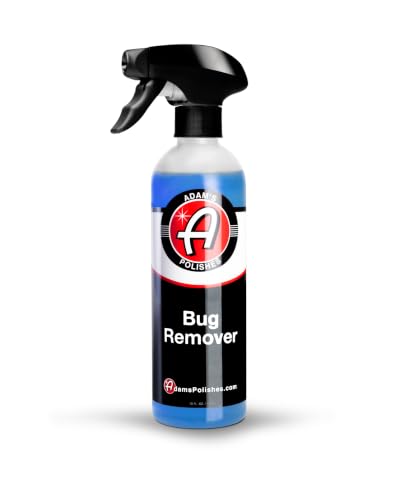
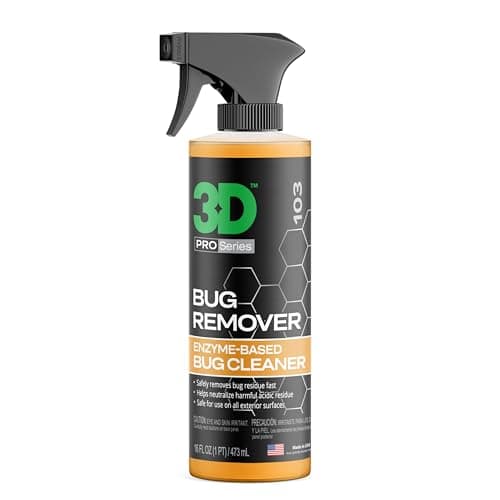
Bug removal is a surfactant and dwell problem. Insect remains are protein and chitin, water-soluble once softened. What they need is a high-lubricity, often high-foaming cleaner that clings to a vertical bumper long enough to rehydrate and liquefy the deposit so it wipes off with no pressure. The foam is not decoration — on a bumper and a mirror cap, a product that runs off in four seconds has done nothing. Adam's leads its own description with high sudsing for exactly this reason, and Chemical Guys built its version to dilute into a foam cannon so the whole front end gets soaked at once.
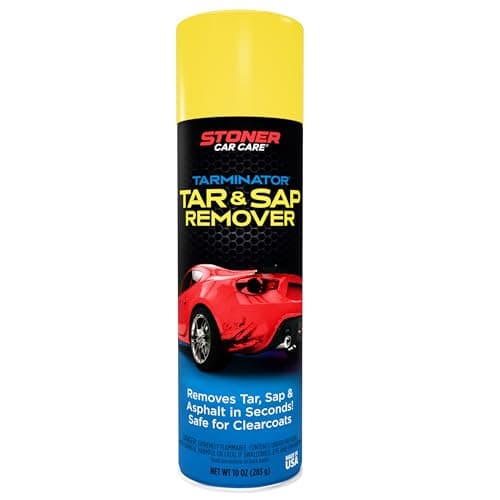
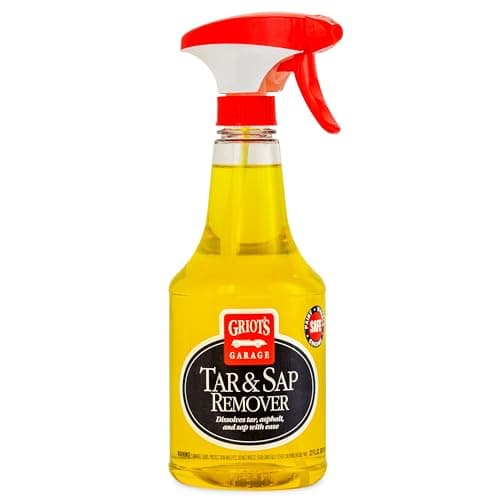
Tar removal is a solvent problem. Bitumen dissolves in petroleum distillates and in citrus terpenes, and nothing gentler will shift it. Stoner publishes a 30-to-60-second working time for its solvent; Griot's names its active chemistry outright as a d-Limonene blend, which is the citrus route, and publishes a dwell of up to two minutes on dry paint. Both work by chemically breaking the bond, which is why neither requires scrubbing — and why scrubbing is the thing you must not do if the solvent has not finished.
The practical consequence: if you only buy one bottle, buy for the contaminant you actually get. A commuter in a hot climate with a long highway run gets bugs. A car parked under pine trees or driven on freshly laid road surface gets tar and sap. They are different purchases.
How we ranked them
Finish safety — what the maker states, in writing, about clear coat, plastics, chrome, trim, PPF and vinyl wrap. This is the criterion with permanent consequences, so it carries the most weight, and the honest observation is that the picks which name their restrictions score better here than the ones claiming everything is safe. Griot's explicitly rules out PPF and wraps; that disclosure is a point in its favor, not against it.
Bug removal — how well each is built for insect protein on a vertical surface, judged from the chemistry class and what each maker says it is for. Foaming and cling are the properties that matter.
Tar removal — how well each dissolves bitumen, asphalt and sap. A water-based degreaser and a petroleum solvent are not close on this axis, and we have scored them accordingly rather than flattening the difference.
Value — cost per use against bottle size and how targeted the product is. A 10 oz solvent that treats a dozen tar spots and a 22 oz spray that handles a whole front end are both good value for completely different buyers. We run no lab and have tested none of these side by side; how we research sets out what the scores are built from.
Every one of these is a degreaser, and that has a cost
This is the part that gets left out of most roundups. Solvents and butyl-based cleaners strong enough to dissolve tar or liquefy baked bug protein will also strip wax, sealant and spray coating from the panel they touch. That is not a defect — it is the same property doing its job — but it means the panel you just cleaned is now the least protected part of the car.
So the sequence matters. Treat the contamination, wash the car, then re-protect the treated area. On a bumper that gets bugs every week in summer, that is a two-minute job with a spray wax or a ceramic spray, and doing it consistently is what stops next month's bugs bonding as hard. A slick, protected leading edge is the only genuine prevention in this category: the bugs still hit, they simply do not grip.
Two things to keep these products away from. Textured black plastic trim, where a strong solvent can leave a lightened patch that no amount of cleaning restores — a trim restorer is the fix, and masking is the prevention. And PPF, vinyl wrap and matte paint, where only the makers that explicitly clear those surfaces should be used. Griot's rules its own product out for film and wrap; the ones that say nothing have not cleared it, they have just not addressed it.
Where this sits in the order of work
Bug and tar removal is a pre-wash step, immediately after the wheels and before the shampoo. The reason is mechanical: bonded debris on a leading edge is exactly what a wash mitt drags across the paint, and the resulting scratch pattern is one of the most common sources of swirls on a bumper and hood.
The full sequence: wheels first, because anything sprayed on them runs downhill — best wheel cleaner covers why. Then bug and tar treatment on the front end, rockers and anywhere you can see deposits. Then the wash, with the two-bucket method. Then chemical and mechanical decontamination if the paint still feels rough: an iron remover for embedded metallic fallout, then clay for whatever is left.
That last point is worth stating plainly, because it is the most common mistake in this part of a detail: claying tar is the wrong order. Tar is soft and sticky, and a clay bar pressed into it picks it up, smears it across the next eighteen inches of panel and then carries it as an embedded lump that scratches everything afterwards. Dissolve the tar chemically first, then clay the paint that is left. Do you need to clay bar before polishing covers where clay does and does not belong.
Bird droppings, sap and the same acid problem
Three contaminants behave like bug splatter and respond to the same products. Bird droppings are abrasive and alkaline, and on a hot panel they soften the clear coat under them and leave a permanent crater-shaped mark within days. Tree sap hardens into a lacquer that bonds mechanically as well as chemically. Both share the bug problem's defining feature: time is the variable that decides whether this is a cleaning job or a correction job.
Four of the six here name bird droppings or sap explicitly, and Rain-X adds adhesive, gum and sticker residue — the third problem nobody buys a product for until they are trying to get a dealer badge off a tailgate. Sap specifically gets its own escalation ladder in how to remove tree sap from car paint, including the household remedies that take clear coat off along with the sap.
The honest summary of all of it: the product you buy matters far less than how quickly you use it. A bug removed the same evening comes off with a damp towel and no chemistry at all. The same bug three weeks later on a black hood that has sat in August sun has already etched, and the best solvent on this page will clean the residue and leave the mark.
Getting bugs and tar off without marking the paint
Treat it in days, not weeks
This is the whole ballgame. Bug remains are acidic and bird droppings are abrasive and alkaline; both work on clear coat continuously while they sit, and heat accelerates it. Same-week removal is a wipe. Same-month removal is a polishing decision. Keep a bottle in the garage specifically so the job is never postponed.
Never dry-wipe a bug or a tar spot
A dried insect is a hard, abrasive lump. Pushing it across clear coat with a towel is scratching the paint with the bug. Soak, dwell for the published time, then wipe with no pressure — if it has not released, the answer is more dwell, not more force.
Respect the published dwell time, and the shade
Stoner publishes 30 to 60 seconds; Griot's publishes up to two minutes on dry paint. Those are working windows, not suggestions. On a hot panel in sun the solvent evaporates before it finishes, which is why the product "did nothing" and why the second attempt in the shade works. Work one small area at a time.
Mask or avoid textured trim
Strong solvents and butyl degreasers can lighten or dry out textured black plastic, and the patch they leave does not clean off. Grilles, mirror housings, bumper inserts and lower cladding are exactly where bugs land, so this collides with the job constantly. Masking tape is the cheap prevention; a trim restorer is the expensive cure.
Check PPF and wrap before you spray
If the car wears paint protection film, a vinyl wrap or matte paint, use only a product whose maker clears that surface in writing. Griot's rules out PPF and wrap on its own listing; P&S and Koch-Chemie clear them on their rinseless products. Blanket "safe on all exterior surfaces" claims with no detail behind them are not a clearance.
Buy for the contaminant you actually get
Highway commuter in a warm climate: a foaming bug cleaner that can go in a bucket or cannon, so a whole front end gets treated in one pass. Car parked under trees or driven on fresh asphalt: a dedicated solvent in a small bottle, used on spots. Both problems: expect to own two bottles, because the chemistries genuinely differ.
Re-protect the panel afterwards
Every product here strips wax and sealant from what it touches. The bumper you just cleaned is now bare, which means next week's bugs bond harder to it. A quick pass of spray wax or a ceramic spray on the leading edges takes two minutes and is the only real prevention available.
Dissolve tar before you clay, never after
Clay picks tar up and smears it, then carries the lump as an abrasive across every panel that follows. Chemical first, mechanical second — and inspect the clay face constantly if you clay a car that has been near new road surface.
A bug sponge or mesh is not a shortcut
The mesh pads sold for bug removal work by abrasion, which on a bumper means fine marring across the most visible panel on the car. If a soaked, dwelled, no-pressure wipe has not released the deposit, the correct next step is a second application — or accept that it has etched and handle it with a polish rather than a scouring pad.
Wash the car afterwards, not before
These are pre-wash products. Treating the contamination first means the wash mitt never drags bonded debris across clear coat, which is the mechanism that turns a bug-covered bumper into a swirled one. Treat, then wash, then decontaminate, then protect.