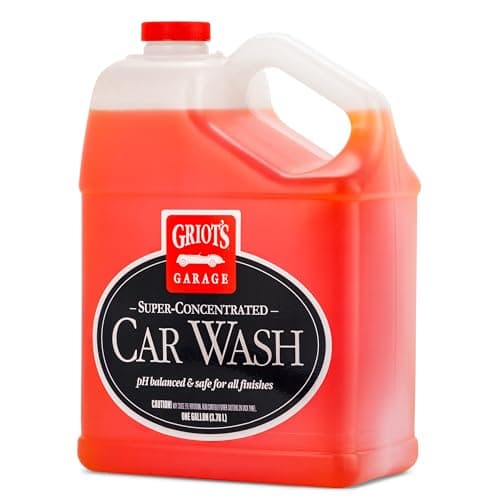
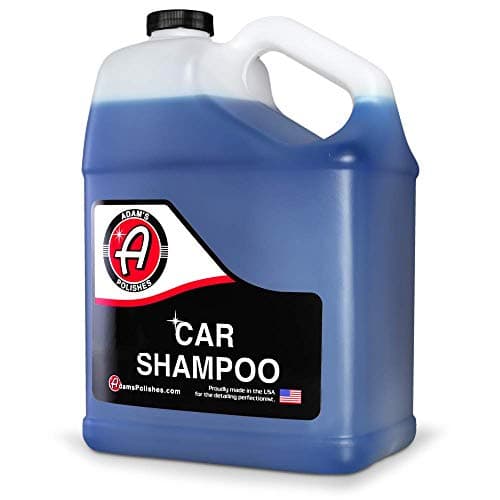
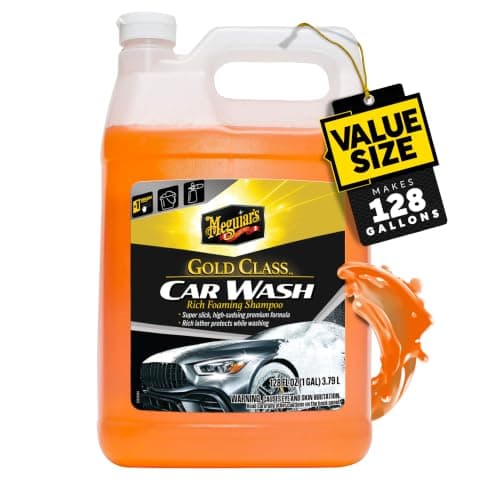
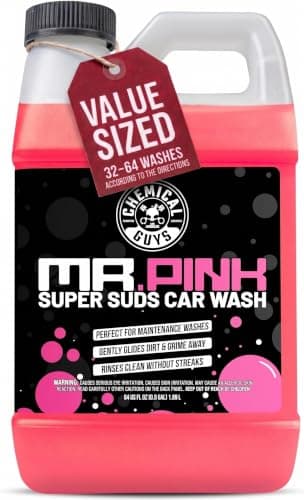
Nearly every swirl mark on a car was installed during a wash. Not by the polisher, not by the wax, not by the weather — by dragging grit across paint with a mitt or a brush. Which means the wash step is where you either preserve the correction you spent a weekend on, or slowly undo it, one Saturday at a time.
Shampoo is the smaller half of that. Technique is the larger half, and the two are related: what a good shampoo actually provides is lubricity — a slippery film that lets dirt particles slide off the paint rather than being dragged across it. Everything else on the label is secondary.
pH neutral, and why it matters to you specifically
A pH-neutral shampoo cleans without chemically stripping the wax, sealant or ceramic coating underneath it. On an unprotected car that is irrelevant. On a car you have just spent money and a weekend protecting, it is the entire specification.
This is why dish soap is bad advice. It is a degreaser — it is designed to strip protective films off surfaces, and it does that job on your paint just as efficiently as on a frying pan. Using it once will not destroy a coating. Using it every week will measurably shorten one, and there is no upside, because it does not clean a car any better.
The exception runs the other way. Before applying a wax, sealant or coating, you want everything stripped off — that is when a dedicated strip wash or a stronger degreasing shampoo is correct. See can you apply ceramic coating over wax for why that step is not optional before a coating.
Foam: useful, and oversold
Thick foam looks superb and does two genuinely useful things: it holds cleaning agents against vertical panels long enough to work, and it encapsulates loose dirt so more of it rinses away before a mitt touches the car. That pre-wash foam layer is real swirl prevention.
What foam does not do is clean by itself. A foam cannon layer left to dwell and rinsed off removes loose dirt, not road film. The contact wash still has to happen. And foam density depends heavily on your water pressure, water hardness and cannon setup, so a shampoo that produces a shaving-cream blanket for one person produces a thin lather for another with the same bottle.
Cost per wash, not cost per bottle
Concentrations vary enormously across this category, and the sticker price tells you almost nothing. A gallon that dilutes at a high ratio can work out cheaper per wash than a small bottle that costs a quarter as much. Divide the price by the number of washes the stated dilution ratio actually yields before deciding anything is expensive.
The other half of that arithmetic is how often you wash. A weekly washer gets through a gallon in a season and should buy on cost per wash. Someone washing monthly will have the same gallon for years, and should probably buy the bottle that suits their method instead.
The method that matters more than the bottle
- Rinse thoroughly first. Every particle removed before contact is a particle that cannot scratch. This is the highest-value thirty seconds of the whole wash.
- Pre-foam if you can. Let it dwell, then rinse again. More loose dirt gone before the mitt.
- Two buckets, both with grit guards. One shampoo, one clean rinse water. Rinse the mitt in the second bucket after every panel. This single habit prevents more swirls than any product choice.
- Top down, straight lines. Wheels and lower panels last, with a separate mitt they never share with the paint. Straight passes rather than circles. Which mitt you hold matters as much as the shampoo in it — the wash mitt picks rank the field on grit release rather than softness.
- Dry properly. A plush drying towel or a blower, never letting the car air-dry — water spots are mineral deposits, and they need mechanical removal once they bake on. See the microfiber towel picks.
Where washing ends and decontamination begins
A wash removes what is sitting on the paint. It does not remove what has bonded into it — embedded iron from brake dust, tar, industrial fallout. Those need chemical decontamination and clay, and no shampoo replaces that step.
The test is simple: after washing and drying, slide a hand inside a thin plastic bag across the paint. Glassy means clean. Gritty means you need an iron remover and a clay bar before anything else happens.
Shampoo choice is only half of a safe wash, though. The other half is method — the pre-rinse, the second bucket, straight-line passes and drying the car immediately rather than letting it air-dry. That routine is what decides whether your paint accumulates swirl marks, and it is written out step by step in how to wash a car without scratching it.
How to choose a car wash soap
Match the soap to the job
- Maintenance wash over wax, sealant or a coating — pH-neutral, explicitly coating-safe. Every pick here qualifies.
- Prep wash before applying protection — a strip wash or degreasing shampoo. You want the old layer gone.
- Wash-and-wax products — convenient, but they leave a film that masks how your actual protection is performing. Not what you want on a coated car.
Buy for your equipment
If you have a pressure washer and a foam cannon, a highly concentrated cannon-focused shampoo shows its advantage. If you wash with a bucket and a hose, a cheaper conditioning shampoo performs effectively identically, and the money is better spent on a good mitt and a proper drying towel.
Check the dilution ratio
It is the number that determines cost per wash and it is printed on every bottle. A gallon at a high ratio can be dramatically cheaper per wash than a small bottle at a low one.
Spend the difference on the mitt and the towel
The gap between a good shampoo and a great one is small. The gap between a cheap sponge and a proper microfiber wash mitt is enormous, and it is measured directly in swirl marks. If your budget only stretches one way, spend it there — Two Bucket Club's rundown of the best wash mitts is a useful shortlist of what separates a safe one from a swirl machine.
Never wash in direct sun
Shampoo drying on paint leaves residue, and water evaporating on paint leaves mineral spots. Both then need removing mechanically. Wash in shade or early morning, and this entire category of problem disappears.