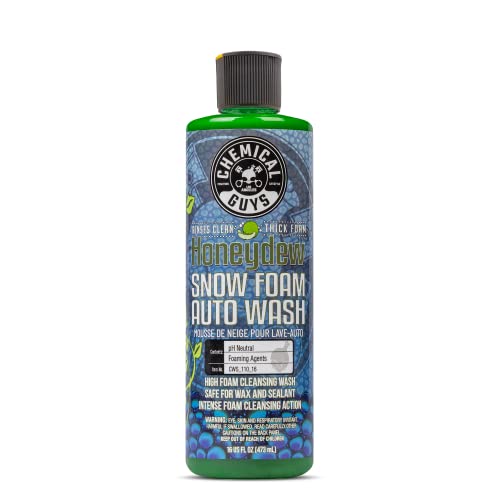
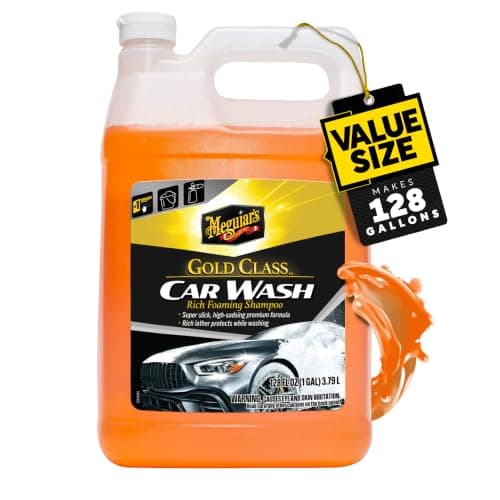
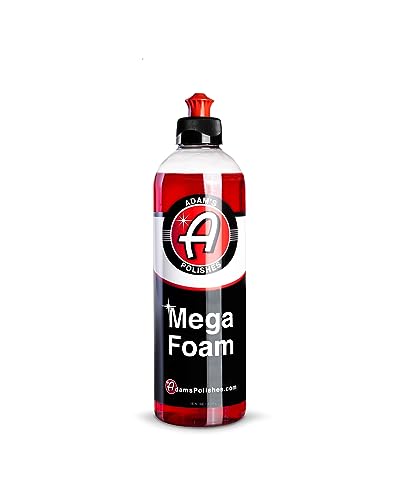
Adam's Mega Foam is the best snow foam for most people — a pH-neutral concentrate Adam's builds around thick clinging suds, which is the only property of a foam that does any useful work, and it runs in a cannon, a foam gun or a bucket. The budget pick is Chemical Guys Honeydew Snow Foam, the bottle most first foam cannons meet and cheap enough that learning your dilution ratio costs nothing. If what you actually want is traffic film gone before anything touches the paint, skip to Koch-Chemie Active Foam, which is the only genuine pre-wash chemistry here. Every price on this page is rendered from the live price layer, as of November 27, 2026.
The foam step exists for one reason, and it is a paint-correction reason rather than a cleaning one: nearly every swirl mark on a car was installed during a wash, by dragging grit across clear coat with a mitt. Anything you can remove before the mitt arrives is damage that never happens. That is the whole argument for snow foam. It is a good argument, and it is not the argument the category advertises.
What the category advertises is thickness. Foam that buries a car in what looks like shaving cream photographs beautifully and tells you almost nothing about whether dirt is being lifted. Foam is a delivery mechanism — its job is to hold chemistry against a vertical panel long enough to work, and to lubricate what it cannot dissolve so it slides off in the rinse instead of being scrubbed in. A dense foam that clings for four minutes beats a dramatic foam that slides off in forty seconds. A product that cleans well and foams moderately beats both, and that is the ranking this page actually runs.
There is one hardware fact worth stating plainly before you spend anything. Every product here will foam in a bucket and most will foam in a pump-up garden sprayer, but the thick blanket people buy snow foam for needs a foam cannon on a pressure washer. That is a separate purchase, and this site deliberately does not rank pressure washers — if you do not own one, a pH-neutral foam in a bucket wash plus a good rinseless wash gets you most of the paint-safety benefit for less money.
Active pre-wash vs. a shampoo that foams
This is the single distinction that decides whether you are happy with your purchase, and almost no listing makes it.
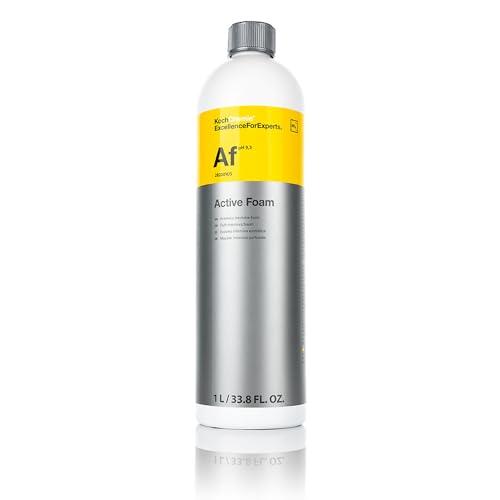
An active pre-wash foam is a cleaner first. It carries surfactants chosen to break down road film, traffic film and the oily gray layer that a normal shampoo leaves behind, and it is designed to be applied, dwelled and rinsed with no contact at all. Koch-Chemie's Active Foam is the example on this page: phosphate- and NTA-free, VDA Class A compliant, and still listed as safe over waxes, sealants and coatings. It foams respectably. It does not foam spectacularly, because that is not what it is tuned for.
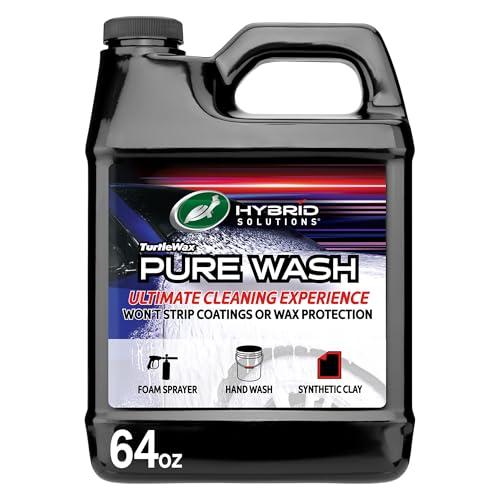
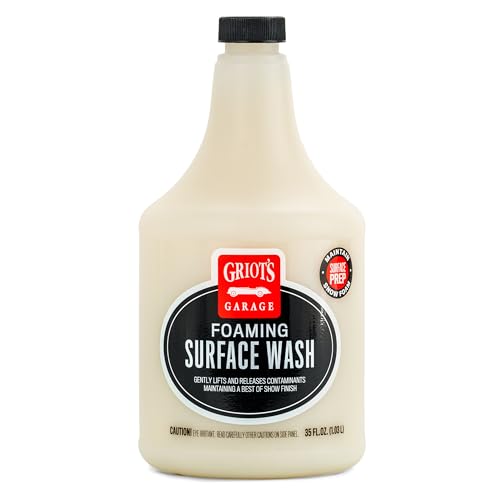
A pH-neutral foaming shampoo is a wash soap optimized to foam. It lubricates brilliantly, protects your existing wax or coating, smells like a dessert, and removes light dust and loose dirt. What it will not do is dissolve two months of motorway film. Adam's Mega Foam, Chemical Guys Honeydew, Griot's BOSS Foaming Surface Wash and Turtle Wax Pure Wash are all in this family, and four of our six picks are here on purpose: for a car washed every week or two over a coating, this is the correct product, and an aggressive pre-wash would be overkill that shortens the life of the protection underneath.
Pick by how dirty the car gets, not by how good the foam looks. Weekly maintenance over protection: pH-neutral. Winter, a long commute, a car that gets washed when you remember: an active pre-wash, with a pH-neutral shampoo in the bucket afterwards.
How we ranked these
Cleaning power first. What comes off during the dwell and the rinse, before the mitt touches anything. This is the whole point of the step, and it is where the differences between these bottles are largest.
Then cling. How long the foam stays on a vertical panel at working dilution. Dwell time is cleaning time, and a foam that sheets off the doors in under a minute has only cleaned the hood.
Then coating safety. If you spent a weekend on a ceramic coating, a pre-wash that shortens its life is a false economy. We note where a product states pH-neutrality and wax, sealant or coating safety, and where it does not.
Then cost per wash at real dilution. Bottle price is close to meaningless in this category. A 16 oz concentrate at 1:10 in a cannon reservoir can outlast a 64 oz ready-diluted soap, so we rank concentration and bottle size together rather than looking at the sticker.
Then whether one bottle covers both steps. A product that foams in the cannon and also works as your bucket shampoo is one purchase instead of two, which is worth real money for a home detailer.
Why this matters more on soft paint
Wash-induced marring is proportional to how easily the clear coat abrades, so the cars that benefit most from a touchless pre-wash are the ones with soft paint — many Japanese marques, modern waterborne repaints, and all single-stage paint. If your car swirls if you look at it wrong, the foam step is not a luxury, it is the cheapest paint correction you will ever do: the marks you prevent cost nothing to fix. Best polish for soft paint is the page for when prevention came too late, and how to wash a car without scratching it is the full technique the foam step belongs to.
How to use a snow foam properly
Rinse first, foam second
Foaming a dry, dusty car is wasted product: the foam spends its surfactants wetting grit it could have simply rinsed away. A quick pressure rinse removes the loose layer and leaves the foam to work on what is actually bonded.
Get the dilution right, then stop adjusting it
Too strong and you are pouring money onto a driveway; too weak and the foam collapses before it has done anything. Start at the manufacturer's stated ratio where there is one — Koch-Chemie and Griot's both publish guidance, and Griot's BOSS system handles the mixing in the cannon itself — and only change it if the foam is visibly failing to cling. Thicker is not better past the point where it clings.
Dwell, but never let it dry
Three to five minutes in the shade is the useful window. Foam drying on paint in direct sun is how you get streaks and water spots, which is a longer fix than the dirt would have been; how to remove water spots from car paint covers that repair. If it is hot, work panel by panel instead of foaming the whole car.
Rinse thoroughly, top down
Then look at the car. Whatever is left is what the contact wash has to deal with, and now you know how much work the foam actually did — which is the only honest test of a snow foam, and far more informative than how it looked going on.
Then do the contact wash anyway
Snow foam is a pre-wash, not a wash. Nothing touchless removes bonded road film completely, and the people who skip the mitt entirely end up with a car that looks clean at ten feet and dull in sunlight. Two buckets, a clean mitt, top-down — best car wash mitt and best car wash soap for detailing cover the contact half, and a proper drying towel covers the step where the other half of all swirls are installed.
Where snow foam fits in the full sequence
If you are washing before paint correction, the foam step is the first of four and the mildest. Foam, then contact wash, then an iron remover for the embedded brake dust nothing soapy will touch, then clay for whatever is still bonded. Skipping straight from foam to polish drags contamination under the pad and installs the exact marring you are trying to remove — do you need to clay bar before polishing is the argument in full, and iron remover vs. clay bar explains why those are two steps rather than one.
If you are maintaining a coated car, the sequence is shorter and the product choice changes: a pH-neutral foam, a gentle contact wash, and a drying aid. How to maintain a ceramic coating sets the cadence, and best drying aid is the step that keeps the water behavior looking new.
What people over-buy here
Foam thickness, almost always. The products that foam most dramatically tend to be the ones carrying the most foam boosters and the least cleaning chemistry, and the satisfaction fades the first time you rinse a genuinely dirty car and find the dirt still there. If you only buy one bottle, buy the one matched to how dirty your car actually gets.
The second over-buy is the gallon. Concentrates do not improve with age, foam boosters separate, and most home detailers wash twenty to thirty times a year. A 16 or 35 oz concentrate is frequently a season or two of washes; buy the gallon only once you know you like the product. Car detailing vs. car wash is a useful reality check on how much of this you actually need.