Skip to content
Pad & Polish

HUB 06 · Paint Prep & Decontamination

How to Remove Water Spots From Car Paint

Two completely different problems wear the same name. One wipes off with the right liquid; the other is damage and only levels out with an abrasive. Here is how to tell which you have.

By Stephen V.Updated How we research
#ad

We earn a commission when you buy through our Amazon links, at no extra cost to you. It never affects our rankings, and we say so when the cheaper product is the better buy. How this works.

A water spot is not water. It is what the water left behind. Tap water, sprinkler water and most rain carry dissolved minerals — calcium and magnesium above all — and when a droplet evaporates off a warm panel those minerals stay put as a ring. What happens next decides how much work you are in for, and it depends almost entirely on how long the deposit sat there and how hot the panel got.

Stage one is a deposit. The minerals are sitting on top of the clear coat. Nothing has been damaged. The right liquid dissolves them or the right abrasive shears them off, and the paint underneath is untouched.

Stage two is etching. Given time, heat and sun, the mineral concentrate becomes alkaline enough to attack the clear coat itself, leaving a shallow crater with the outline of the original droplet. There is nothing left to dissolve. The only way to remove an etched spot is to level the clear coat around it down to the bottom of the crater, which is paint correction — the same mechanism as removing a swirl.

The ten-second test

Wet the affected area and look at it while it is wet. Water temporarily fills a shallow etch and restores a coherent reflection, so:

  • Spots disappear while wet and return as it dries — you have etching. The surface is no longer flat, and only an abrasive will fix it.
  • Spots are still clearly visible while wet — the deposit is still sitting on the surface. Start with the gentle routes below.
  • You can feel them with the back of a clean fingertip through a plastic bag — bonded deposit, which clay will remove.

Do the test in shade on a cool panel. On a hot hood in direct sun everything looks worse than it is, and anything you apply flash-dries before it can work.

The escalation ladder

Work from the least aggressive option that could plausibly work, and stop as soon as the spots are gone. Every step down this list costs more clear coat than the one above it.

  1. Wash properly first. Some of what people call water spotting is just road film outlining an old droplet. A proper wash with a pH-neutral shampoo removes it, and you cannot assess anything under a dirty panel anyway.
  2. A mild acidic spot remover, or diluted white vinegar. Mineral deposits are alkaline, and a mild acid such as citric or acetic dissolves calcium and magnesium without abrading anything. Work on a cool panel in shade, dwell briefly, rinse thoroughly, and do not let it dry on the paint. Vinegar is the household version of the same idea and it works — test an inconspicuous area, keep it off trim and glass seals, and rinse well afterward.
  3. Clay. For deposits that have bonded rather than merely dried on, clay shears them off mechanically. It is the same step covered in how to clay bar a car, and it needs the same generous lubrication. Clay will not touch etching, because clay removes what is on top of the paint and etching is a hole in the paint.
  4. Polish. Once you have established that the spots are etched, a light machine polish levels the clear coat and the craters disappear with it. Most water-spot etching is shallow and comes out with a mild compound or even a finishing polish, which is why the compound on this page is the mainstream, clear-coat-safe one rather than a heavy cutter.
  5. Compound, then polish. Reserve this for deep, long-standing etching — sprinkler damage on a car that has sat in the same spot for months is the classic case. Two stages, exactly as described in what is a cut and polish.

There is a sixth outcome worth naming honestly: some etching is deeper than the clear coat can afford to lose. If a spot survives a genuine compounding pass, stop. Chasing it further thins the clear around it for no gain, and the limits are laid out in will rubbing compound damage clear coat.

Wheels, glass and trim are different problems

The same minerals land on everything, but the surfaces respond differently. Glass tolerates more aggressive chemical and mechanical treatment than paint and often needs it, because water spotting on a windshield can be genuinely etched into the silica. Bare or polished aluminum reacts badly to acids. Matte and satin wraps must never be polished. If the spots are on glass rather than paint, treat that as a separate job with separate products rather than reaching for the same bottle.

Then stop it happening again

Removal is the smaller half of this. Water spots come back because the conditions that made them have not changed, and three habits fix most of it: never let a car air-dry, never wash in direct sun on a hot panel, and keep a slick layer of protection on the paint so droplets bead and run off rather than sitting and flattening out. Protection does not make paint immune — a mineral droplet that dries on a coated panel still leaves a deposit — but it makes that deposit far easier to remove before it can etch.

Prices for everything below are live from the retailer and stamped with the date we verified them. Where we have no verified price we show none rather than a stale one.

The short answer

Quick picks

#ProductBest forScorePrice
01
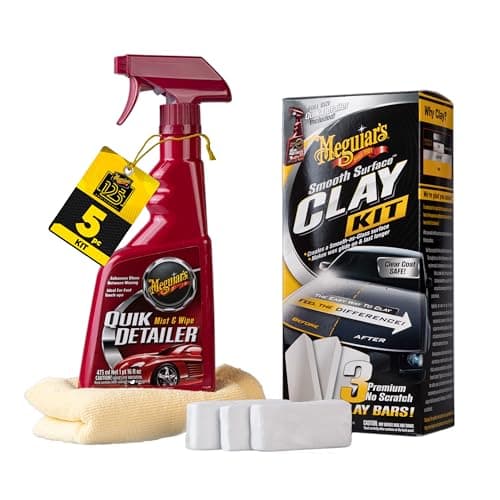
Meguiar's Meguiar's Smooth Surface Clay Kit
Meguiar's Smooth Surface Clay Kit

The most beginner-proof clay kit: a mild bar, quik detailer as lube, and a wax to finish, all matched to work together — the closest thing to a zero-risk introduction to claying.

An absolute first-timer who wants zero risk
8.4
$17.19Amazon
02
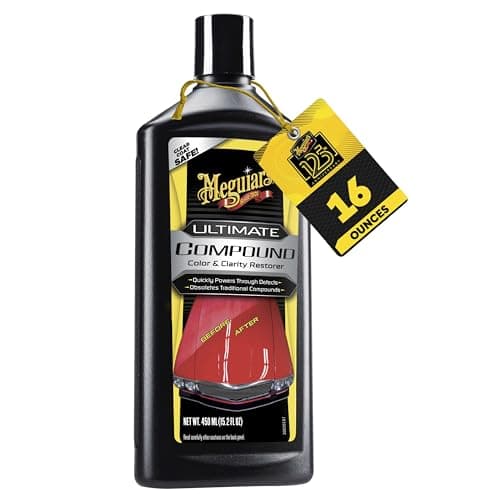
Meguiar's Meguiar's Ultimate Compound
Meguiar's Ultimate Compound

The compound to start with: clear-coat safe, works by hand or machine, and removes moderate swirls and oxidation while leaving a finish glossy enough that many people skip a follow-up polish.

Most swirl and oxidation removal, by hand or machine
8.6
$13.97Amazon
03
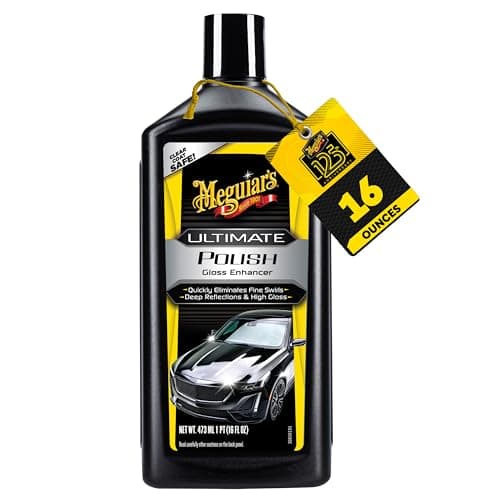
Meguiar's Meguiar's Ultimate Polish
Meguiar's Ultimate Polish

The gloss step, not a correction step: an extremely fine polish that darkens and deepens paint after compounding, which is exactly what black and dark-metallic finishes need before wax goes on.

The gloss pass after compounding, especially on dark paint
7.7
$9.67Amazon
04
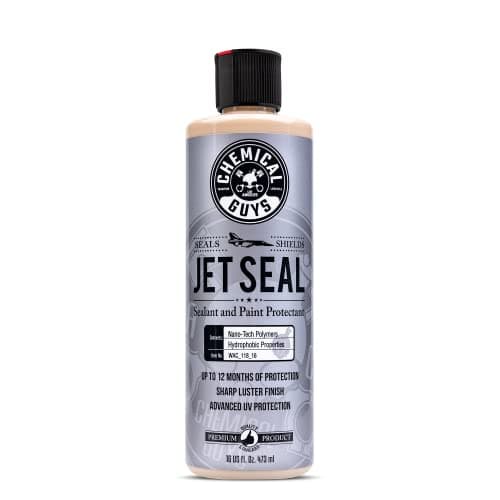
Chemical Guys Chemical Guys JetSeal Anti-Corrosion Paint Sealant
Chemical Guys JetSeal Anti-Corrosion Paint Sealant

The long-haul synthetic sealant here: it bonds to the clear coat rather than sitting on it like carnauba, which is why a single application carries protection through a season rather than a month.

Season-long synthetic protection under a wax topper
8.0
$39.99Amazon

#ad · Live prices from the Amazon Product API, as of Sep 18, 2026. Where we have no verified live price, we show none — we would rather leave a gap than print a number that has rotted.

In detail

The picks, in full

01
Meguiar's Meguiar's Smooth Surface Clay Kit

An absolute first-timer who wants zero risk

Meguiar's Smooth Surface Clay Kit

Mild clayDetailer + waxMatched kitBeginner-proof
8.4/10

The most beginner-proof clay kit: a mild bar, quik detailer as lube, and a wax to finish, all matched to work together — the closest thing to a zero-risk introduction to claying.

Decontamination
7.4
Marring safety
9
Kit completeness
8.6
Value
8.4

Pros

  • Everything matched to work together
  • Mild bar is very hard to marr with
  • Includes a finishing wax step

Cons

  • Mild grade struggles with heavy fallout
  • Smaller bar than standalone options

Don't buy this if…

your paint has heavy industrial fallout — reach for an iron remover plus a medium clay.

$17.19View on Amazon

$29.9943% off

Price as of Sep 18, 2026. Prices change — Amazon's is the one that counts.

#ad · we may earn a commission from this link to Meguiar's Smooth Surface Clay Kit

02
Meguiar's Meguiar's Ultimate Compound

Most swirl and oxidation removal, by hand or machine

Meguiar's Ultimate Compound

Clear-coat safeHand or machineNo fillers15.2 oz
8.6/10

The compound to start with: clear-coat safe, works by hand or machine, and removes moderate swirls and oxidation while leaving a finish glossy enough that many people skip a follow-up polish.

Cutting power
7.6
Finishing ability
8.6
Ease of use
9
Value
9

Pros

  • Genuinely clear-coat safe and beginner-forgiving
  • Corrects moderate defects yet finishes down glossy
  • Works by hand when you don't have a machine

Cons

  • Not aggressive enough for deep scratches or heavy oxidation
  • Best results still need a machine

Don't buy this if…

your paint has heavy sanding marks or severe oxidation — step up to a dedicated cutting compound.

$13.97View on Amazon

Price as of Sep 18, 2026. Prices change — Amazon's is the one that counts.

#ad · we may earn a commission from this link to Meguiar's Ultimate Compound

03
Meguiar's Meguiar's Ultimate Polish

The gloss pass after compounding, especially on dark paint

Meguiar's Ultimate Polish

16 ozFine finishing polishHand or DAUse before wax or sealant
7.7/10

The gloss step, not a correction step: an extremely fine polish that darkens and deepens paint after compounding, which is exactly what black and dark-metallic finishes need before wax goes on.

Cutting power
3
Finish quality
9.2
Ease of use
9.2
Value
9.2

Pros

  • Adds visible depth to dark paint that compound alone leaves flat
  • Almost impossible to over-correct with — very low cut
  • One of the cheapest bottles in the whole category

Cons

  • Removes essentially no defects on its own
  • Adds a whole extra step to an already long job

Don't buy this if…

your paint still has swirls — compound first, then come back to this.

$9.67View on Amazon

$12.9926% off

Price as of Sep 18, 2026. Prices change — Amazon's is the one that counts.

#ad · we may earn a commission from this link to Meguiar's Ultimate Polish

04
Chemical Guys Chemical Guys JetSeal Anti-Corrosion Paint Sealant

Season-long synthetic protection under a wax topper

Chemical Guys JetSeal Anti-Corrosion Paint Sealant

16 ozSynthetic sealantAnti-corrosionHand or machine application
8.0/10

The long-haul synthetic sealant here: it bonds to the clear coat rather than sitting on it like carnauba, which is why a single application carries protection through a season rather than a month.

Durability
9
Looks & warmth
7.4
Ease of application
8.2
Value
7.6

Pros

  • Durability well beyond any carnauba wax
  • Rated for wheels and bare metal as well as paint
  • Takes a carnauba topper cleanly if you want more warmth

Cons

  • The sharpest, most clinical look in this category — some prefer carnauba
  • The most expensive bottle on this page

Don't buy this if…

you love the deep, wet carnauba look — a sealant's shine is deliberately cooler.

$39.99View on Amazon

Price as of Sep 18, 2026. Prices change — Amazon's is the one that counts.

#ad · we may earn a commission from this link to Chemical Guys JetSeal Anti-Corrosion Paint Sealant

What to buy, and in what order

Buy the clay before the compound

A surprising share of what looks like etching is bonded deposit, and clay is cheaper, faster and removes zero clear coat. Clay the panel, dry it, then repeat the wet test. If the spots are gone you have saved yourself a correction; if they are not, you have at least ruled out the easy explanation and the panel is now clean enough to polish properly. Our clay bar picks rank the wider field.

A mainstream compound is usually enough

Water-spot etching is typically shallow — much shallower than a scratch you can feel with a fingernail. A clear-coat-safe consumer compound on a light-cut pad removes most of it, and it is far more forgiving than a body-shop cutter in inexperienced hands. Escalate only if a genuine test section proves you have to; the full rubbing compound field is there if you do.

Follow with a polish on dark paint

On black and dark metallic finishes the compound stage leaves a haze that is more visible than the water spots were. Budget a fine finishing polish as a second pass. On light paint you can often skip it, which is one of the few genuine advantages light colors have.

Protect afterward, without exception

Compounding and polishing strip whatever protection was on the panel, so a corrected panel is bare and spots more readily than the rest of the car until you re-protect it. A durable sealant is the right answer here rather than a short-lived wax, because the point is to keep the surface slick for months. Our sealant picks and ceramic sprays both work; the sealant lasts longer, the spray is faster.

Fix the drying habit, not just the panel

Most recurring water spotting is a drying problem. Air-drying a car is the single most reliable way to create new spots, and a thirsty drying towel used immediately after the final rinse prevents nearly all of them. Our microfiber towel picks cover the drying end, and how to wash a car without scratching it covers the rest of the routine.

Sprinklers are a parking problem

If the car lives where a sprinkler hits it, no product on this page solves the situation — it just resets the clock. Sprinkler water is often harder than tap water and it lands repeatedly on the same panels, which is why sprinkler etching is some of the worst we see described. Move the car, or accept a correction every year.
How we picked

We do not run a testing lab

We compiled published specifications, manufacturer data sheets and aggregated owner reviews, computed the cost of ownership from real sizes and coverage, then scored each product against a published rubric. The scores are judgments from documented research — they are not measurements we took, because we do not own a lab and we are not going to pretend we do. Where a number came from someone else, we name them and link them in Sources.

Questions

Frequently asked

How do you remove hard water spots from car paint?
Start gentle and escalate. Wash the panel first, then try a mild acidic water-spot remover or diluted white vinegar on a cool panel in shade — mineral deposits are alkaline and a mild acid dissolves calcium and magnesium without abrading anything. If the deposits have bonded, clay them off. If they are etched into the clear coat, only a machine polish will level them out.
How do I know if my water spots are etched?
Wet the area and look at it while it is wet. Water temporarily fills a shallow etch, so spots that vanish while wet and reappear as the panel dries are etched into the clear coat. Spots that remain clearly visible while wet are still sitting on the surface, which means a chemical or clay approach will remove them without any correction.
Will a clay bar remove water spots?
It removes bonded mineral deposits sitting on top of the paint, which is a large share of what people call water spotting. It cannot remove etching, because clay shears off what is above the surface and an etched spot is a crater below it. Clay first anyway — it is cheap, removes no clear coat, and it tells you which problem you actually have.
Does vinegar remove water spots from a car?
Yes, for fresh mineral deposits. Diluted white vinegar is a mild acid and mineral deposits are alkaline, so it dissolves them the same way a commercial water-spot remover does. Work on a cool panel in shade, do not let it dry on the paint, rinse thoroughly, and keep it off bare aluminum and rubber seals. It does nothing at all for etched spots.
Can water spots permanently damage car paint?
Yes. Given time, heat and sunlight, the mineral concentrate left by an evaporating droplet becomes alkaline enough to attack the clear coat, leaving a shallow crater. That damage is permanent until the surrounding clear is leveled down to it by polishing — and if the etch is deeper than the clear coat can afford to lose, it is not safely removable at all.
How do I stop water spots coming back?
Never let the car air-dry, never wash it in direct sun on a hot panel, and keep a slick layer of protection on the paint so droplets bead and run off instead of sitting and flattening out. Protection does not make paint immune to minerals, but it buys you time to remove a deposit before it can etch.

Keep reading

Receipts

Sources

We do not run a testing lab, and we do not pretend to. Where a measured number came from someone else's lab, we name them and link them. Where we could not verify something, we say so on the page rather than quietly leaving it out. Read our full method.