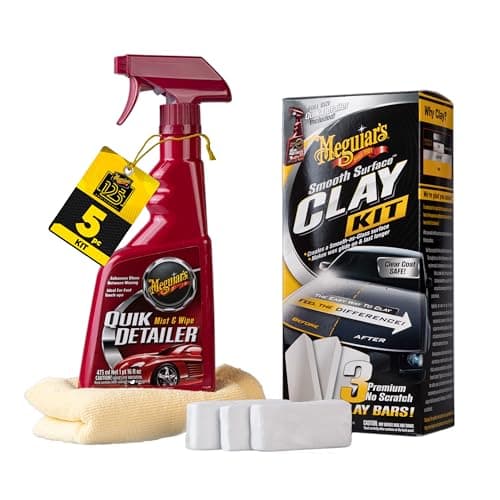
Work up the ladder, never down it: soften the sap, dissolve what you can, then lift the rest with clay — the Meguiar's Smooth Surface Clay Kit is the most beginner-proof version of that step, a mild bar with the matched lubricant already in the box. Only reach for a polish if the sap left a dull mark after the surface is clean, because that mark is etching rather than residue and no amount of further wiping will remove it. The one rule that matters more than any product: do not pick, scrape or scrub a hardened drop. That is how a removable deposit becomes a permanent scratch.
Tree sap is a sugar-and-resin mix. Fresh, it is sticky and dissolves readily. Left in the sun, it hardens into a bonded lump and the acids in it start working into the clear coat underneath — which is why a sap drop you ignore for a fortnight leaves a visible ring even after you finally remove it.
The ladder, in order
- Wash the car first. Removing sap from a dusty panel means grinding dust into the clear coat with every wipe. A normal wash, then work on a clean, dry surface.
- Warm the sap. Park in the sun for twenty minutes, or lay a warm damp towel over the spot for a minute or two. Warm sap softens; cold sap chips.
- Soak, do not rub. Hold a cloth soaked in your solvent of choice against the drop for 30-60 seconds and let the chemistry work. Then wipe in one direction with light pressure, and repeat rather than pressing harder.
- Clay what is left. A mild clay bar with plenty of lubricant shears off the bonded remainder that a solvent softened but did not release. This is the step that does most of the actual work on hardened sap.
- Inspect, then polish only if needed. If the panel is smooth but a dull ring remains, that is etching in the clear coat and a light machine polish is the fix.
- Re-protect the spot. Both solvent and clay strip whatever wax or sealant was there, leaving bare clear coat exactly where sap already landed once.
What to use as the solvent
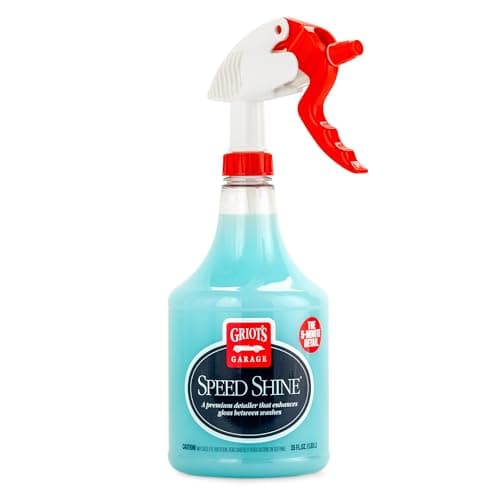
Isopropyl alcohol diluted with water is the standard household answer and the one most commonly used, because it dissolves resin without being aggressive towards cured clear coat. Dedicated bug-and-tar or sap removers do the same job in a purpose-made formula. A slick detail spray is the gentlest option and will handle fresh sap on its own — Griot's Garage Speed Shine is the one in the picks above because it is safe on every exterior surface including trim and wheels, and it doubles as the clay lubricant for the next step.
Whatever you use, test it on a low panel first, work on a cool surface rather than a scorching one, and keep it off plastic trim where you can. We do not rank a dedicated sap remover here because we have not tested one and will not pretend otherwise.
What not to use
| Common suggestion | What it actually does |
|---|
| Fingernail or a plastic scraper | Drags hardened sap across clear coat — a guaranteed scratch |
| Melamine foam (magic eraser) | A very fine abrasive block. It removes sap and clear coat together |
| Acetone or lacquer thinner | Strong enough to soften the clear coat itself |
| Bug sponge or a dish scourer | Scours a matte patch into the panel |
| Hand sanitizer | Works, but the added gels and fragrances need removing afterwards anyway |
| Pressure washer at close range | Will not shift bonded sap and can lift an edge of failing clear coat |
Melamine foam deserves the specific warning because it is the most-recommended bad idea on the internet for every stuck-on contaminant. The same argument applies to paint transfer, where we spell it out in how to remove paint transfer from a car.
Deposit or damage? The test
After the panel is clean and dry, close your eyes and run your fingertips over the spot. If it still feels raised or gritty, there is sap left and the answer is another clay pass, not a polish. If the surface is perfectly smooth but you can see a dull ring or a faint discoloration, the sap has etched the clear coat — the deposit is gone and what you are looking at is a shallow crater in the surface, which only abrasion will level.
That is the same test the site uses for mineral deposits in how to remove water spots from car paint, and it is the one decision that keeps people from polishing paint that did not need it.
Polishing the etch out
Sap etching is nearly always shallow, and a clear-coat-safe compound on a foam pad clears it in a few passes. Work the single panel rather than the car, keep the pass small, and inspect under a strong light before deciding to go again. If you are doing this by machine for the first time, the technique is in how to use a dual-action polisher; by hand, it is in how to polish a car by hand. Deep etching that survives a careful polish is into the clear coat far enough that the honest answer is to leave it rather than thin the clear chasing it.
Preventing the next one
Protection is the actual fix
Sap on bare clear coat bonds to the clear coat. Sap on a sealed or coated panel bonds to the sacrificial layer, which is why a protected car releases sap with a detail spray and an unprotected one needs clay. A durable synthetic sealant is the cheapest version of that insurance, and the field is ranked in best paint sealant.
Speed beats product
Fresh sap comes off with almost anything. Hardened sap needs clay. Etched sap needs a machine. Every day you leave it moves you one rung up a ladder you did not want to climb, so keep a detail spray and a couple of towels in the trunk between April and September.
Clay the whole car, not just the spot
If one panel needed clay, the rest of the car is carrying bonded contamination too — you simply cannot see it. Claying the whole car while the bar is out costs an hour and resets the surface, and the method is in how to clay bar a car.
Buy the mild clay, not the aggressive one
Aggressive clay marrs soft paint, and sap does not need aggression — it needs lubrication and patience. A mild bar with plenty of lube is both safer and, on sap specifically, no slower. The grades are compared in best clay bar for a car.
Re-seal the spot the same day
Solvent and clay both strip protection locally. If you clean a sap drop off the hood and leave it, you have created a bare patch on the most exposed panel on the car. A wipe of sealant over the area takes two minutes.