Skip to content
Pad & Polish

HUB 04 · Ceramic Coatings

Best Trim Restorer for Faded Black Plastic

Gray, chalky trim makes a perfectly corrected car look tired. Six restorers ranked by what they actually do to the plastic, not how wet it looks on day one.

By Stephen V.Updated How we research
#ad

We earn a commission when you buy through our Amazon links, at no extra cost to you. It never affects our rankings, and we say so when the cheaper product is the better buy. How this works.

You can spend a weekend doing everything this site recommends — decontaminate, correct, polish, coat — and the car will still look ten years old from twenty feet away if the plastic is gray. Cowl panels, mirror caps, window surrounds, wheel-arch cladding, the strip along the bottom of a bumper: faded trim is the detail that undoes a corrected finish, and it is the one most people treat with whatever is on the shelf.

It deserves better than that, because trim and paint fail in completely different ways. Understanding why is the whole basis for ranking these products, and it explains the thing that frustrates people most: why the shine they applied last month is already gone.

Why black plastic goes gray

Exterior trim is usually a polypropylene or TPO blend, pigmented black and compounded with UV stabilizers and carbon black. Unlike paint, it has no clear coat over it. The pigment and the stabilizers are in the plastic itself, exposed directly to sunlight for the life of the car.

Over years of UV exposure two things happen. The stabilizer package is consumed, and the polymer surface oxidizes — the top few microns break down into a porous, light-scattering layer, and the plasticizers and oils that gave the surface depth migrate out and wash away. What is left is a rough, dry, microscopically broken surface that scatters light in all directions instead of reflecting it. That is what gray is: not dirt, not loss of paint, but a surface texture that has stopped reflecting coherently.

Which means there are exactly two honest approaches. You can fill and wet the porous layer so it reflects again, or you can replace the pigment that has been lost. Most products do the first and are sold as if they do the second, and that gap is the source of nearly every disappointed review in this category.

The three chemistries, and what each one honestly does

Dressings and protectants wet the oxidized surface with silicone or a polymer film. They look excellent immediately, they are easy, they are cheap, and on lightly dulled trim they are genuinely all you need. On badly oxidized trim they produce a dark, slightly artificial finish that fades back as the film wears, which can be weeks. Silicone-based versions have a second drawback: in rain they sling off onto adjacent paint and leave streaks, and silicone residue interferes with anything you later try to bond to the surface.

Dye-infused restorers carry pigment into the porous surface layer. This is the only category that genuinely restores color rather than wetting what is left, which makes it the right answer for trim that has gone properly chalky gray. The price is mess: dye stains paint, concrete, clothing and skin, and it does not come off because permanence is the point. Masking and gloves are not optional.

Bonded trim coatings are the same SiO2 chemistry as a paint ceramic coating, formulated for plastic. They cross-link into a hard, hydrophobic layer that is measured in months and years rather than washes. They are the most durable option by a wide margin and the least forgiving: the trim has to be genuinely clean and dry, application is panel-by-panel with a level-and-wipe window, and high spots cure in place. A coating also cannot add pigment — it locks in and protects whatever color is there when you apply it, which is why the correct sequence on badly faded trim is restore first, coat second.

How we ranked them

Restoration depth — can the product help trim that has gone genuinely gray, or only trim that is slightly dull? This is where dye chemistry separates from everything else.

Published durability — what the manufacturer actually claims, in the units they chose to claim it in. Every figure on this page is attributed to the maker that published it, and we have not run longevity tests. Worth noting that Cerakote publishes its figure in wash cycles rather than months, which is the more honest unit: trim protection is removed by detergent and pressure, not by the calendar.

Finish realism — does the result look like factory trim or like dressed plastic? A matte, slightly open finish reads as original. A deep wet gloss reads as product, and it is also the finish that highlights every remaining imperfection in the surface.

Value — cost per treated panel, not bottle price. The most expensive bottle on this page is also a multi-year supply, and the cheapest kit runs out halfway down an SUV.

Prep is most of the result

Nothing in this category works on dirty trim, and the failures blamed on products are usually failures of preparation. Oxidized plastic is porous, which means it holds old dressing, wax residue, road film and whatever silicone the last product left. Anything you apply over that bonds to the residue instead of the plastic, and it leaves with it.

The sequence is: clean the trim with an all-purpose cleaner or a dedicated degreaser, agitate with a soft brush to get into the texture, rinse, dry completely, and for the bonded coatings follow with a panel wipe — the same step and the same reason as coating paint. If water beads on the trim or the surface feels slick, there is still something on it. Do this in shade on cool plastic; everything in this category flashes too fast in direct sun, which is how streaks and tiger stripes happen.

One more sequencing note, because it catches people out: do the trim after any polishing, not before. Compound and polish residue blows into the texture of adjacent plastic and is miserable to dig back out, and a dressed surface gets stripped by the panel wipe anyway. Correct the paint, wipe down, then trim, then coat. The same order argument applies to the paint side in how to polish a car before ceramic coating.

What none of these will fix

If the plastic surface itself is physically damaged — gouged, crazed, or so far gone that it is flaking rather than fading — no restorer reaches it. The same applies to trim that has been painted over and is now peeling, and to clear plastic that has yellowed all the way through, which is a different problem with a different solution (the abrasive ladder in best headlight restoration kit). Restorers work on oxidized but intact black plastic. That covers the large majority of tired-looking trim and not all of it, and it is worth establishing which you have before you spend money.

The short answer

Quick picks

#ProductBest forScorePrice
01
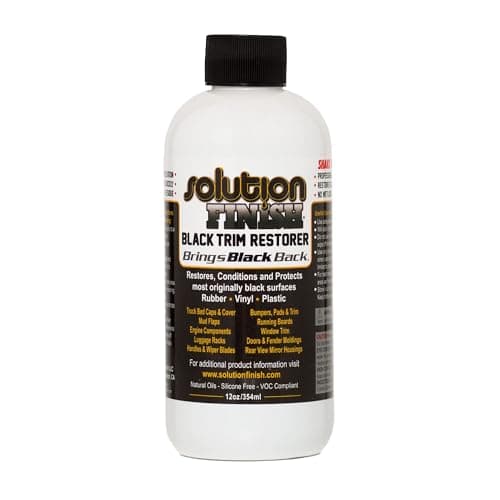
Solution Finish Solution Finish Black Trim Restorer (12 fl oz)
Solution Finish Black Trim Restorer (12 fl oz)

The restorer enthusiasts keep buying because it is silicone-free and leaves a matte factory finish instead of a wet shine — it restores the color rather than painting gloss over the fade.

A factory matte finish on badly faded trim
8.7
$33.99Amazon
02
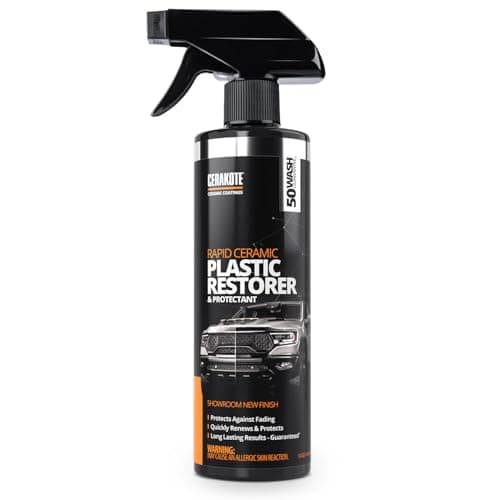
Cerakote Cerakote Rapid Ceramic Plastic Restorer (14 oz)
Cerakote Rapid Ceramic Plastic Restorer (14 oz)

The value pick, and the one with a published wash-cycle claim rather than a vague month count: Cerakote rates it at 50+ washes, which is a far more honest unit for something that lives on a car.

The best value, with a published wash rating
8.5
$14.90Amazon
03
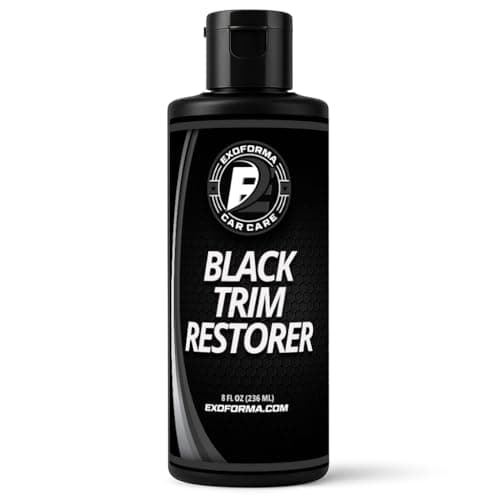
ExoForma ExoForma Black Trim Restorer (8 oz)
ExoForma Black Trim Restorer (8 oz)

Dye-infused rather than purely a dressing, which is the right chemistry for trim that has gone genuinely gray — it puts pigment back instead of wetting what is left.

Chalky, sun-grayed plastic and bumper cladding
8.6
$24.95Amazon
04
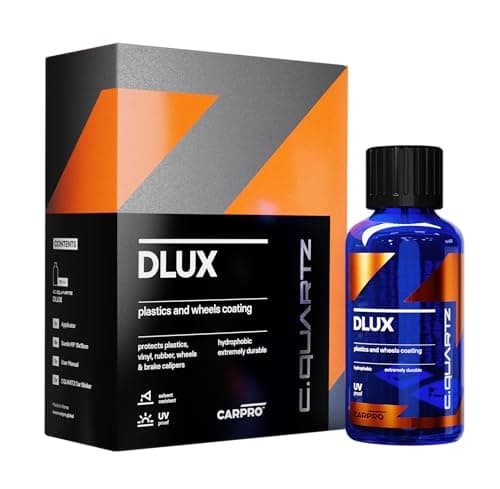
CarPro CarPro CQuartz DLUX Wheel & Trim Coating
CarPro CQuartz DLUX Wheel & Trim Coating

The wheel coating enthusiasts actually keep buying: a solvent-based SiO2 layer built for brake-caliper heat, and it does double duty on the plastic trim you were going to have to protect anyway.

One bottle that coats both wheels and exterior trim
8.4
$42.99Amazon
05
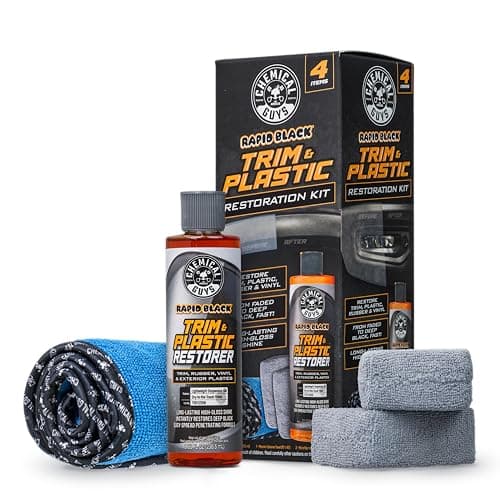
Chemical Guys Chemical Guys Black Trim Restorer Gel Kit
Chemical Guys Black Trim Restorer Gel Kit

A gel rather than a liquid or a spray, which is the format that keeps product on the trim and off the paint — and it ships with the applicator you would otherwise have to buy.

Precise work on trim next to painted panels
7.8
$19.99Amazon
06
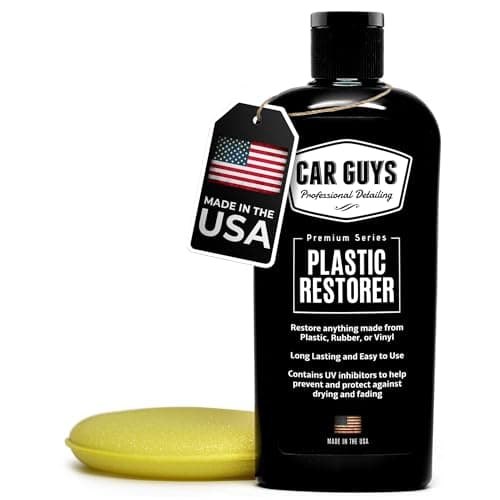
CAR GUYS CAR GUYS Plastic Restorer (8 oz Kit)
CAR GUYS Plastic Restorer (8 oz Kit)

The friendliest product here for a first attempt: one bottle that handles plastic, rubber and vinyl, forgiving if you over-apply, and it comes with a foam applicator.

A first attempt, and rubber as well as plastic
7.4
$17.99Amazon

#ad · Live prices from the Amazon Product API, as of October 16, 2026. Where we have no verified live price, we show none — we would rather leave a gap than print a number that has rotted.

In detail

The picks, in full

01
Solution Finish Solution Finish Black Trim Restorer (12 fl oz)

A factory matte finish on badly faded trim

Solution Finish Black Trim Restorer (12 fl oz)

12 fl ozSilicone-freePolymer basedMatte, non-greasy finish
8.7/10

The restorer enthusiasts keep buying because it is silicone-free and leaves a matte factory finish instead of a wet shine — it restores the color rather than painting gloss over the fade.

Restoration depth
9.2
Published durability
8.8
Finish realism
9.4
Value
7.4

Pros

  • Silicone-free, so it does not sling onto paint in the rain or interfere with a coating you apply later
  • Dries to a matte finish that reads as original trim rather than as freshly dressed plastic
  • A little goes a very long way — this bottle size is a multi-year supply for one car

Cons

  • The most expensive bottle here, and the price is hard to justify for one faded mirror cap
  • Needs genuinely clean, dry trim or it goes on patchy, which means prep work people skip
  • Will transfer to a cloth or a sleeve until it has fully flashed off

Don't buy this if…

…you want the deep wet-black look — this deliberately does not do that, and no amount of extra product will make it.

$33.99View on Amazon

Price as of October 16, 2026. Prices change — Amazon's is the one that counts.

#ad · we may earn a commission from this link to Solution Finish Black Trim Restorer (12 fl oz)

02
Cerakote Cerakote Rapid Ceramic Plastic Restorer (14 oz)

The best value, with a published wash rating

Cerakote Rapid Ceramic Plastic Restorer (14 oz)

14 oz sprayMaker's claim: 50+ wash ratingNon-greasy finishCeramic chemistry
8.5/10

The value pick, and the one with a published wash-cycle claim rather than a vague month count: Cerakote rates it at 50+ washes, which is a far more honest unit for something that lives on a car.

Restoration depth
7.8
Published durability
8.6
Finish realism
8.4
Value
9.4

Pros

  • Cerakote publishes durability in washes rather than months, which is the variable that actually wears trim coatings
  • Non-greasy finish, so it does not collect dust the way an oily dressing does
  • Cheapest cost per treated panel on this page by a wide margin, in a bottle big enough for an SUV

Cons

  • A spray is harder to keep off adjacent paint and glass than a gel, so mask or work carefully
  • The 50+ wash figure is the manufacturer's own claim and depends on how the car is washed
  • On severely oxidized, chalky trim it needs more than one application to even out

Don't buy this if…

…your trim is gray and chalky rather than merely dull — a dye-infused restorer puts color back and this mainly protects.

$14.90View on Amazon

Price as of October 16, 2026. Prices change — Amazon's is the one that counts.

#ad · we may earn a commission from this link to Cerakote Rapid Ceramic Plastic Restorer (14 oz)

03
ExoForma ExoForma Black Trim Restorer (8 oz)

Chalky, sun-grayed plastic and bumper cladding

ExoForma Black Trim Restorer (8 oz)

8 ozDye infusedMaker's claim: 6+ monthsPlastic, trim and vinyl
8.6/10

Dye-infused rather than purely a dressing, which is the right chemistry for trim that has gone genuinely gray — it puts pigment back instead of wetting what is left.

Restoration depth
9.4
Published durability
8.8
Finish realism
8.2
Value
8

Pros

  • Dye chemistry restores color on trim that is too far gone for a dressing to help
  • ExoForma's published claim is 6+ months, at the long end of what trim products claim
  • Works on the big textured cladding panels that make an older SUV look tired

Cons

  • Dye means stains — on paint, concrete, clothing and your hands, and it is not easily undone
  • Needs careful masking and gloves, so it is the least casual product on this page
  • 6+ months is the manufacturer's claim, not a figure we have verified over a season

Don't buy this if…

…your trim is only slightly dull — a non-staining protectant gives you most of the look with none of the mess risk.

$24.95View on Amazon

Price as of October 16, 2026. Prices change — Amazon's is the one that counts.

#ad · we may earn a commission from this link to ExoForma Black Trim Restorer (8 oz)

04
CarPro CarPro CQuartz DLUX Wheel & Trim Coating

One bottle that coats both wheels and exterior trim

CarPro CQuartz DLUX Wheel & Trim Coating

30 mlWheels + plastic trimHigh heat toleranceSolvent-based SiO2
8.4/10

The wheel coating enthusiasts actually keep buying: a solvent-based SiO2 layer built for brake-caliper heat, and it does double duty on the plastic trim you were going to have to protect anyway.

Durability
9.2
Brake-dust release
8.8
Ease of use
6.8
Value
8.6

Pros

  • Formulated for the heat cycling a brake rotor puts through a wheel
  • Also restores and protects faded exterior plastic trim
  • From the same line as the paint coating we rank first overall

Cons

  • Wheels must come completely off and be decontaminated first
  • Solvent-based, so ventilation is not optional

Don't buy this if…

…you will not remove the wheels — a spray sealant is the realistic choice.

$42.99View on Amazon

Price as of October 16, 2026. Prices change — Amazon's is the one that counts.

#ad · we may earn a commission from this link to CarPro CQuartz DLUX Wheel & Trim Coating

05
Chemical Guys Chemical Guys Black Trim Restorer Gel Kit

Precise work on trim next to painted panels

Chemical Guys Black Trim Restorer Gel Kit

Gel formulaApplicator includedExterior plastic, rubber, vinylDeep black finish
7.8/10

A gel rather than a liquid or a spray, which is the format that keeps product on the trim and off the paint — and it ships with the applicator you would otherwise have to buy.

Restoration depth
8.2
Published durability
7.2
Finish realism
7.8
Value
8

Pros

  • Gel stays where you put it, which matters on window surrounds and mirror caps with paint on both sides
  • Applicator in the box means nothing else to buy before you can start
  • Gives a deeper black than the matte restorers, if that is the look you want

Cons

  • No published durability figure on the listing, so you cannot compare it on paper to the wash-rated options
  • Deeper finish means a slightly dressed look rather than a factory matte one
  • Small kit format gets expensive if you are doing a whole set of cladding panels

Don't buy this if…

…you need to cover large textured cladding — a spray or a bigger bottle is far less tedious.

$19.99View on Amazon

Price as of October 16, 2026. Prices change — Amazon's is the one that counts.

#ad · we may earn a commission from this link to Chemical Guys Black Trim Restorer Gel Kit

06
CAR GUYS CAR GUYS Plastic Restorer (8 oz Kit)

A first attempt, and rubber as well as plastic

CAR GUYS Plastic Restorer (8 oz Kit)

8 ozFoam applicator includedPlastic, rubber and vinylInterior and exterior use
7.4/10

The friendliest product here for a first attempt: one bottle that handles plastic, rubber and vinyl, forgiving if you over-apply, and it comes with a foam applicator.

Restoration depth
7
Published durability
6.6
Finish realism
7.2
Value
8.6

Pros

  • Hard to get wrong — streaks level out rather than setting in, which is not true of the dye products
  • Covers rubber seals and interior plastics as well as exterior trim, so one bottle does several jobs
  • Foam applicator included, and the bottle is enough for a full pass on a mid-size car

Cons

  • No published durability figure, and in practice it behaves more like a protectant than a long-life restorer
  • On badly oxidized trim the improvement is real but partial — it cannot replace lost pigment
  • Glossier than a factory finish, which looks dressed rather than restored on matte-gray cladding

Don't buy this if…

…your trim is severely sun-bleached — a dye-infused restorer is the only thing that genuinely puts the color back.

$17.99View on Amazon

$23.9925% off

Price as of October 16, 2026. Prices change — Amazon's is the one that counts.

#ad · we may earn a commission from this link to CAR GUYS Plastic Restorer (8 oz Kit)

Choosing and applying a trim restorer

Diagnose the fade before you buy

Wipe a hidden section of the trim with a damp cloth. If it darkens to near-black while wet and goes gray again as it dries, the pigment is still in there and a protectant or coating will hold that wet look. If it stays gray even wet, or the cloth comes away chalky, the pigment is gone and only a dye-infused restorer will bring the color back. This takes ten seconds and decides which half of this page you should be shopping in.

Restore first, protect second

On badly faded trim the best result is two products, not one: a dye restorer to put the color back, cured per the maker's instructions, then a bonded coating over the top to stop the new surface oxidizing again. A coating alone preserves gray. A dye alone starts the clock again from day one.

Mask the paint, every time

Tape along the paint edge of every trim piece you are treating. This is tedious and it is non-negotiable with dye products, which stain paint permanently, and merely sensible with everything else. The cost of masking is twenty minutes; the cost of not masking can be a polishing session on the adjacent panel.

Thin coats, worked in, excess removed

Every product here performs better applied thinly and worked into the texture with an applicator than flooded on and left. Excess product does not absorb — it sits on the surface, stays tacky, attracts dust and streaks in the first rain. Apply, work it in, then wipe the surface with a clean cloth before it flashes.

Respect the cure window

Dye restorers and bonded coatings both need dry time before the car sees water: typically hours for a dye and considerably longer for an SiO2 coating, per the maker's instructions on the bottle. Washing a coating before it has cross-linked is the most common way to waste one, and it is entirely avoidable by reading the label and checking the forecast.

Maintain it with the right wash

Strong degreasers and traffic-film removers strip trim protection fastest, which is the real reason that trim looks gray again three months later. A pH-neutral shampoo and a gentle method keep it where it is — the same products and the same reasoning as maintaining a ceramic coating, because on a coated car the trim and the paint are now the same maintenance job.
How we picked

We do not run a testing lab

We compiled published specifications, manufacturer data sheets and aggregated owner reviews, computed the cost of ownership from real sizes and coverage, then scored each product against a published rubric. The scores are judgments from documented research — they are not measurements we took, because we do not own a lab and we are not going to pretend we do. Where a number came from someone else, we name them and link them in Sources.

Questions

Frequently asked

What is the best trim restorer for badly faded black plastic?
For trim that has gone genuinely chalky gray, a dye-infused restorer is the only category that puts pigment back rather than wetting what is left. For trim that is merely dull, a silicone-free restorer or a ceramic trim protectant gives a factory-matte finish with far less mess risk.
Why does my black trim keep going gray again?
Most trim products wet the oxidized surface rather than replacing lost pigment, so the gray returns as the film wears off — and strong degreasers or traffic-film removers strip that film in a wash or two. A dye restorer followed by a bonded trim coating lasts far longer than either on its own.
Can you ceramic coat plastic trim?
Yes, with an SiO2 product formulated for trim. It is the most durable option available, measured in months to years rather than washes. It cannot add color, though, so on faded trim the correct order is to restore the color first and coat over it once that has cured.
How long does trim restorer last?
It depends entirely on the chemistry, and the honest answer is to go by what each maker publishes. Dressings are typically weeks, the dye-infused and ceramic products on this page carry maker claims from 50+ washes to 6+ months, and a bonded trim coating is claimed in years. Those are manufacturer claims, not figures we have measured.
Should I do the trim before or after polishing the car?
After. Compound and polish residue settles into the texture of adjacent plastic and is difficult to remove, and any dressing you applied first gets stripped by the panel wipe before coating anyway. Correct the paint, wipe down, then restore the trim, then coat.
Will trim restorer stain my paint?
Dye-infused restorers can and do, permanently, which is why masking and gloves are mandatory with them. Non-dye protectants and coatings wipe off paint while still wet but will cure as high spots if left, so work in shade, apply thinly and tape the edges regardless of which you choose.

Keep reading

Receipts

Sources

We do not run a testing lab, and we do not pretend to. Where a measured number came from someone else's lab, we name them and link them. Where we could not verify something, we say so on the page rather than quietly leaving it out. Read our full method.