Hard paint is the single most common reason a first machine correction stalls. You buy a well-reviewed compound, run the recommended four or five passes, wipe the panel down, and the swirls are still there — slightly softer, maybe, but plainly still there. Nothing is wrong with the compound. The clear coat on the car is simply harder than the clear coat that compound was formulated to level, and the pad under it is too soft to make up the difference.
The pattern is well known in the trade. German manufacturers — BMW, Audi, Mercedes-Benz, Volkswagen and Porsche among them — have used ceramic-reinforced and scratch-resistant clear coat systems for years, and detailers consistently describe them as harder to correct than the softer clears common on many Japanese vehicles. Detailed Image, Jimbo's Detailing and the long-running Autogeek thread on paint hardness by make all describe the same split, and all of them land on the same caveat, which is the most useful sentence on this page: test the panel, do not trust the badge. Hardness varies by model year, by plant, by color, and completely by whether a panel has ever been repainted.
How to tell whether you actually have hard paint
Before you buy anything heavier, spend twenty minutes proving you need it. The test is the same one every professional runs on an unfamiliar car.
- Wash and decontaminate one low-visibility panel — a lower door, or the back half of a hood. Embedded grit will scratch during the test and confuse the result.
- Run your mildest realistic combination on a two-foot square: a medium compound on a light-cut foam pad, four to five slow overlapping passes with firm pressure.
- Wipe the section down with a panel wipe or a diluted isopropyl alcohol solution. This is not optional — polishing oils temporarily mask exactly the defects you are grading.
- Inspect under a hard, focused light. Swirls gone means your paint is not hard and you do not need anything on this page. Visibly reduced but present means you need more cut. Essentially untouched means you have hard paint, and you need a different pad rather than just a different bottle.
The mirror-image failure is worth naming too, because buying off this page for the wrong car is expensive. On soft paint the same test corrects in two passes and then leaves its own fine marring behind, and the right answer there is a finishing polish, not more abrasive. If you are not sure which car you own, hard paint vs soft paint walks the whole diagnostic. A hard, focused inspection light is what makes the call honest — our paint inspection light picks exist for exactly this moment.
The part everyone gets wrong: the pad is the variable
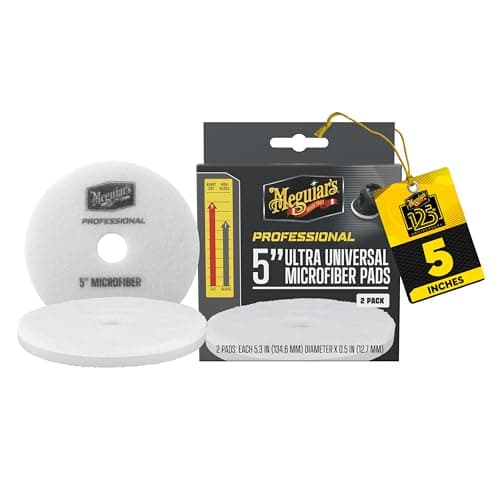
Cut is produced by chemistry, pad and machine together, and on hard clear the pad is the term people leave alone. A heavy compound on a soft foam pad is a heavy compound that cannot reach the paint hard enough to work. Moving from foam to a microfiber cutting face, or on a rotary from foam to knitted wool, routinely does more for a hard-paint correction than swapping one compound for another rated a point harder.
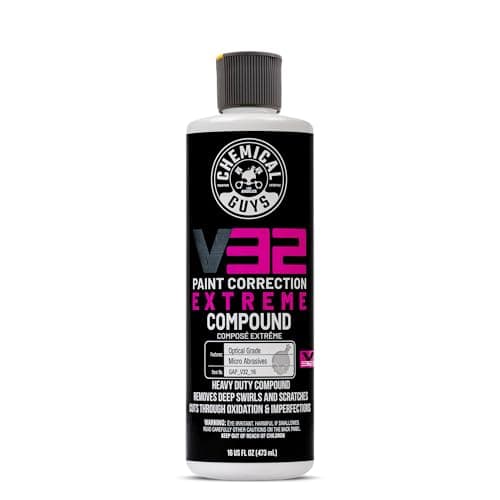
That is why this list is not five bottles. Two of the five picks below are pads, because a hard-paint shopping list with no pad on it is an incomplete shopping list, and because the usual outcome of buying only the heaviest compound on the shelf is an expensive bottle that still slides. If you want the pad field ranked on its own, our microfiber cutting pad picks and the rotary wool shortlist cover the wider field; the two here are the ones we would pair with these compounds.
The machine sets the ceiling
Hard paint punishes an underpowered polisher more than any other condition. A budget dual-action that loses pad rotation the moment you lean on it turns a cutting compound into an expensive way of spreading liquid around, and that stall is invisible — the machine still sounds like it is working. A long-throw DA with real torque, or a rotary in experienced hands, is what makes a heavy compound behave the way its data sheet describes. The dual-action shortlist is ranked on exactly that trait, and long throw vs short throw explains why orbit size matters so much once the paint stops cooperating.
Everything below is priced live from the retailer and stamped with the date we verified it. Where we have no verified price we show none rather than an old one.
Buying for hard clear coat
Escalate the pad before you escalate the compound
The cheapest useful experiment is a microfiber cutting pad with the compound you already own. Microfiber presents thousands of abrasive fiber tips to the surface instead of a continuous foam face, which raises the effective cut of whatever liquid you prime it with. If that does not close the gap, then step the compound up. Doing it the other way around means you never learn which variable was the problem, and you own a bottle of heavy compound you may not have needed.
Prefer SMAT chemistry on hard paint
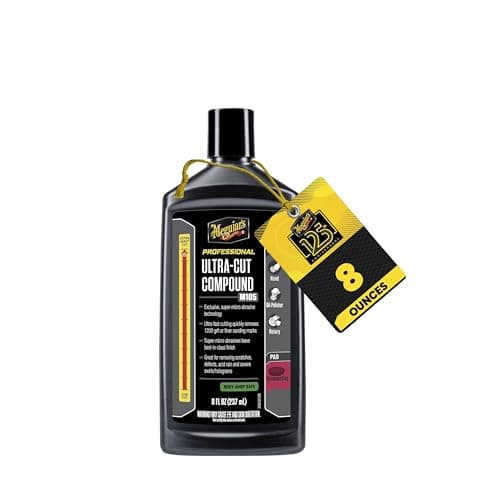
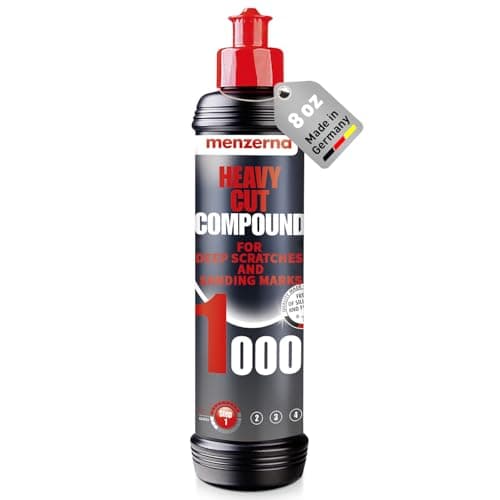
Diminishing abrasives are designed to break down as you work them, which is elegant on paint that corrects quickly and frustrating on paint that does not — the abrasive has finished breaking down before the defect has finished leveling. SMAT-style compounds, where the abrasive stays closer to its original size through the pass, keep cutting for as long as you keep working, which is what a hard clear needs. Both Meguiar's M105 and the Menzerna heavy cut behave this way; the full DAT-versus-SMAT explanation lives on the compounds hub.
Pressure and speed, not more passes
On hard paint the correcting combination is firm pressure at a moderate machine speed with slow arm movement — roughly an inch per second, which feels absurdly slow the first time. Adding passes at the light pressure you would use on a soft Japanese clear mostly generates heat. Work a small section, four to six passes, then wipe and look. If two consecutive test sections show no improvement, change the pad, not the count.
Budget for a finishing stage, because you will need one
Every product on this page except the pads is a cutting product, and all of them haze by design. Microfiber and wool leave their own signature on top of that. A hard-paint correction is therefore a genuine two-stage job almost every time, so buy the finishing liquid at the same time as the compound rather than discovering the need halfway through a Saturday. What a cut and polish actually is lays out how the two stages fit together, and polishing vs finishing pads covers the softer pad the second stage needs.
Hard does not mean invulnerable
A scratch-resistant clear is still only microns thick, and cutting it is still permanent. Hard paint resists being marked and resists being corrected in equal measure — the fact that it takes four passes to level a swirl does not make those four passes free. Will rubbing compound damage clear coat puts honest limits around how often this is worth doing, and compounds sorted by scratch depth is where to start if the problem is one deep mark rather than general haze.
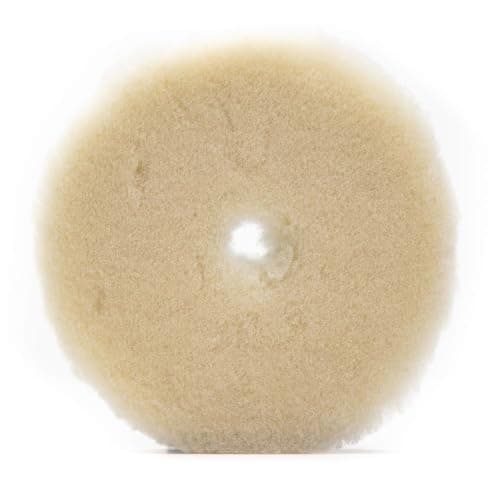
Wool is a rotary tool, and it commits you to a third step
Knitted wool cuts faster than any foam, which makes it the traditional answer to a hard, neglected panel. It also leaves wool haze that a foam polishing pass has to clear, so a wool pass turns a two-stage job into a three-stage one. Buy it when the defects genuinely justify a rotary, and read how to use a rotary polisher before you put one on your own car.